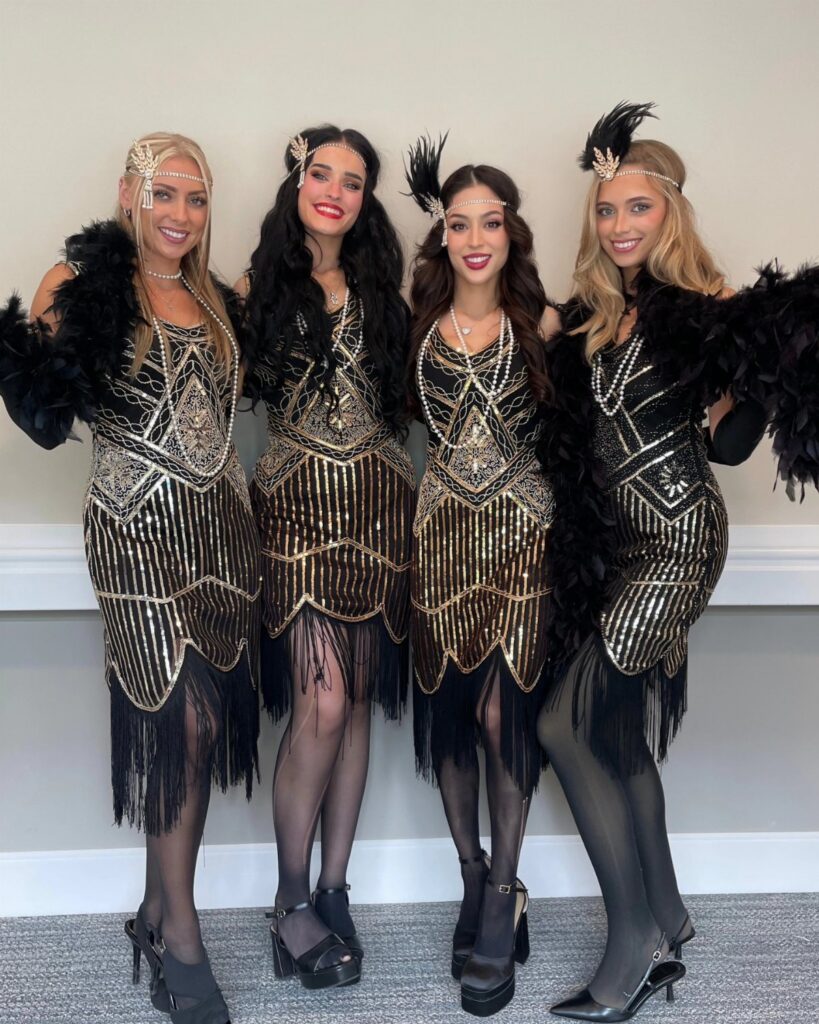
The 8 looks below run from 1920s dropped waists to 2010s boyfriend jeans, and the right one depends on what your closet already holds.
A 1920s flapper dress hangs straight from shoulder to hem, while Dior’s 1947 New Look nips the waist and balloons the skirt, two shapes that ask entirely different things of the body underneath.
1. Flapper Look
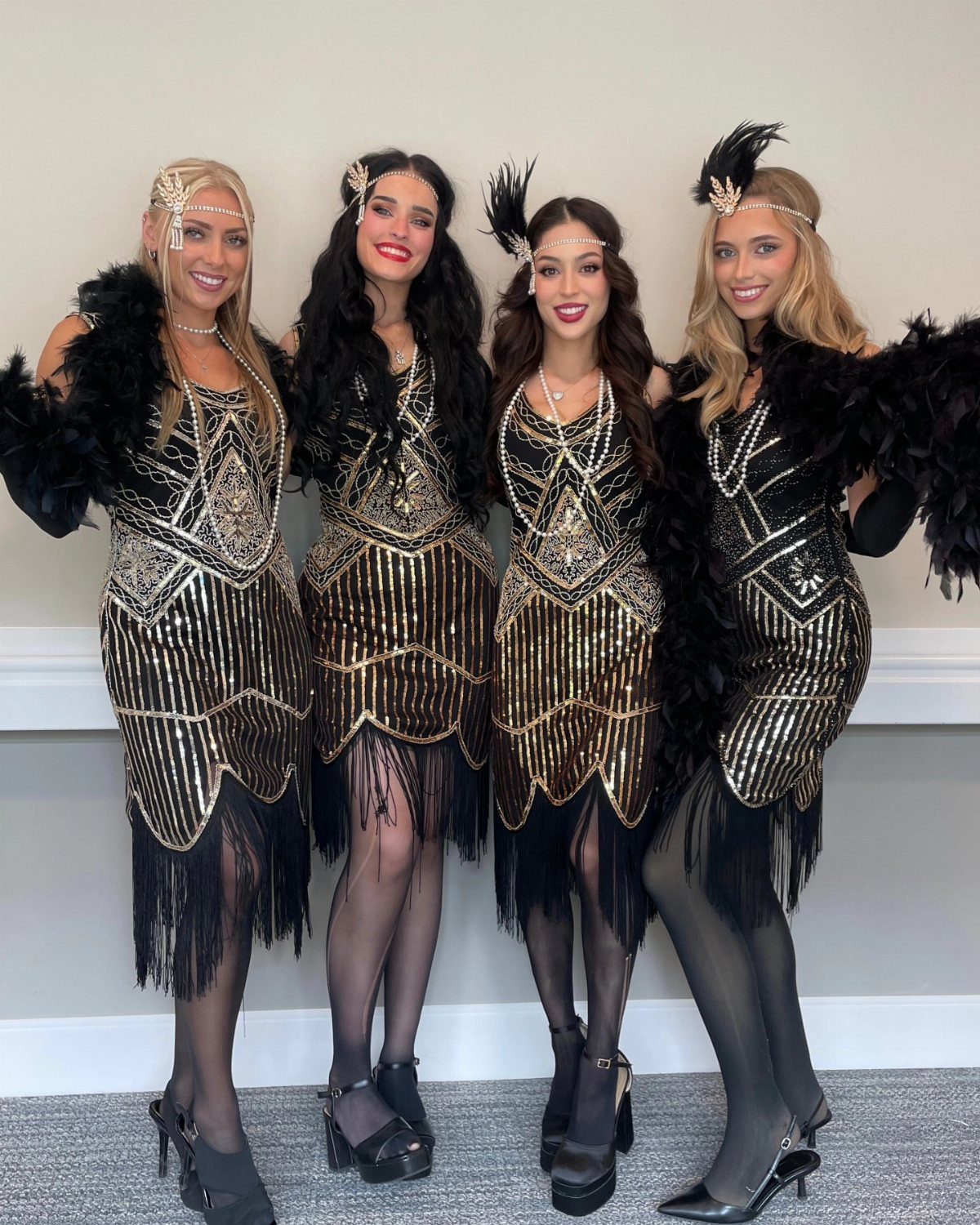
Dropped waists and knee-length hemlines defined the flapper look of the 1920s, a silhouette Coco Chanel helped push into mainstream dress.
Sequins and fringe read costume now, but the straight, boyish cut still works as a counterbalance to fitted pieces already in your closet.
A beaded flapper dress pairs badly with a modern blazer; the textures fight. Better to borrow the shape through a dropped-waist slip dress in silk or a sleeveless column cut that skims rather than cinches.
For evening, one strand of pearls or a simple headband carries the reference without the full period costume.
This look wins for straight and rectangle body shapes where the lack of waist definition feels intentional. Curvier builds trade away shape; you’d need to add a belt or pick a bias-cut reference from the following decade instead.
2. New Look
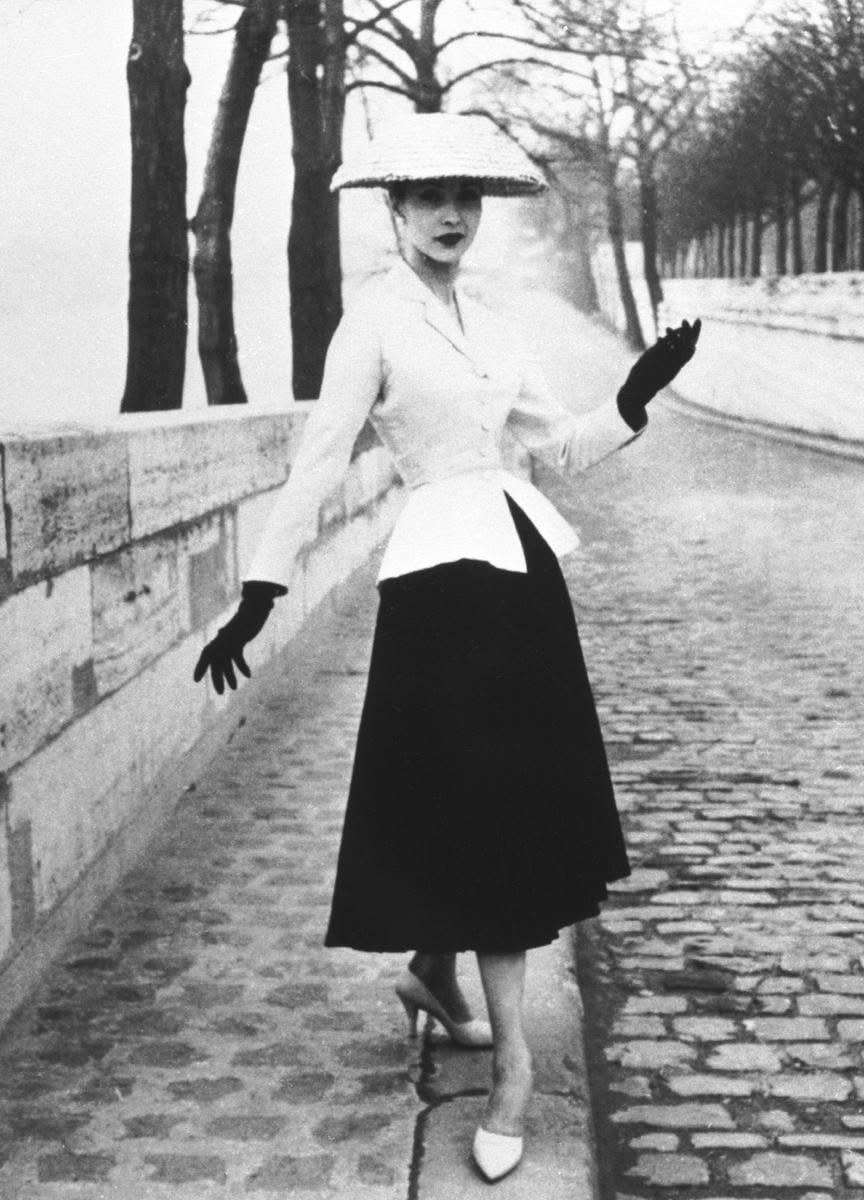
Christian Dior introduced the New Look in 1947, using extravagant amounts of fabric in a deliberate break from wartime rationing. The cinched waist and full mid-calf skirt show the architecture clearly: structured jacket, nipped middle, volume below.
The full skirt demands heels; flats swallow the proportion and read as costumey. For a modern take, a peplum jacket with a pencil skirt keeps the waist emphasis without the volume.
Gloves and a wide-brimmed hat complete the formality but are optional for everyday wear.
This silhouette suits hourglass and pear shapes best, since the waist definition and skirt flare balance naturally. Petite readers should watch skirt length: midi cuts at mid-calf shorten the leg.
A knee-length version with the same jacket shape fixes that.
3. Swinging Sixties
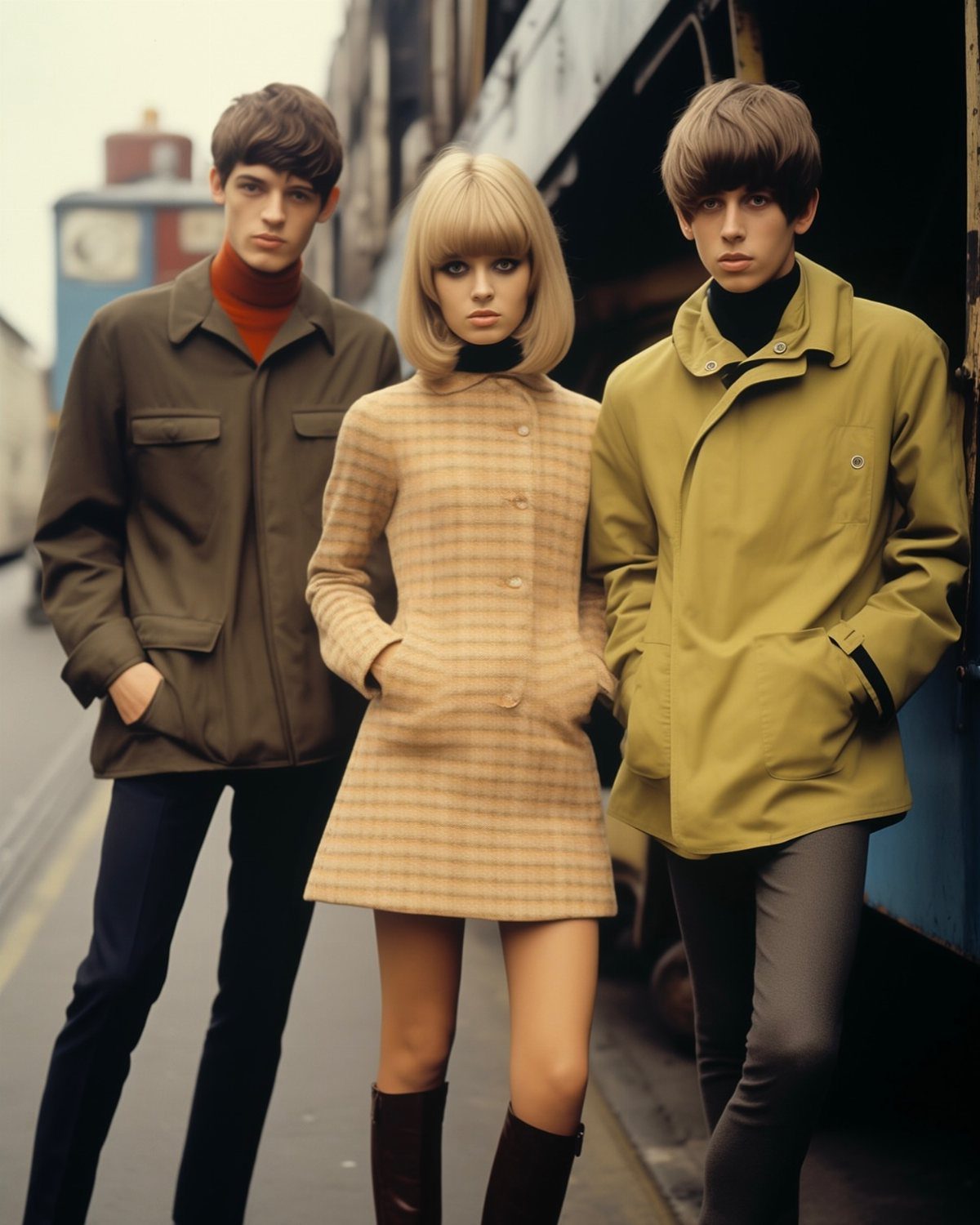
Mary Quant and André Courrèges turned the middle of that decade into a fashion moment built on youth rather than wealth.
The mini length, bold patterns, and go-go boots show the freedom that came with hemlines rising above the knee for the first time in mainstream dress.
A plaid A-line mini works with opaque tights in fall or bare legs in summer; the cut flatters most heights because the line stays simple.
Turtlenecks underneath, as the men wear here, add warmth and a mod reference without requiring a full period piece. Geometric prints and op-art patterns from this era pair best with solid accessories; let the fabric carry the statement.
This look favors leaner builds and shorter torsos, where the high waist and short skirt elongate. Taller readers can wear it, but the effect shifts from playful to dramatic; choose a longer coat or boots to ground the proportion.
4. 1930s
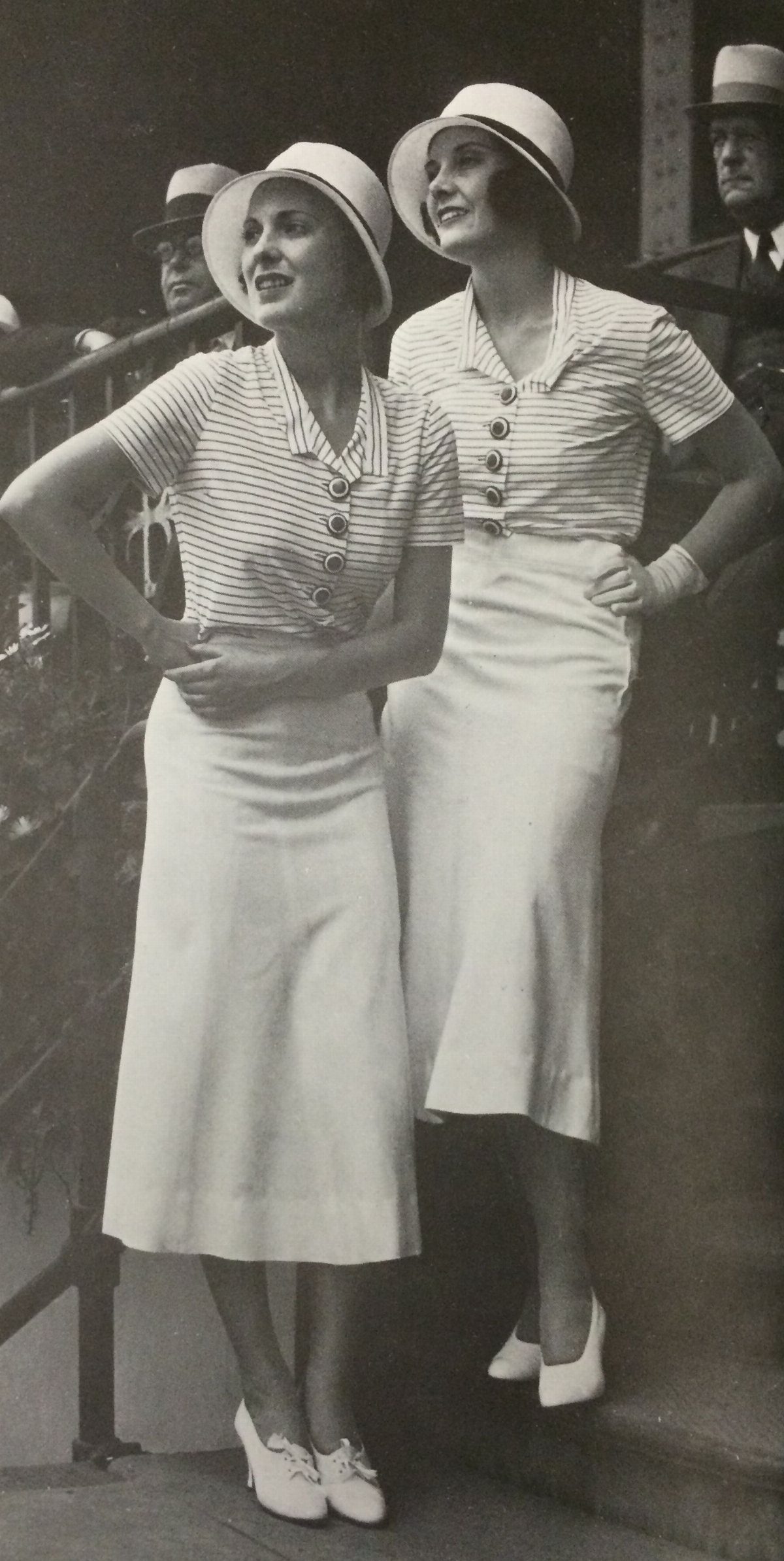
The 1930s softened the 1920s boyish line into something more body-conscious through the bias cut, a technique that lets fabric drape and cling rather than hang straight.
Striped tops and long white skirts show the transition: still covered, but the fabric follows shape now.
Hollywood drove this look. Greta Garbo and Bette Davis put these silhouettes on screen, and women copied the elegance at home.
A bias-cut skirt or dress in satin or crepe skims without gripping; it is forgiving across hip and thigh while still reading dressed-up. The midi length works with a low heel or a T-strap sandal.
This era suits curvier builds better than the previous one did; the cut accommodates rather than hides. Straight body shapes can wear it but may need to add interest at the shoulder or neckline to avoid looking columnar.
5. Boyfriend Jeans
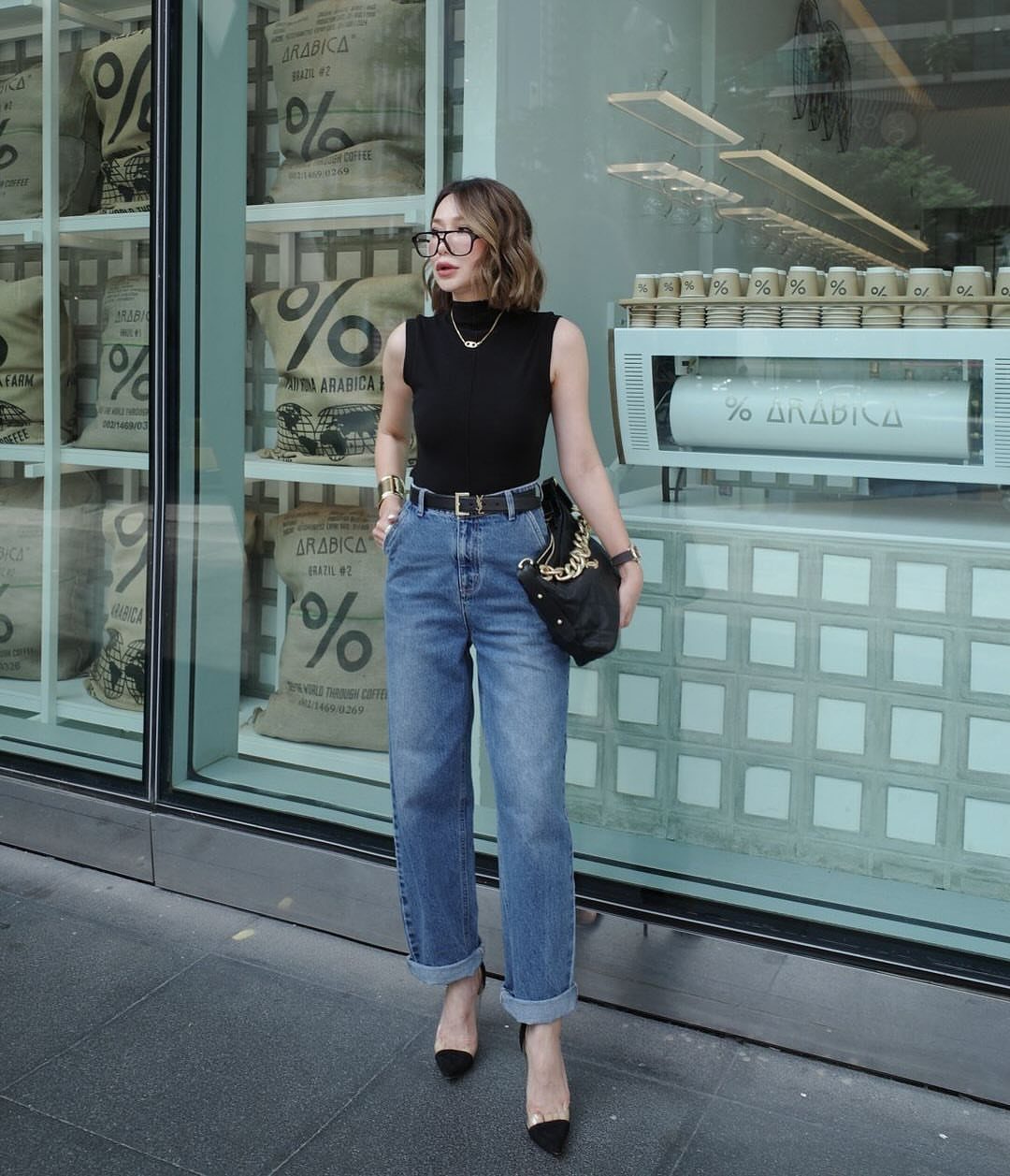
Rolled cuffs and a loose fit through the hip and thigh define boyfriend jeans, a 2010s staple that borrowed from menswear without requiring an actual male body to fill them.
A pair that sits low on the waist with a cuff at the ankle balances best with a fitted top and pointed heels that keep the look deliberate rather than sloppy.
The key is proportion. A loose jean needs a structured or tucked-in top; two oversized pieces read as accidental.
Heels add polish, though white sneakers work for a casual run. The cuff should hit at or above the ankle bone; longer rolls shorten the leg.
This cut favors straighter hips and longer legs, where the volume does not overwhelm. Petite or pear-shaped readers trade away shape definition; a slimmer straight-leg with a single small cuff gives the same relaxed feel without the bulk.
6. Utility Clothing
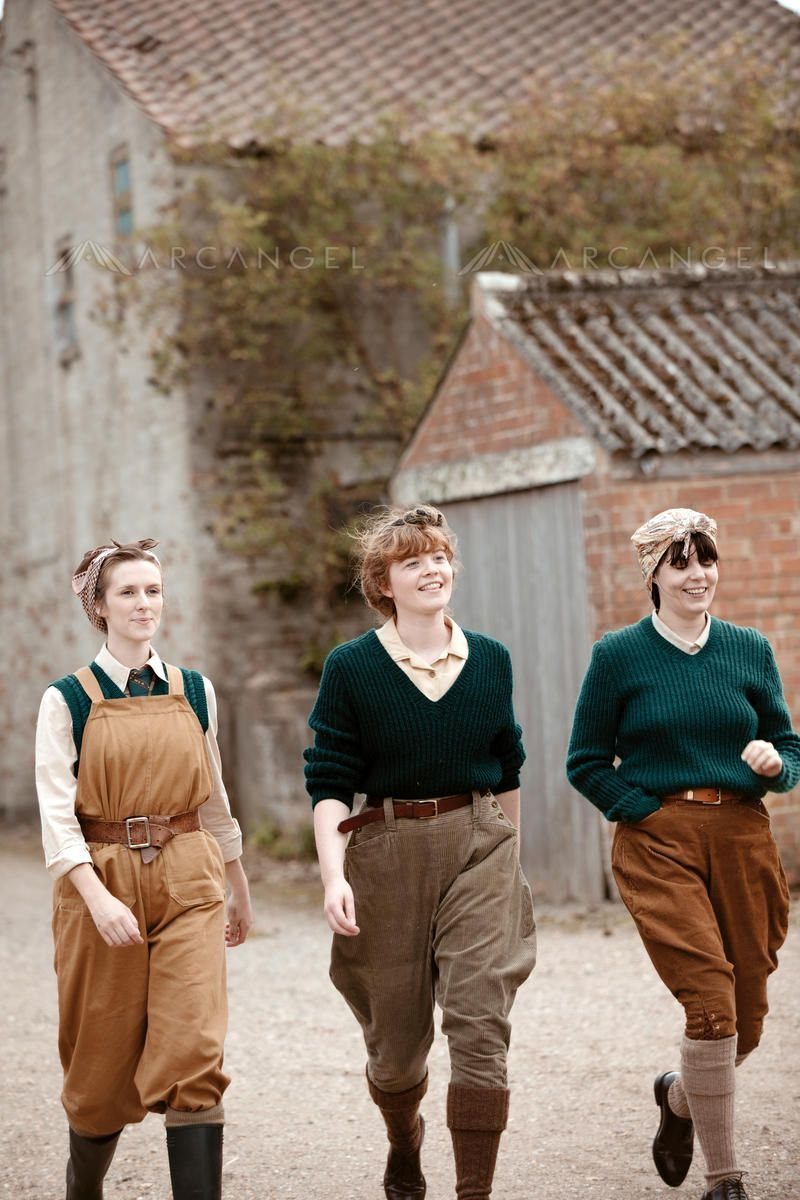
World War II rationing turned practical dressing into a necessity, and utility clothing emerged with padded shoulders, cinched waists, and hemlines held strictly below the knee.
Land Army overalls, breeches, and headscarves show the working end of this era, designed for durability rather than display.
Modern takes borrow the silhouette without the wartime constraints. Sturdy boots and minimal jewelry keep the functional mood; adding pearls or a silk blouse fights the reference.
This look suits broader shoulders and narrower hips, where the padded detail balances naturally.
Softer, rounder builds may find the structured top half boxy; a softer shoulder line with the same high waist keeps the era’s feel without the military edge.
7. Bikini Introduction
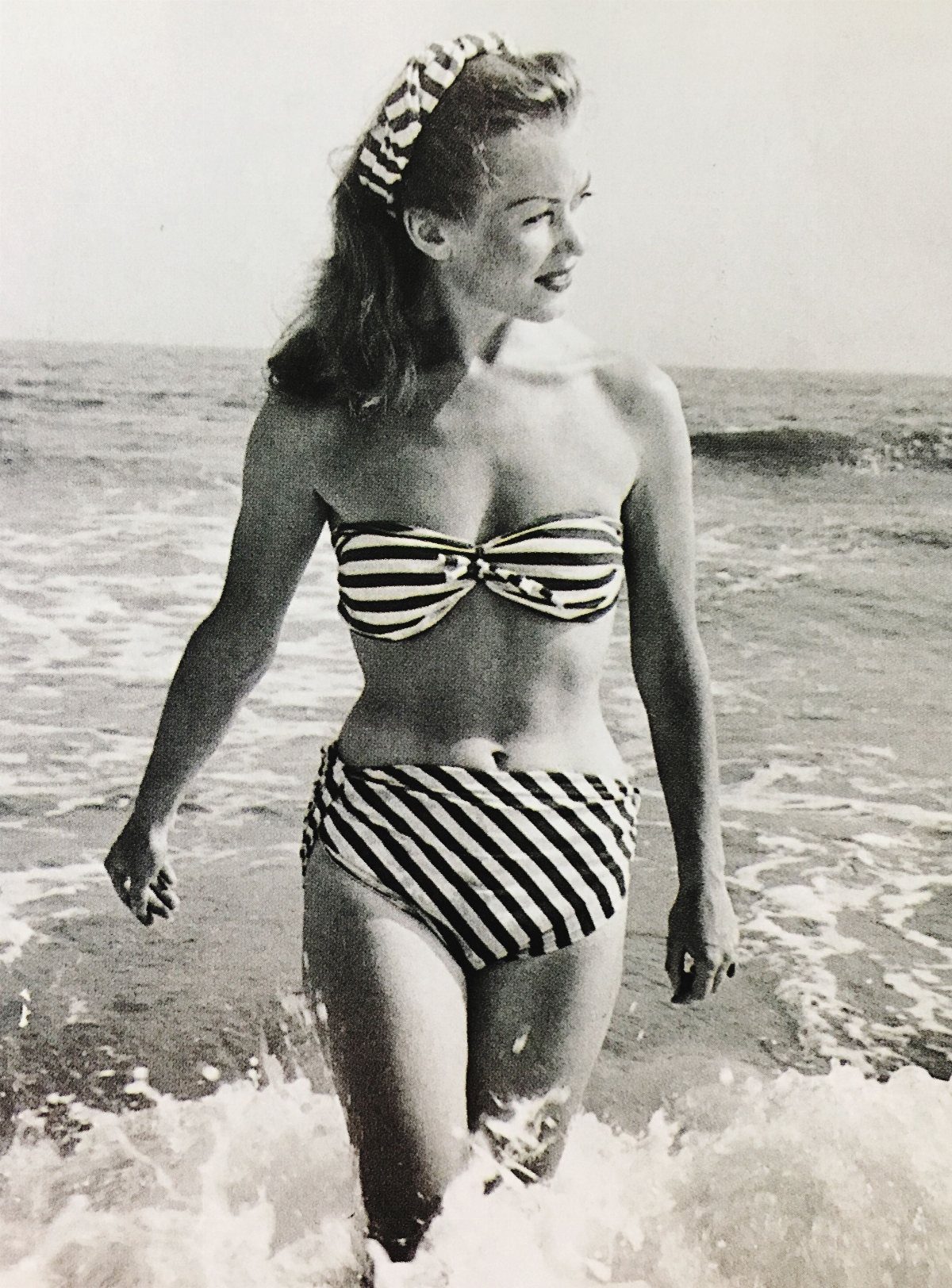
Louis Réard named his 1946 design after the Bikini Atoll, betting that the two-piece would cause its own explosion.
A strapless top and high waist that meet only at the side keep the original spirit, with a matching headscarf for sun coverage. For a modern wearer, this silhouette still wins on proportion.
The waistband sits at the natural waist, not the hip, which lengthens the torso and anchors the suit during actual swimming. A striped cotton in navy or black reads as period-appropriate without looking costumed.
The headscarf is optional but practical; a broad triangle folded and tied under the chin stays put in wind better than any hat brim.
I’d skip the scarf only if the hair is very short or the plan is full immersion.
8. Geometric Styles
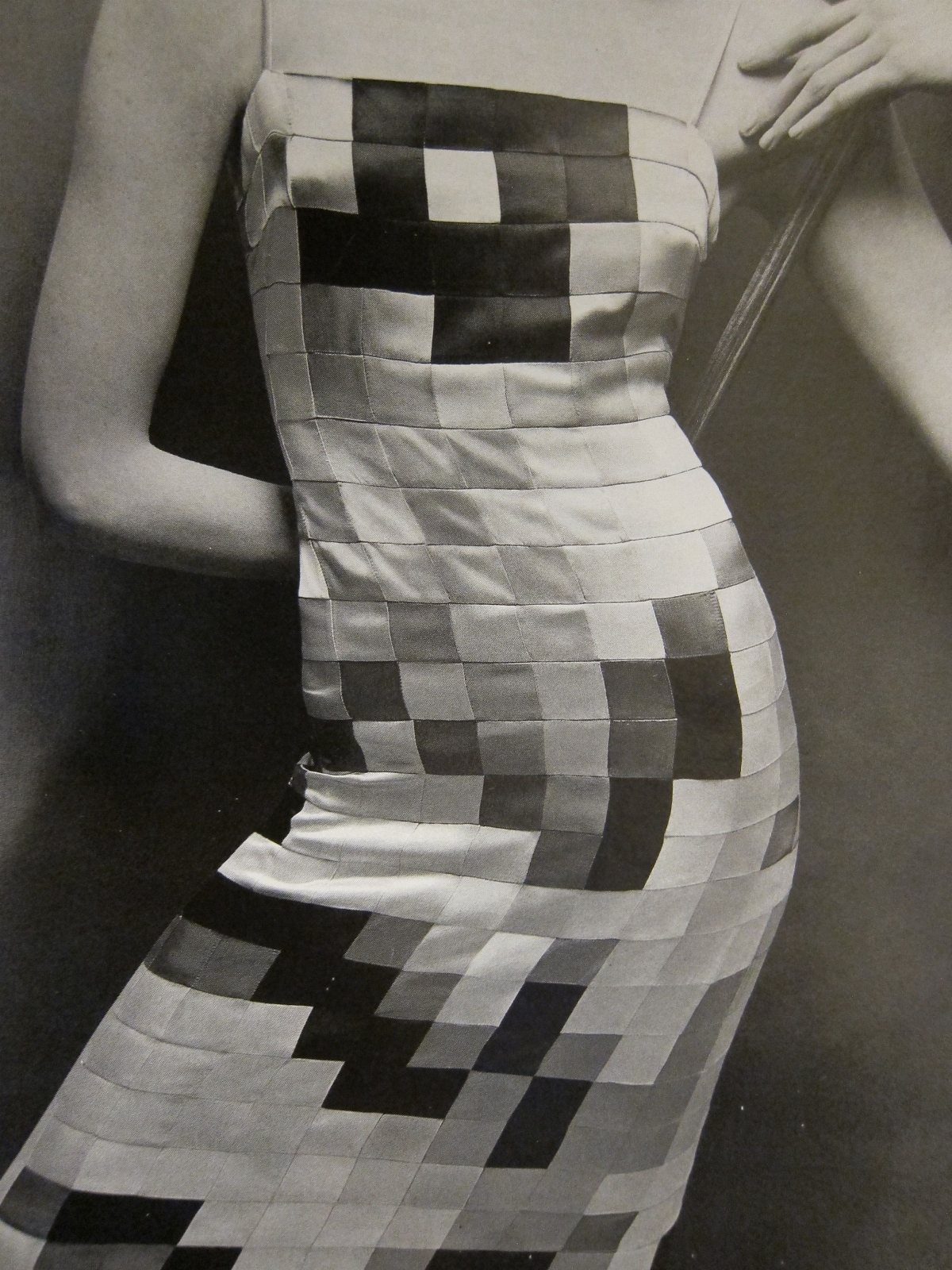
Bridget Riley’s black-and-white paintings moved when you looked at them, and 1965 fashion tried the same trick on the body.
Satin rectangles of varying sizes, sewn into a grid that shifts as the wearer moves, build the pattern from actual fabric panels rather than print. This construction matters.
A printed checkerboard lies flat; paneling creates depth and catches light differently at each seam.
For someone considering this now, the technique translates well to simpler pieces. A panelled A-line skirt in two alternating solids gives the effect without the full commitment of a body-conscious dress.
The spaghetti straps here are a 1965 detail I’d keep; they keep the neckline clean and the focus on the geometry.
The look trades away softness. Curves read as interruptions in the pattern, so this style suits straighter figures or those willing to shape the garment rather than the other way around.
Cultural Movements Impact
The 1980s carried that energy forward. Women entered boardrooms in record numbers, and the clothes followed: padded shoulders from Emanuel Ungaro and Thierry Mugler, bold accessories, heels high enough to command attention.
Princess Diana, Nancy Reagan, and Margaret Thatcher each wore the power suit differently, but the message was uniform.
Music split the decade into tribes. Pop demanded big hair, glitter, and layers of jewelry.
Hip hop brought loose jeans and sneakers as standard. Fitness culture, fed by films like "Dirty Dancing," put spandex, leggings, and leg warmers on streets that had never seen a dance studio.
Perry Ellis and Ralph Lauren held the other line: the preppy look, borrowed from Ivy League campuses and British aristocracy, quiet where the rest was loud.
Influence of Designers
Hubert de Givenchy and Cristobal Balenciaga shaped the early 1960s around Jacqueline Kennedy’s silhouette, feminine and controlled, before the decade broke open.
Mary Quant, André Courrèges, Pierre Cardin, and Paco Rabanne understood the shift.
Coco Chanel’s earlier move into costume jewelry came from necessity. In 1915, wartime funding redirected away from lavish dress, so she made accessories that looked expensive without being so.
That same year, Elizabeth Arden and Helena Rubinstein opened salons on Fifth Avenue, their Paris-influenced style drawing the elite of New York. A decade later, in 1925, tubular dresses ended and a more feminine silhouette returned.
Fashion Recycling
The 2020s proved how fast the cycle turns. Comfort stayed after restrictions lifted, and minimalism resurfaced with it.
Mini dresses and skirts from the 1960s returned. The Y2K trend from the 2000s came back too.
Each decade borrows from another when the moment calls for it; recognizing which resurrection fits your closet now matters more than wearing the reference as costume.
Practicality in Fashion
Wartime rationing made practicality mandatory. The 1915 "war crinoline" kept hemlines just above the ankle, full and bell-shaped but less lavish than before.
Fabric went to the effort; women dressed accordingly.
World War II tightened further. Utility clothing held hemlines below the knee, padded shoulders structured the silhouette, and waists stayed cinched within strict limits.
Headscarves kept hair clear of machinery.
The modern borrow from this era works when the functional mood stays intact. Pearls or silk underneath fight the look; the wartime version had no room for that kind of softening.