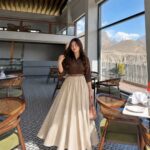
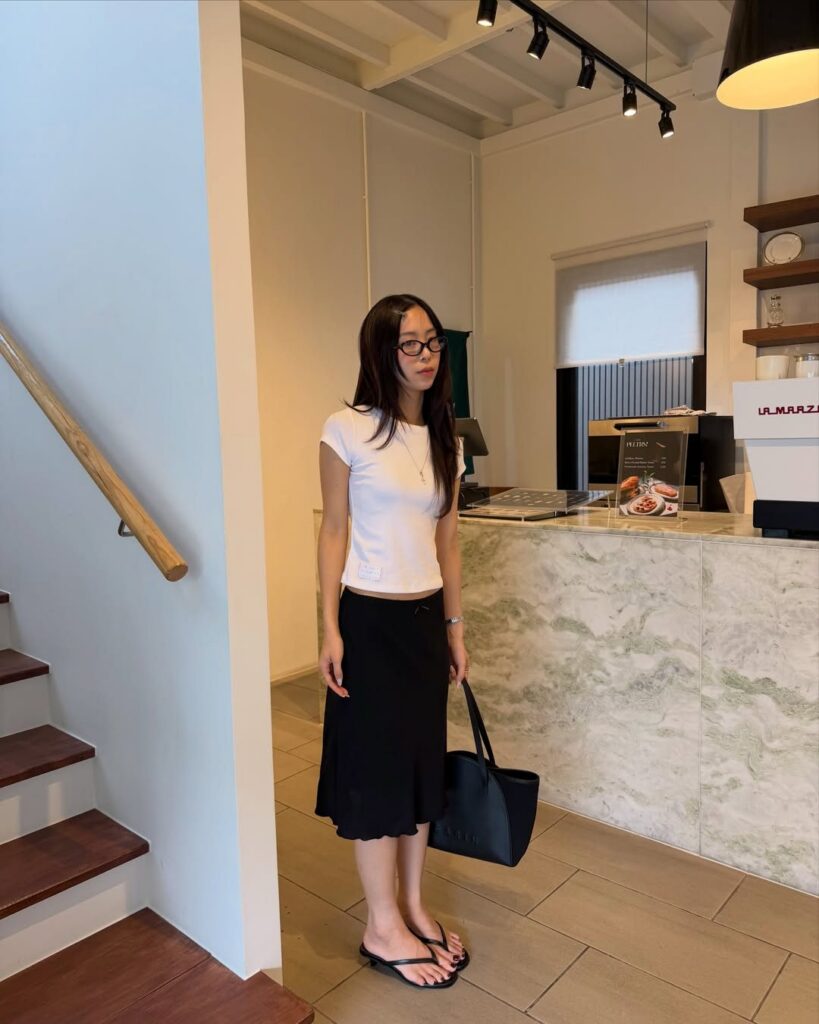
The combinations below move from a knotted cotton tee to a ruffled neckline with heels, and the deciding factor is where your day takes you: errands call for the half-tuck, a meeting calls for the cuff.
A rolled sleeve pushed to the forearm shifts the whole posture from desk-bound to intentional; that small adjustment shows up more than once in these pairings because it earns its place.
1. Oversized Shirts
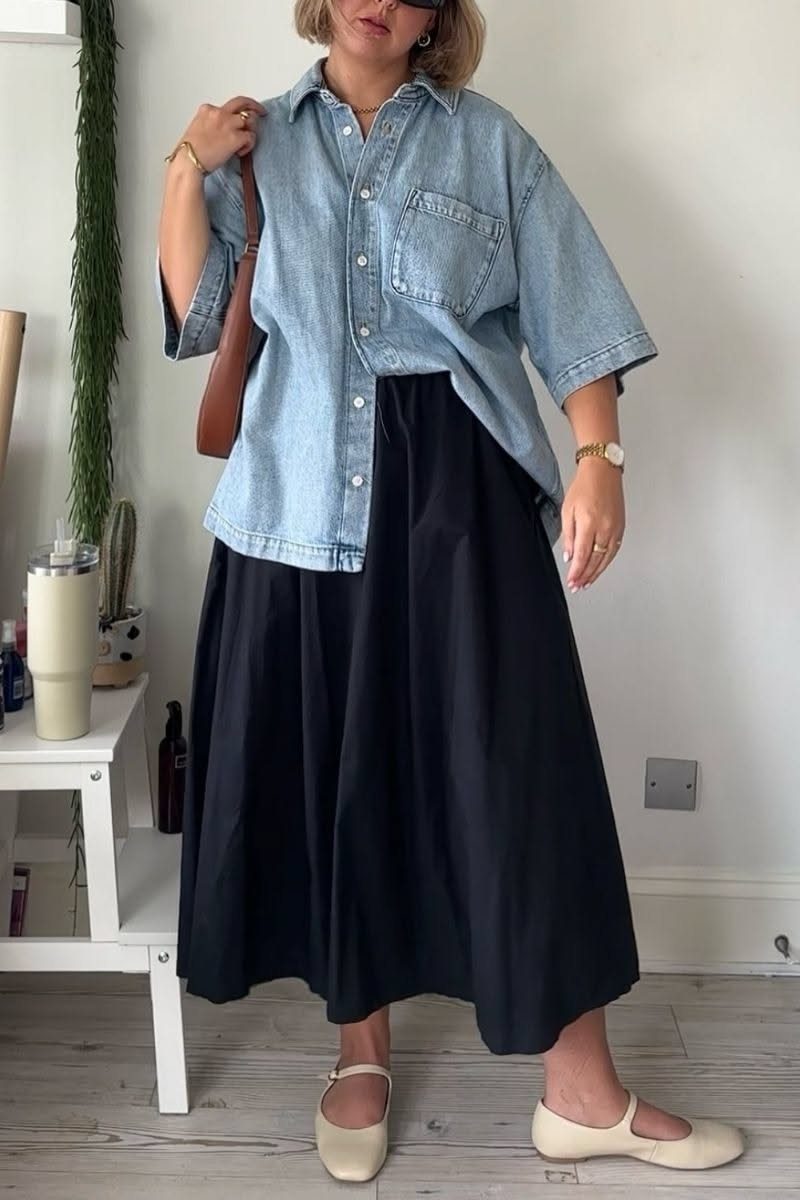
An oversized shirt with a midi skirt reads as intentional rather than sloppy when you half-tuck the front. The extra fabric brings movement that balances a fuller skirt without adding weight where you don’t want it.
A denim wash keeps the look grounded for weekends; a crisp white or pale stripe shifts it toward lunch meetings. The half-tuck is the whole trick here: front in, back out, sleeves rolled to the elbow.
Mary Jane flats or ballet flats finish it without competing.
This combination suits anyone who wants coverage without structure. Silhouette can get lost in the volume; a belt anchors the waist if you need it.
2. Crop Tops
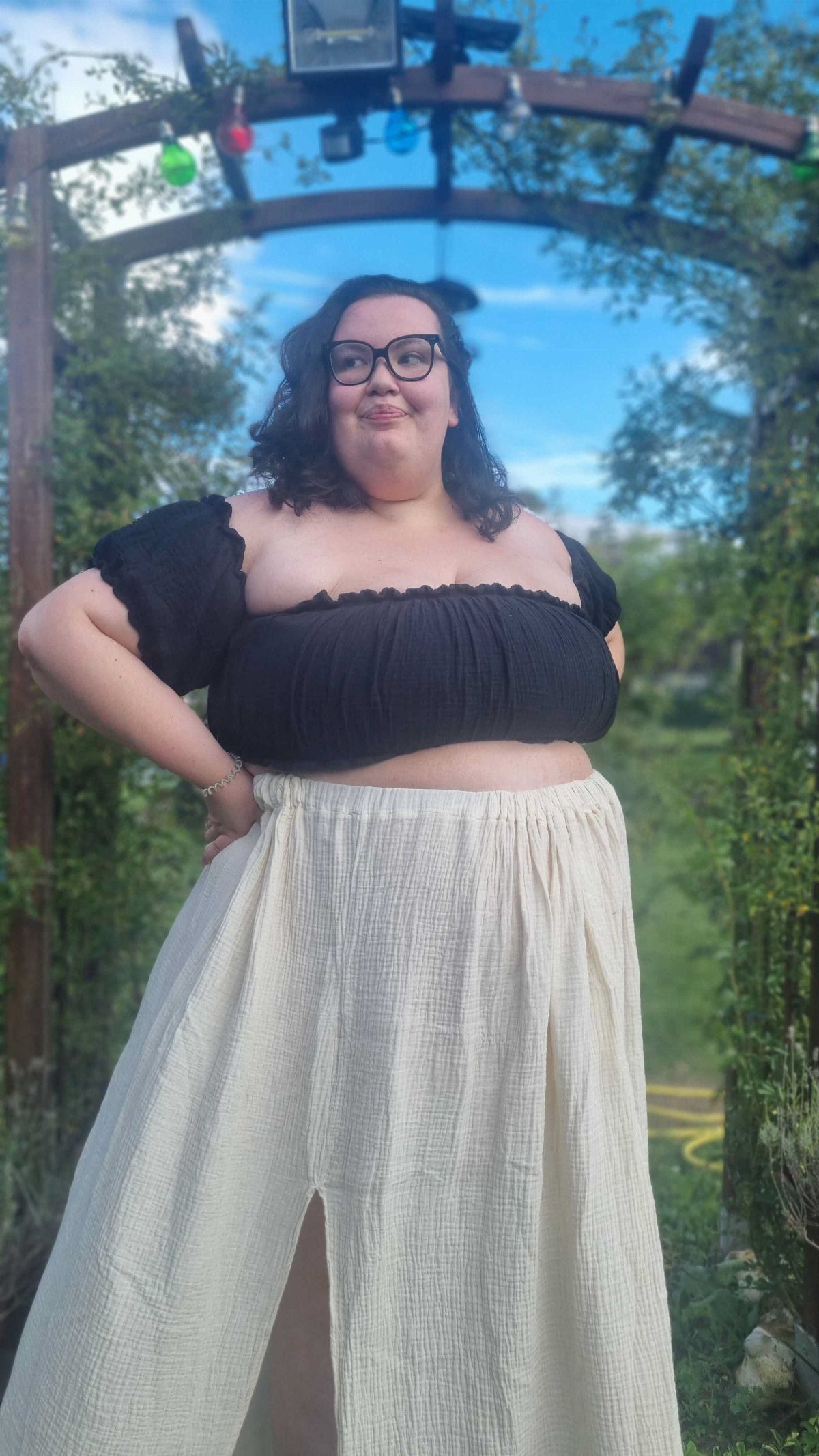
A cropped top solves the eternal tucked-in bulk problem by eliminating it entirely. The hem hits at the natural waist, so the skirt sits where it should with no fabric fighting for space.
Off-the-shoulder or puff-sleeve versions add interest up top while the midi keeps the overall coverage balanced. This is weekend territory: garden parties, outdoor dinners, anywhere you want ease without looking underdressed.
The boxier crops read more relaxed and age-spanning than body-skimming versions; choose based on how much skin you want to show.
Who this serves best: hourglass and pear shapes, since the waist gets full attention. Straight figures may want a belt or a skirt with more volume below to create shape.
Crop tops are the perfect weekend midi skirt counterpart, especially if you’re trying to avoid the bulk that can come from tucking in a shirt. Instantly, you have a flattered waist, a no-fuss tucking situation, and an adorable outfit you’ll never want to take off.
3. Button-Down Shirts
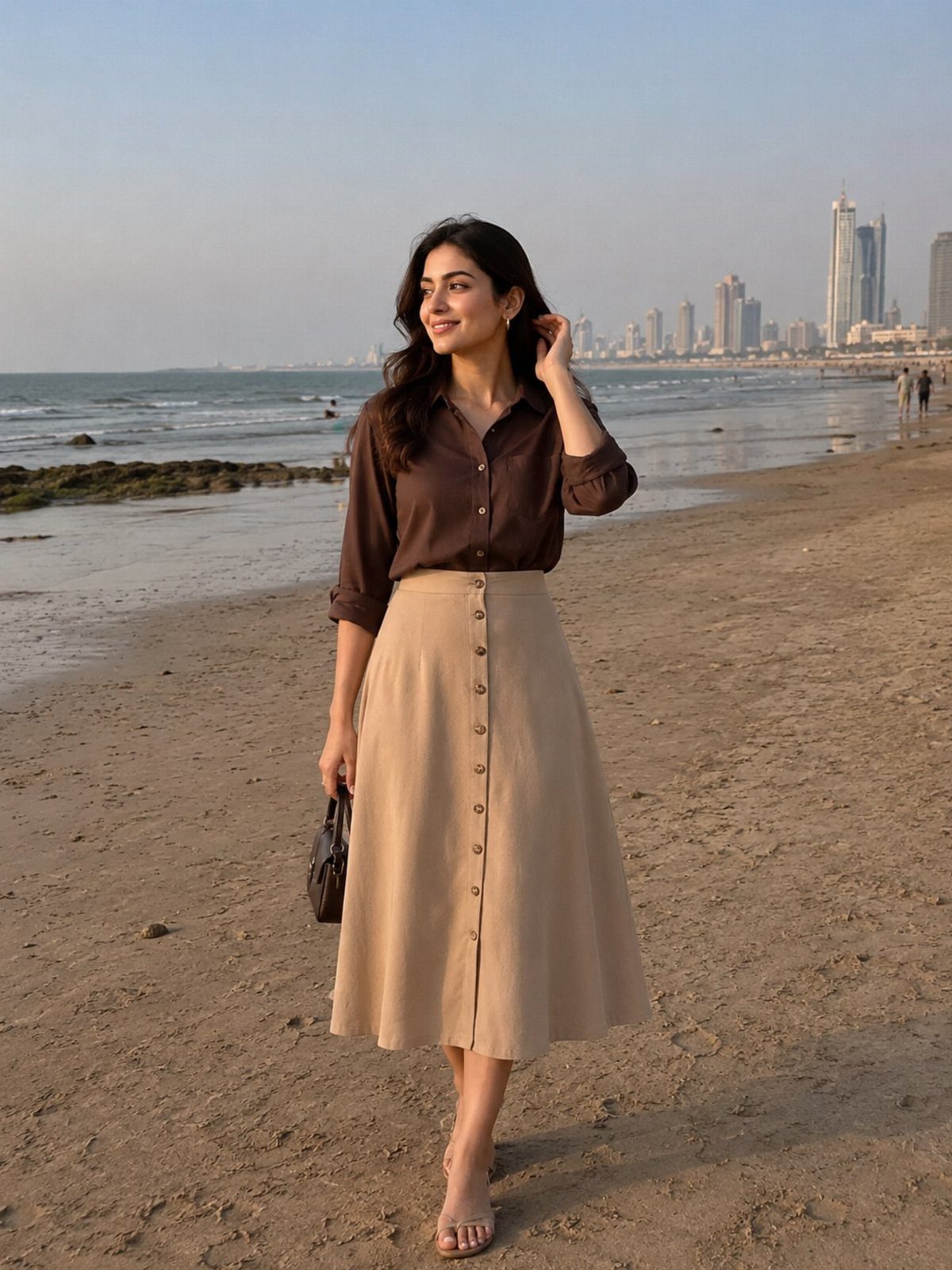
The button-down with a midi skirt is a pairing so established it risks corporate territory fast. Cuff the sleeves past the wrist to kill that mood; three rolls, pushed to the forearm, changes the whole posture from desk to deliberate.
Tuck it neat into the waistband so the skirt’s line stays clean. Cotton or silk both work, though silk catches light better against matte skirt fabrics.
Brown on tan keeps the palette warm and still looks pulled together.
This is your default for days with multiple stops, none of them casual enough for a tee. The collar and buttons do the dressing-up; you provide the looseness through sleeve and tuck.
4. Thin-Knit Turtlenecks
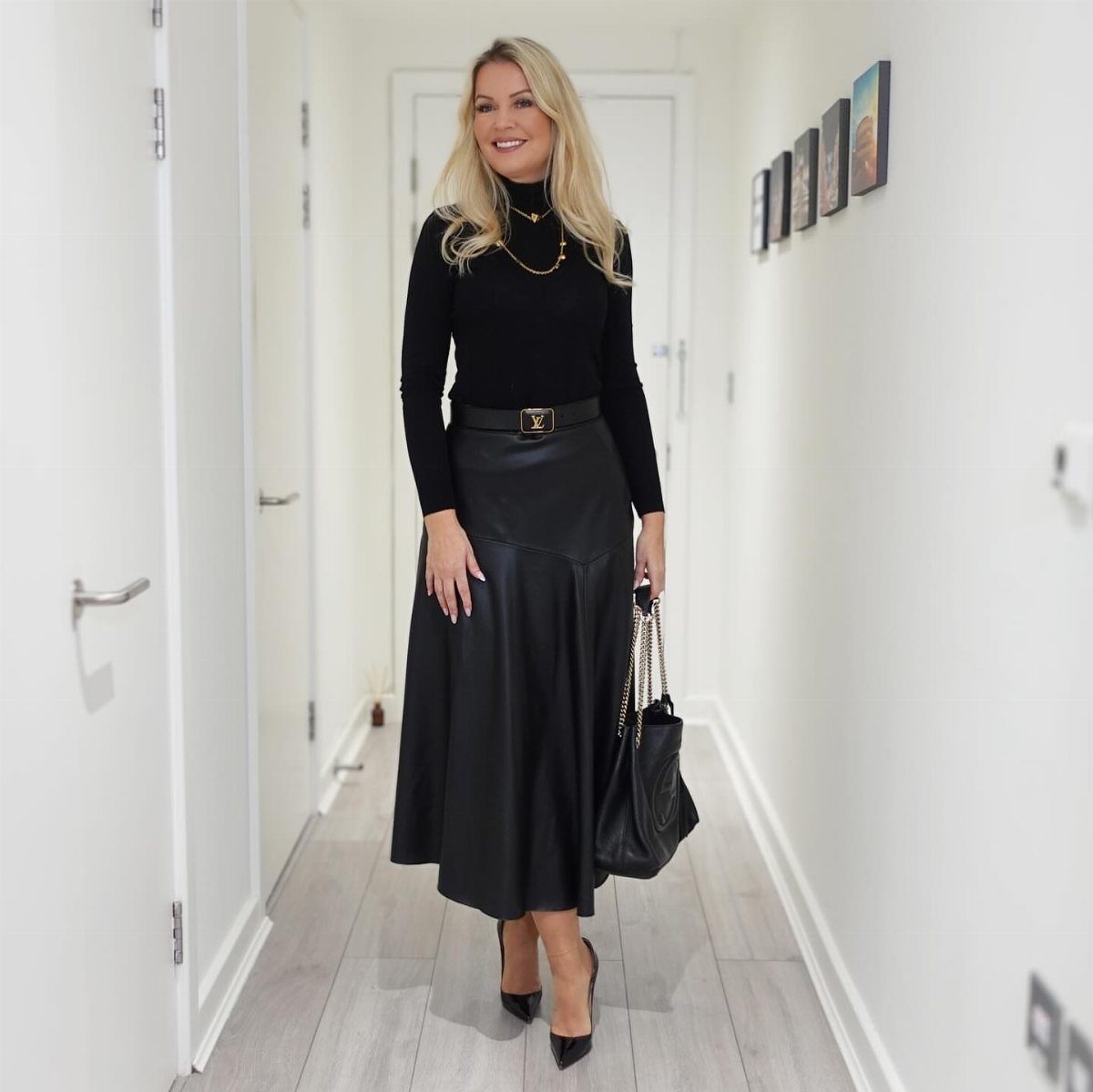
A thin-knit turtleneck is the most flattering top choice for structured midi skirts, especially when the skirt has volume to balance. The close fit defines the waist without competing; the high neck draws the eye up.
Black on black is the simplest version and the most severe. For everyday, try cream against charcoal or a ribbed burgundy against navy.
The knit needs to be thin enough to stay smooth under a belt; anything bulky defeats the streamlined silhouette.
This is fall and winter’s answer to the sleeveless fitted top. Leather skirts, A-line wool, anything with swing below: the turtleneck holds the top half quiet so the skirt can move.
5. Slouchy Sweaters
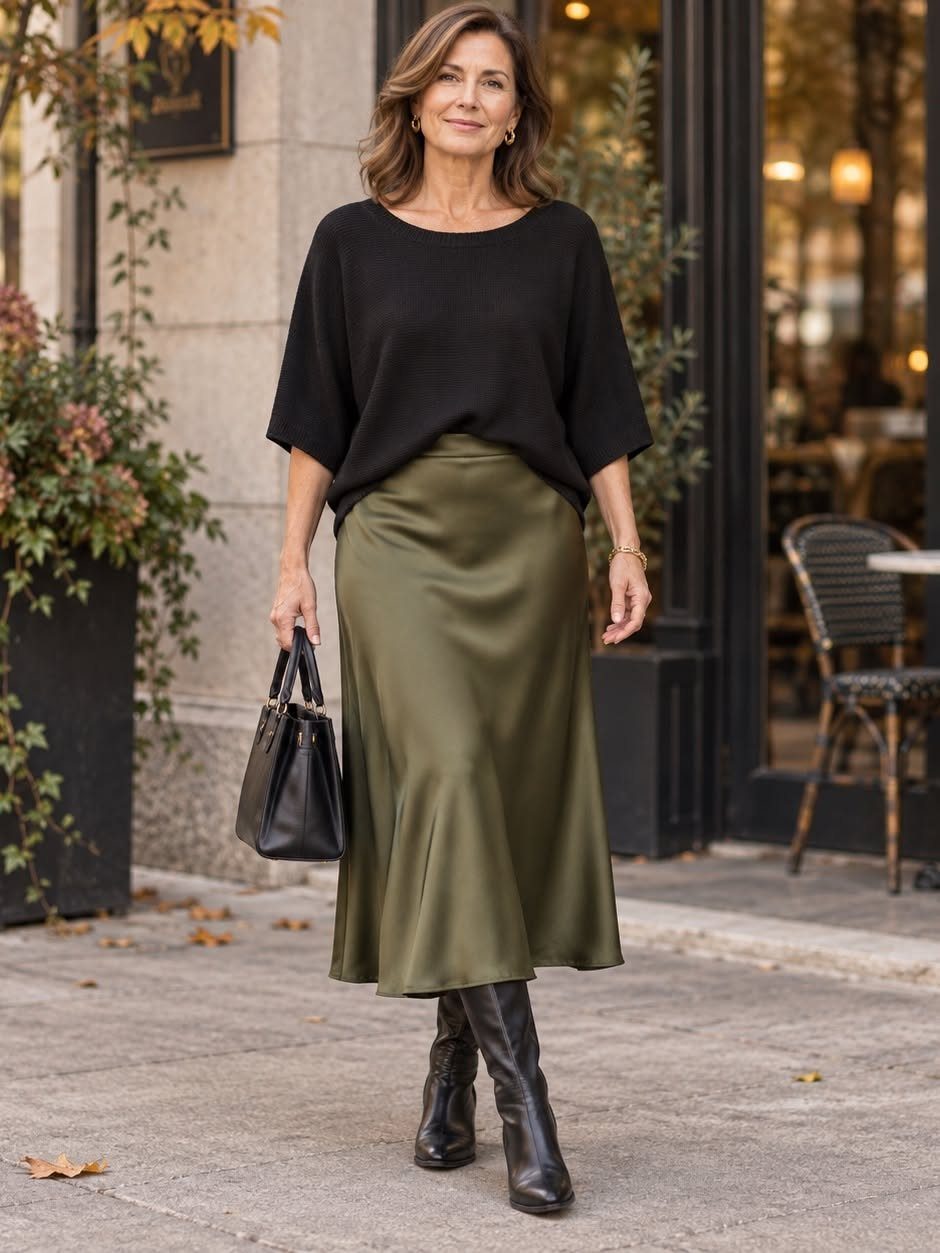
A slouchy sweater with a satin midi skirt lives in the tension between undone and dressed-up. The sweater says you didn’t try too hard; the skirt’s sheen says you did.
The front tuck is non-negotiable. Without it, the volume swallows your shape; with it, you get proportion and a visible waist.
Push the sleeves up to the elbow for the same reason the cuff works on a button-down: it introduces effort and skin. Olive-and-black is one route; cream on cream, or charcoal on burgundy, shifts the mood toward evening.
Best for relaxed outings where you want to look considered, not constructed. This is not your deep-winter layer without a coat.
6. Fitted Tops
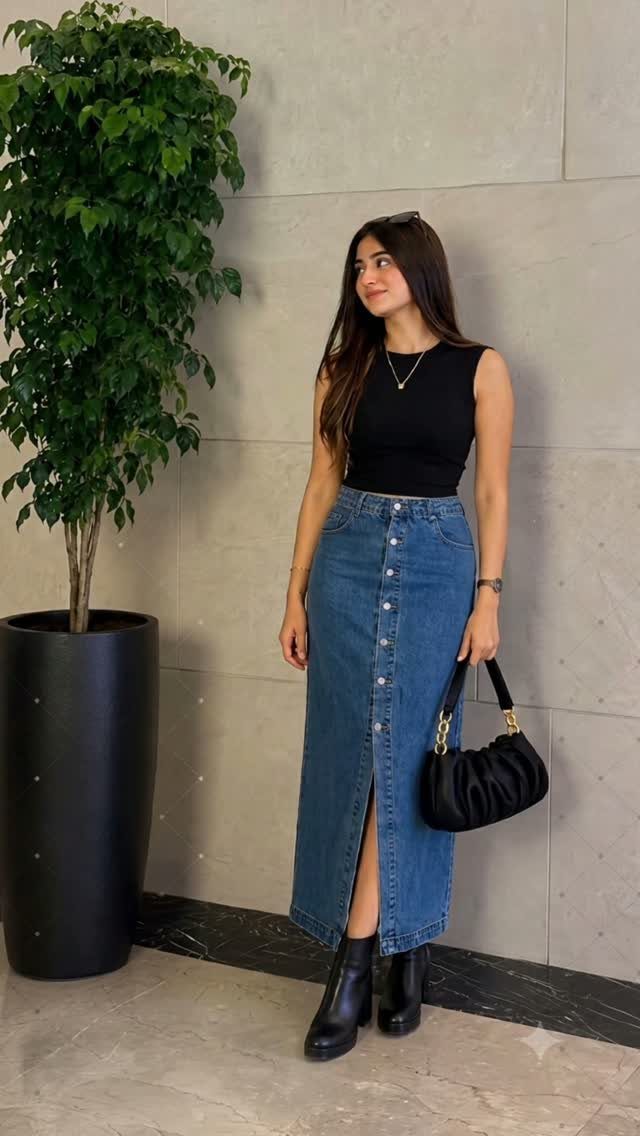
A fitted sleeveless top keeps the line clean from shoulder to hip, which matters when the skirt below has its own details: buttons, pleats, denim texture. The eye gets one focal point, not two fighting.
This is the professional setting’s reliable choice. Tucked in, it accentuates the waist without the fuss of a full blouse; the absence of sleeves keeps it current rather than corporate.
For coverage, add a cropped blazer or structured cardigan that ends at the waistband, not below.
Black with denim works for offices that allow jeans on Fridays. For stricter environments, swap to a solid skirt in wool or crepe and keep the top in a neutral.
The fitted silhouette suits most figures; the question is arm coverage, which a jacket solves fast.
7. Ruffled Blouses
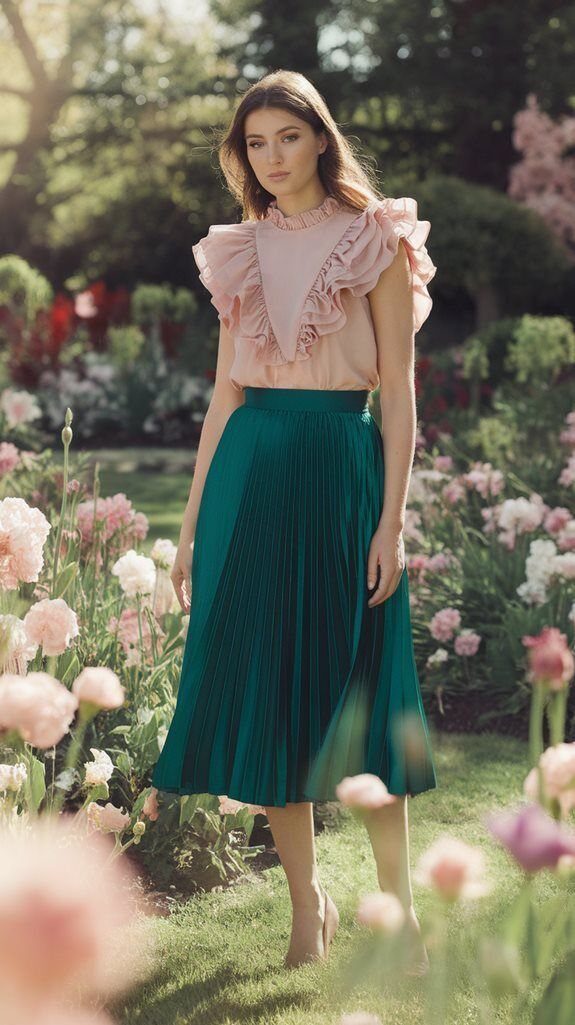
A ruffled blouse carries enough detail to carry the outfit. A high, full neckline ruffle needs a simple skirt beneath it: solid, silky, tucked in cleanly so the eye has one focal point.
Pumps finish it, and the look moves straight to a meeting without changing.
This pairing trades casual comfort for polish. The ruffles do the decorating; jewelry stays minimal, a thin chain at most.
Someone with a shorter torso might skip the full tuck and try a front-only tuck instead, letting the back blouse skim over the waistband.
Office dress codes vary, but this formula reads formal enough for most without trying for cocktail hour.
The sleeveless version here works through late spring; add a fitted cardigan across the shoulders for air conditioning or early fall.
8. Casual Tees
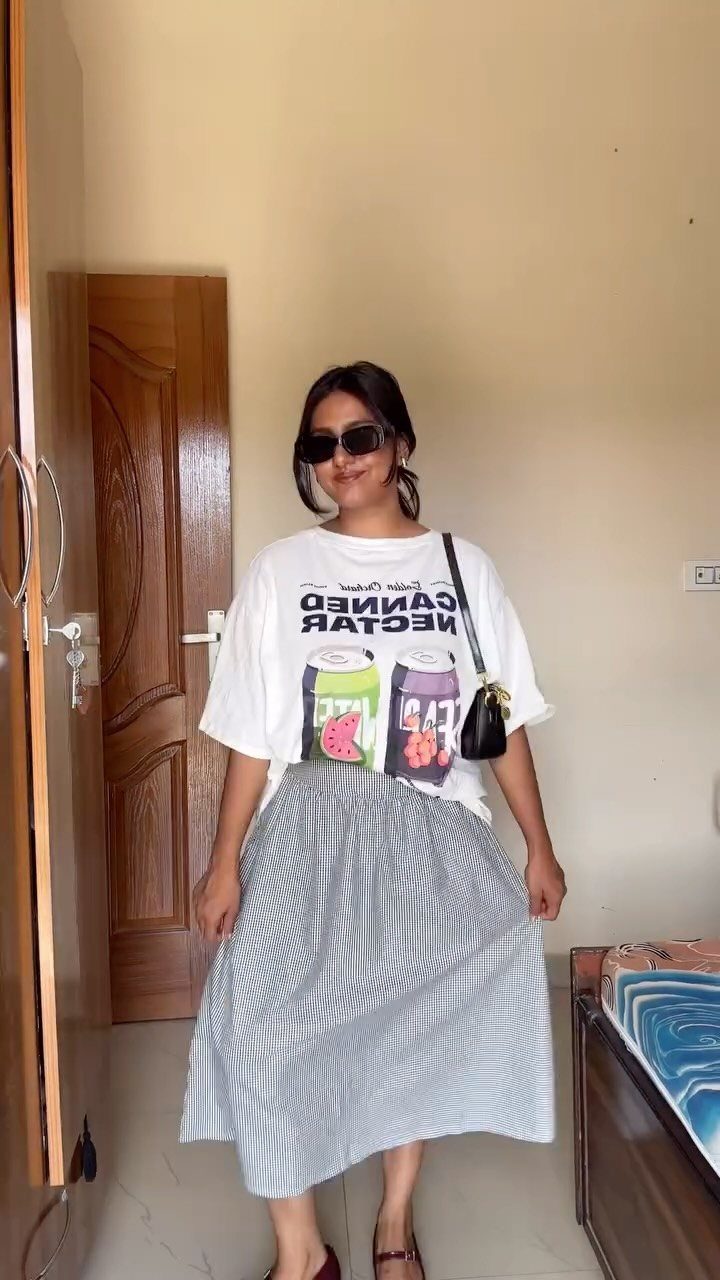
Soft cotton, a half-tuck, and the day runs itself. A graphic tee gives the skirt its personality, while the skirt’s structure keeps the whole thing from looking like you grabbed the first shirt off the floor.
Striped or neutral tees work the same way if loud prints feel too young. The knot at the waist, or rolling sleeves to the elbow, breaks up the silhouette so it doesn’t flatten out.
This is the entry point for anyone nervous about midi length; the casual top signals you meant the skirt, not that you’re dressing up for an event you weren’t invited to.
Moms, weekend errands, coffee that turns into an afternoon: this is the workhorse. It trades drama for reliability, and sometimes that’s the smarter choice.
9. Statement Sleeves
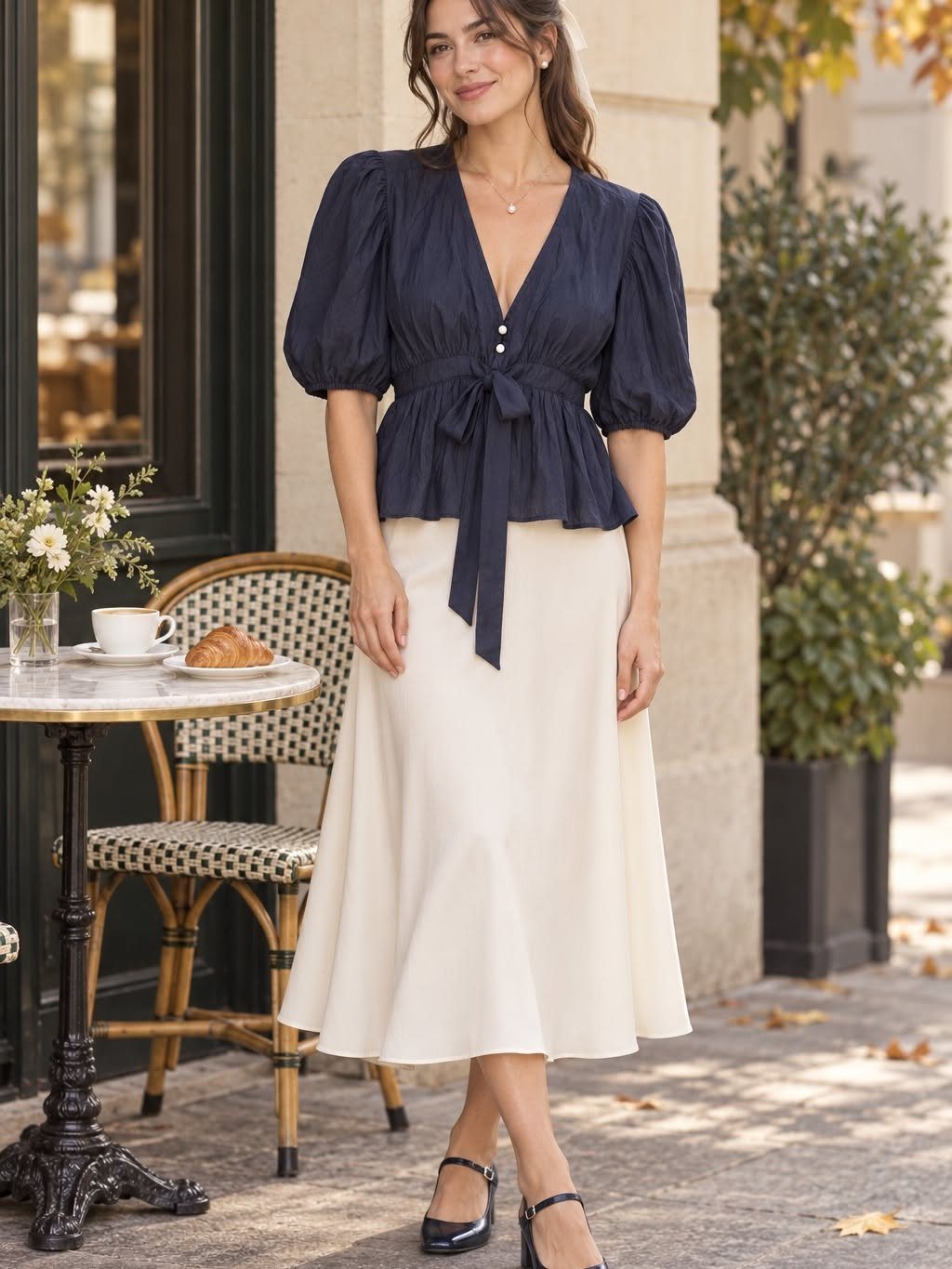
Puff sleeves change the proportion entirely. Volume at the shoulder narrows the waist by comparison, and a tie detail keeps the silhouette from ballooning out of control.
For an evening out, this much sleeve reads intentional; for a desk job, it can feel costume. I’d save this pairing for dinner, a shower, any event where standing out is the point rather than the risk.
A cream skirt grounds the drama; a printed or textured skirt fights the sleeves for attention and usually loses. One statement piece per outfit, always.
Petite frames should watch the sleeve length: too long and the volume swallows the arm. Three-quarter puff, or pushing full sleeves above the elbow, keeps the scale right.
Balancing Proportions
Fitted tops with flowy skirts keep volume from overwhelming your frame.
A cropped top does the same work more directly: the hem hits at the natural waist, so the proportion reads intentional without any tucking. The hint of skin or fabric break creates a flattering line on most figures.
Play with lengths to shift the mood. A slightly cropped top reads casual; a full tuck into a high waist looks polished.
Somewhere in the middle sits the half-tuck, still easygoing but with more purpose than letting everything hang loose.
For A-line skirts, the cropped pairing is especially useful. The waist gets defined without the bulk of gathered fabric at the band.
Accessorizing
A belt turns any loose pairing into a shape. Without it, an oversized shirt or slouchy sweater can flatten the silhouette; with it, the waist appears and the skirt’s line makes sense.
Jewelry stays minimal against busy tops. Small gold hoops or a fine chain finish the look without drawing focus away from the outfit.
Against a plain tee or turtleneck, you can go slightly larger, but one focal piece is usually enough.
Shoes anchor the formality. Sneakers keep a casual tee and skirt pairing grounded; block heels lift a tucked blouse toward evening.
Match the shoe to the most dressed-up piece in the outfit, then let everything else relax one step below.
Layering Techniques
Short jackets and cropped blazers keep the upper body in scale with the longer skirt line. The hem should hit at or above the waistband, not below it, or the line cuts the figure in half.
Cardigans work the same way if you choose fitted versions and leave them open. A long, loose cardigan over a flowy skirt doubles the volume and loses the shape.
For warmth without bulk, a denim jacket or shacket adds structure. The rigid fabric contrasts with a softer skirt and gives the outfit a frame.
Layering order matters: thin knits under jackets, nothing bulky under fitted blazers. The skirt’s volume should still move freely.
Fabric Harmony
Lightweight fabrics pair naturally with flowy skirts. Linen blouses and soft cotton tees half-tuck easily without fighting the waistband.
The movement matches, and nothing feels out of season with its partner.
Heavier fabrics need fitted silhouettes to balance. A thick knit works when it hugs the torso; a bulky sweater over a structured skirt creates too much mass on top and fights the line below.
Silk and satin tops bridge the gap. They read as light but fall smoothly, so they work tucked into fuller skirts or left loose over fitted ones.
The sheen catches light against matte fabrics without adding actual weight.
For seasonal shifts, a light sweater with a pleated skirt handles cooler mornings. Scrunch the sleeves higher so the knit doesn’t weigh down against light, flowing pleats.
Frequently Asked Questions
How to wear a midi skirt without looking frumpy?
Balance the volume with a fitted top or a defined waist. A half-tuck, front knot, or full tuck keeps the silhouette from drowning in fabric.
Cropped tops, thin-knit turtlenecks, or anything that shows where your waist sits prevents the shapeless middle that reads as dated.
What are some casual tops I can wear with skirts?
Soft cotton tees, graphic or striped, work with a half-tuck or waist knot. Oversized shirts half-tucked in front, lightweight button-downs with sleeves rolled, and simple tanks in summer all keep the look relaxed.
The skirt’s structure does the dressing-up; the top just needs to look intentional.
What tops work best with midi skirts?
Casual tees for everyday, fitted tops or button-downs for work, slouchy sweaters or statement sleeves for evening.
The half-tuck or front tuck is the recurring move that makes almost any top work, since midi length needs a visible waist to keep proportion.