The 6 designers below run from a 1930s Chanel suit pattern that costs about the effort of three modern blouses to Tom Ford ready-to-wear that starts above most department store ceilings.
The deciding factor is not budget but the reader’s own daily posture: whether you need to sit down and reach up in what you wear, or whether you are dressing to be seen.
1. Coco Chanel
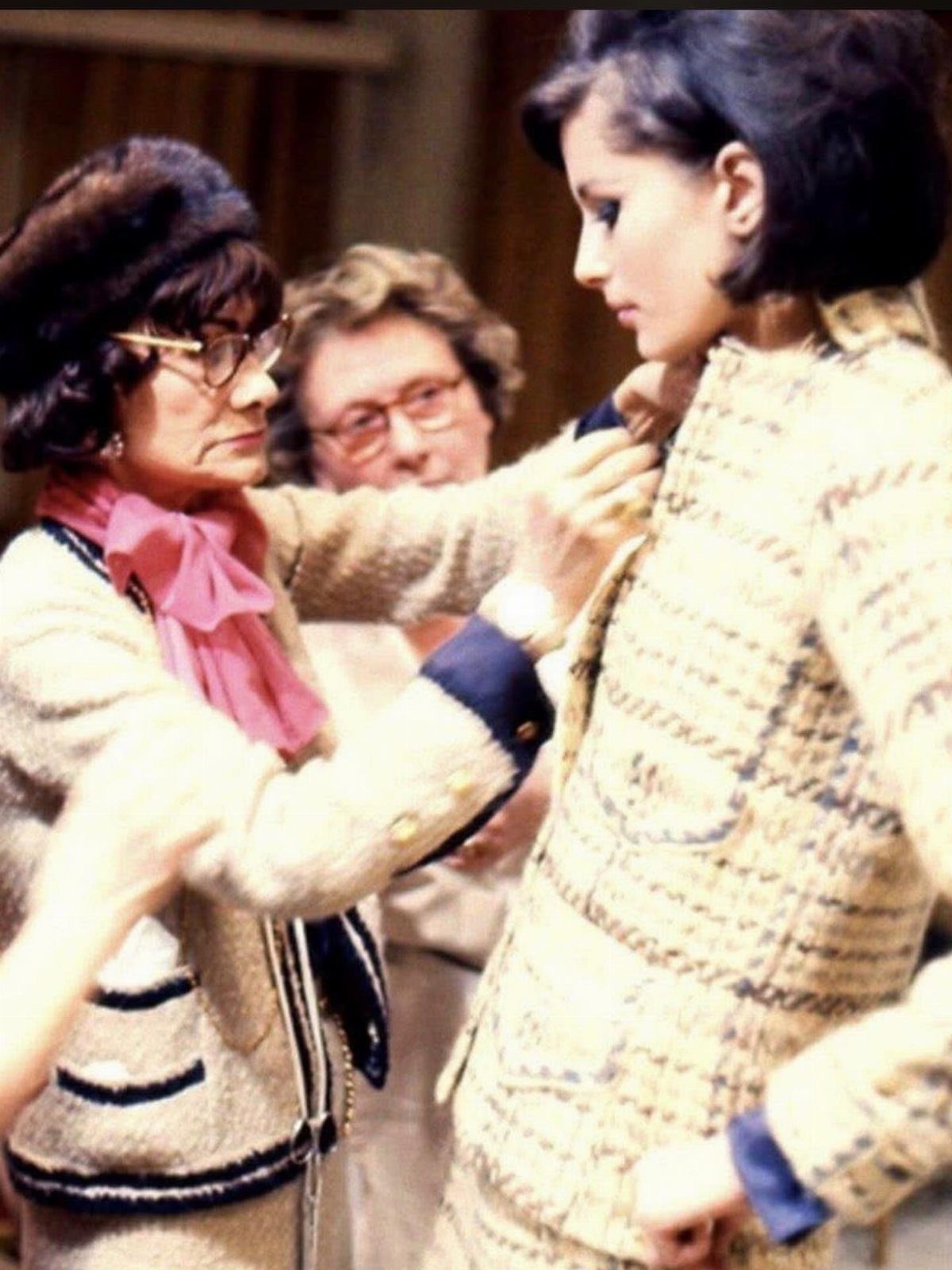
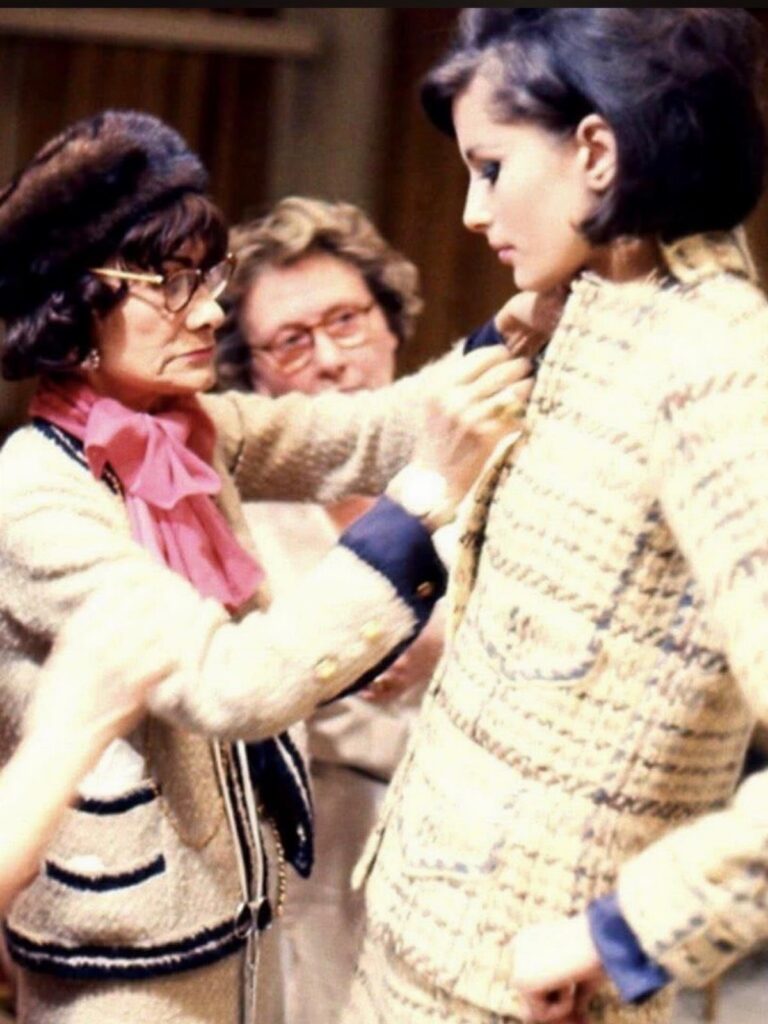
Coco Chanel built her name on clothes that moved with a woman rather than against her. A boxy cut that skims the waist without pinching, lined so it keeps shape without padding, that is the logic of the jacket.
For anyone building a wardrobe from real pieces rather than trends, this is the template: one jacket that works over a dress, with trousers, or alone as a top layer.
Her little black dress did the same job, replacing fussy evening changeouts with one clean silhouette. The Chanel suit came next, quilted bags and costume jewelry after that.
Each piece was designed to be worn, not displayed.
A Chanel-influenced suit pattern from the 1930s runs about the effort of three modern blouses and lasts longer.
The comfort-first rule still sorts good buys from bad ones: if you cannot sit down or reach up, the piece is costume, not clothing.
2. Giorgio Armani
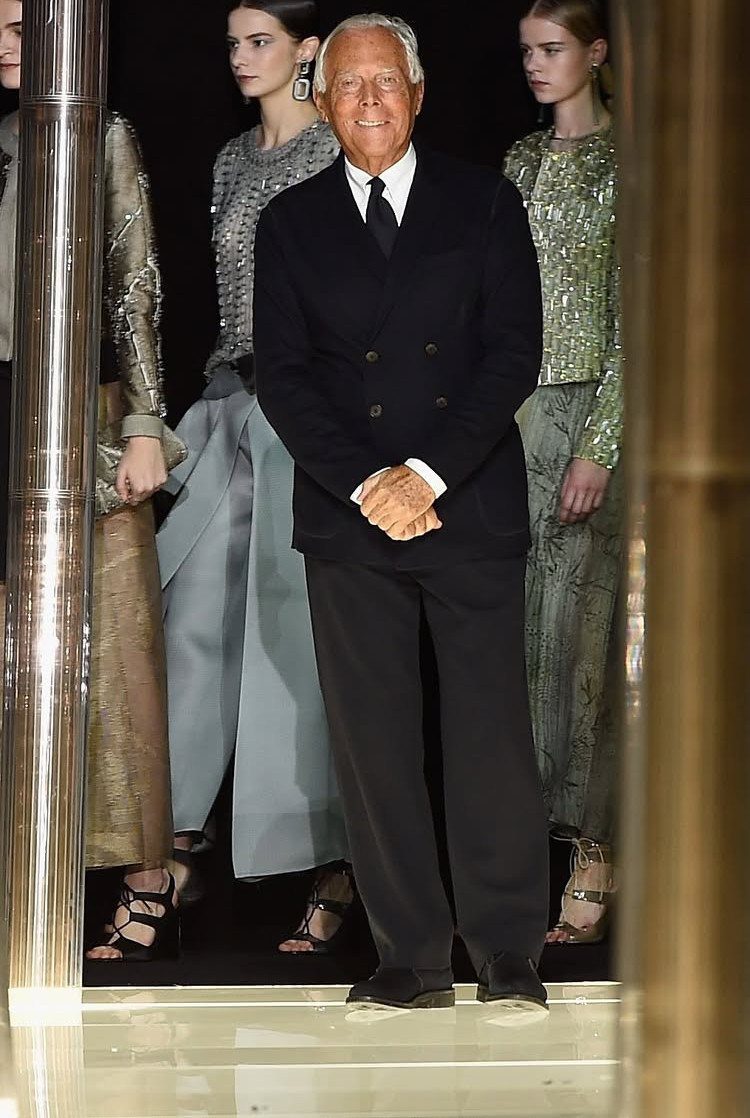
Giorgio Armani started in a Milan department store window after medical school and military service, which explains the practical bent.
His navy double-breasted suit above, worn by the man himself, shows the Armani formula: soft shoulders, relaxed construction, fabric that drapes rather than stands at attention.
Richard Gere’s wardrobe in American Gigolo (1980) put this on the map for US audiences. The film made tailored clothing feel approachable rather than ceremonial; men who had avoided suits started asking for that ease.
Armani’s 17th-century Milan palazzo shows ran the same way, season after season.
For women, the same principles translated into beaded evening wear that moved like day clothes. Sequined pieces keep that relaxed line even under stage lighting.
A vintage Armani-inspired men’s pattern costs less than one rental tuxedo wear. Look for unstructured shoulders.
Everything else follows.
3. Donatella Versace
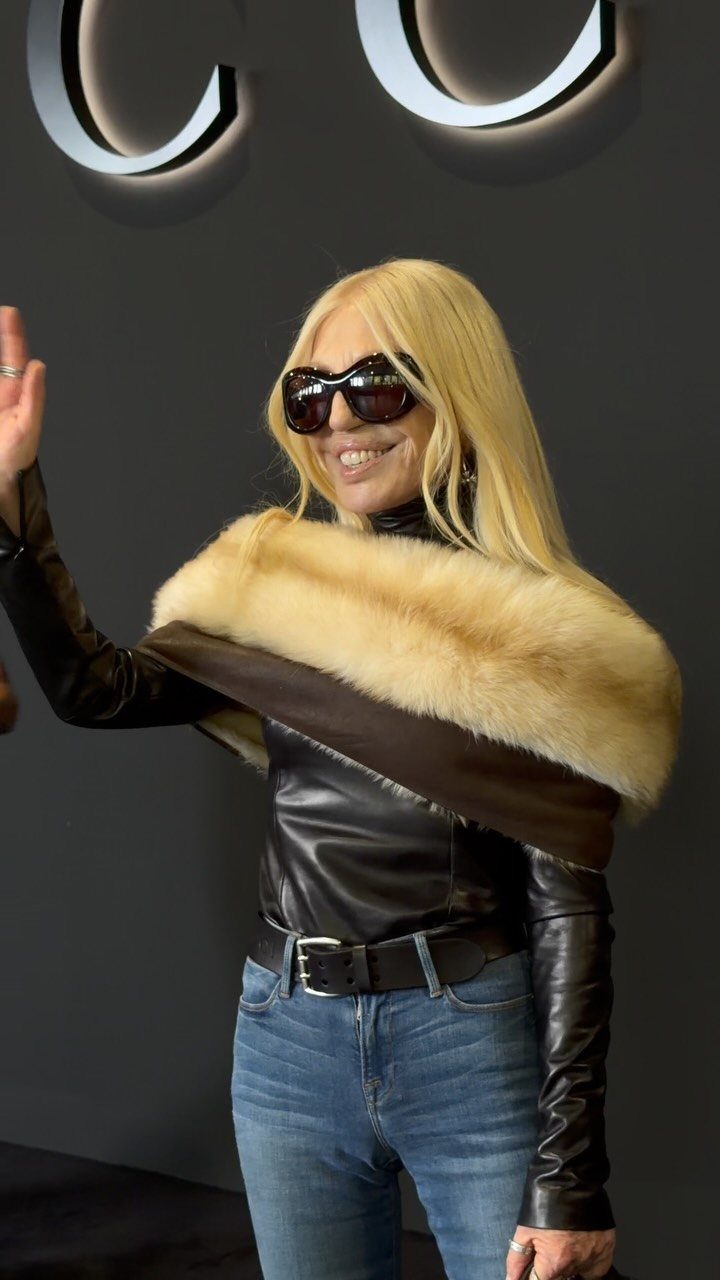
Donatella Versace studied literature and languages in Florence, planning to teach, which is not the usual path to a fashion house.
She helped her brother Gianni in Milan instead, became his critic and muse, and took over Versace after his death in 1997. Leather tops and fur stoles are signature Versace: unapologetic glamour, body-conscious cuts, hardware that reads from a distance.
Her celebrity collaborations kept the brand in camera range when runway coverage alone would not. The approach works for anyone dressing to be seen: bold color, strong silhouette, one statement piece rather than accumulated quiet items.
The cost runs high for originals, but the formula translates. A black leather top, good jeans, and one dramatic layer, fur or otherwise, gives the same proportion at different prices.
The sunglasses are not optional in this look; they finish the frame.
4. Oscar De La Renta
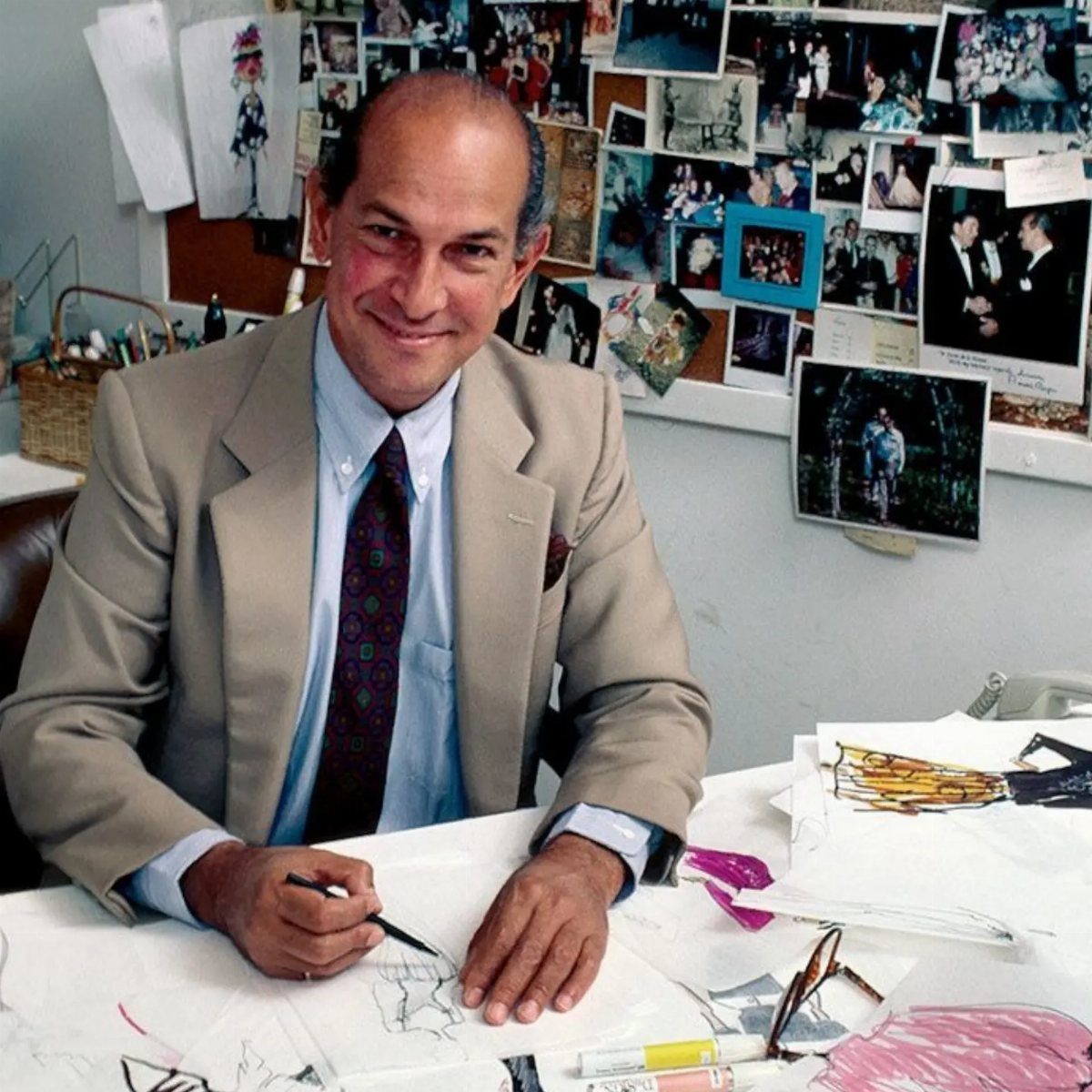
Oscar de la Renta sat at desks like this one for decades, sketching dresses that merged European couture construction with American wearability. The tan blazer and tie match his own daily uniform; his work for clients ran far more romantic.
His late-1960s Russian and gypsy-inspired collections first drew attention, all cosmopolitan sophistication without the stiffness that usually accompanied it. First ladies and red-carpet regulars stayed loyal because the dresses photographed well and allowed actual movement.
For a wedding guest or anyone dressing for an event where cameras run, his formula still holds: defined waist, full or structured skirt, fabric that catches light without relying on bareness.
A 1960s evening dress pattern in his spirit needs the patience of a few weekends and costs less than a mid-range department store alternative.
Upkeep runs high; these pieces demand pressing and often dry cleaning. Machine-washable substitutes exist, but they read as different garments entirely.
5. Vivienne Westwood
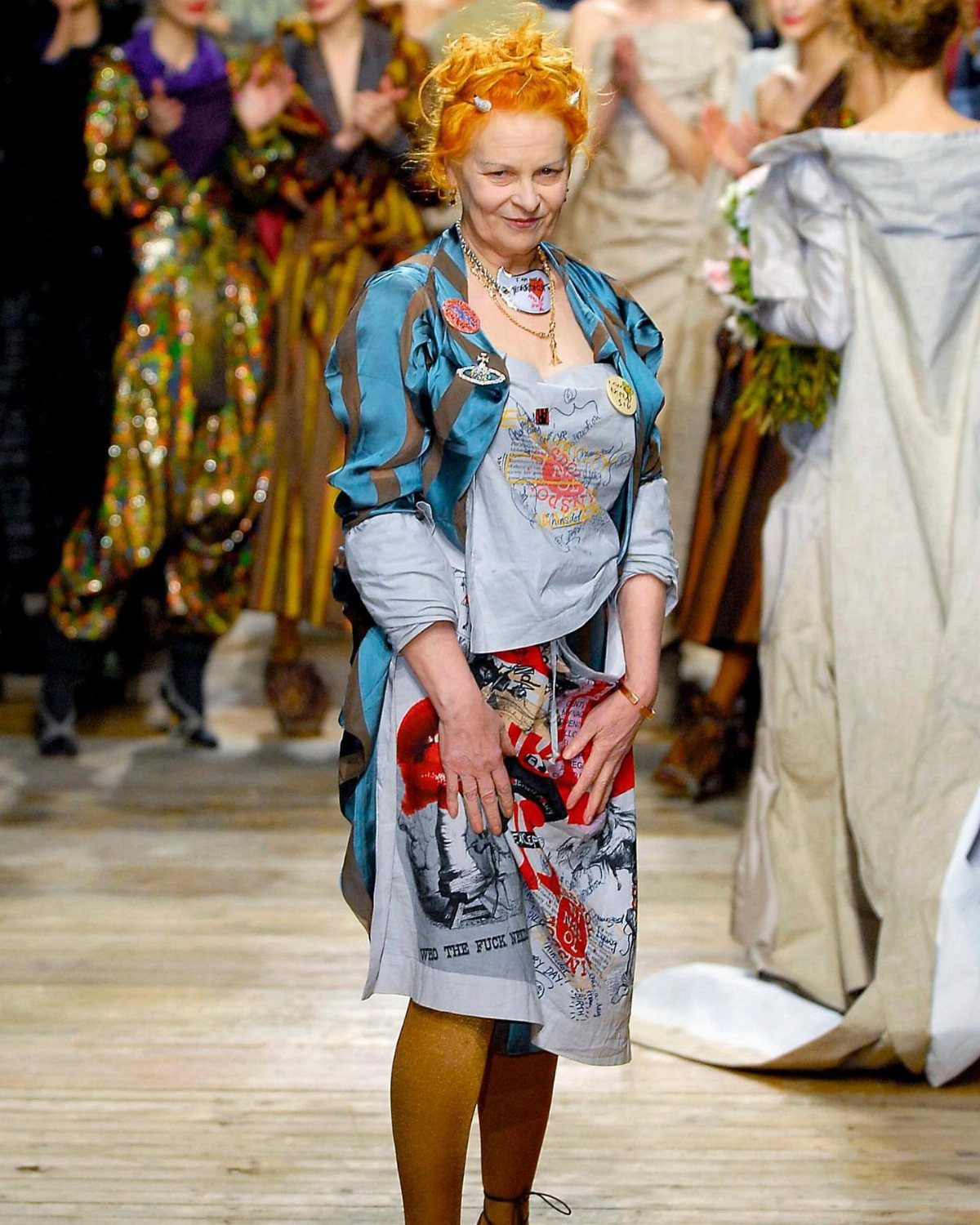
Vivienne Westwood’s orange hair and layered prints announce what her clothes deliver: deliberate clash worn with confidence. She built the visual vocabulary of punk, then kept evolving while younger designers recycled her early moves.
The "WHO THE FUCK" text behind her is typical staging, not accident. Her runway presentations treated fashion as provocation rather than decoration, and her later environmental advocacy kept that confrontational stance.
She was among the first major designers to publicly attack the industry’s ecological damage.
For readers drawn to this look, the entry point is lower than the runway suggests.
A Westwood-inspired outfit needs one piece with historical reference, worn with modern basics: a corset top with jeans, a tartan skirt with a plain sweater, a single dramatic jacket over neutral trousers.
The jewelry stacks in multiples, none of it precious.
This look asks for commitment. Half-measures read as costume; full commitment reads as style.
6. Tom Ford
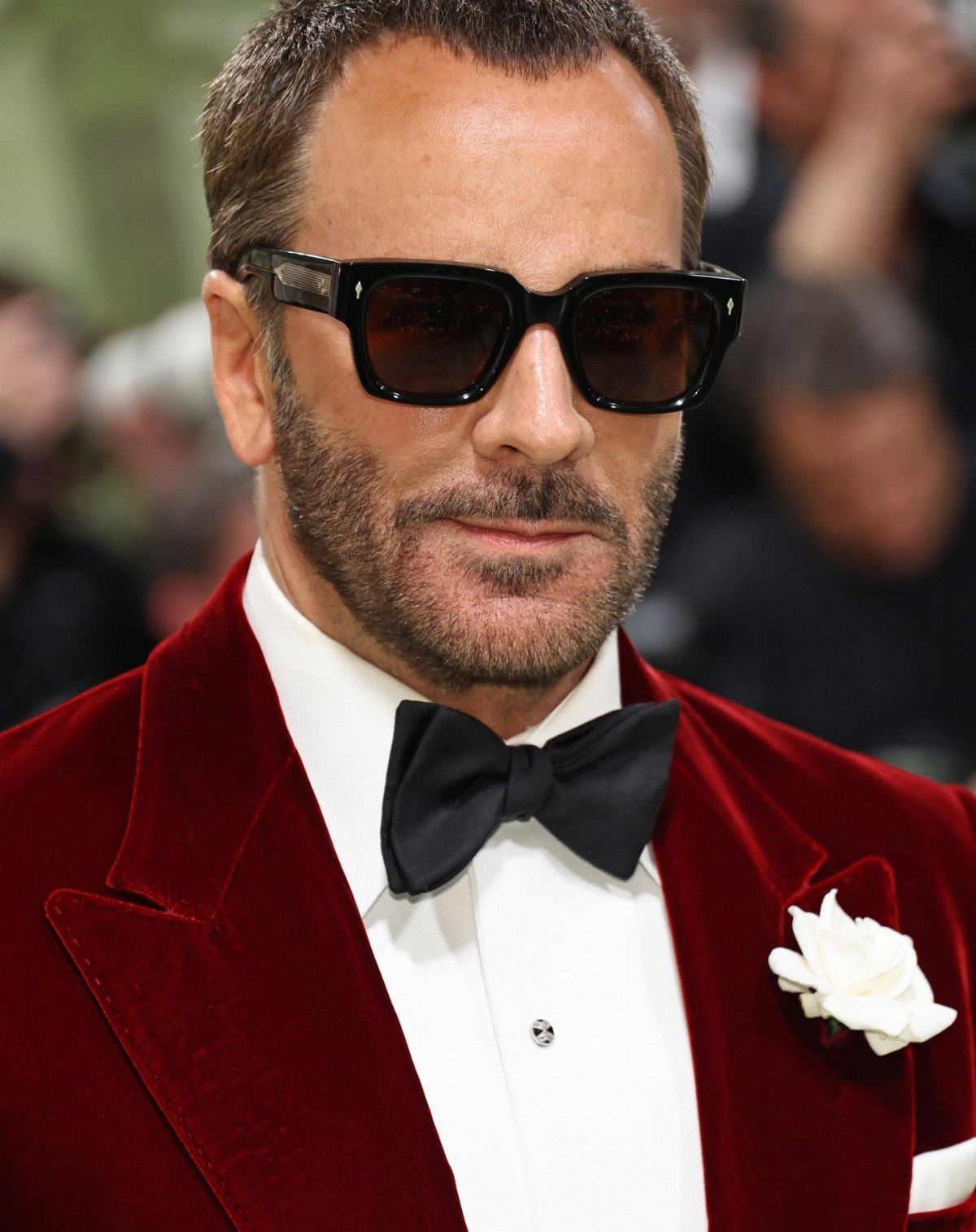
Tom Ford’s red velvet tuxedo jacket above, pinned with a white flower, is the man in his own product: precise, luxurious, slightly theatrical.
He pulled Gucci from near-collapse into a powerhouse by applying this same discipline, then built his own house on the same principles.
His Gucci years established a template for brand revival that others still attempt: narrow the focus, raise the prices, control every surface the customer sees.
The personal brand followed the same logic, with eyewear and fragrance doing volume while clothing maintained the image.
For a reader investing in one formal piece, Ford’s cut is worth studying even at a distance. The jacket sits close through the torso, trousers run slim and slightly short, accessories are few and deliberate.
The velvet here is not everyday wearable, but the proportion, the narrow lapel, the controlled color palette, all transfer to wool or cotton versions.
The investment is serious; his ready-to-wear starts above most department store ceilings. The look itself, though, is a matter of fit and restraint rather than label.
Impact on Fashion
Women’s Wear Daily once asked working designers who mattered most across more than a century of fashion, and the same three names rose to the top then as they do in most conversations now: Coco Chanel, Yves Saint Laurent, and Christian Dior.
Coco Chanel, Yves Saint Laurent, and Christian Dior took the top three spots, in that order. The same three had won when WWD ran the question for its 90th anniversary.
The consistency is worth noting: working professionals, not historians, kept the same names across decades of change.
Chanel’s jacket logic, Armani’s soft construction, Ford’s controlled revival formula: each became a template others copied. That is the test of influence.
A designer who shapes only their own house leaves a archive; one who shapes how rivals work leaves a legacy.
Chanel and Armani carry the most practical weight for someone building a wardrobe now. Their solutions to real problems, movement and comfort, still sort good pieces from bad ones.
WWD had asked a similar question when it marked its 90th anniversary. And now, as then, the three who stood out the most were the same: Coco Chanel, Yves Saint Laurent and Christian Dior, in that order.
Cultural Significance
Fashion as expression is an old claim; what changed was who got to do the expressing. Androgynous designs followed, rising above gender norms rather than confirming them.
The power suit, the polo shirt, the little black dress: each carried a message about who wore it. The career-driven woman, the sports enthusiast, the woman who wants attention on her terms.
The clothing was never only clothing.
Vivienne Westwood’s environmental advocacy kept the confrontational stance her punk years established.
What values a piece expresses matters as much as how it looks. Whether it fits the life you are building matters as much as whether it fits your body.
Innovative Techniques
Coco Chanel’s own rule was that difference is the price of being irreplaceable. The designers who lasted found techniques that made them different in ways others could not easily copy.
Chanel’s boxy jacket with its skimming waist, lined to keep shape without padding: that construction solved a problem no one else had solved.
Others attempt the same formula; the success rate is low because the execution is harder than the strategy sounds.
The actionable point is to look for construction you cannot find elsewhere. A unique material, a shoulder that moves, a waist that sits right without boning.
That irreplaceability justifies the higher price and the longer search.
Celebrity Influence
Celebrity placement worked before social media made it constant.
The formula for dressing to be seen is specific. One dramatic layer, clean lines that do not distort under light, fabric that catches attention without relying on bareness.
Frequently Asked Questions
Who are the top 10 designers in the world?
Coco Chanel, Giorgio Armani, Donatella Versace, Oscar de la Renta, Vivienne Westwood, and Tom Ford all belong on that list for anyone building a wardrobe from real pieces.
Who is the most famous clothing designer?
Coco Chanel is usually named first. Her boxy jacket that skims without pinching, her little black dress that replaced fussy evening changeouts, and her quilted bags created the template for clothing designed to be worn rather than displayed.