The 6 ideas below run from the street’s origins to who actually wore the clothes, so the deciding factor is what you want to understand: the business, the designers, or the kids who made it matter.
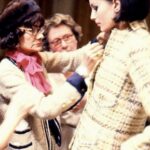
Mary Quant’s influence shows up most clearly in the miniskirt cuts that reached Carnaby Street boutiques, where a true-waist version that stayed put without riding up became the piece that sold the whole look.
1. Carnaby Street’s Significance
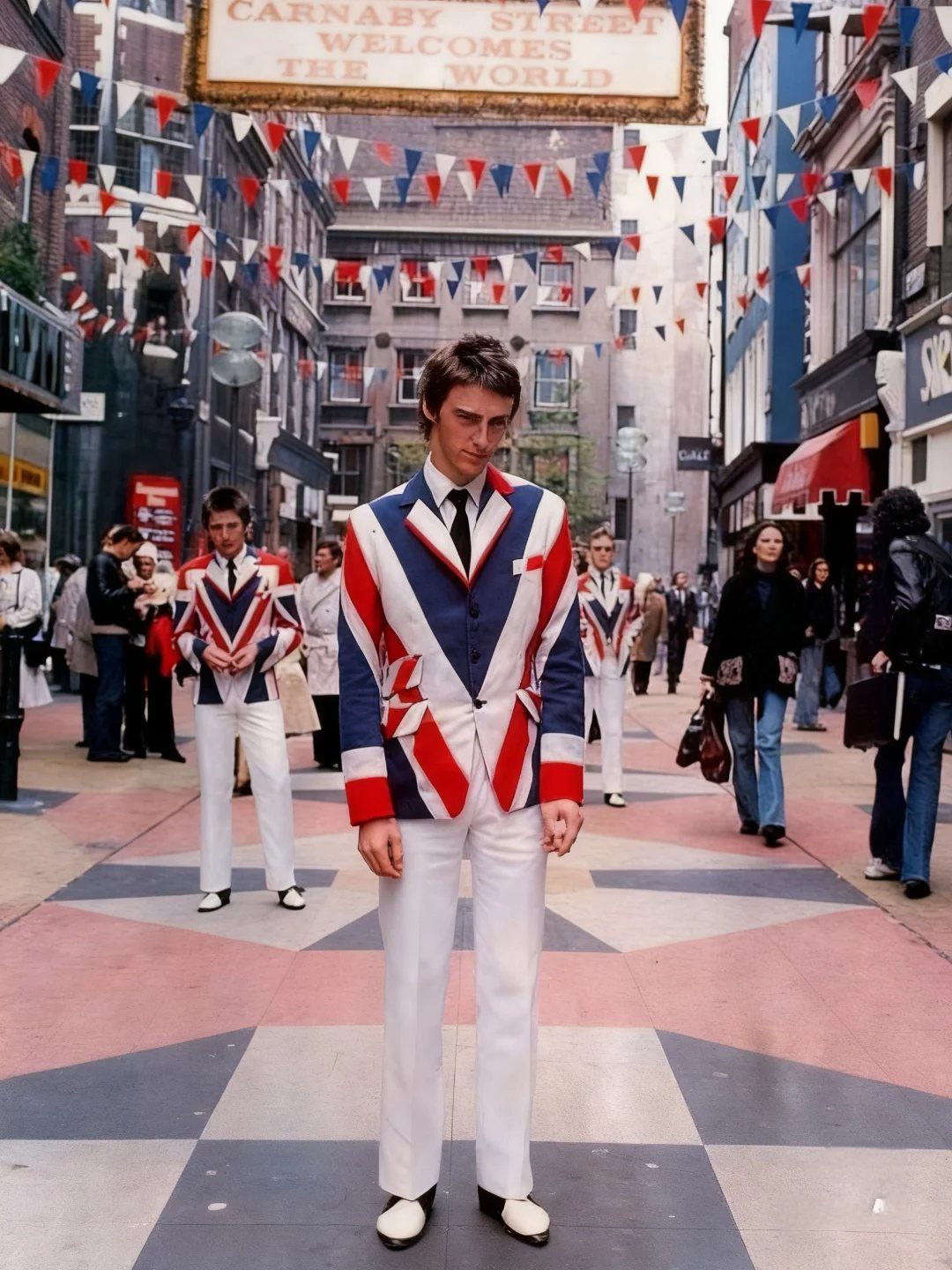
Carnaby Street turned a quiet London corner into the address that defined an era. The Union Jack blazers and bunting that filled the photo were not costume; they were how a generation announced itself to the world.
For anyone tracing how fashion moves from fringe to mainstream, this is the case study: independent shops, young buyers with disposable income, and a press hungry for the next thing.
The shift happened fast. The street turned over fast.
One season it sold traditional menswear; soon after it was the center of Swinging London. What made it stick was the mix, not the cloth alone.
Musicians lived nearby, artists painted the windows, and the buyers came to watch each other as much as to shop.
If you are building a look now from 1960s pieces, start here for attitude. The cut of a jacket matters less than the confidence behind it.
2. Fashion Boutiques
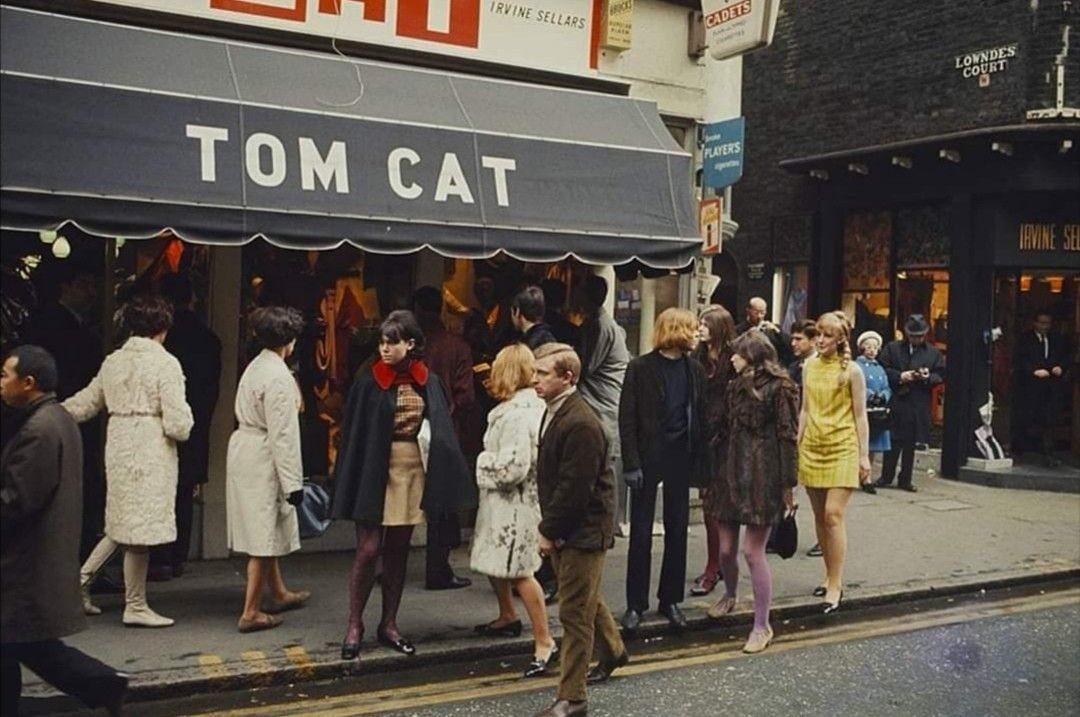
The boutiques on Carnaby Street were small rooms with big opinions. Tom Cat and Irvine Sellars were not department stores with buying departments; they were owners standing behind their own counters, deciding what the season would be.
For a reader assembling a 1960s wardrobe today, this changes where you hunt. The originals came from shops that turned over stock weekly, so provenance is hard.
Better to look for the cut and the color energy than for a label.
Minidresses with opaque tights, sharp coats in unexpected colors, boots that hit at the calf: these were the uniform because the boutiques made them easy to try and easy to buy.
The risk is costume. One full period look reads as party dress; the move is to take the silhouette or the color and wear it with something quiet.
3. Mary Quant’s Influence
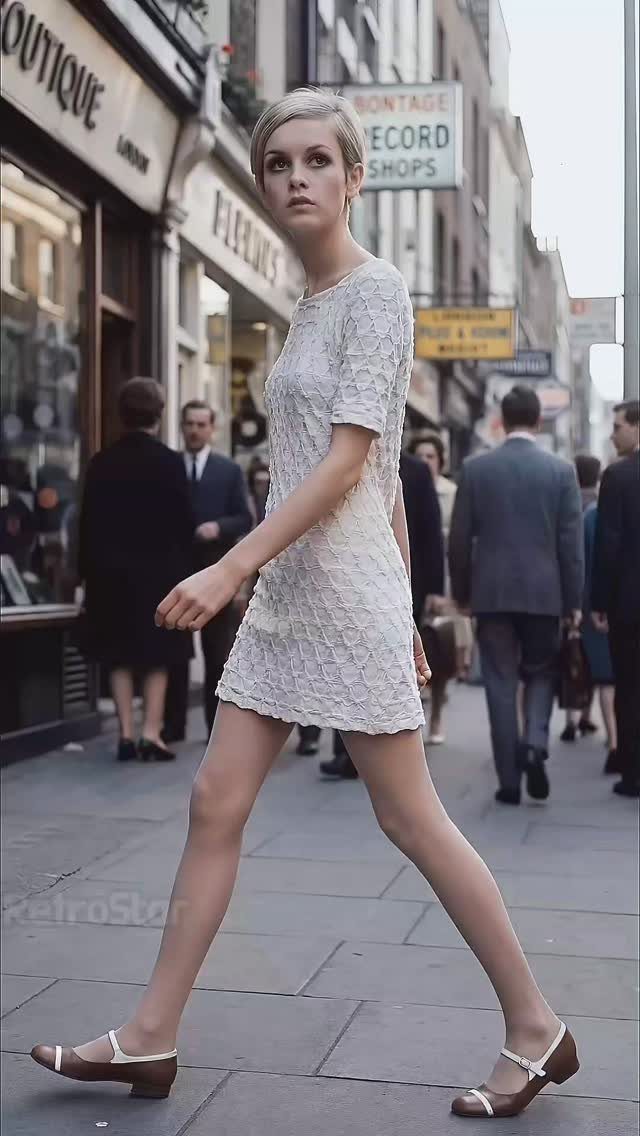
Mary Quant did not invent the miniskirt, but she named the moment when hemlines rose above the knee and stayed there.
The white lace dress Twiggy wore in her early street shoots shows the balance Quant struck: short enough to shock, cut carefully enough to wear.
Quant ran her own boutique, Bazaar, on the King’s Road, not Carnaby Street itself. The connection is that she trained the eye of the buyer who then walked both streets.
Her designs used simple shapes in fabrics that moved, which made them affordable and made them look young.
For sizing, check the waist placement. Quant’s skirts sat at the true waist, not the hip, which is what let the hem rise without the whole garment riding up.
A reproduction that misses this will feel wrong even if the length is right.
4. Youth Culture and Rebellion
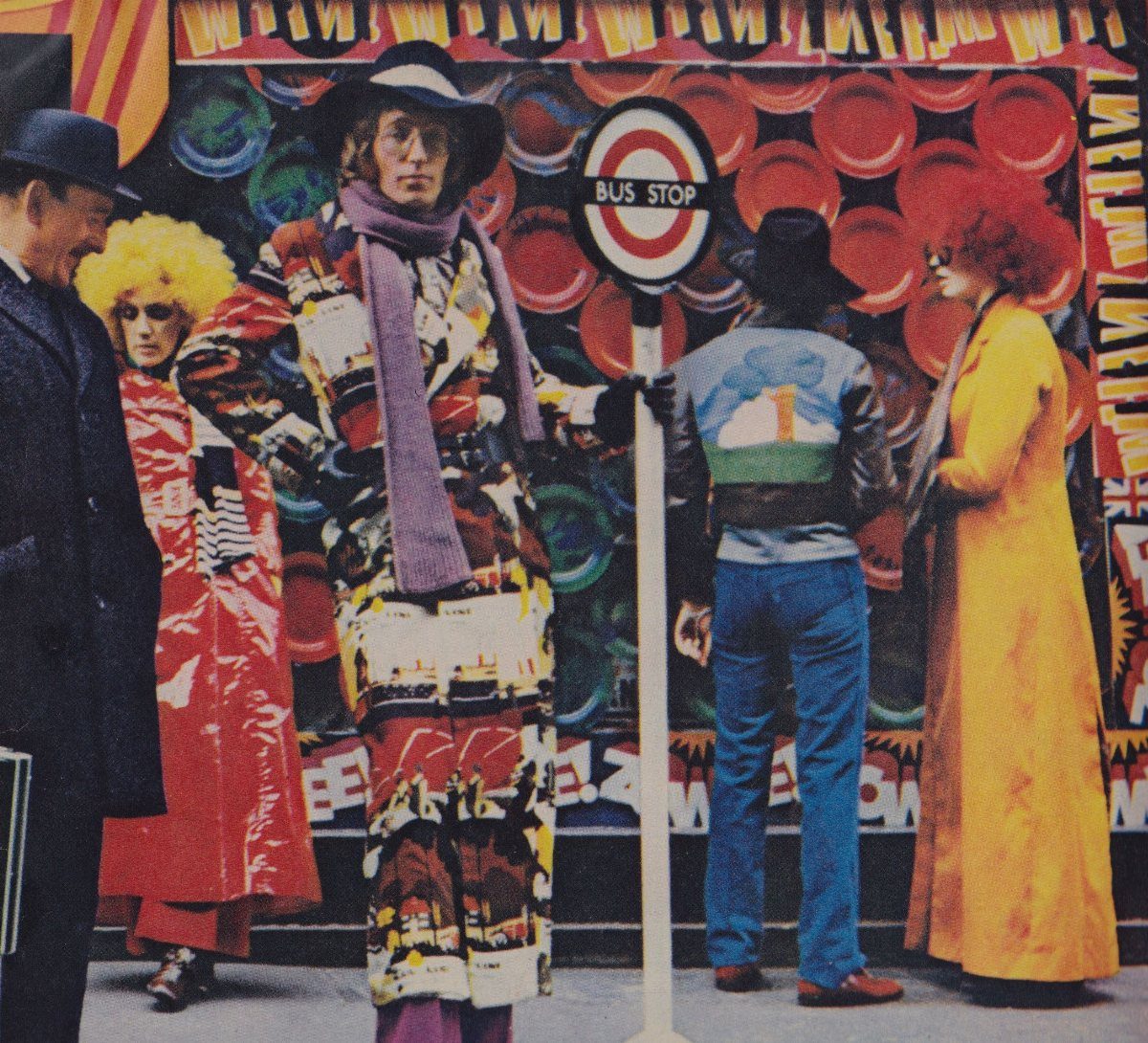
The younger generation had money from full employment and no mortgage yet. They spent it on being seen.
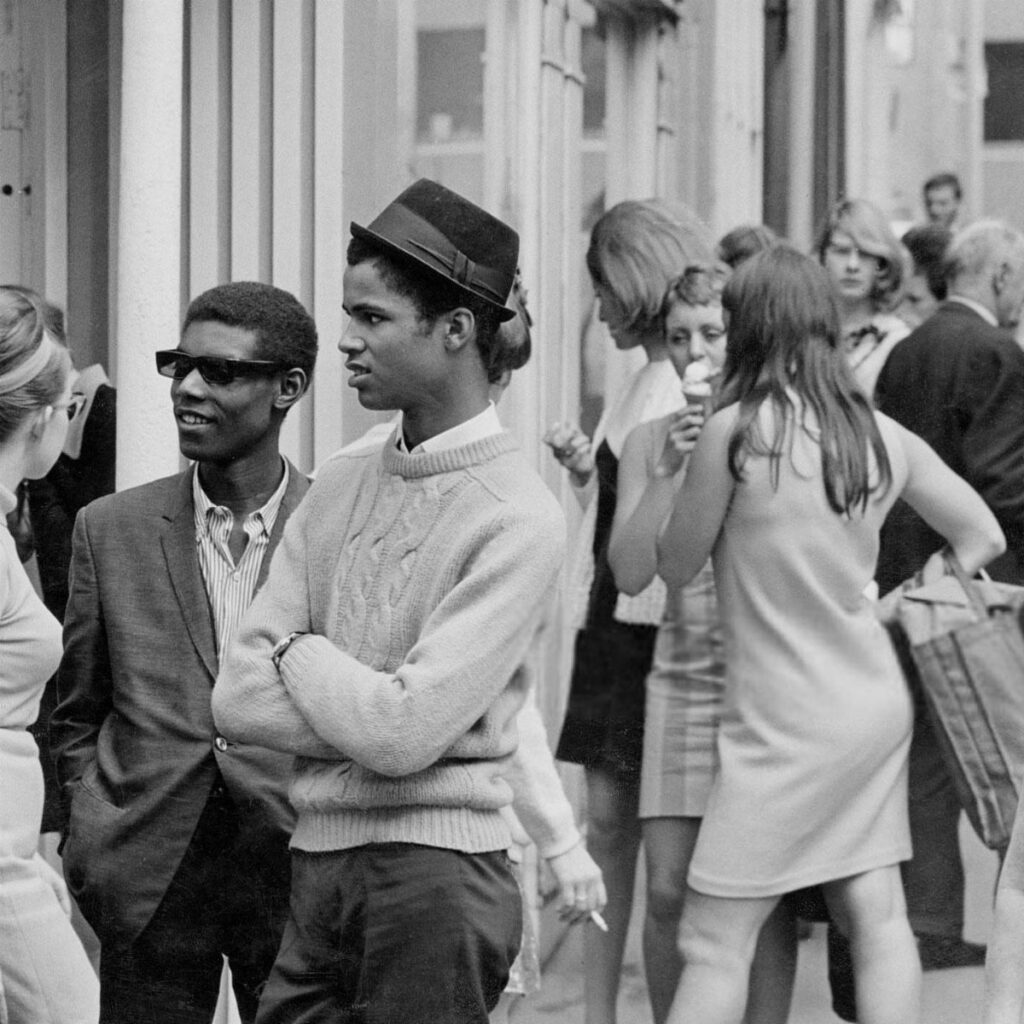
The psychedelic backdrop behind the bus stop group was sometimes literal, sometimes just the energy of the street itself.
To use this now, pick one loud element and ground it. A patterned coat over black trousers.
A bright boot with a neutral dress. The 1960s look went full volume; a modern wearer usually needs the contrast to keep control.
5. Unisex Fashion
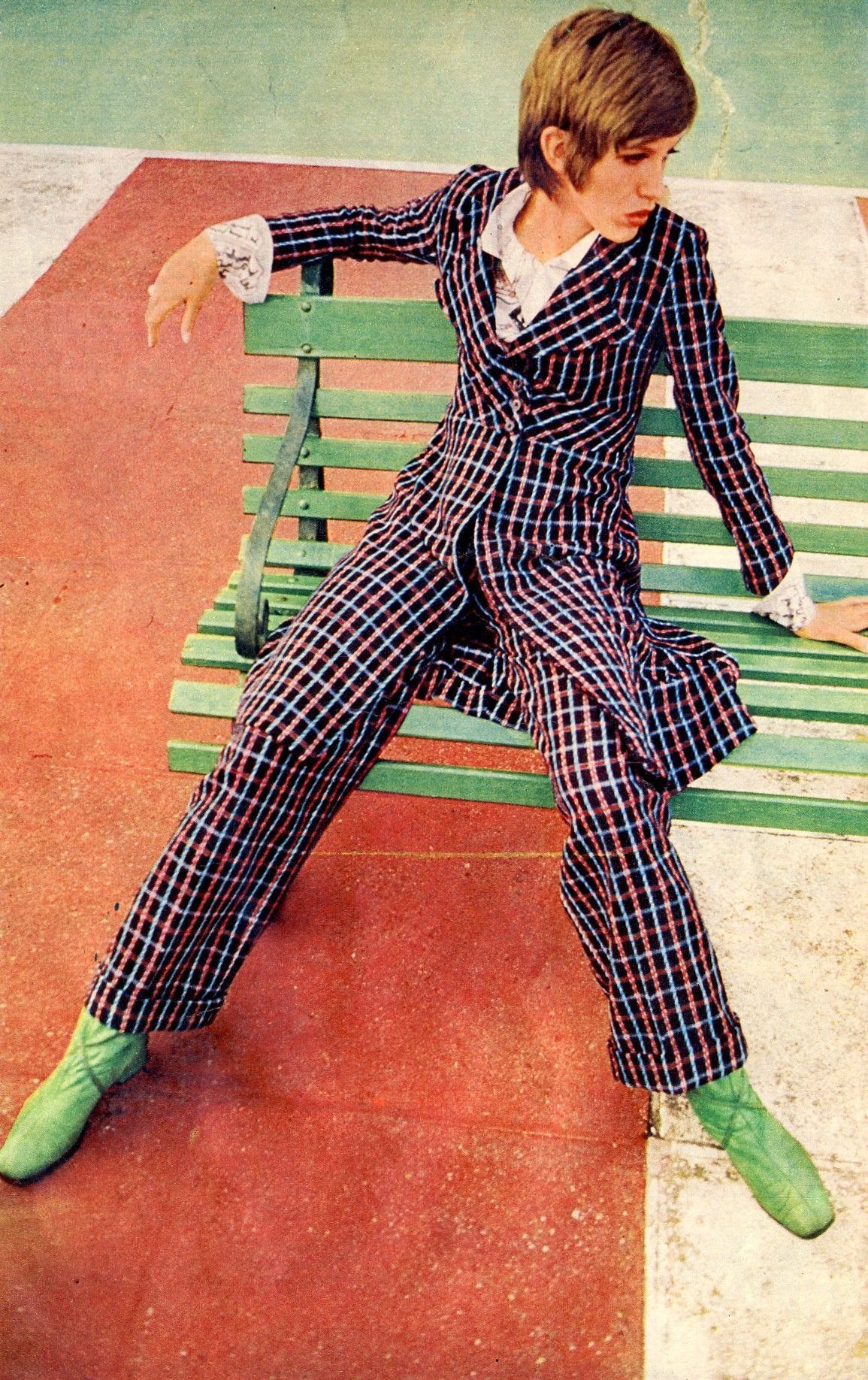
A plaid suit worn on the street was not labeled men’s or women’s. That was the point.
Carnaby Street boutiques sold the same jackets and trousers across the floor, and customers chose by fit and taste, not by department.
The cut is what to watch. The jacket is longline, hitting past the hip, with trousers that match in pattern but sit at the natural waist.
The green boots add the color kick that the street favored. Lace cuffs peek out, a detail that softens the tailoring without deciding the gender.
For a reader building this today, the sizing challenge is real. Vintage unisex runs smaller than modern cuts, and the shoulders are narrower.
Try the jacket on or measure carefully; the look depends on the line of the shoulder, not on oversize.
6. Iconic Figures
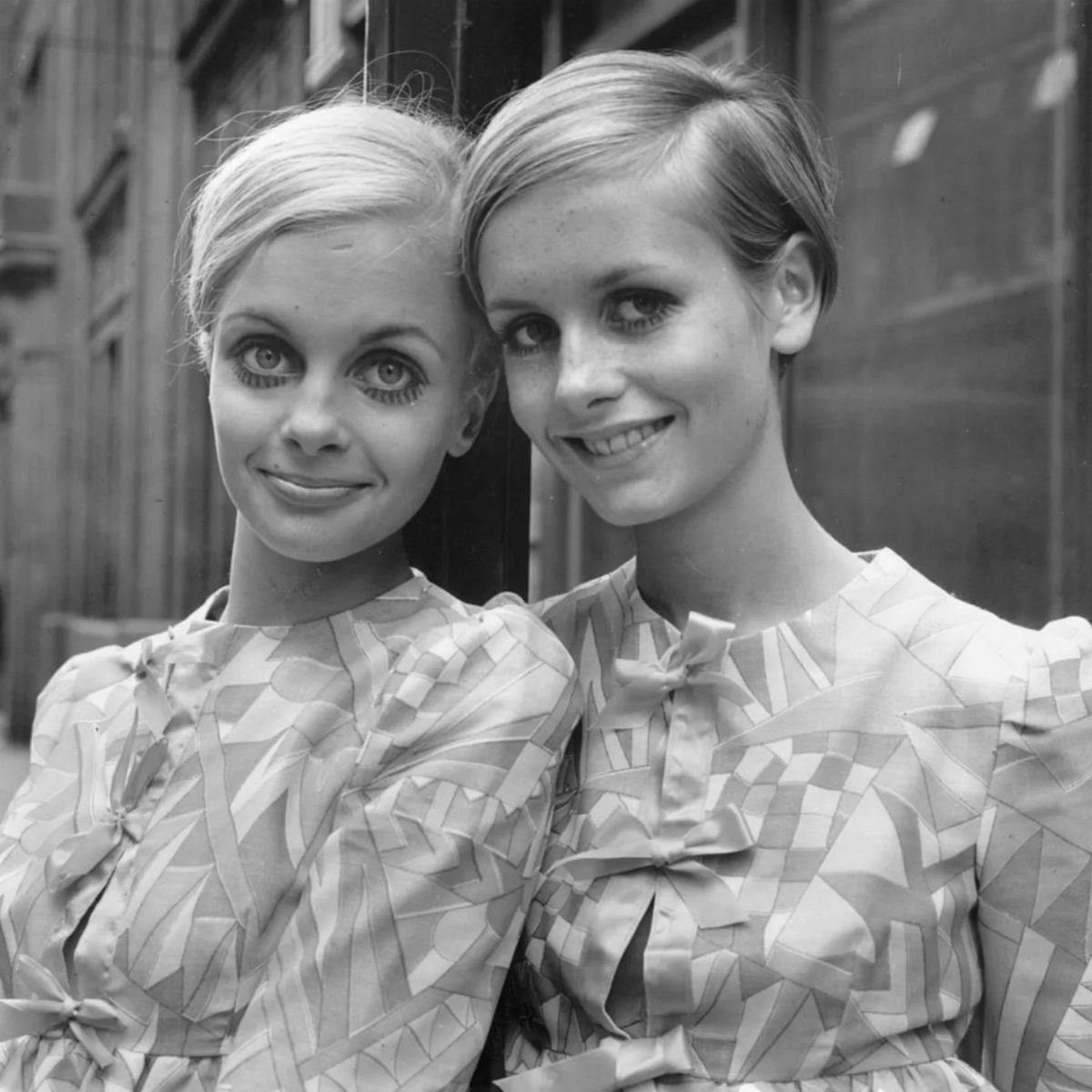
Twiggy’s face in the black-and-white portrait is the one that sold the decade. Heavy liner, short hair, boyish frame: she looked like no model who had come before, which meant every buyer could imagine becoming her.
For a reader with a similar slight frame, the original proportions will work without alteration. For broader shoulders or fuller hips, the shift dress shape needs attention at the waist or the length to avoid looking boxed in.
The eyeliner, though, works on every face. Two coats of mascara and a drawn line along the upper lid: that part takes no tailoring at all.
Legacy of Carnaby Street
Carnaby Street still runs between the same buildings, and the shops that line it still sell to a crowd that comes to be seen. The character is not preserved; it is lived in.
A visitor now finds the same narrow walking space and the same independence in what gets stocked, even if the cuts have changed.
The useful lesson for a reader building a 1960s look today is that the street never treated fashion as heritage. What sold in 1966 was what felt immediate then.
The same instinct applies now: a reproduction piece works when it carries that forward energy, not when it mourns a lost decade.
The bunting still goes up, but the buyer who gets the look right is the one shopping for now, not for costume.
Carnaby Street is less that 200 yards from end to end, and in 1960 was filled with independent fashion boutiques owned by designers and entrepreneurs.
Cultural Significance
Musicians and artists shared the same pavement as the buyers, and the clothing absorbed that contact.
A jacket bought on Carnaby Street carried the same air as the club two streets over; the look and the sound came from the same crowd.
The 1960s pieces that still read as alive for a reader are the ones that held some of that friction. A band poster printed on a dress.
A military coat cut to civilian length. The street did not separate art from clothes, and the best finds now blur the same lines.
Look for one piece that looks like it came from somewhere else first.
Fashion Accessibility
Before Carnaby Street, young buyers with money waited for couture to filter down. The boutiques cut that chain.
A minidress or a fitted jacket came direct from the maker to the rack, priced for a waitress or an office worker rather than a collector.
The fit was part of the access. These were not made-to-measure garments; they were cut to standard sizes and sold off the peg.
A reader shopping vintage now should expect the same: seams that run straight, waists that sit at a true measurement, nothing graded for ease. The original Carnaby Street buyer tried it on in the shop and walked out wearing it.
That speed was the point.
Frequently Asked Questions
Why was Carnaby Street popular in the 1960s?
A handful of independent shops, kids with cash to spend, and magazines chasing the next headline made an ordinary Soho corner the place that came to stand for the whole decade.
Bands rented flats above the storefronts, art students hand-painted the signs, and half the crowd showed up to see who else was there. The mix of fashion, music, and street energy made it the center of Swinging London.
What is Carnaby Street fashion?
Union Jack blazers, minidresses with opaque tights, sharp coats in unexpected colors, and boots that hit at the calf.
Each boutique was barely bigger than a living room, but the owners knew exactly what they thought; stock turned over in days, and buying a shirt meant buying into a stance.
A plaid suit might be worn by anyone, with jackets longline past the hip and trousers at the natural waist.
What was the fashion like in London during the 1960s?
Bold color energy, short hemlines that stayed above the knee, and a break from conservative styles.
Mary Quant gave the era its name with clean silhouettes in fabrics that swirled, waists placed where a waist actually sits so the skirt could climb without bunching.
The original look piled it all on at once; wearing it now means picking one piece with something to say and letting everything else stay home.