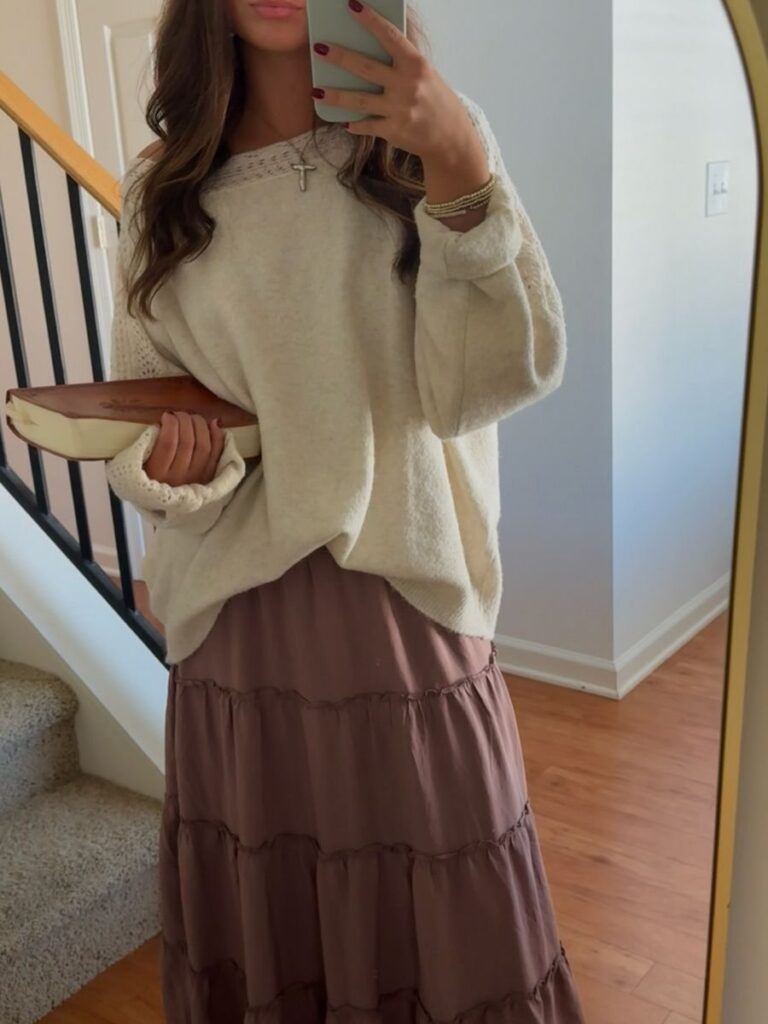
These 15 ideas run from pieces you already own to one careful purchase, and the deciding factor is who in your family hates fussy clothes the most.
A chambray shirt left open over a solid tee pulls from the closet you already have, and a rust pinafore layered over a floral blouse lets the dress person in the family feel like herself.
1. Layering
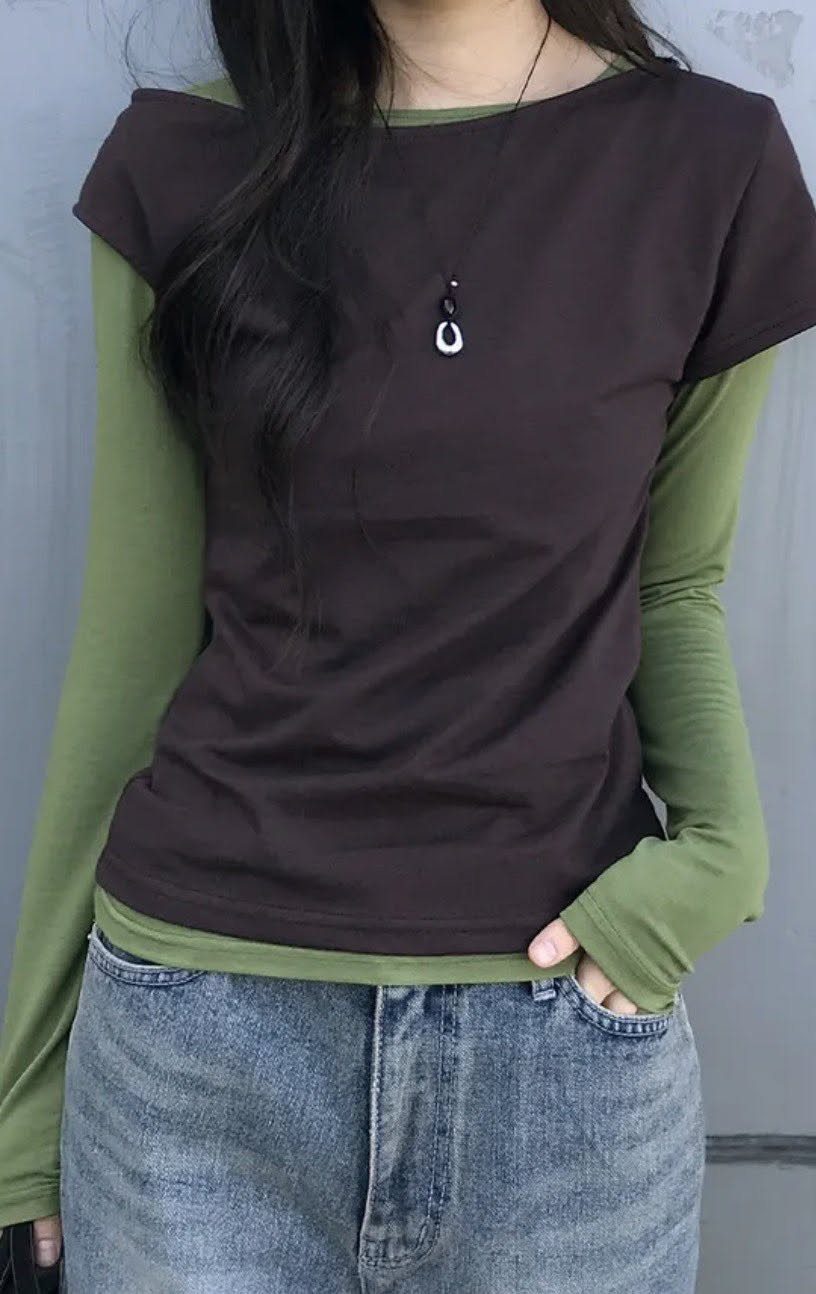
A short-sleeve tee over a long-sleeve base gives kids something to peel off if the afternoon warms up, and the color contrast reads as intentional rather than thrown-together. Cardigans, vests, or light jackets work the same way for adults.
Keep each layer slim enough that nothing bunches at the sleeves or waist. For family photos, I’d avoid anything quilted or puffy; it adds bulk the camera catches.
Check your own closet first: a chambray shirt open over a solid tee, or a thin crewneck under a button-down, covers the look without a purchase.
2. Muted Colors
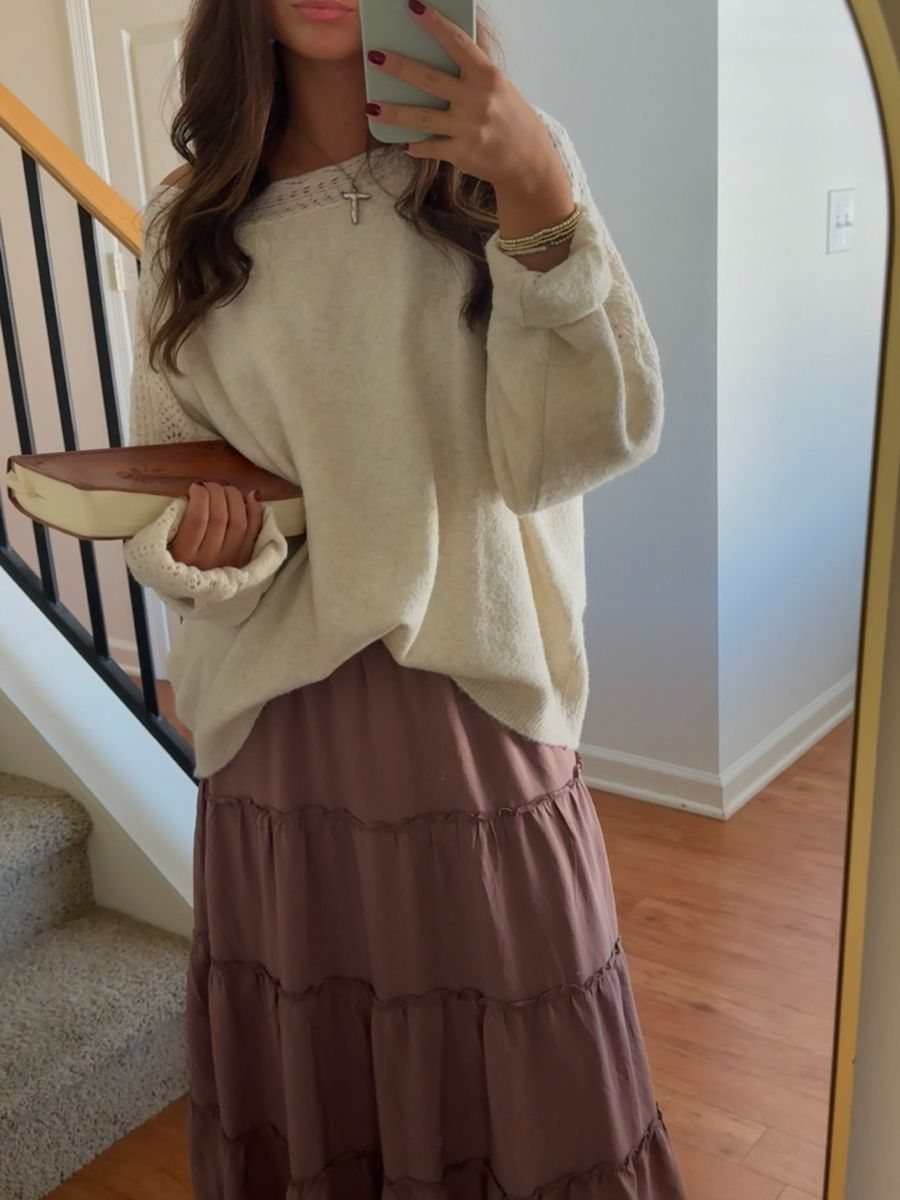
Dusty rose against cream reads softer than hot pink, and the camera thanks you for it. The same goes for mustard instead of sunflower yellow, or sage rather than Kelly green.
These muted tones keep the eye on faces, not fabric. For families on a budget, this is where shopping your closet pays off: that washed-out burgundy sweater or faded chambray shirt you already own is probably the right saturation.
If you’re buying new, hold the item up to a white wall in natural light. If it still looks loud, it will photograph louder.
3. Subtle Patterns
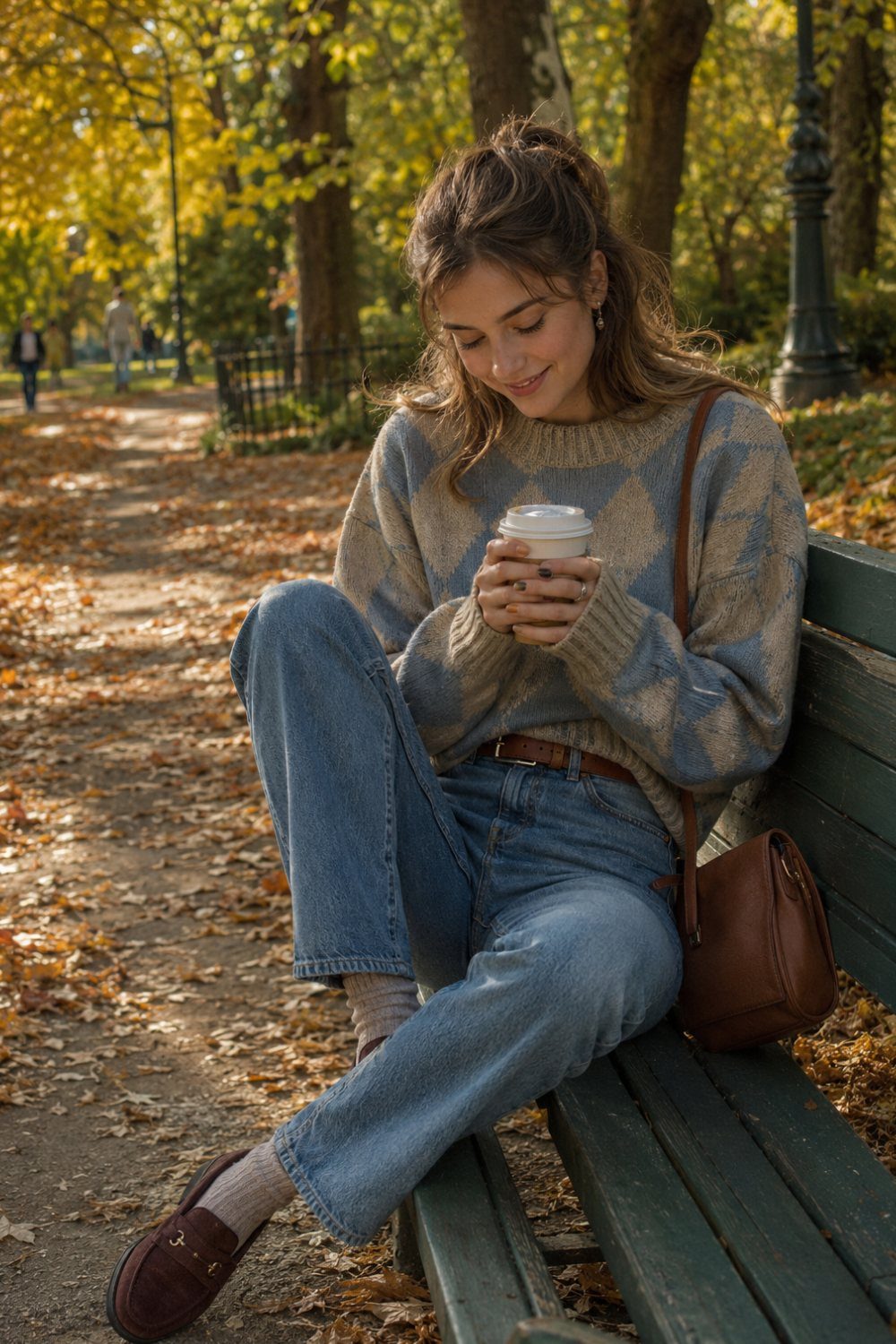
Small-scale argyle, a narrow stripe, or a scattered floral adds depth without fighting for attention. The rule is one patterned piece per outfit, maybe two in a whole group if the patterns share a color.
Large prints shrink or expand oddly on camera and can read as the subject instead of your kid. For boys who refuse anything fussy, a thin plaid shirt under a solid sweater hits the mark.
For girls, a small floral on a skirt paired with a textured solid top does the same. Scale matters more than motif: if the pattern looks busy from across the room, skip it.
4. Coordinate, Don’t Match
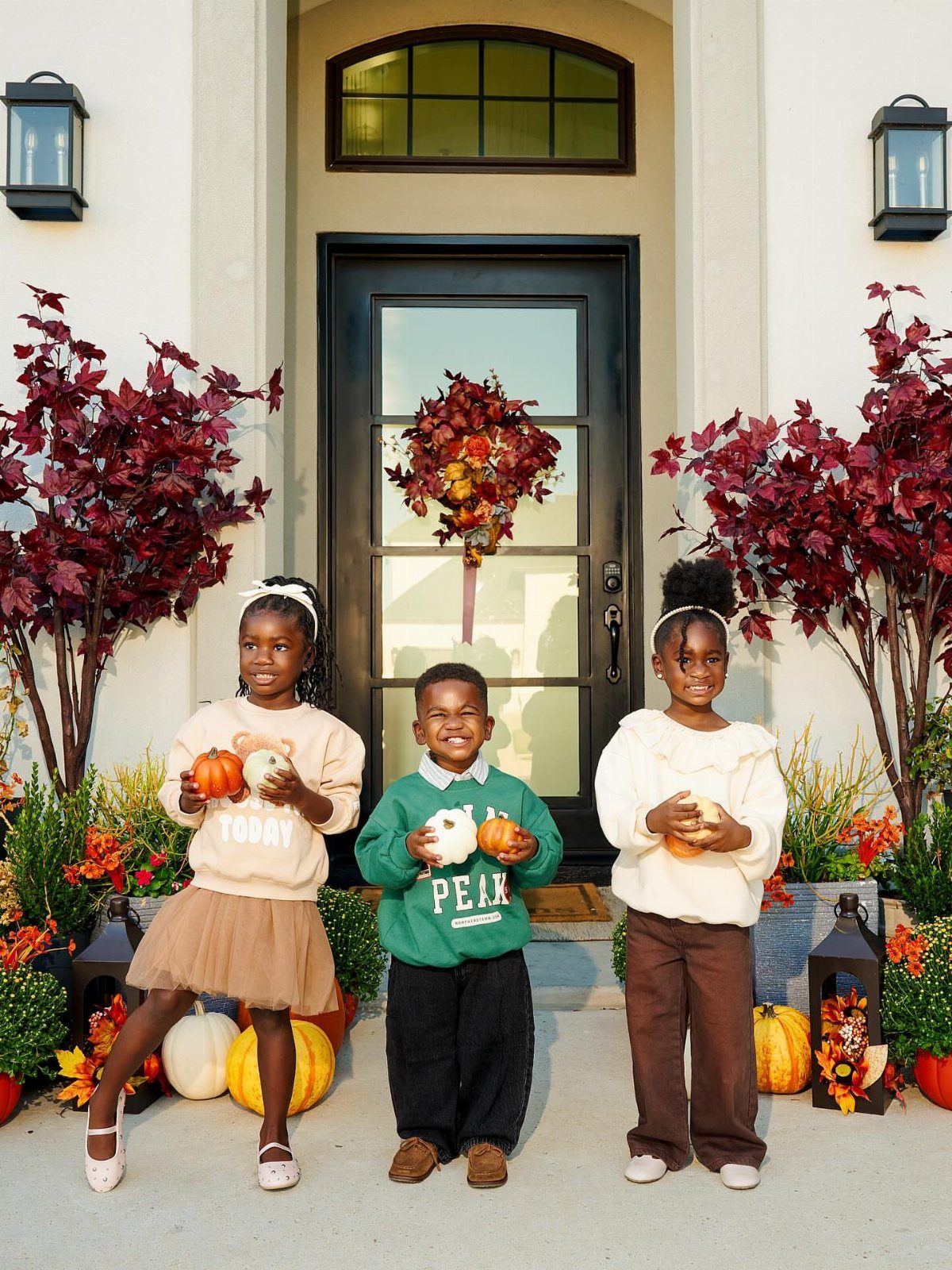
Three kids in cream, green, and brown tones, each in their own piece, looks planned; three kids in identical crewnecks looks like a team uniform.
Start with one person’s outfit, usually mom’s or the oldest child’s, then pull two or three colors from it for everyone else.
If your daughter’s in a rust dress, your son’s corduroys can pick that up while your own sweater stays neutral. Colors should talk to each other, not echo the same note.
5. Fall Color Themes
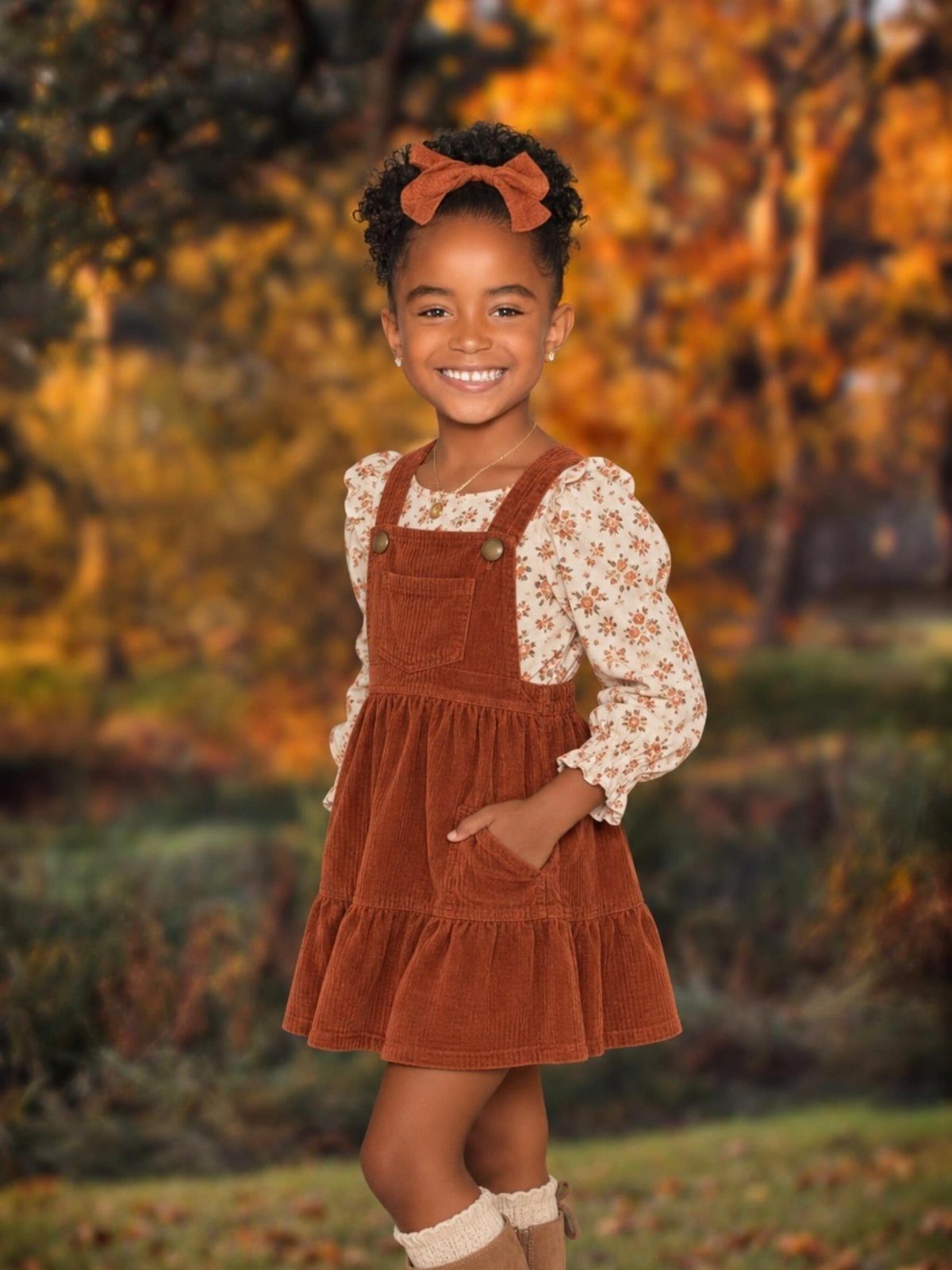
Rust corduroy reads as fall without shouting the season. Mustard, burnt orange, maroon, and olive green all read fall in photos, especially when the background is already giving you gold and red.
I’d keep one person in the deepest tone and let others step lighter; a whole family in burgundy disappears into a maple grove. Corduroy, wool, or a matte knit carries these colors better than something shiny.
For a girl who loves dress-up, a pinafore in rust over a floral blouse gives her the princess moment while you get the seasonal palette.
6. Comfortable Clothing
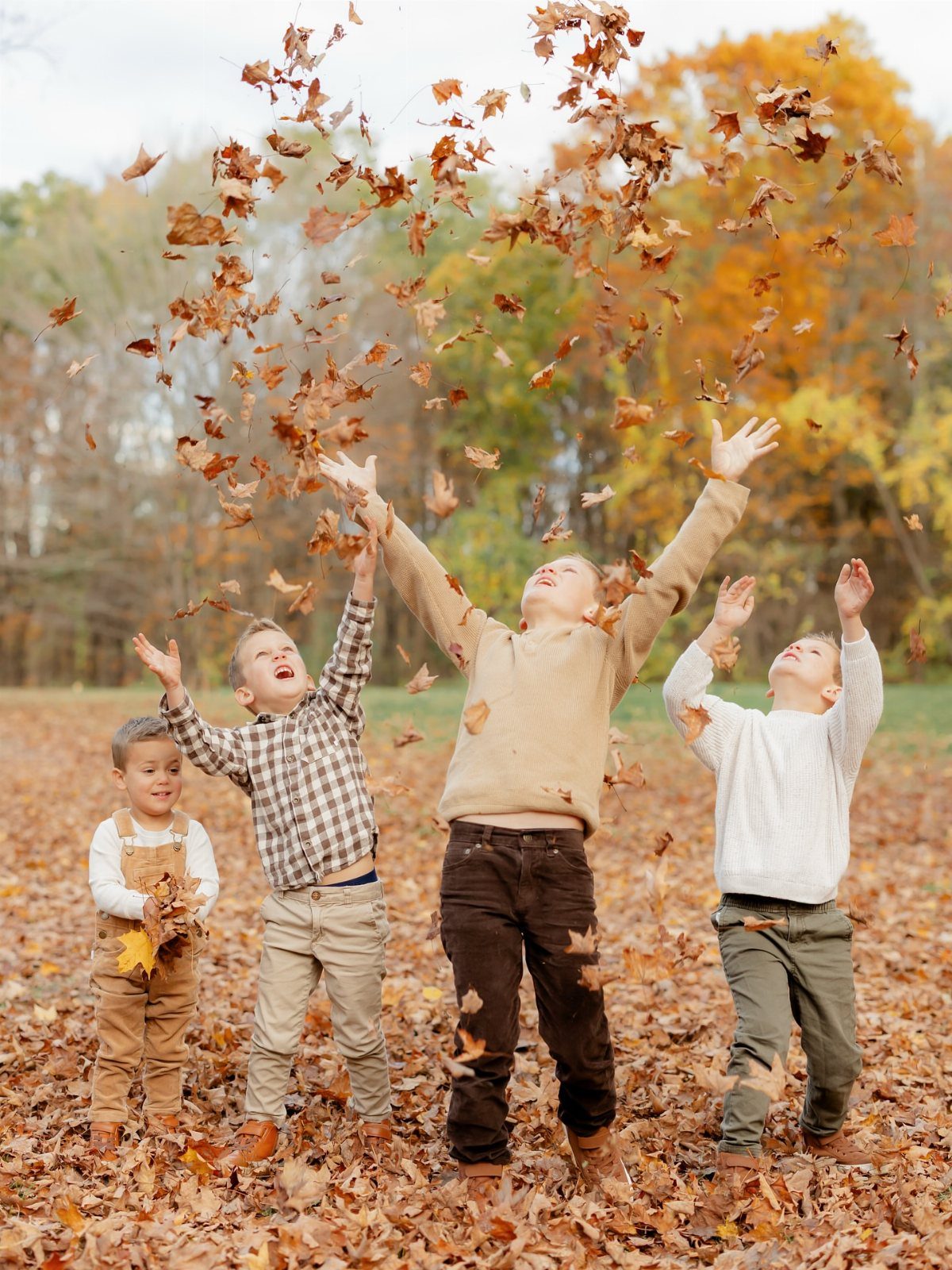
Sweaters that pass the leaf-throwing test keep kids from tugging at collars mid-shoot. Fitted layers move better than oversized ones; a slim cut lets a child run and climb without fabric catching or bunching.
Natural fibers breathe during the warm afternoon and hold heat when the sun drops. For boys especially, trousers with a bit of stretch beat stiff denim.
Check the waistband yourself: if it leaves a mark sitting down, it’ll show in photos and distract them the whole session. Comfortable kids smile on cue; uncomfortable ones don’t.
7. Corduroy Jumper or Overalls
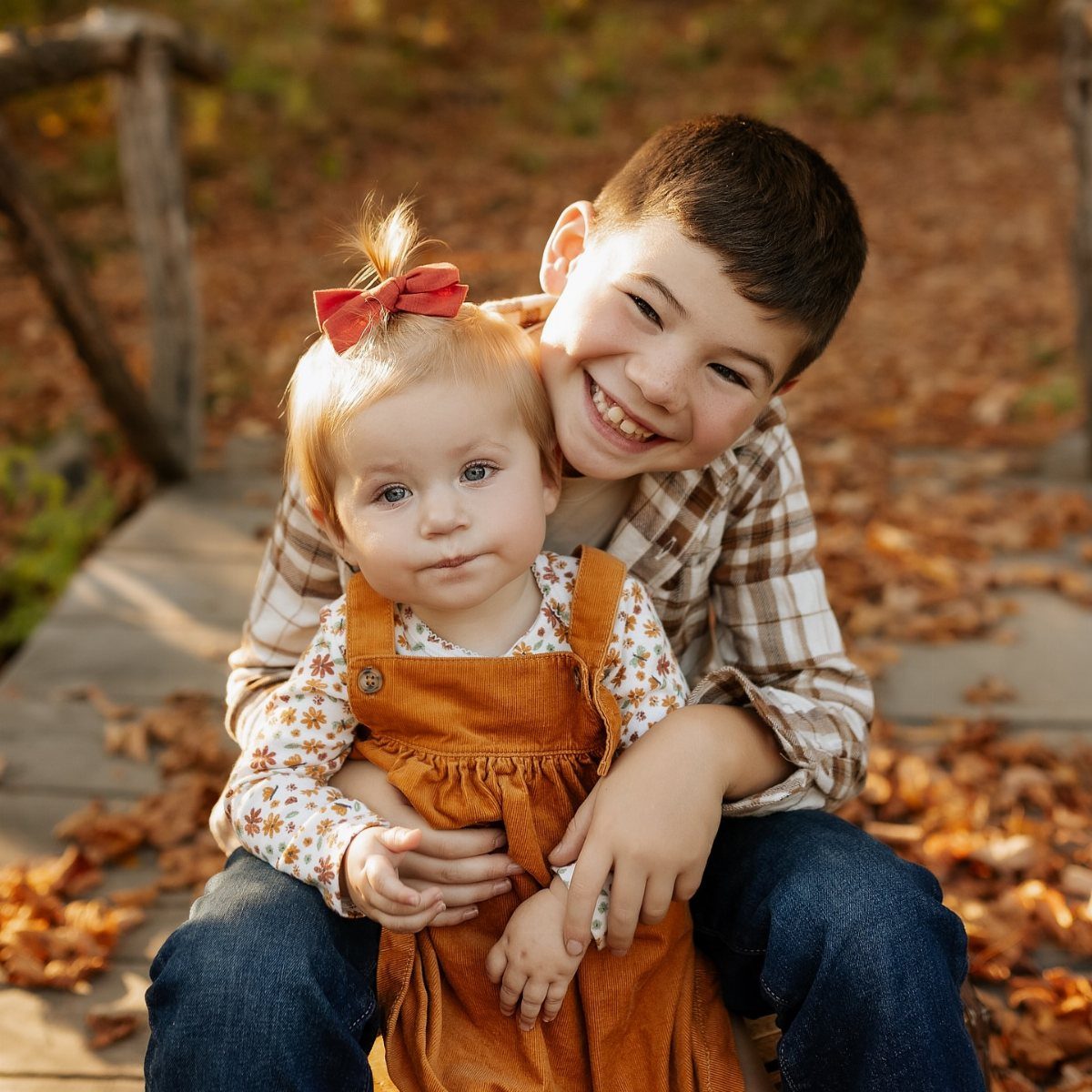
Corduroy holds light differently than denim or plain cotton, which gives a child in photos that warm, dimensional texture photographers chase.
A jumper or overall dress in rust or burnt orange layers neatly over a floral long-sleeve top, and the combination reads as dressed-up without restricting movement.
The ribbed wales photograph best in outdoor light when they run vertically; horizontal corduroy can look bulky on small frames.
For toddlers, overall straps with proper buckles stay put better than button or tie versions during a session that involves sitting, standing, and probably being picked up by a sibling.
Check that the leg openings are wide enough for a diaper or pull-up underneath. Too slim a cut creates pulling at the crotch that shows in seated shots.
8. Turtleneck and Leather Skirt
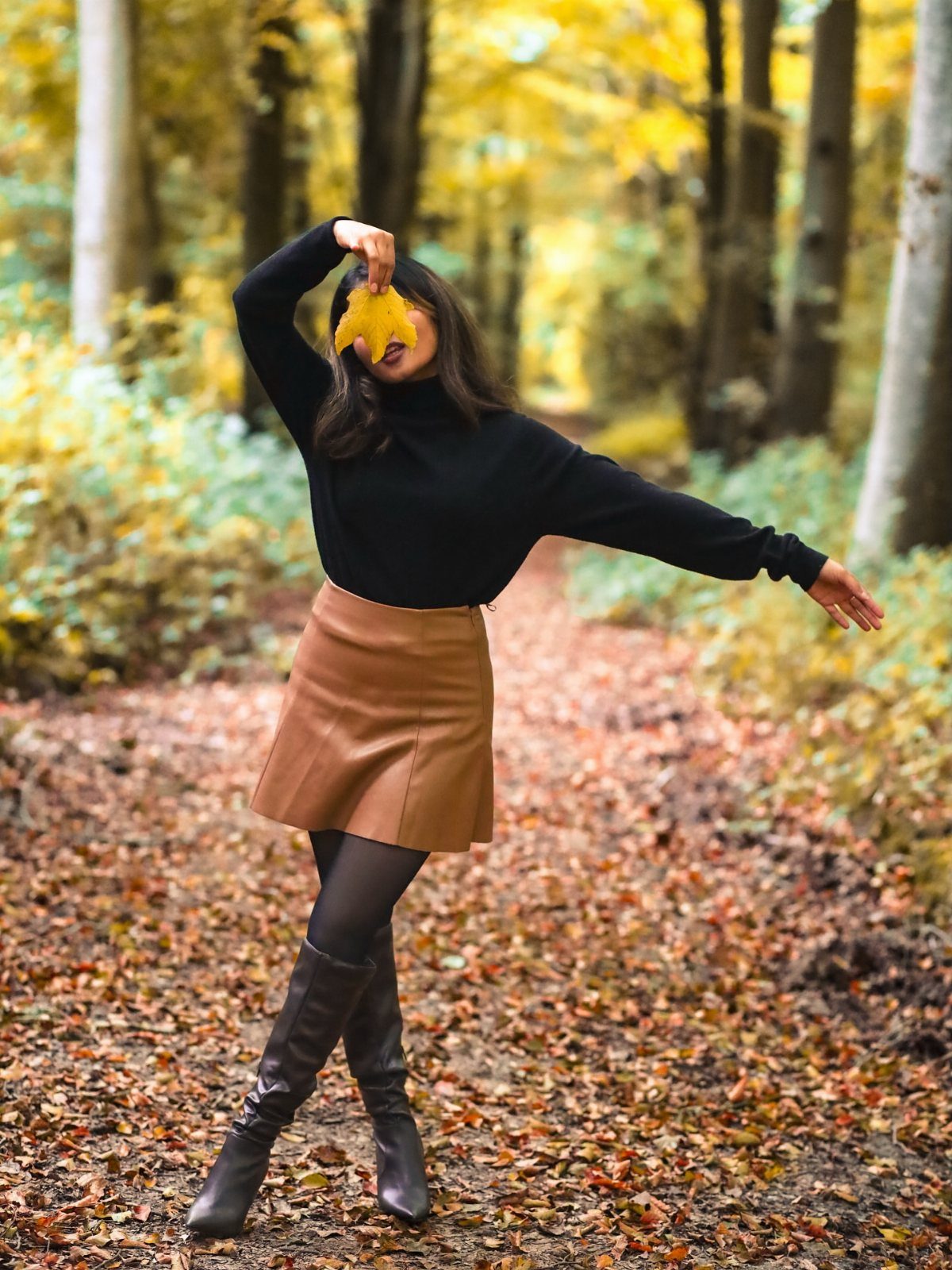
A black turtleneck against a tan leather skirt gives the kind of tonal contrast that works in a forest setting without competing with the background.
The leather catches light even under overcast October skies, and the turtleneck keeps the neck line clean for portraits where the face matters most.
Tights in a matching black extend the leg line into knee-high boots, which helps if the mini length feels shorter than your usual comfort zone. The boots also protect against damp ground in locations where leaves are still falling.
The skirt length and boot height are the variables: lower boots and a longer skirt shift it toward conservative, over-the-knee boots and a shorter hem push it editorial.
9. Pastel Pink Sweater Dress
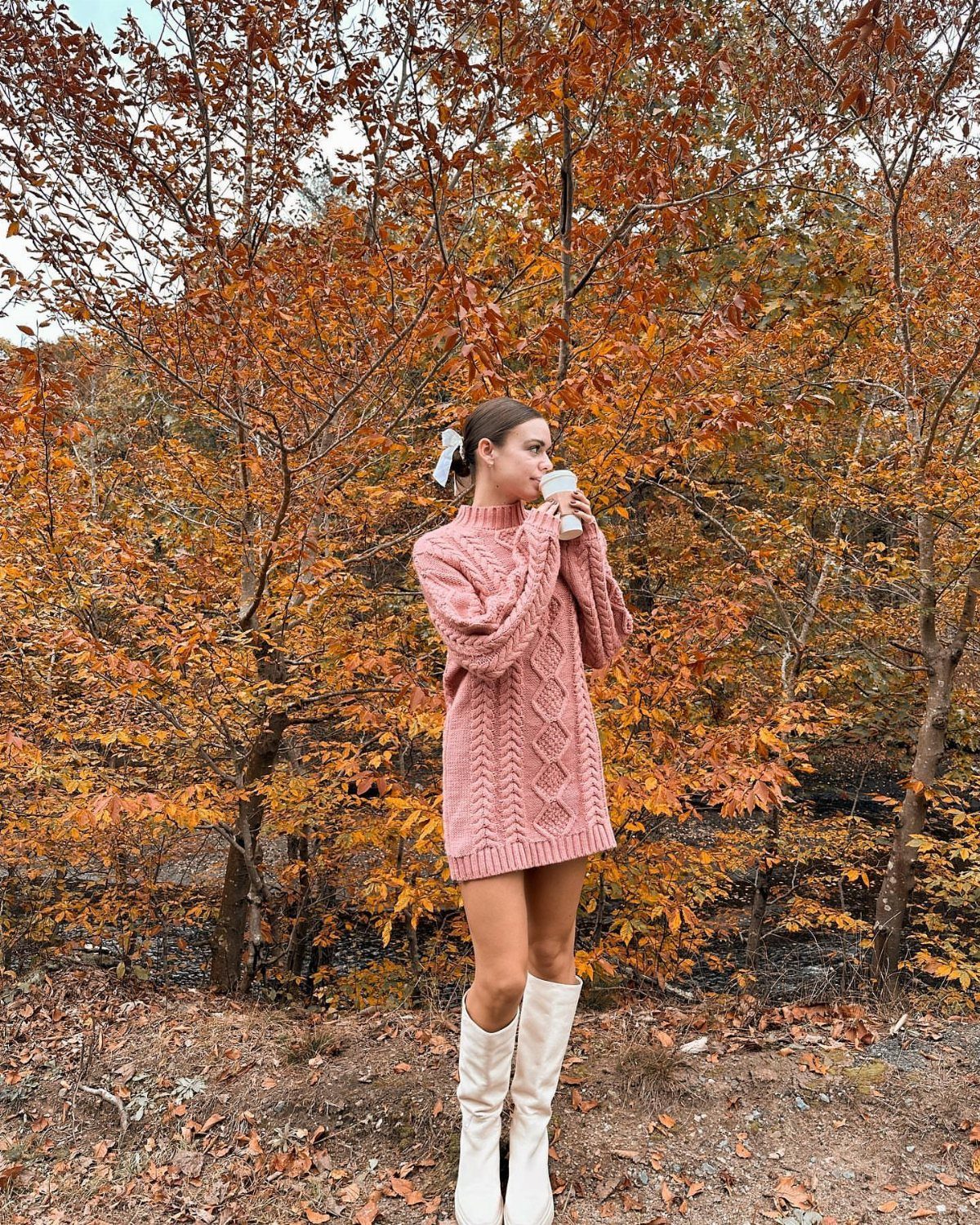
An oversized cable-knit in pastel pink against autumn foliage works because it is unexpected; the eye goes to the soft color while the texture holds its own against leaves and bark.
White boots extend that lightness rather than grounding it with the usual brown or black.
The sweater dress needs to hit mid-thigh or lower for standing poses to read as intentional rather than borrowed.
If the knit is thick, size up so the cable pattern does not pull across the hips; a stretched cable photographs as cheap construction, not cozy volume.
This outfit suits someone who runs warm or a session scheduled during midday sun.
For morning or evening shoots, add tights in cream or a very pale grey, not black, which would break the wash of soft color that makes the idea work.
10. Blazer and Wide-leg Jeans
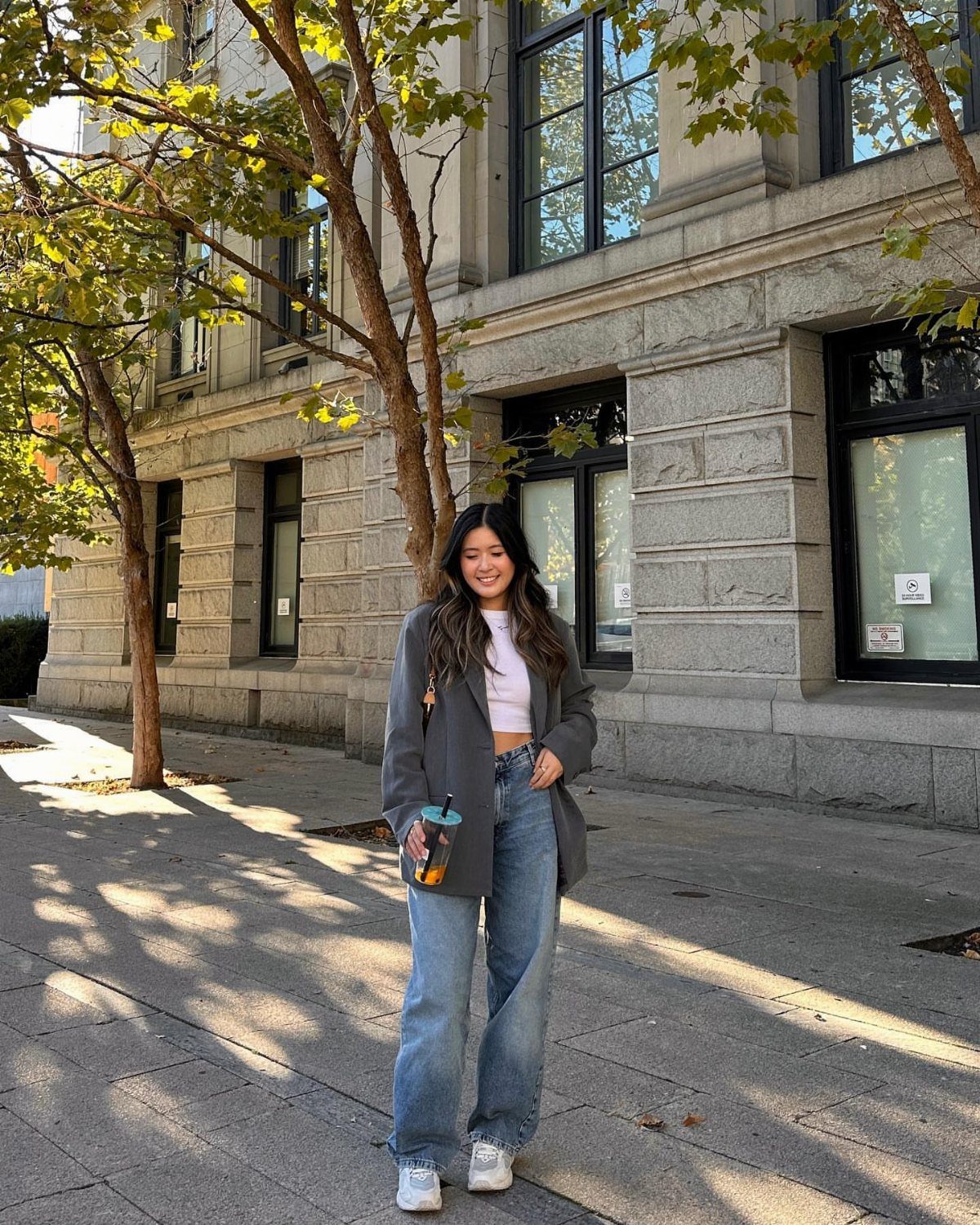
A grey blazer over a white crop and wide-leg jeans borrows from office dressing but relaxes it enough for a family photo that includes running children.
The structure of the blazer flatters shoulders and posture; the wide leg and sneakers keep the stance casual and mobile.
The key proportion is where the blazer hem hits relative to the jean waist.
A cropped blazer that ends at the natural waist works with high-rise denim; an oversized blazer that covers the hips needs the jeans to sit lower or the silhouette turns shapeless.
The visible outfit shows a cropped white top between the two, which creates a break that defines the waist.
This is a strong choice for someone who owns the blazer already and needs one purchase to make it weekend-appropriate. The sneakers should be clean; scuffed white rubber reads careless in close-up shots.
11. White Knits with Blue Denim
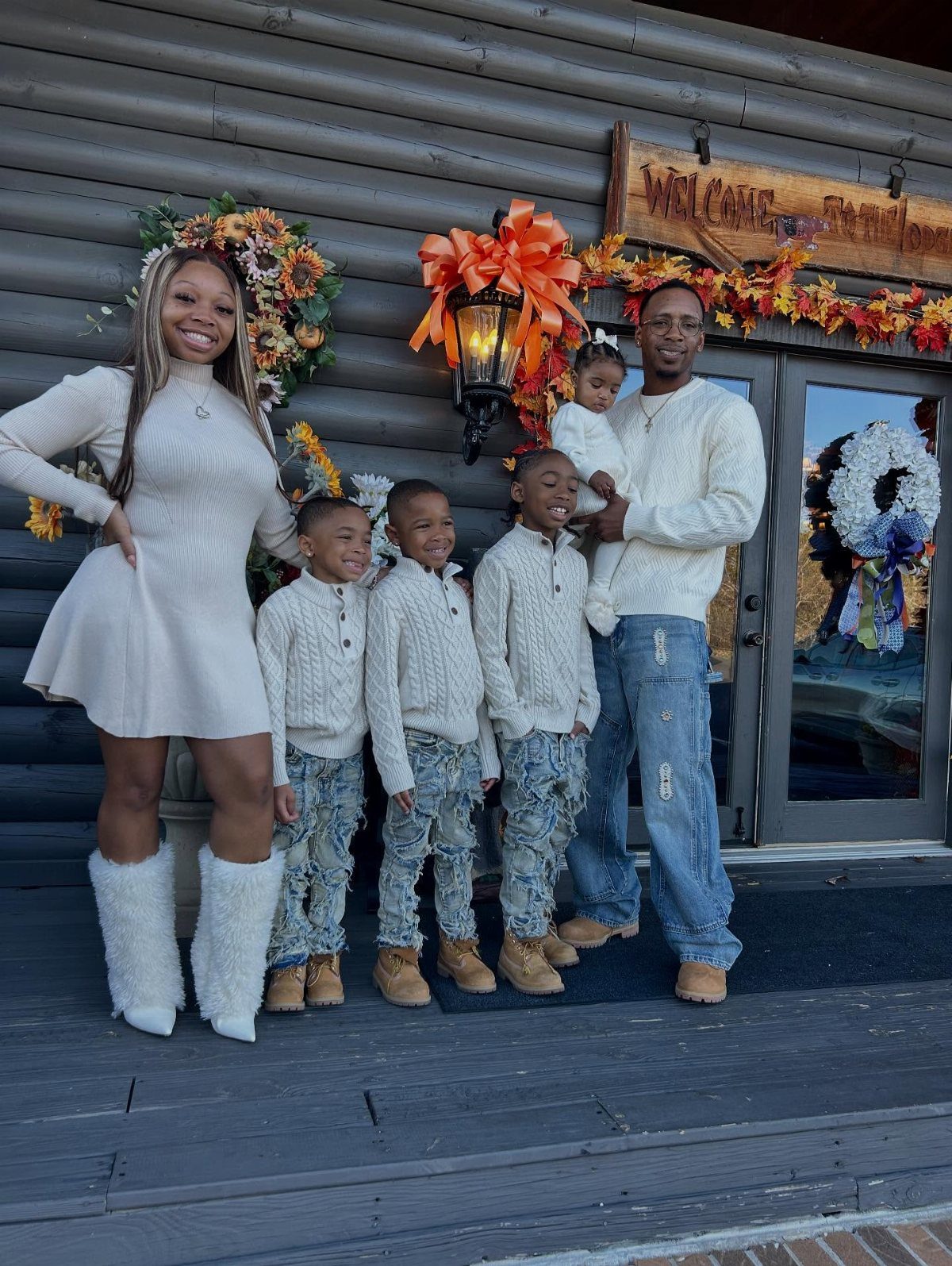
Matching cream knits across a family group create a unified field that lets faces and connections become the subject. Blue denim below anchors the light top half so the overall effect is fresh, not washed out.
The note about bright white washing out complexions matters here: cream and ivory reflect warmer light onto skin. For a group, this means every member photographs with healthier tone, not just the one in the center.
Denim does not need to match in wash; the father in dark indigo and a child in medium blue keeps the look from feeling costumed.
The knits should vary in weight or stitch pattern so the matching reads intentional, not uniform. A cable knit next to a smooth stockinette next to a ribbed cardigan gives each person distinction while the palette holds together.
12. Collared Shirt Layered Under Sweater
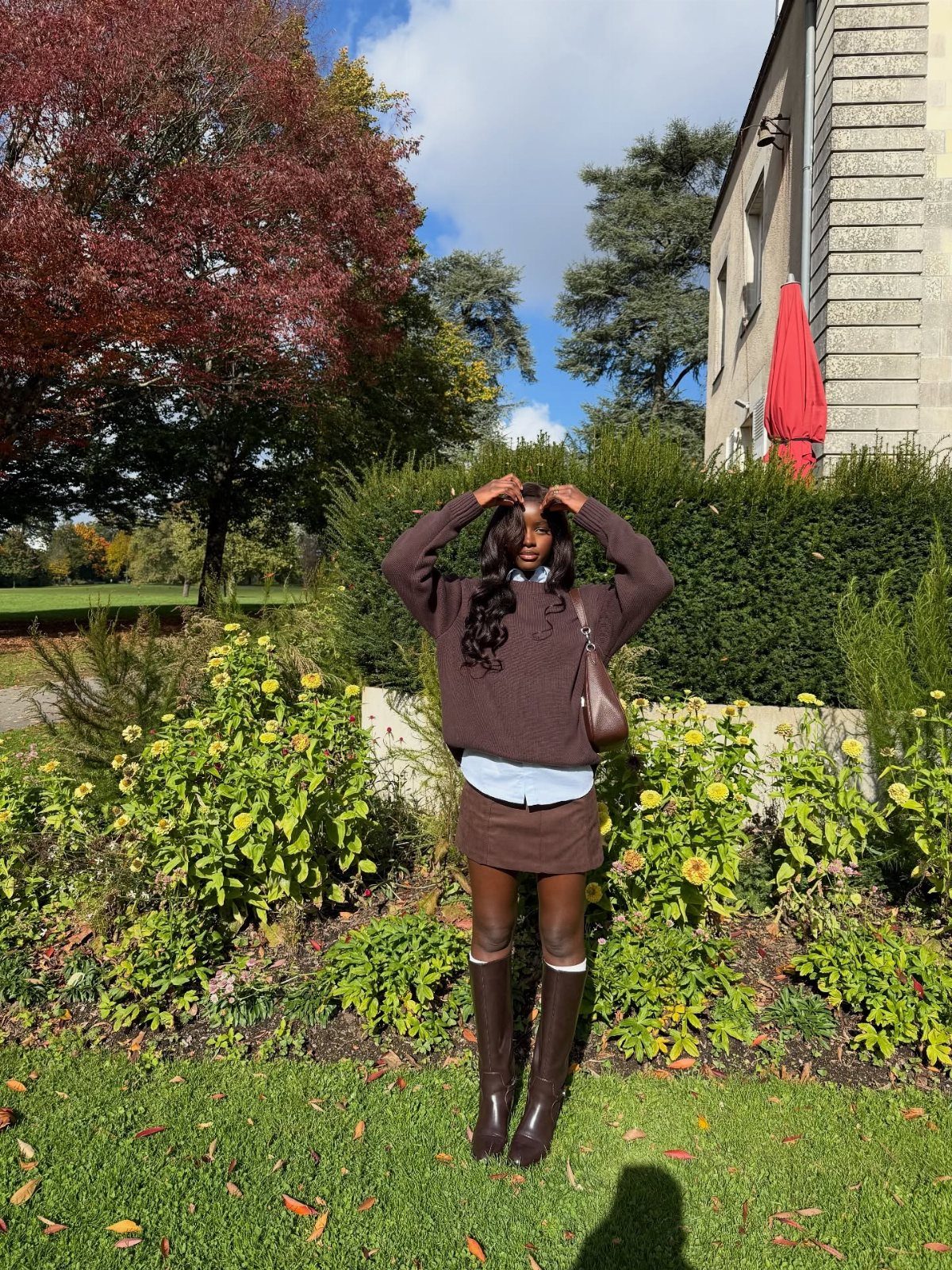
A collared shirt under a crewneck sweater is the easiest way to add polish without buying new; most closets already hold both.
The brown sweater over light blue in the visible outfit works because the tones are close in value, so the layering reads as texture shift, not color clash.
The collar points should sit outside the sweater neck, not tucked under, or the line looks accidental. A crisp cotton or linen collar holds its shape; flannel or softer fabrics collapse and read sloppy in photos.
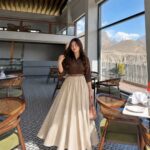
The skirt matching the sweater extends the color block upward, and tall boots finish the leg so the mini length does not dominate the composition.
This suits someone who wants to look put-together for a photo they did not plan their month around. The pieces are ordinary; the combination is what elevates them.
13. Knit Sweater and Mini Skirt with Tights
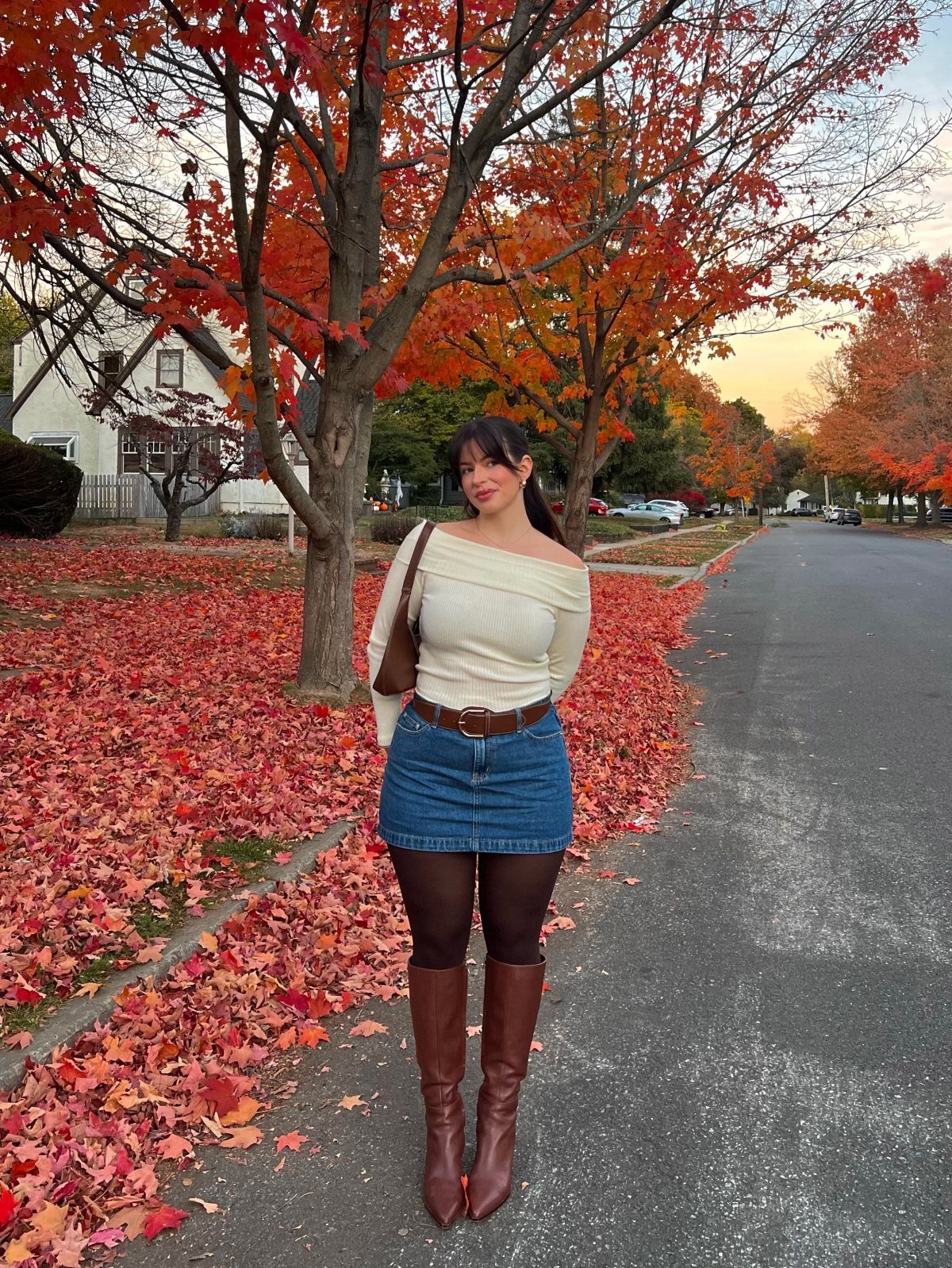
A knit sweater and mini skirt with tights gives you structure up top and movement below without fighting the weather.
The tights matter more than the skirt; a solid opaque denier reads as a solid color in photos but still lets you bend and sit comfortably through a long shoot.
I’d pick cable or ribbed knits for texture that catches afternoon light, and keep the skirt simple so the eye travels to faces.
Boot height changes the whole proportion. Knee-high boots shorten the leg line slightly but keep you warm; ankle boots need a higher denier to avoid a visual break.
For family photos with lots of standing and walking between spots, this outfit moves better than a maxi dress and layers more gracefully than jeans if temperatures shift.
14. Striped Sweater with Wide-leg Jeans
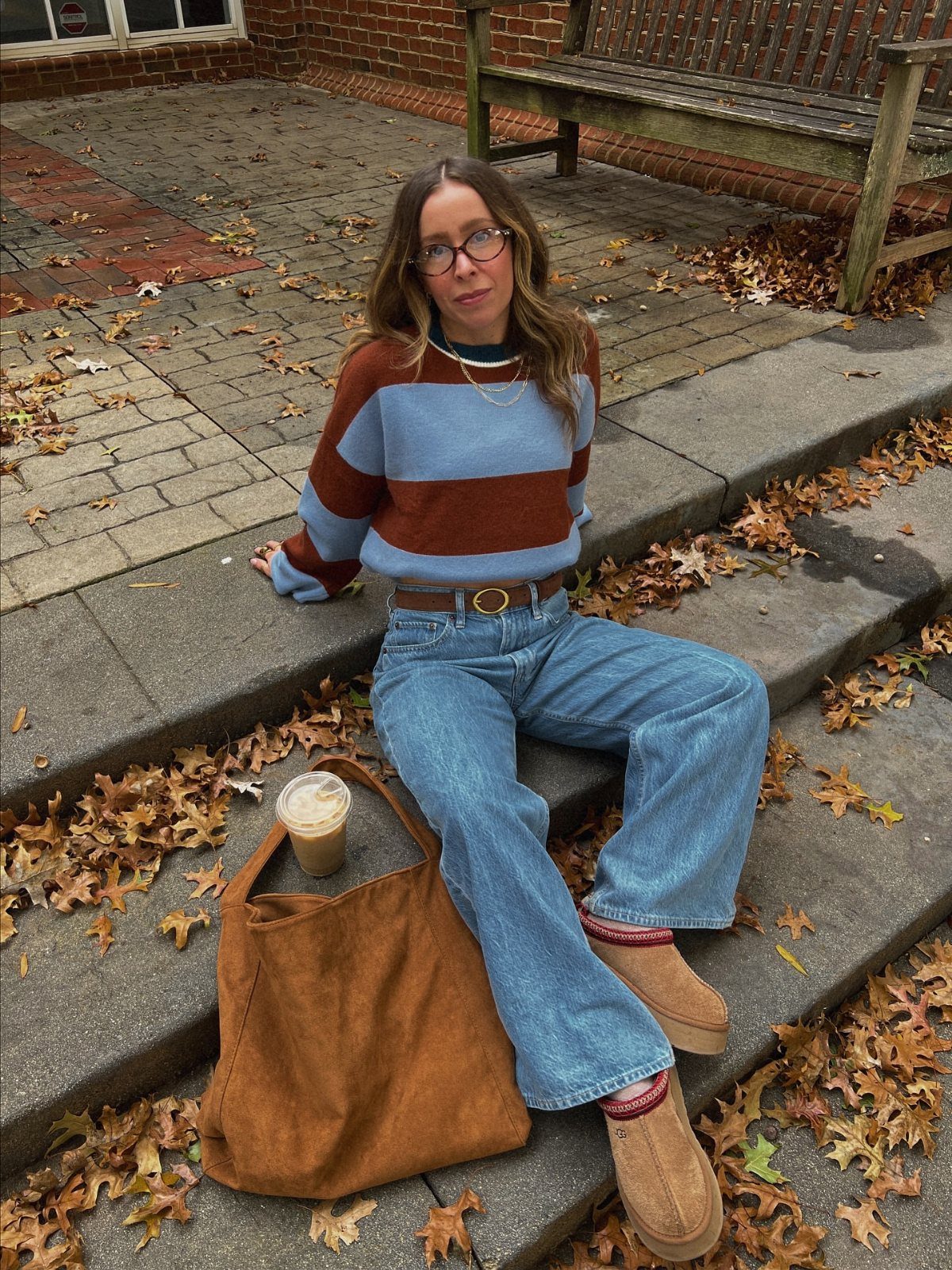
Stripes in fall colors, navy and brown or cream and rust, read as pattern without the busyness of florals or plaids that fight group photos.
The sweater wants a partial tuck, just the front hem, to give the wide-leg jeans a waistline without bulk; a full tuck balloons over the belt.
Wide-leg jeans need the right shoe. Platform slippers or a low block heel keep the hem from dragging and add height that balances the volume.
A structured bag in suede or leather sits better beside you than a slouchy tote that collapses into the leaves. For parents running between work and a late afternoon session, this pulls together from pieces most people already own.
15. Ruffled Long-sleeve Dress
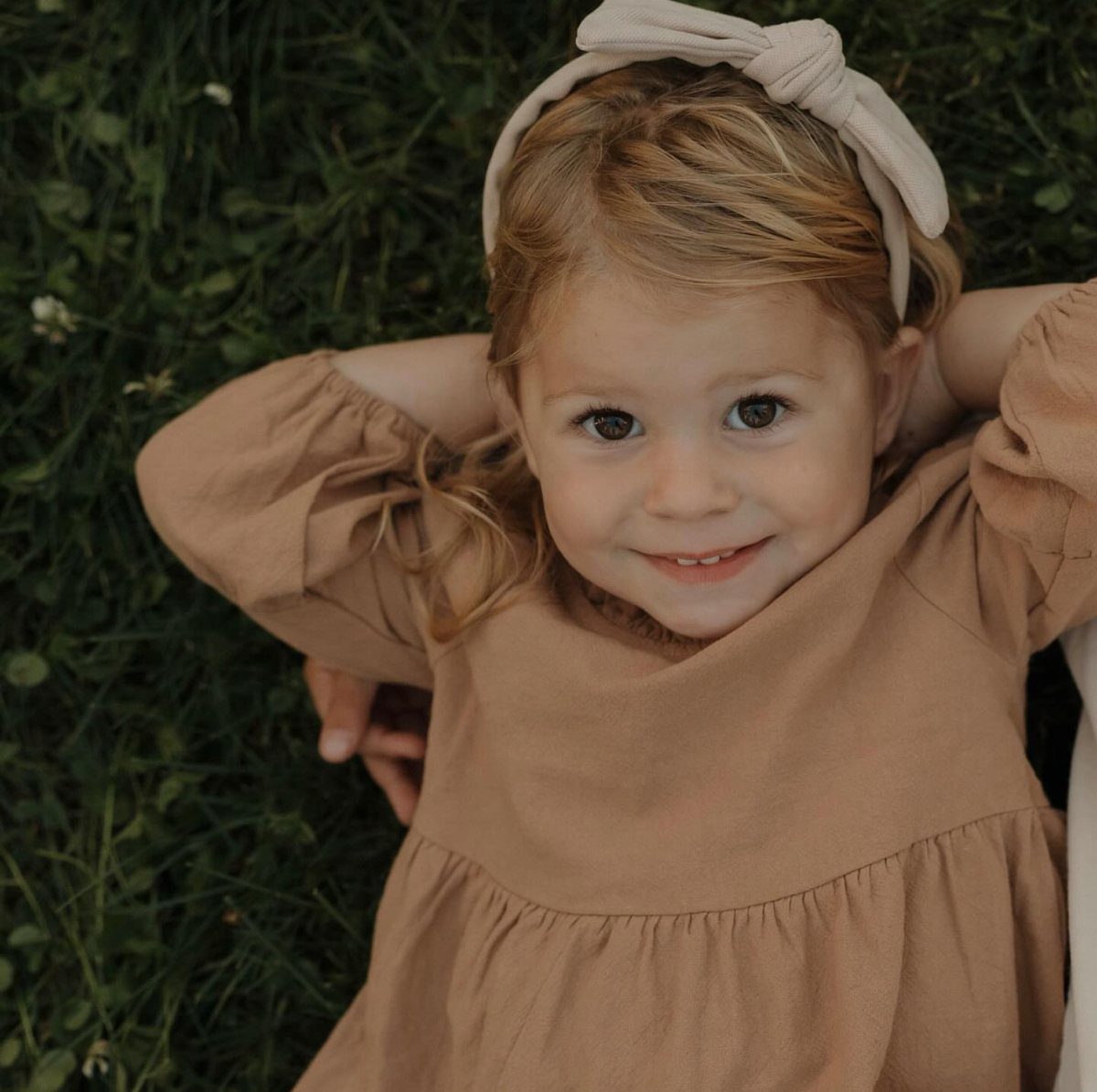
A ruffled long-sleeve dress on a child solves the layering problem in one piece; no separate top and bottom to twist, ride up, or refuse in the car.
Tan or cream reads warm against fall backdrops without the saturation that dates a photo, and the ruffles add movement when she turns or kneels.
The headband match is a choice, not a requirement. I’d skip it for boys or girls with short hair, and add knee socks in a similar tone if the dress runs short.
Cotton or a cotton-linen blend breathes through a warm afternoon; fully lined versions work better once November hits. For the child who won’t tolerate tights or jackets, this is the easiest full outfit to negotiate.
Talk to Your Photographer
Ask your photographer about the location before you settle on anything. The outfits need to match that vibe, not fight it.
Editing style matters too. Some photographers run warm and golden; others stay cool and true-to-color.
If you’re buying new pieces, hold them against your photographer’s sample gallery. A mustard that looks rich in one style can turn orange in another.
I’d send the photographer a flat lay of what you’re considering, especially for family shoots. They can spot a color that will sink into the background or a fabric that catches light wrong.
Most photographers would rather get that text than fix clashing tones later.
Frequently Asked Questions
What should I wear for fall pictures?
Muted colors like dusty rose, mustard, and sage photograph better than bright shades because they keep attention on faces instead of fabric.
Layer a slim cardigan or light jacket over a solid tee so you can adjust for temperature changes without bulk that catches on camera.
One small pattern per outfit, such as narrow stripes or scattered florals, adds depth without competing with the subject.
What is the dress code for picture day?
There is no single dress code, but the same principles apply: slim layers that do not bunch at sleeves or waist, one patterned piece at most, and colors that coordinate rather than match across a group.
Quilted or puffy pieces turn into shapeless blobs under school lighting, and oversized prints tend to steal attention from the face you’re actually there to photograph.