Rainy day outfits run from a baseball cap upgrade to Hunter boots that resell after years of salt and puddles.
The deciding factor is how much of the day you spend actually outside: dog walkers need traction and hoods, while city walkers who hop between heated shops win with thin merino layers they can strip off.
1. Parka + Leggings
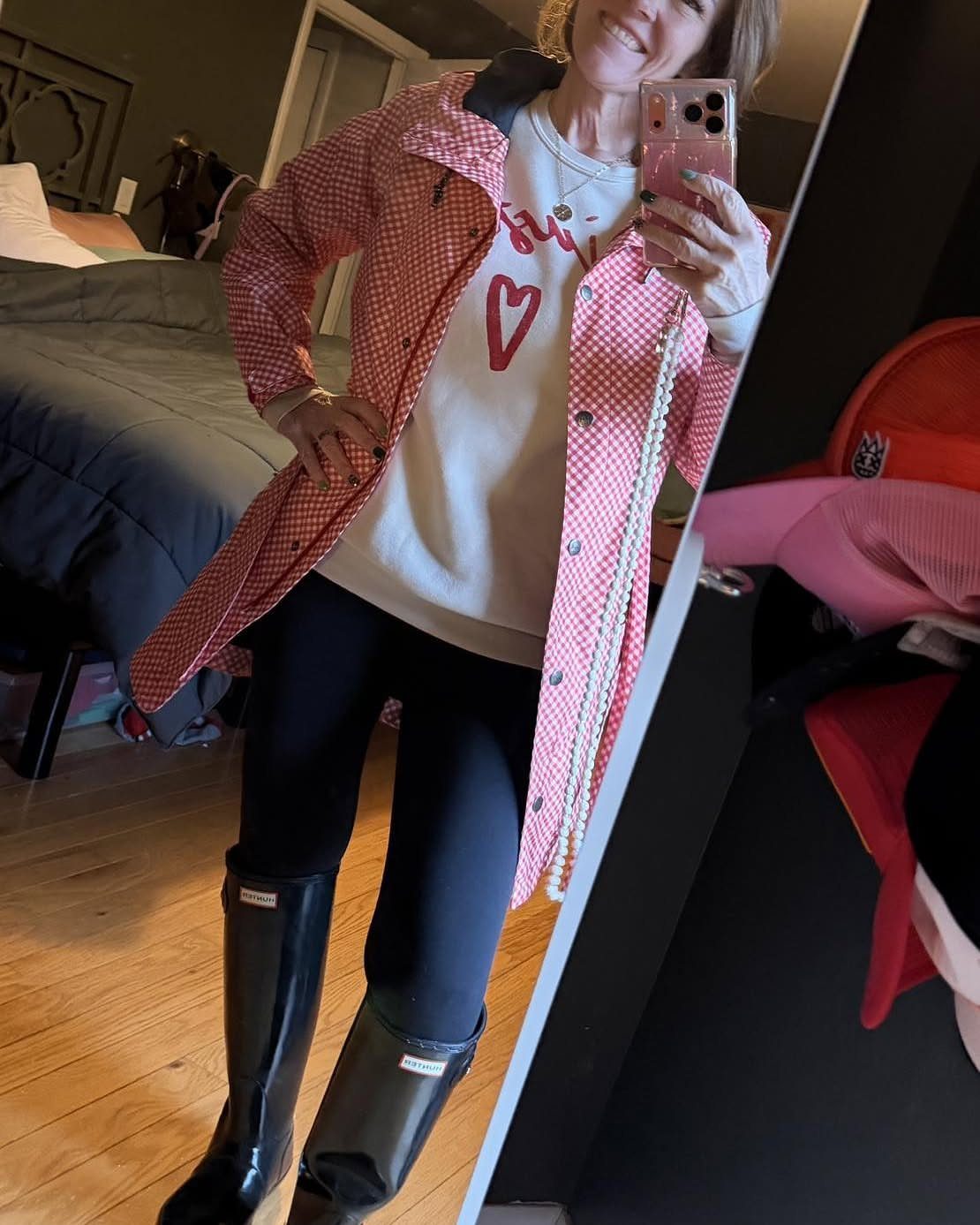
A checked parka over black leggings reads sporty without trying for it. The jacket does the heavy lifting: waterproof shell, warm lining, and a print that lifts gray skies.
Leggings keep the silhouette lean so the coat can be the statement.
Hunter boots finish the look with actual traction. I would add a baseball cap if the drizzle turns steady; it keeps water off glasses and hair off the neck.
The whole thing works for dog walks, Target runs, or any outing where you need to move and stay dry.
Skip the matching set unless you already own one. Mismatched solids do the same job for less.
2. Sweater + Cropped Jeans
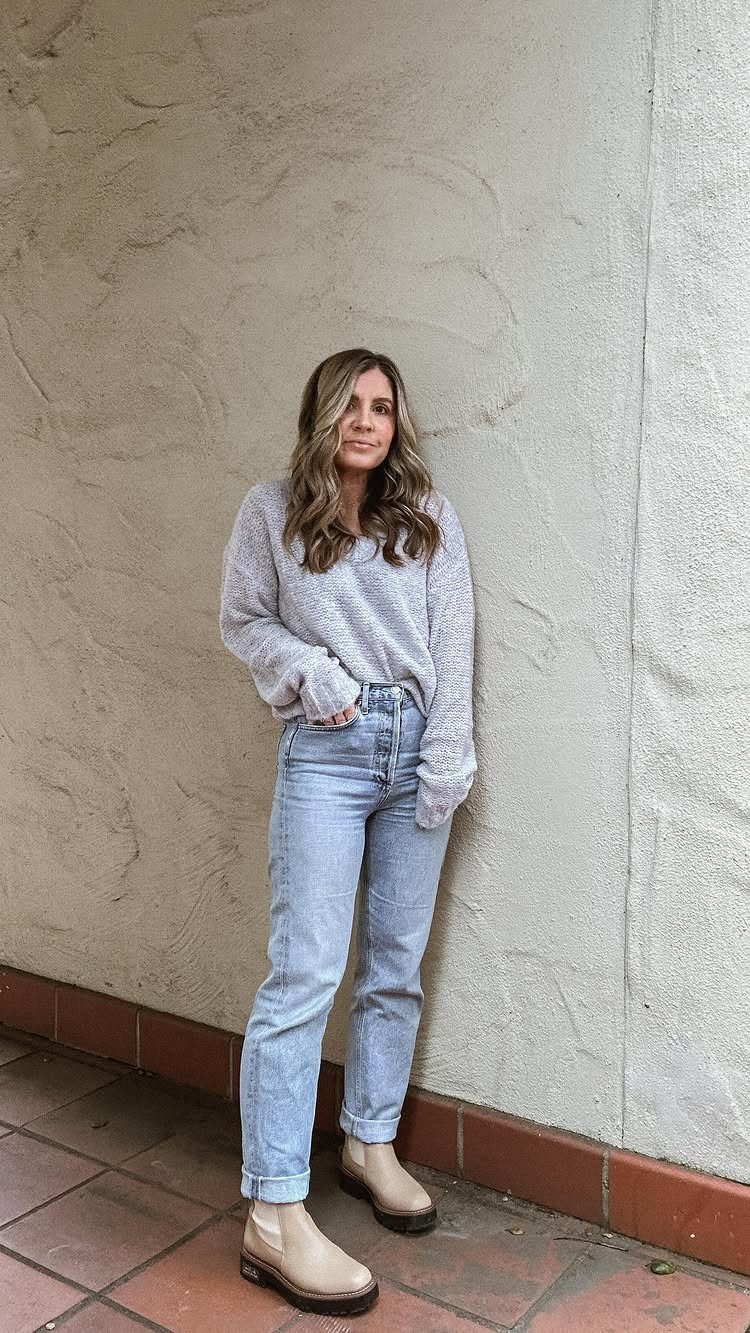
Cropped jeans and a loose knit sweater hit that middle ground between put-together and comfortable. The sweater’s texture adds interest without demanding attention; the cropped hem keeps denim from dragging in puddles.
Beige Chelsea boots are the practical choice here. Waterproof leather, a slight platform for wet sidewalks, and a color that works with most neutrals.
I would size down half a step if you’re between sizes; the ankle cut can gap otherwise.
This outfit suits brunch, casual meetings, or any Saturday where the forecast says "showers" and you need to look like you planned for it. A long coat fixes the warmth problem once the day turns cold.
3. Stylish Hats
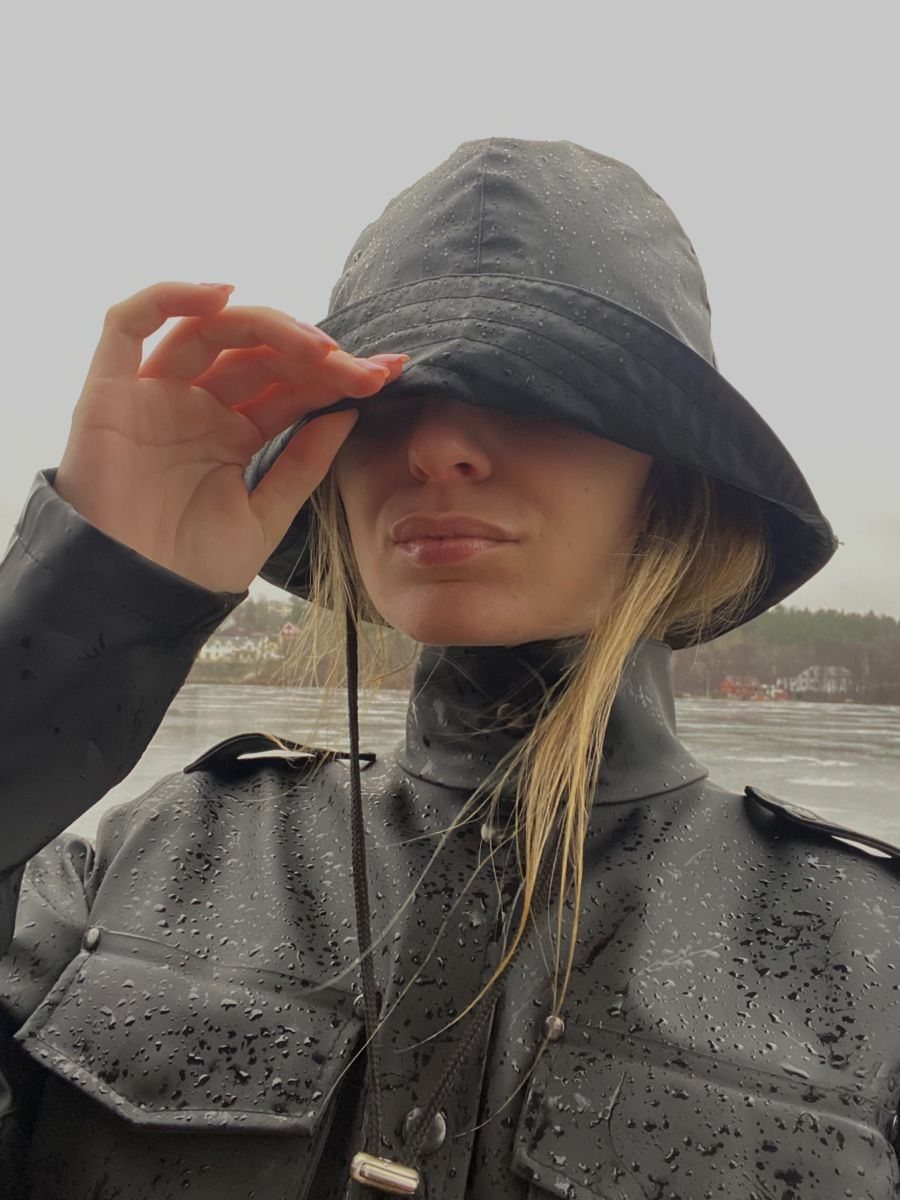
Cotton gabardine sheds water the same way trench coats do, so a wide-brim hat in that fabric holds up past a light drizzle.
The brim channels rain away from your face and neck; the fabric sheds moisture instead of soaking it.
Black keeps the look sharp and hides water spots. I would wear this with a simple tank dress and tall rubber boots, letting the hat lead without competition.
The combination reads deliberate, not desperate.
This solves humid hair days when umbrellas fail or hands are full. It does not replace a hood for sideways rain.
Check that the crown fits snugly; a gusty day will test it.
4. Rain Boots
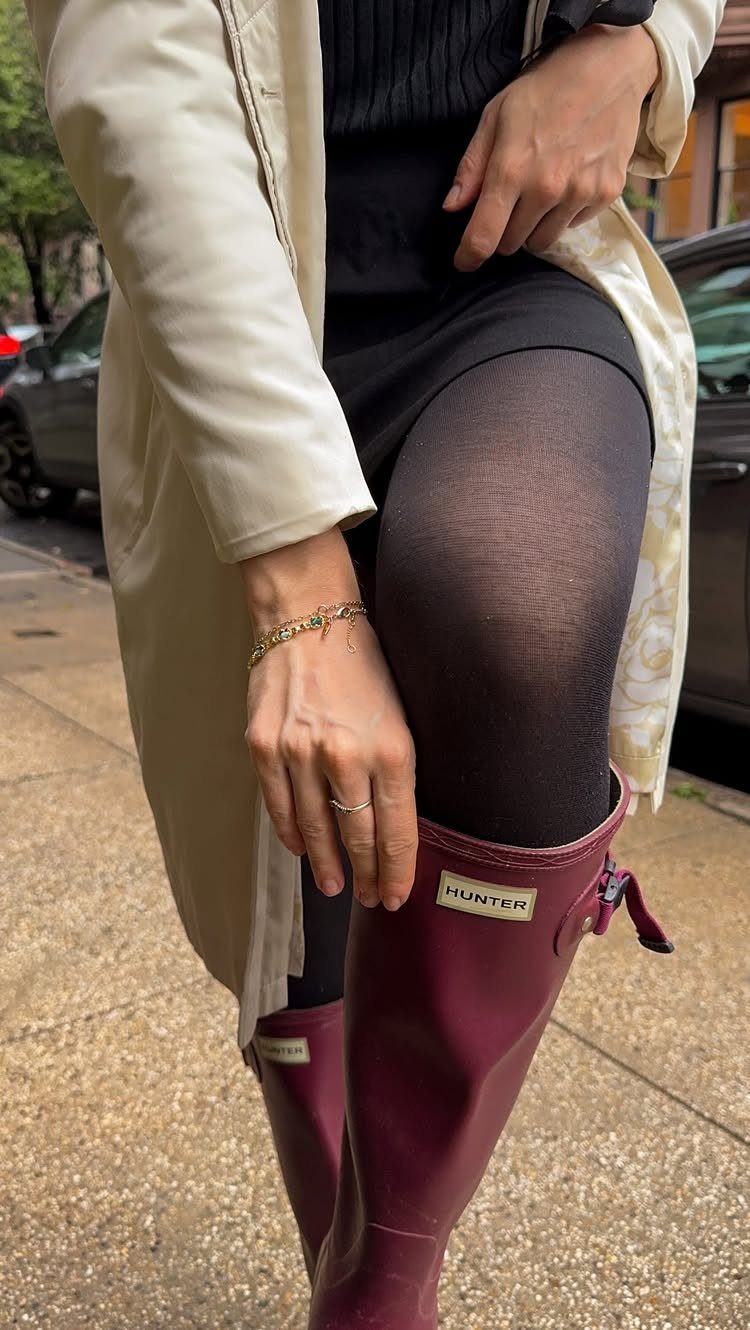
Tall rain boots in burgundy or classic green pair with more than you’d expect. The Hunter shape has stayed current because it works: rounded toe, matte finish, enough shaft height to step through shallow flooding without thinking.
A trench coat and black tights complete the city version. I would keep the coat hem at mid-thigh or longer; the boot shaft needs something to transition into, or the proportions read off.
These are an investment that pays out over years. Classic colors age better than prints; black or green resells if you tire of them.
The weight takes a day to get used to. After that, regular boots feel underdressed for wet weather.
5. Casual Dress + Rain Boots
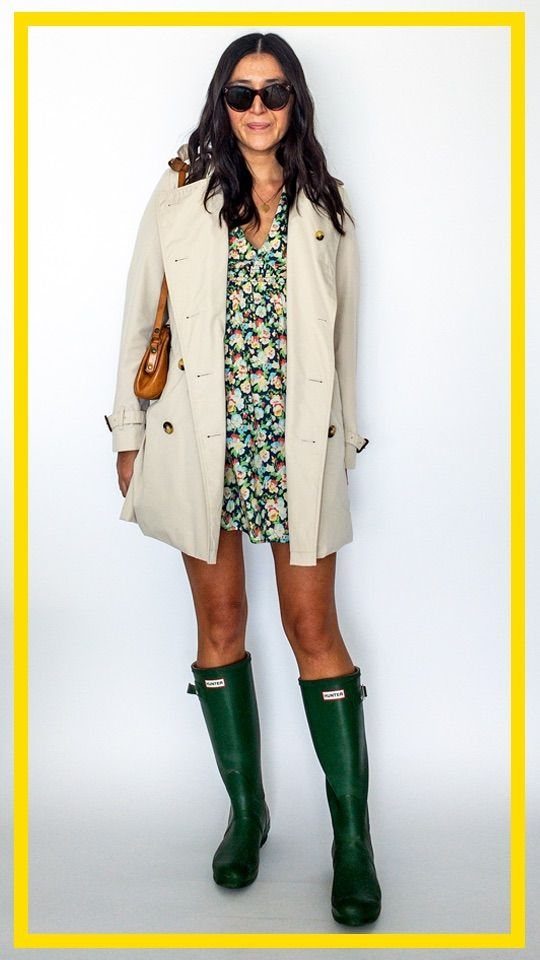
A floral mini dress under a beige trench, finished with green Hunter boots, mixes seasons on purpose. The dress keeps its summer usefulness; the trench and boots handle what the sky throws at it.
Hemline matters more than anything else here. Mini hits above the boot shaft, creating a clean line that midi or maxi would break awkwardly.
I would add sunglasses even on overcast days; they read as intentional, not leftover from sunnier moments.
This works for relaxed lunches, gallery walks, any plan where you want to look dressed without the effort of full seasonal rotation. A compact umbrella covers the strip of leg left open between coat hem and boot top.
6. Trench Coat + Slim Pants
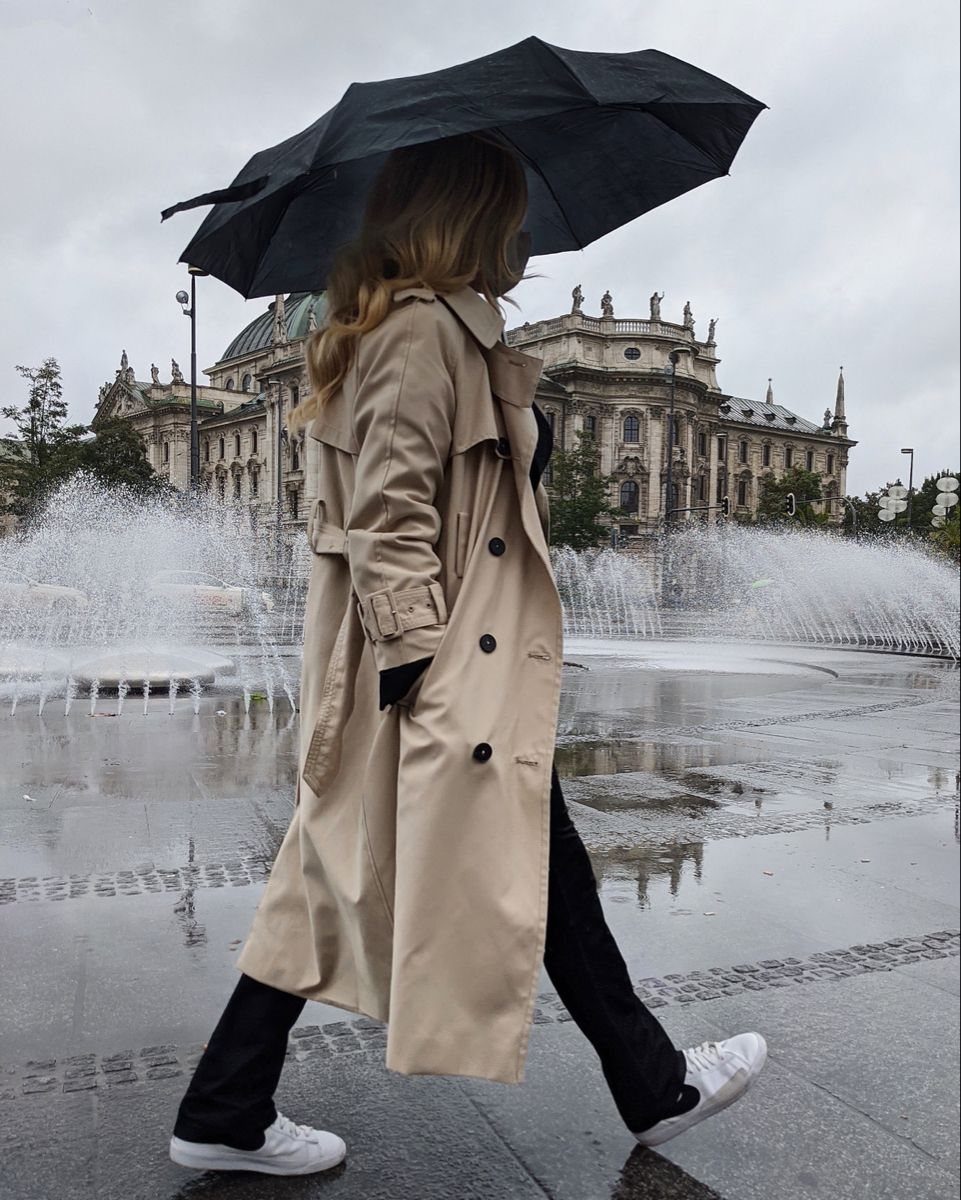
A beige trench over slim black pants with white sneakers is the formula French women have been refining for decades. The coat’s length and cut do the elegance; the sneakers keep you walking all day on wet pavement.
Slim pants matter here. Wide or cropped styles fight the trench’s line; skinny or straight-leg denim tucks cleanly into the shoe.
I would choose pants with some stretch; rain-day layers add bulk that rigid fabric exaggerates.
This outfit handles office-to-dinner transitions without a change. The white sneaker risks splatter; leather cleans easier than canvas.
An umbrella in black completes it; anything brighter competes with the coat’s classic tone.
7. Avoid Light Colors
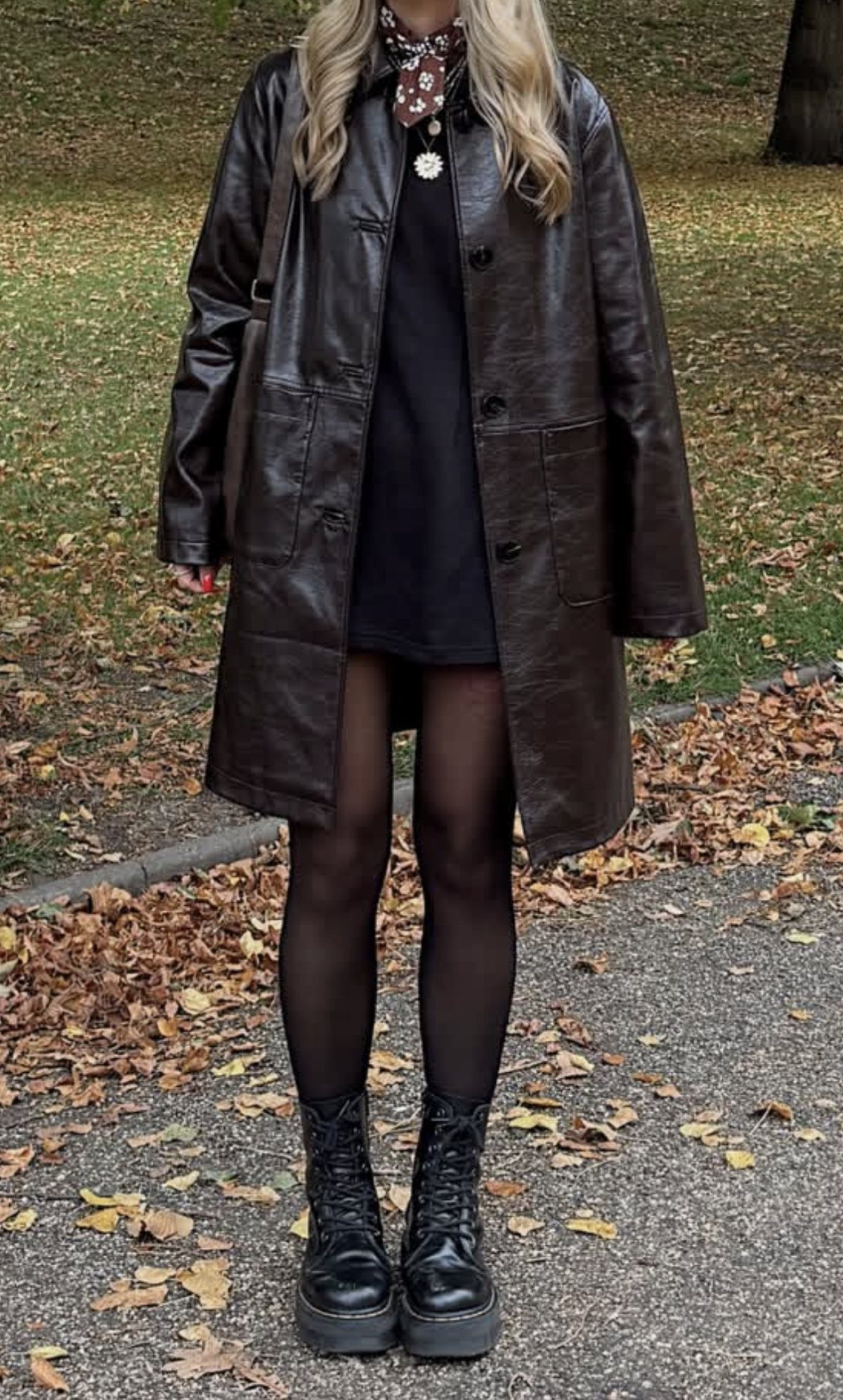
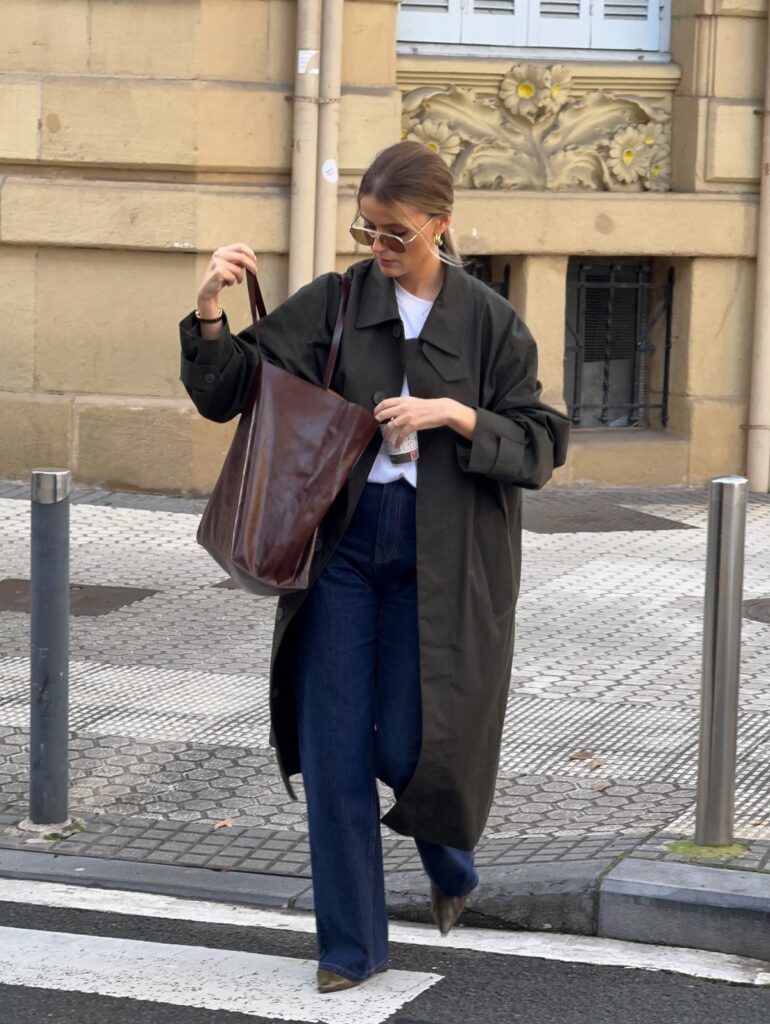
Dark colors hide what rain and city streets do to fabric. Mud splatter on cream or pale gray turns a commute into a wardrobe casualty; a brown leather trench over black handles the sidewalk mess without the stress.
I reach for chocolate, charcoal, or forest green on wet mornings. Navy works too, though it can read lighter than expected in downpours.
Saturation matters: a color deep enough that water spots and sidewalk grit become texture, not stain.
Save your ivory trousers and pastel knits for dry days. If you own one pair of black boots that can take salt and puddle water, this is their moment.
8. Stay Neutral
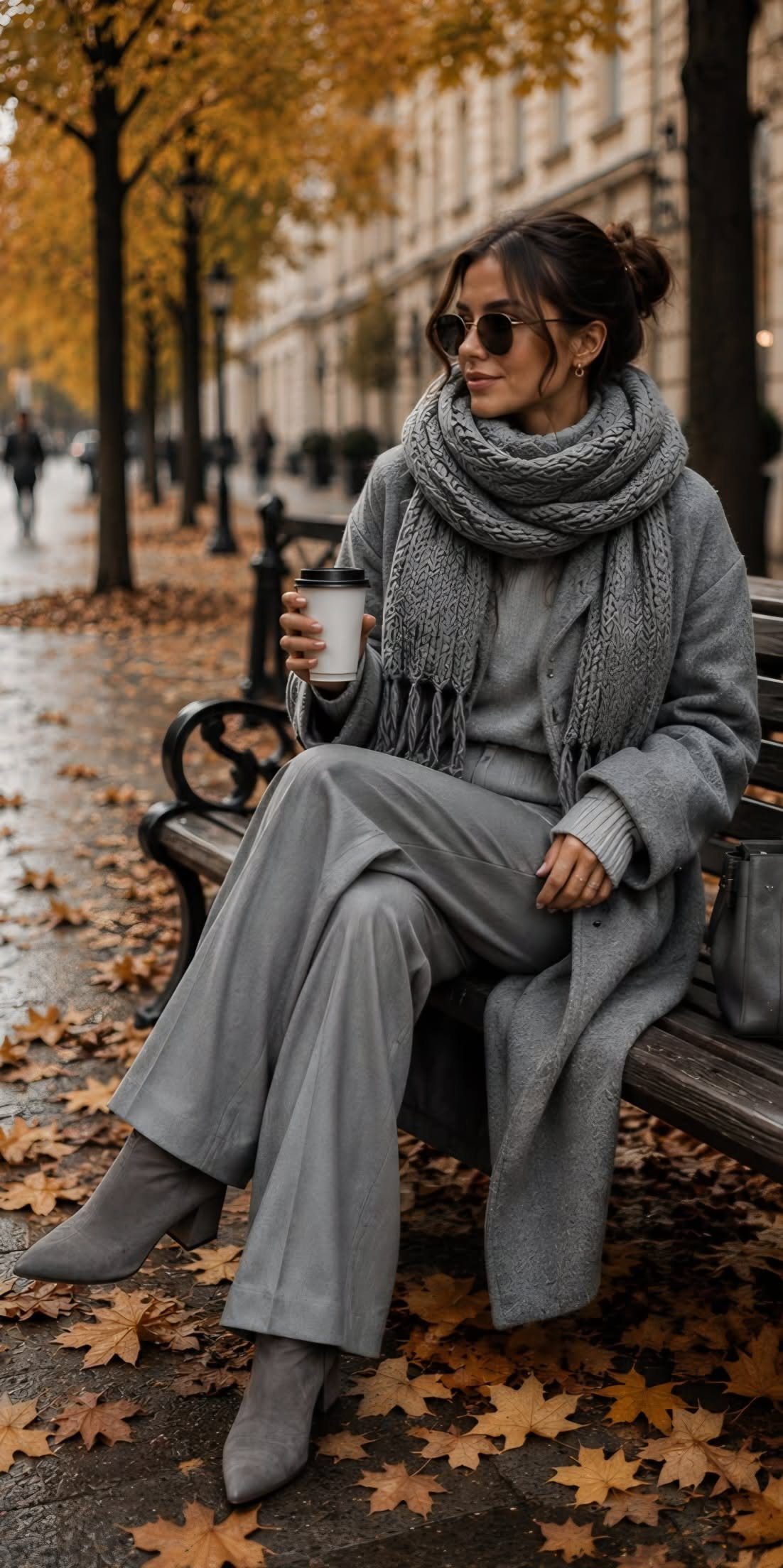
Gray reads as intention rather than absence of color. An all-gray look, from coat to scarf to boots, feels pulled together when the tones share a temperature: cool, muted, calm against the chaos of rain.
Start with wide-leg trousers in mid-gray and build upward. A charcoal belt adds just enough break; chunky heels keep you above wet pavement.
For lighter rain, skip the coat entirely and layer a balaclava in a warm gray tone over a matching sweater.
The head coverage protects without the bulk of a hood, and the monochrome line from neck to ankle elongates what rain gear usually swallows.
Black umbrella, same gray family. The calm is the point.
9. Matching Sets
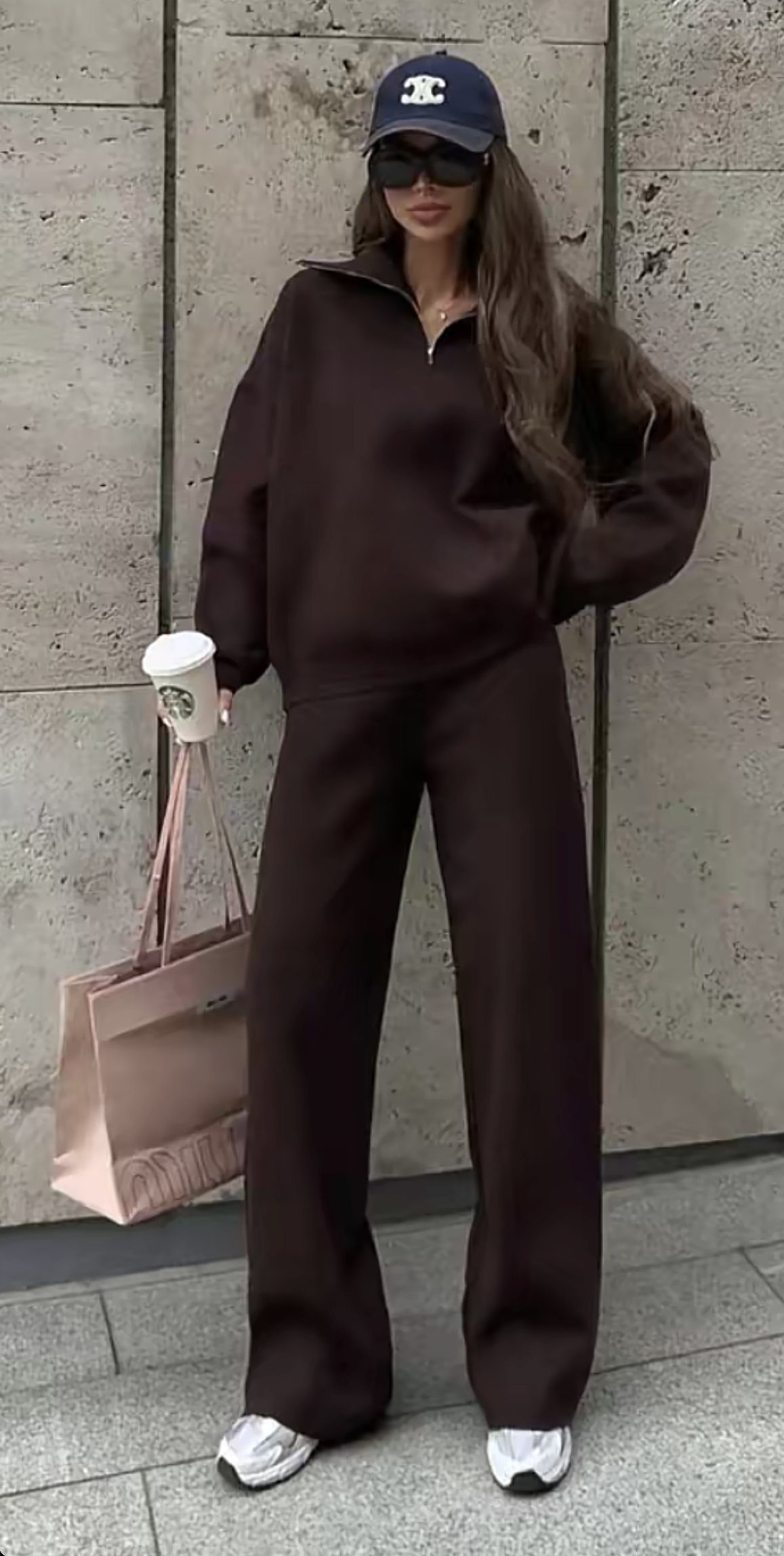
Matching sets solve the morning when nothing goes together.
I keep three kinds ready: a knit set for transitional days, a linen version for warm rain, and a sweater set with shorts specifically for tall boots. The shorts-boot pairing avoids the bunching that happens when jeans tuck into rubber.
Sweater sets in particular bridge seasons. The loose knit breathes when humidity spikes but still reads covered and intentional.
Striped versions add direction without breaking the simplicity.
Cost runs higher than mixing separates, but cost-per-wear drops when the outfit assembles itself.
10. Layering for Warmth
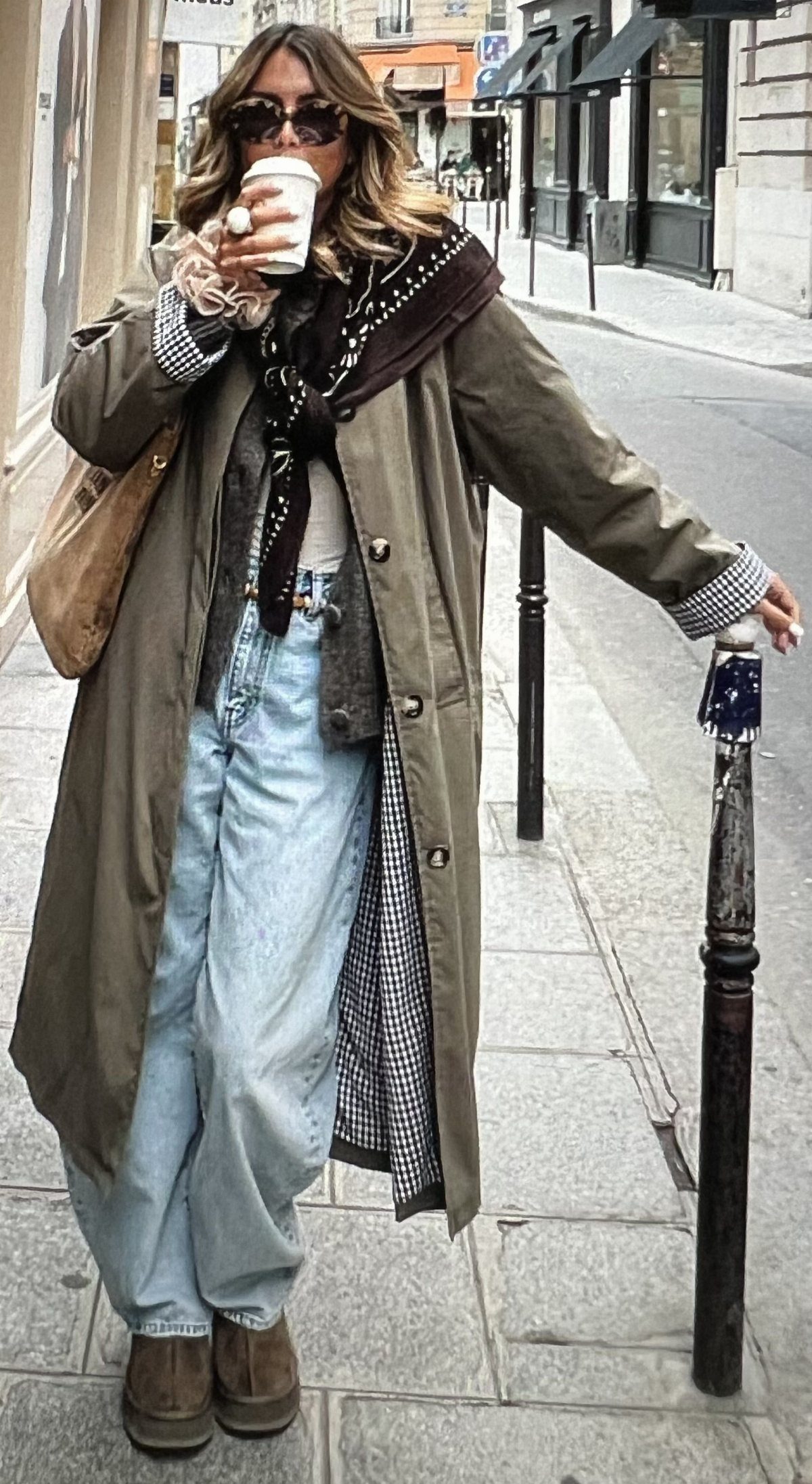
Thin layers beat one thick shell for actual warmth. An olive trench over a gray sweater over a patterned shirt lets each piece breathe; together they trap heat without the Michelin effect of a down coat in drizzle.
Cashmere or merino wool against skin wicks moisture and keeps shape when damp. Cheap acrylic pills and holds water; the upgrade is worth it for pieces you reach for weekly.
Baggy jeans allow air circulation at the legs.
This works best for city walkers who move between overheated shops and cold rain. The tradeoff: more pieces to manage.
A streamlined puffer wins if you drive door to door.
Choosing the Right Fabrics
Treated cotton and wool outerwear handles rain without the rubbery look. A waxed canvas jacket gives you the same protection as a standard raincoat but reads more intentional; the fabric develops character where synthetics just age.
Linen beneath canvas works for warm, wet days. It dries fast if you catch a sprinkle, and breathes better than cotton when humidity spikes.
I would keep a linen shirt in rotation through early fall for exactly this reason.
Cheap layers become expensive fast when you replace them every season.
Accessorizing for Rain
A structured hat in cotton gabardine does what a trench does for your head.
Bright colors draw the eye and fight your clothes. I would carry one small enough for a tote; the full-size golf umbrella is practical but reads like you planned for a flood.
Faux leather bags withstand rain without wear patterns showing. The material handles repeated wetting better than suede or untreated leather, and structured shapes keep their form when damp.
A scarf in wool adds warmth at the neck where coats gap; silk slides and holds water, so skip it.
The secret is to start dressing for the rain instead of against it, building your outfit around pieces designed to withstand an erratic shower: a water-repellent trench coat, a durable twill bucket hat, puddle-proof rubber footwear, and a bright accessory that cuts through the gloom.
— Vogue
Footwear Considerations
Ankle-high boots hit the awkward middle where water splashes straight in; mid-calf or taller keeps the hem dry without any arithmetic.
Loafers with rubber soles bridge summer rain when boots feel excessive. They breathe better than rubber, look more polished, and handle light wetness if you dodge puddles.
I would reserve these for warm drizzle, not storms.
Bright colors on technical footwear read intentional, not leftover from hiking gear. Padded construction helps if you’re walking long distances in misty cool.
The weight of real rain boots takes a day to get used to.
Layering for Rainy Days
Pick your coat first and build downward. A long puffer for real cold; a trench or canvas jacket for moderate wet.
The outer piece determines how much room you have underneath and whether the silhouette works.
A comfortable long-sleeved top sits closest to skin. A jacket or light sweater over the top handles the core; relaxed jeans or overalls let air move at the legs and hold warmth without puffing out like a snowsuit.
Zip-off pants work if temperature swings across a single day. The versatility saves carrying a second bottom, though I would check the seam sits flat; bulky conversion points rub on long walks.