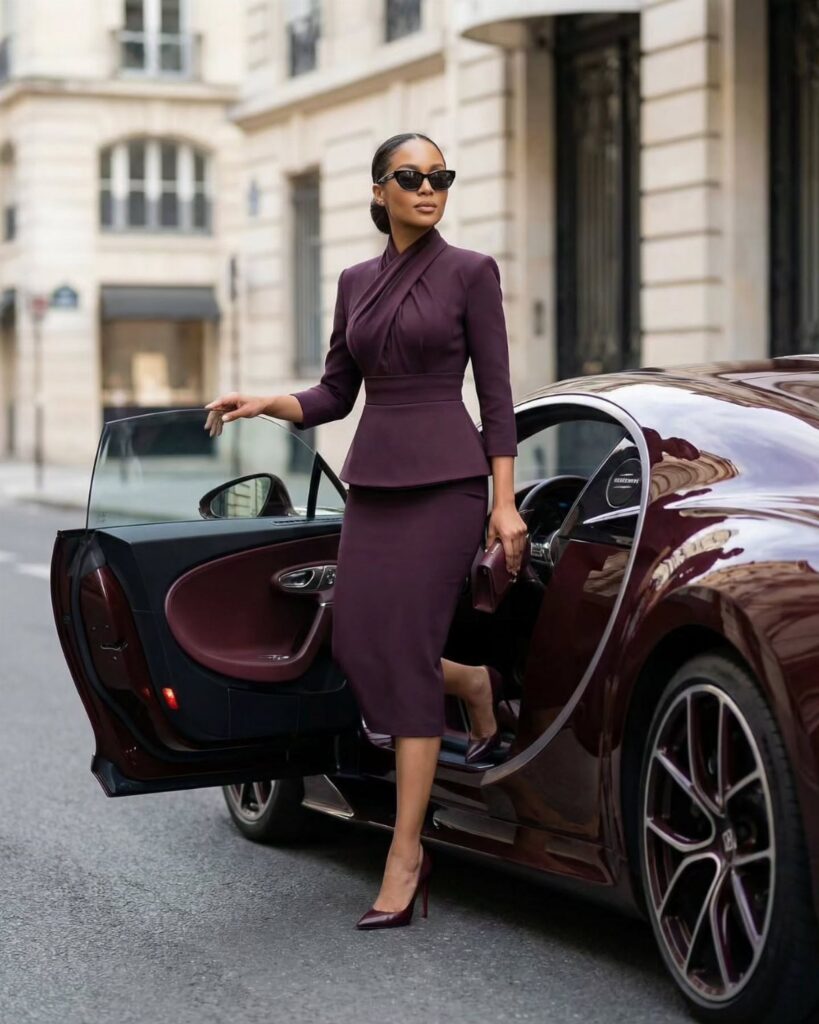
These boss lady outfits run from a crisp white shirt to a belted leather trench, and the right choice comes down to how formal your day actually needs to be.
The detail that separates one look from another is usually the shoe: pointed-toe heels extend the line for evening panels, leather loafers keep you human through a full day of hybrid meetings.
1. Perfect Fit
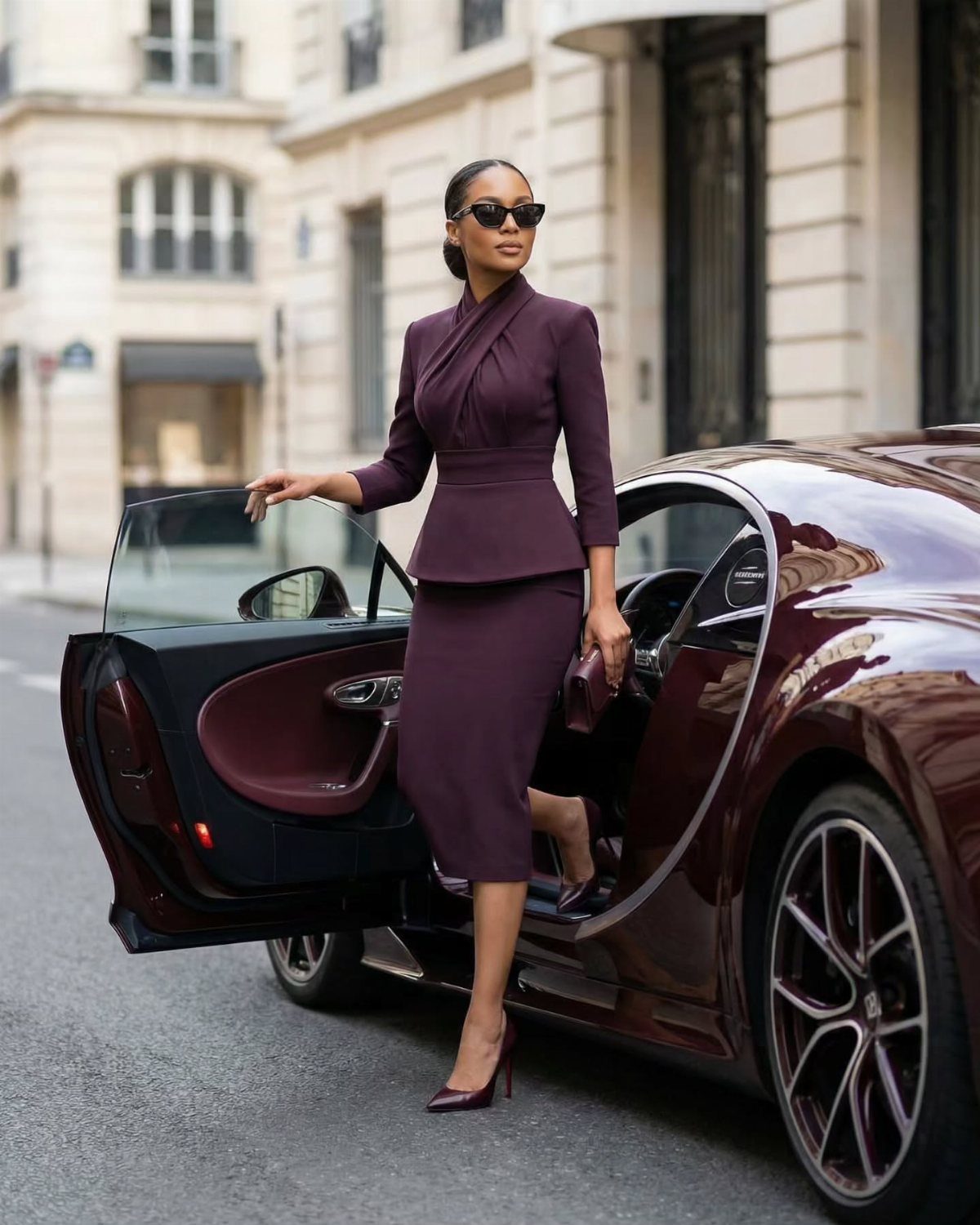
A plum peplum suit that fits like it was made for you does more for your presence than any label ever could.
I learned this the hard way after buying an expensive off-the-rack suit that gaped at the waist and pulled across the shoulders; a trip to a tailor fixed a mistake that cost far more than the alteration.
The peplum jacket nips in at the waist and flares slightly at the hip, which works especially well for hourglass and pear shapes.
Pair it with a pencil skirt that hits at or just below the knee for the cleanest line.
This is the outfit I’d reach for when I need to walk into a client dinner or a board presentation and not think about my clothes once I’m there. The matching set reads intentional; the fit reads expensive.
2. Essential Wardrobe Staples
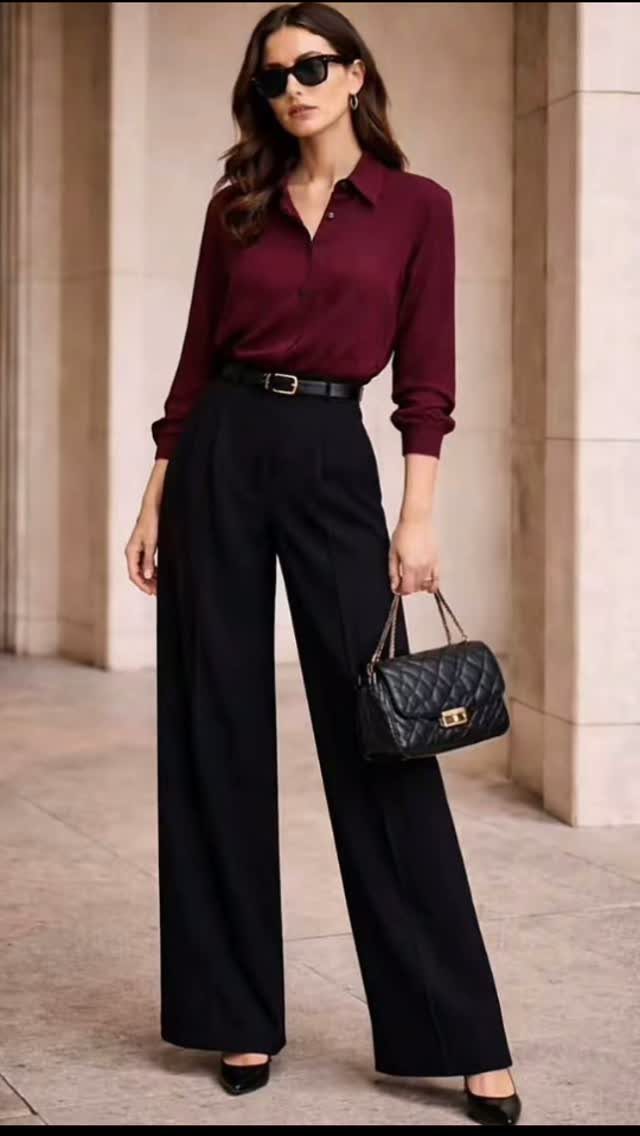
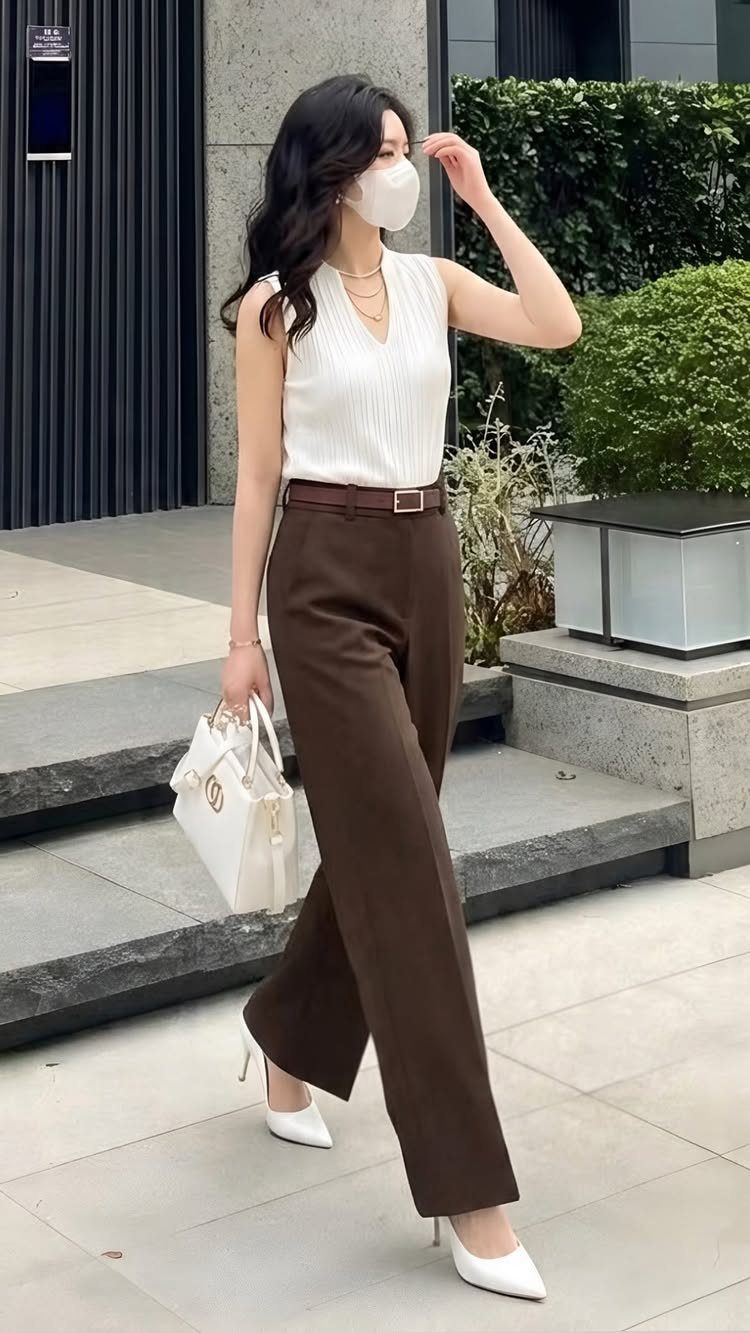
From these, I can pull together enough combinations that a full repeat feels like a choice, not a constraint.
A non-neutral top still anchors to the same system when the trousers and blazer stay in the same neutral family. A quilted bag adds texture without introducing a third color.
I build around one suit in black, navy, or camel. The blazer and trousers work together for interviews; separately, the blazer sharpens dark denim for casual Fridays, and the trousers pair with a fine-knit sweater for days between formality levels.
Two blouses in solid colors, one sheath dress, and two pairs of shoes, one heeled and one flat, complete the capsule. The whole system fits in half a closet and removes the morning decision fatigue entirely.
3. Business Casual Outfit
Dark jeans with a striped button-down and navy blazer hits the sweet spot for offices where "professional" lives in a wide middle ground.
The jeans need to be truly dark, no fading, and the blazer needs to be structured enough that the outfit still holds up if a meeting appears on your calendar mid-afternoon.
I wear this with leather loafers rather than heels; after a full day, my feet still feel human. Silver hoops and a metal bangle add polish without noise.
This combination works best in creative industries, hybrid schedules, or any workplace where the dress code reads "look put-together" rather than "wear a suit." The blazer does the authority work; the jeans do the comfort work.
Stripes add just enough pattern to keep it from feeling like a uniform you settled for.
4. Monochrome Look
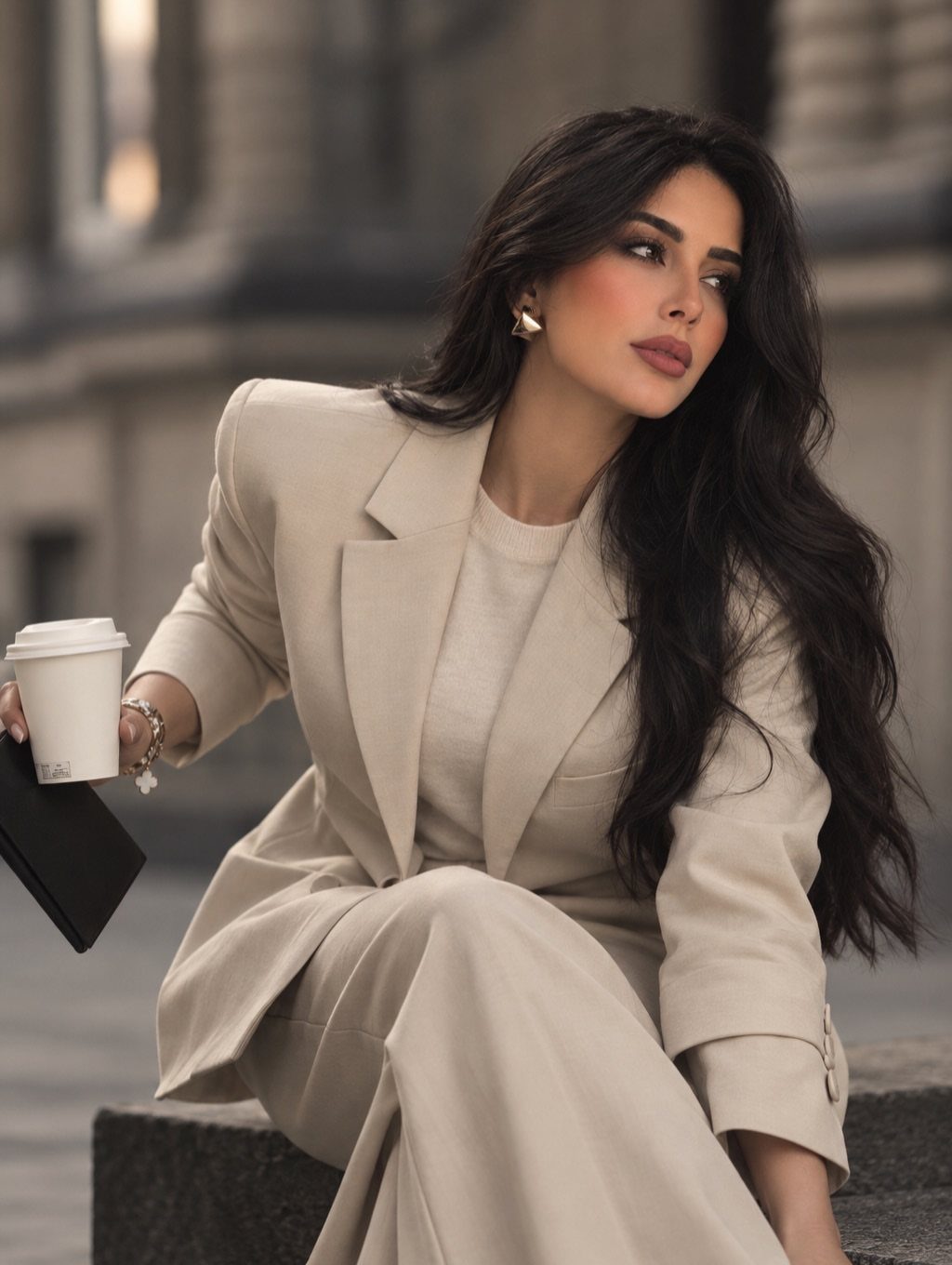
Wearing one color from shoulder to hem lengthens the silhouette and removes every decision about what "goes with" what.
A beige suit relies on texture to keep it alive: a ribbed knit top against the smooth suiting fabric creates depth without breaking the line.
I find this works most powerfully in deep tones, all-black or all-navy, where the single color reads as deliberate authority. Cream and beige offer a quieter version, what some call soft luxury, that still commands attention without shouting.
Mixing finishes keeps the look from going flat. Matte trousers with a slightly glossy blouse, or a wool blazer over silk, keeps the eye moving.
Jewelry stays minimal; the color statement is the statement. This is the look I’d choose for a day when I need to feel like the most composed person in any room I enter.
5. Structured Blazer
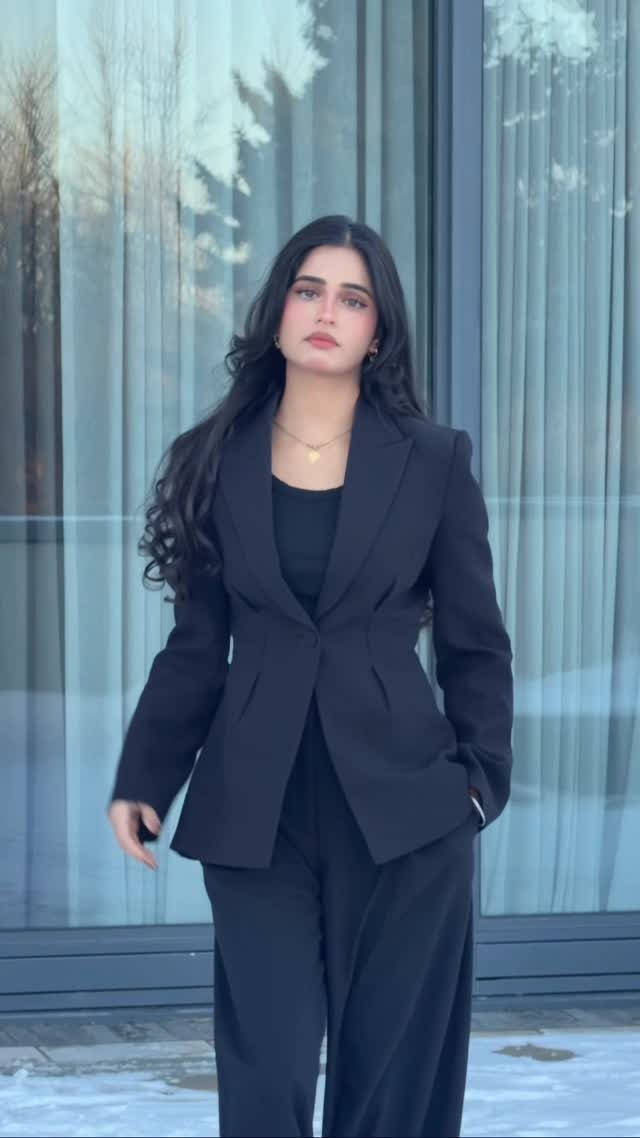
The structured blazer is the single piece that pulls together whatever sits underneath it. Thrown over a sheath dress, it adds architectural shoulders and a defined waist.
Over a jumpsuit with a self-tie belt, it creates a one-and-done outfit that moves from desk to dinner without a change.
I prefer mine fitted rather than oversized for this purpose; the clean line at the waist matters more to me than the relaxed silhouette that’s trending.
Black or navy covers nearly every scenario, though a bolder color works if the rest of your capsule is neutral.
For after-hours networking or industry panels, a sleek jumpsuit underneath with black pointed-toe heels extends the line. One bracelet or a pair of silver drops is enough; the blazer itself is the accessory doing the work.
This is the piece I’d replace first if I lost my entire wardrobe tomorrow.
6. Wide-Leg Trousers
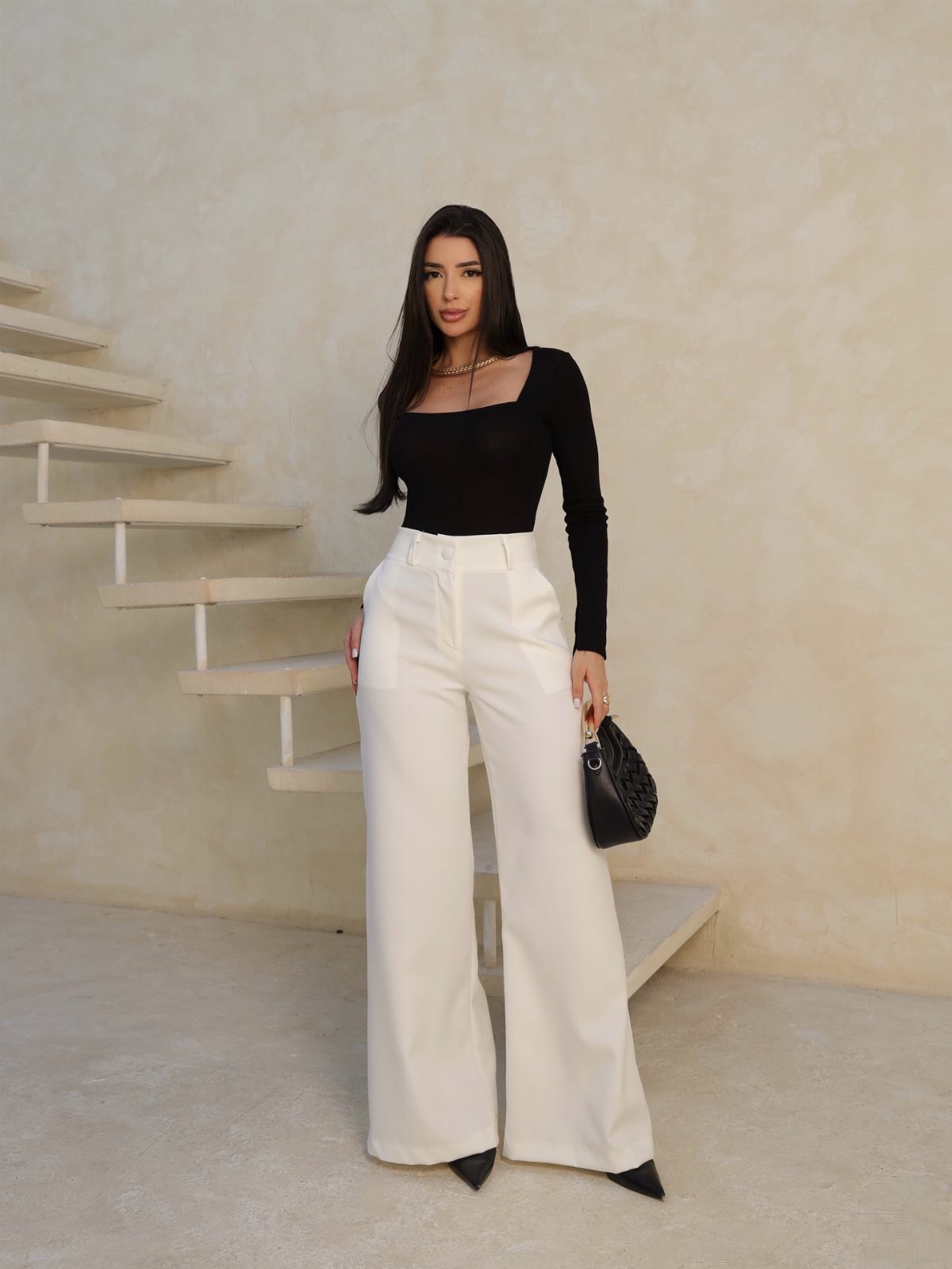
Wide-leg trousers with a fitted black top reverse the proportions of the traditional power suit and feel immediately current.
The fluid cut at the leg needs the structure of a fitted or tucked-in top to balance it; otherwise the silhouette swallows you.
I pair these with a square-neck top or fine-knit sweater, never both voluminous. For shoes, pointed flats or a low block heel keep the hemline from dragging and the look grounded.
The trouser length is the make-or-break detail. Too long and they pool sloppily; too short and they read as ready for flood season.
Tailoring is non-negotiable here, especially for petite frames where the wide leg can overwhelm if the proportion isn’t precise.
This combination works across body types when the fit is exact: the relaxed cut allows movement, the waist definition keeps it sharp.
7. Power Dressing
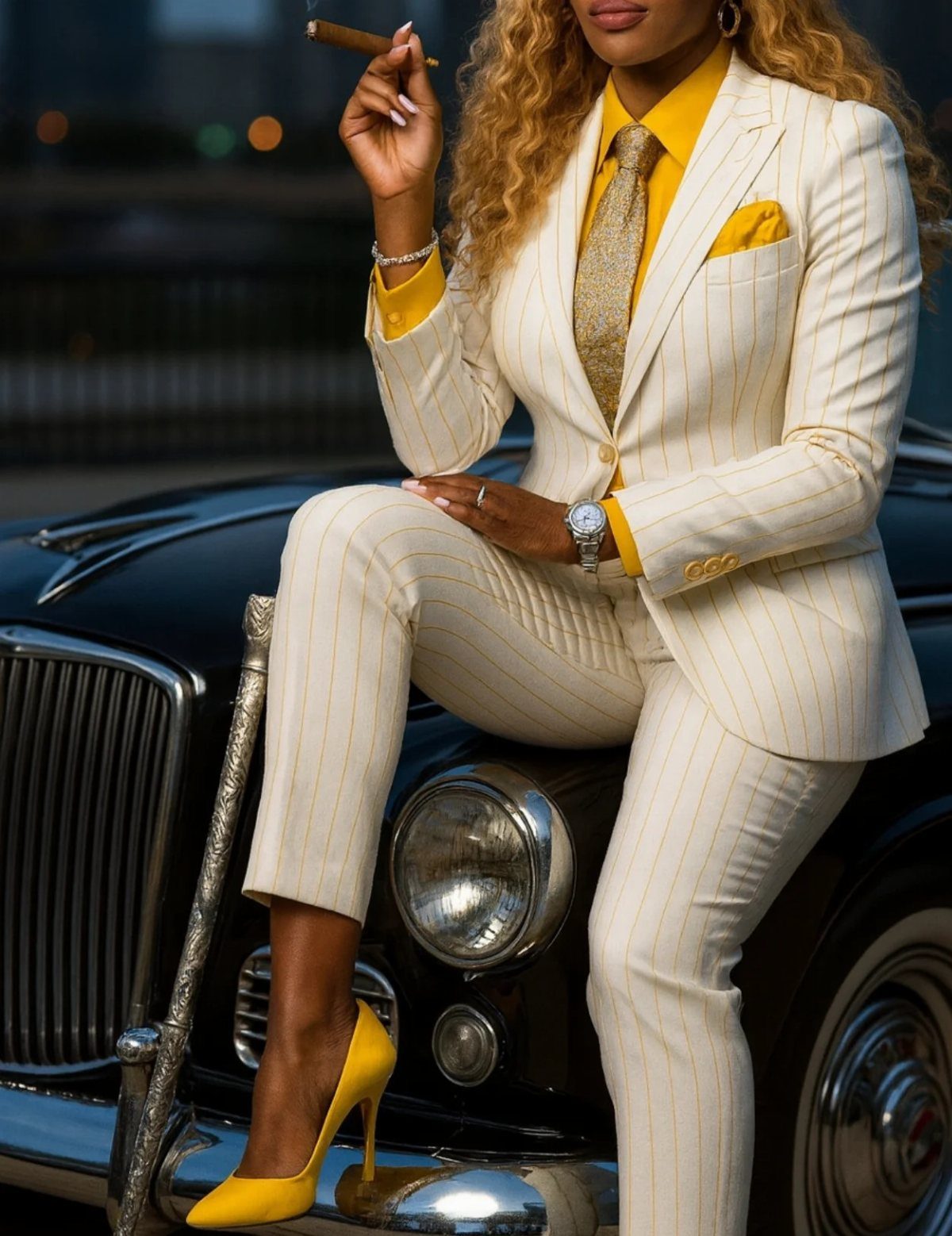
Power dressing is the deliberate use of structure, color, and fit to signal competence before you speak.
Strong shoulders, precise tailoring, and bold or deeply neutral tones do the heavy lifting; jewelry adds the finish that makes the look personal rather than uniform.
Small stud earrings or a slim watch show you attend to details without looking dressed for a party. The balance matters: polished, not performative.
I’d reach for this strategy on days when the room still expects someone else to lead. It trades some spontaneity for authority, which is the point.
8. Job Interview Outfit
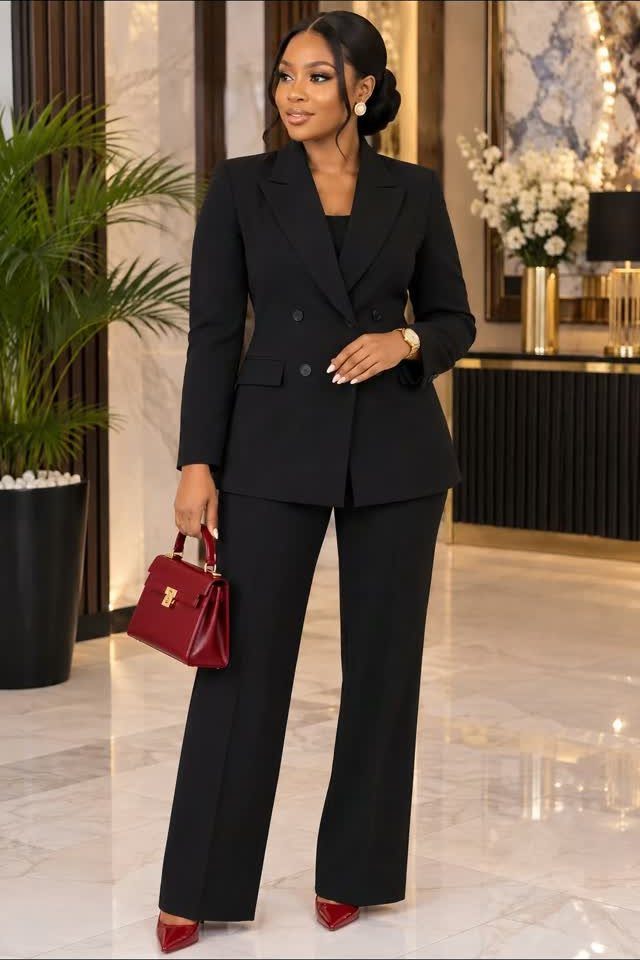
A navy or charcoal pantsuit with a white silk blouse and closed-toe pumps remains the safest choice for an interview where you need zero risk.
The combination reads traditional, respectful, and prepared; small stud earrings and a classic watch keep the focus on what you say. Red heels and a matching bag work if the company culture allows personality through the door.
I’d save that bolder move for second-round conversations where you’ve already proven you belong. For first meetings, let the tailoring speak and keep the color quiet.
9. Belted Leather Trench Coat
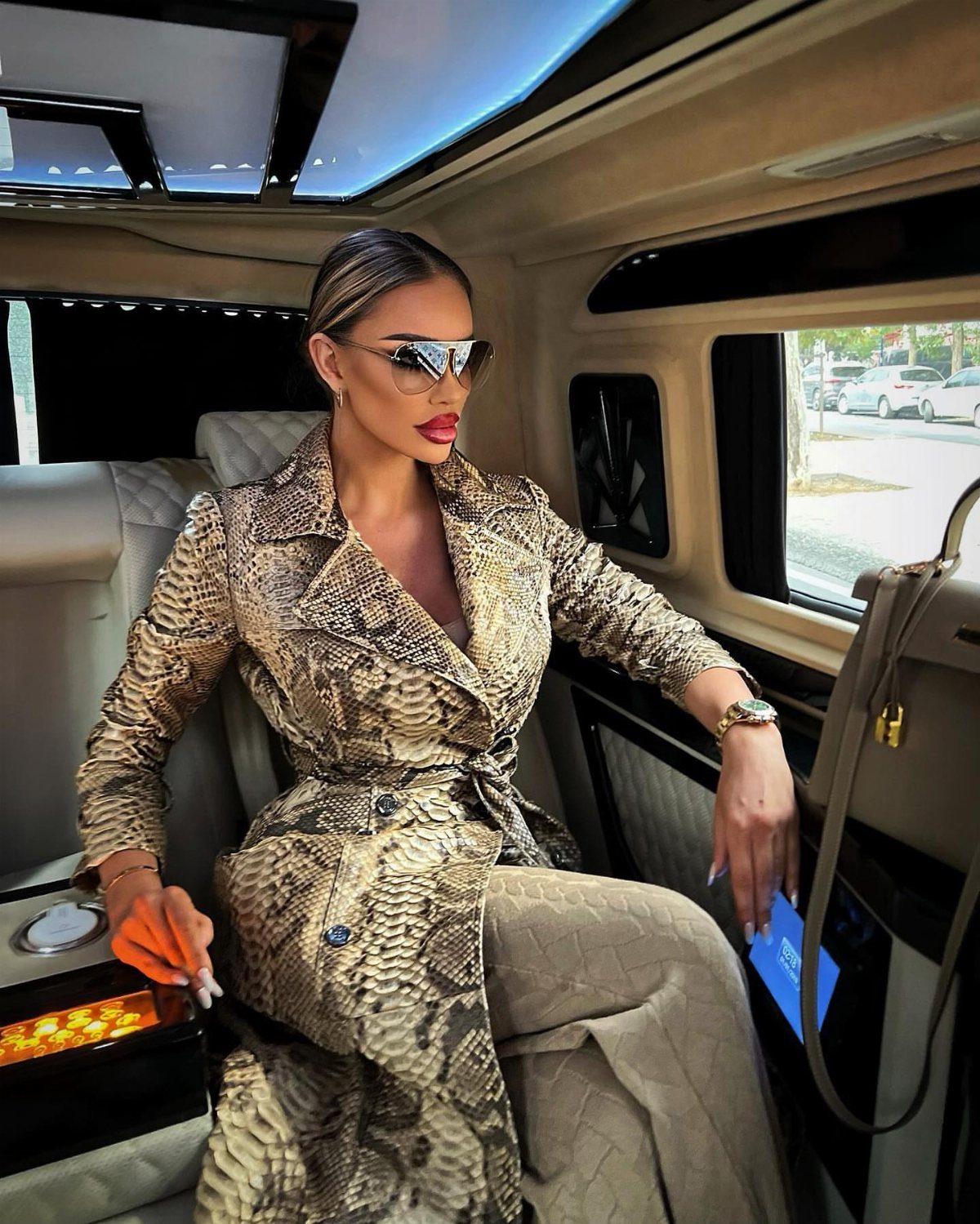
A belted leather trench over a tailored suit adds edge to boardroom structure when the temperature drops. The long lines amplify the authority underneath; leave it unbuttoned to let the suit show, or belt it closed for a sculpted waist.
Large sunglasses and a structured bag finish it, but nothing more: this outfit already carries enough statement. I’d wear this version for client dinners or days when the parking lot is as public as the meeting room.
10. Crisp White Shirt
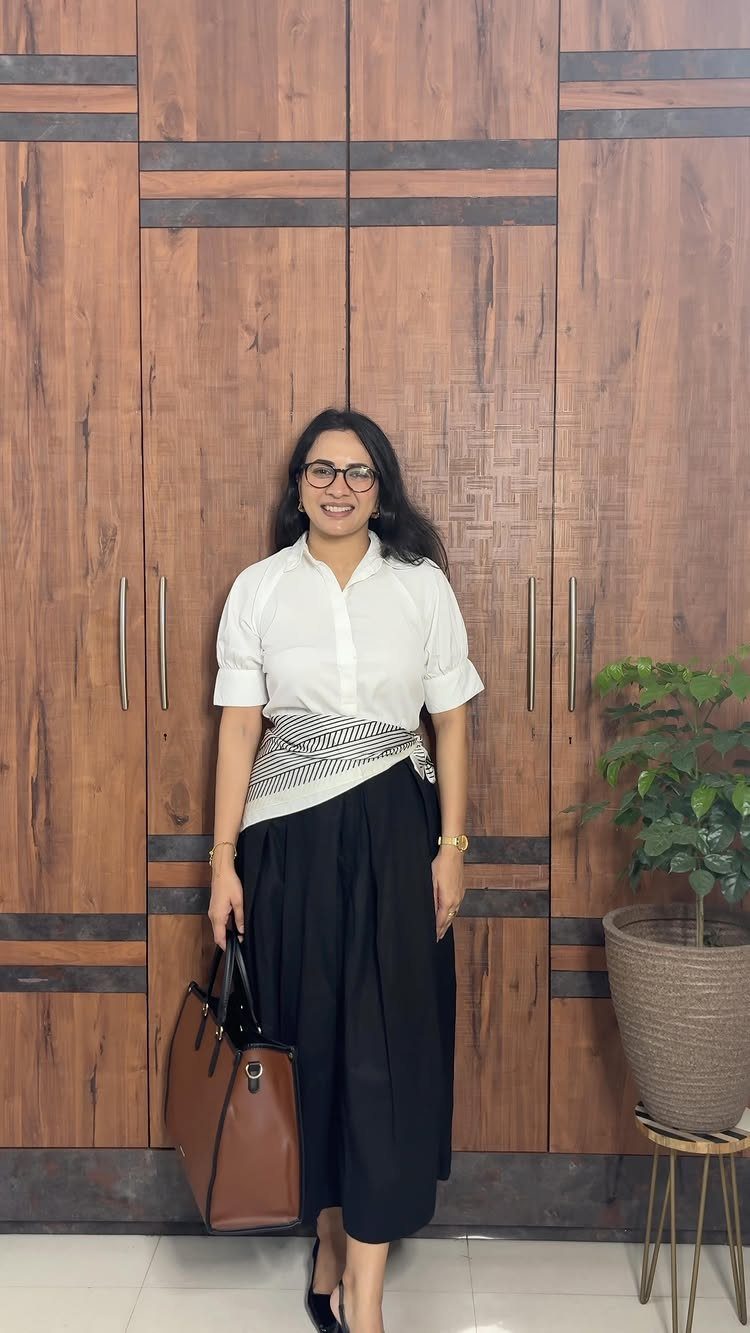
A crisp white shirt, ironed flat and tucked clean, is the most reliable piece in a working wardrobe. It pairs with every blazer and skirt you own, and the polished surface does the work of authority without trying hard.
Short sleeves suit warmer offices or layered days; long sleeves hold more formality for presentations. A plain shirt does the same job without the extra detail.
I’d keep two in rotation: one starched for high-stakes mornings, one softer for travel days. The only maintenance is the iron, and that pays back all day.
11. Colorful Pantsuit
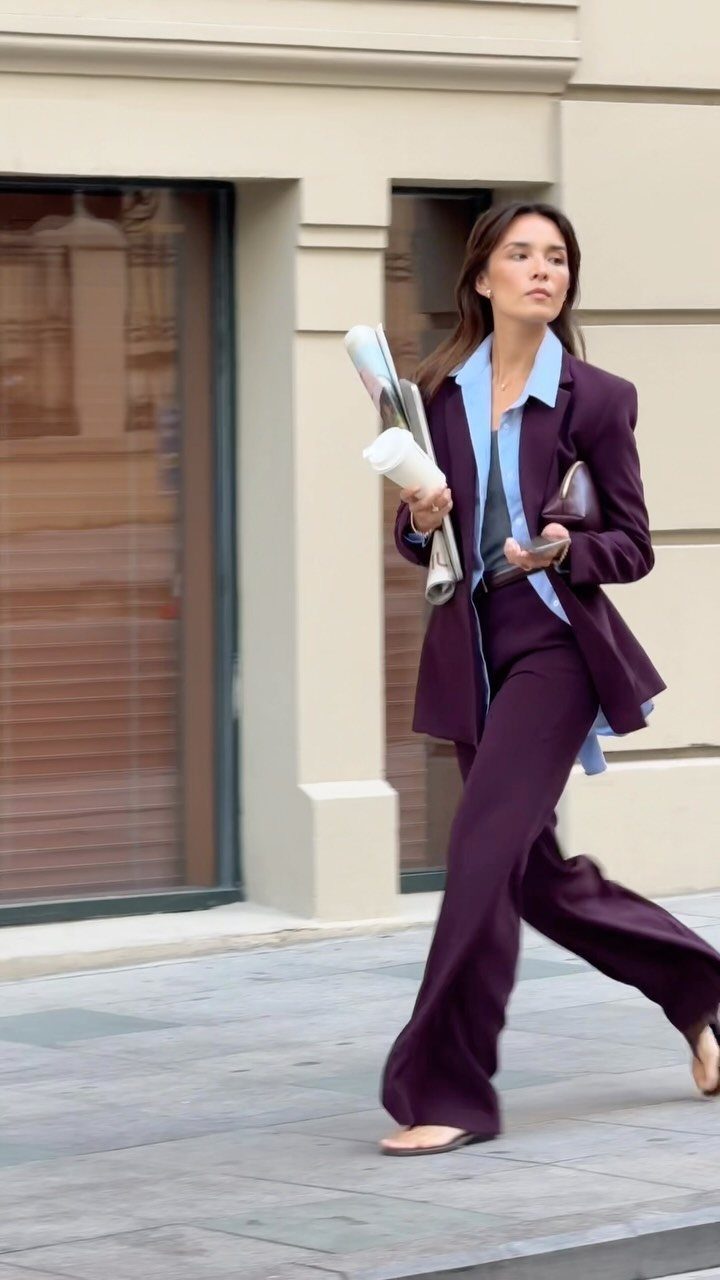
A plum pantsuit reads serious without surrendering to charcoal boredom. The cut matters more than the color: shoulders that sit exactly at your bone, trousers that break cleanly over a heel.
Layer a light blue shirt underneath to cool the purple down for daytime; swap to ivory or even a thin black knit for evening client dinners.
The shirt collar should peek above the jacket lapel by half an inch, no more. This pairing works best in creative fields or anywhere dress codes have relaxed past navy-only territory.
In law or conservative finance, I’d still reach for the charcoal first and save this for the day I already have the room’s attention.
12. Striped Shirt and Pencil Skirt
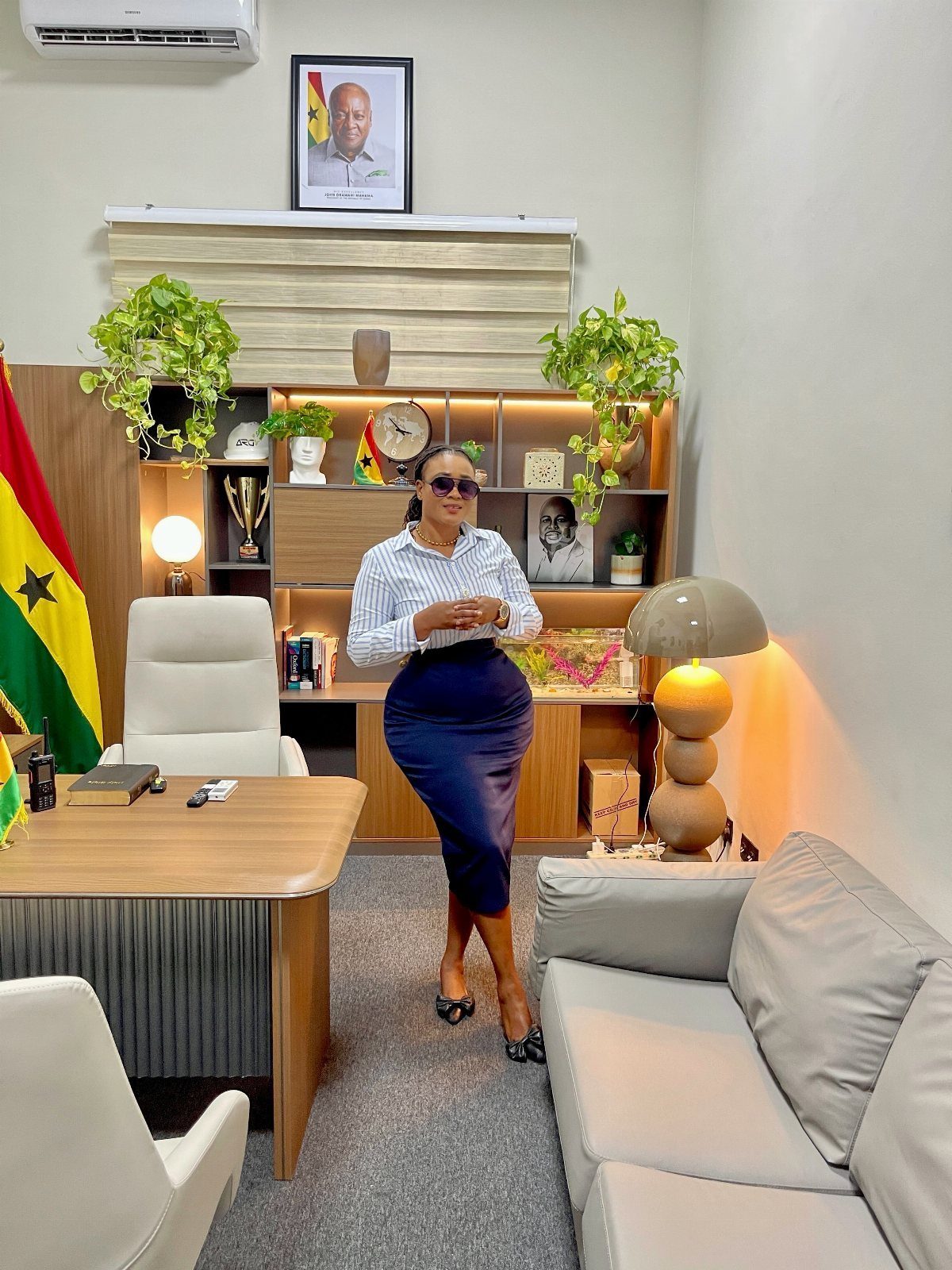
The pencil skirt survives because it does one job perfectly: it creates a straight line from hip to knee that reads as controlled and intentional.
A striped shirt softens the formality without weakening it; the stripes add movement where a solid shirt would go flat.
Navy skirt, white ground stripe, black heel with some pattern or texture to it: that formula has held for decades for a reason.
Tuck fully and add a slim belt if your waist is your advantage; leave a half-tuck or wear the shirt untucked with a shorter skirt only if your torso runs long.
The heel height is negotiable; the skirt length is not. At or just below the knee works on every body.
Shorter starts reading as social, not professional.
13. Pinstriped Co-Ord Set
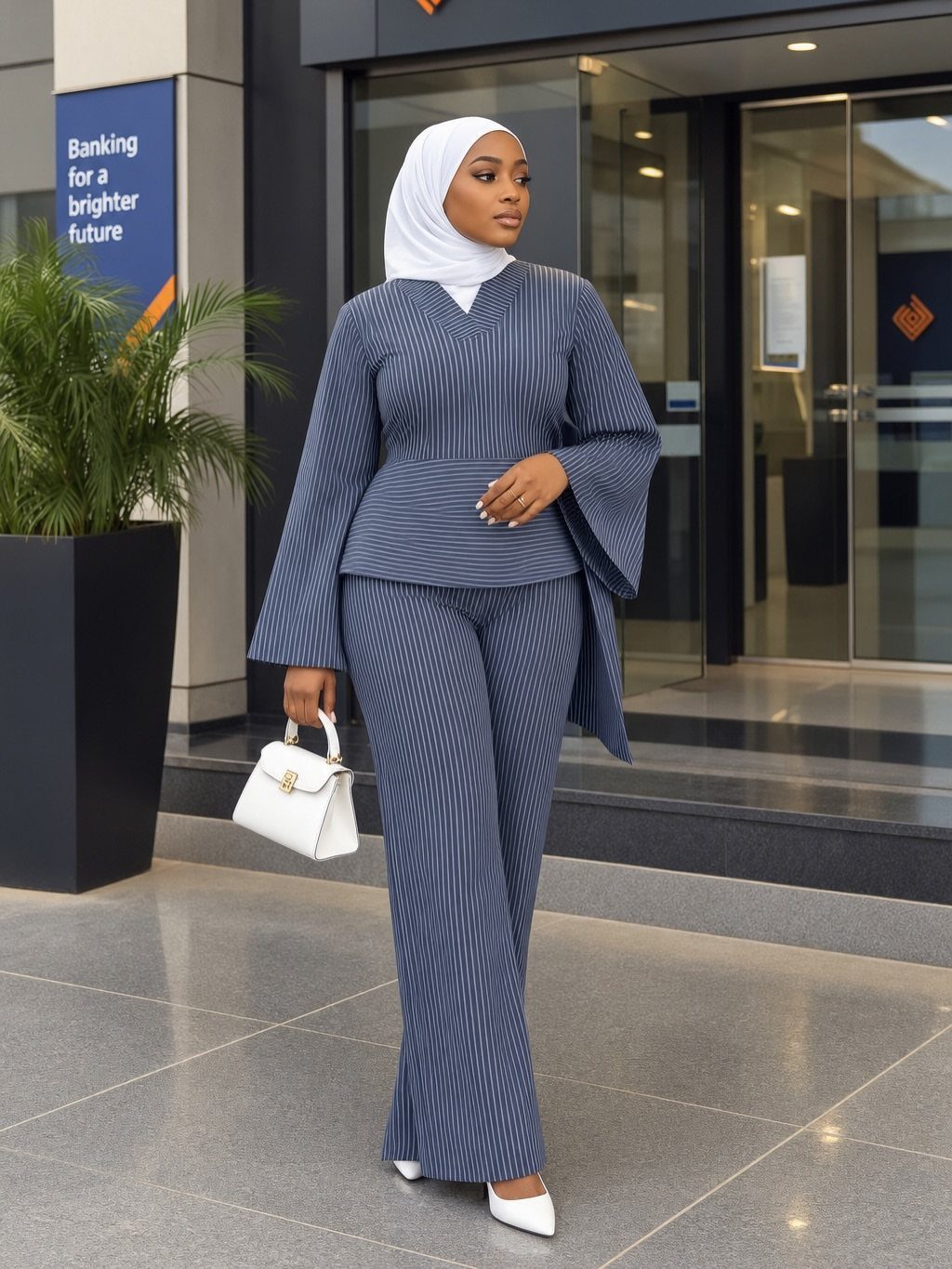
Pinstripe carries automatic boardroom associations, so a wide sleeve and wide leg feel like a deliberate loosening rather than a mistake. The proportions need attention: the top’s volume only works if the trousers carry equal weight below.
A slim pant with that sleeve would topple the silhouette.
The hijab here is white, clean, and pulled back enough to show the collar line where the jacket opens. That intersection of fabric, right at the sternum, becomes your focal point; keep jewelry minimal or skip it.
This set suits anyone who wants the authority of suiting with the ease of a garment that moves as one piece.
For petites, the wide leg will need a heel height you can actually walk in all day; the floor-grazing length only works if it grazes, not pools.
14. Vibrant Office Maxi Dress
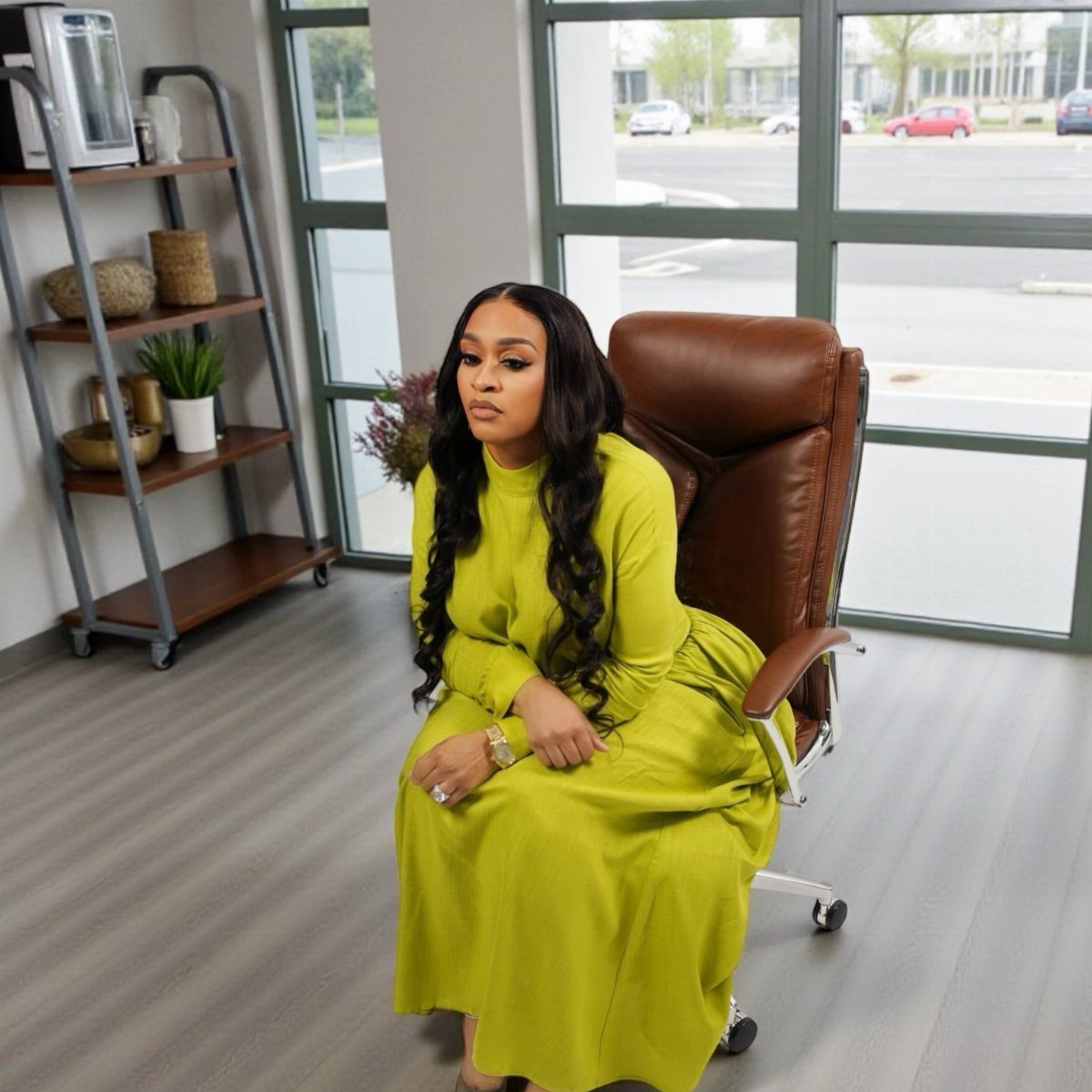
A maxi dress in lime green is a bet on being remembered, and the long sleeve keeps it from reading as resort wear.
The fabric needs enough weight to fall cleanly; anything too light will cling and wander as you move. Look for a matte finish rather than shine, which pushes the color toward costume.
This works as a power move in fields where personal branding matters: creative directors, public-facing founders, anyone whose presence is part of the product. The office context matters too.
In a glass-walled conference room with men in fleece vests, this lands differently than in a law firm with mahogany furniture.
I’d wear it the day I needed to own a room, not the day I needed to disappear into one.
15. Matching Dress and Coat
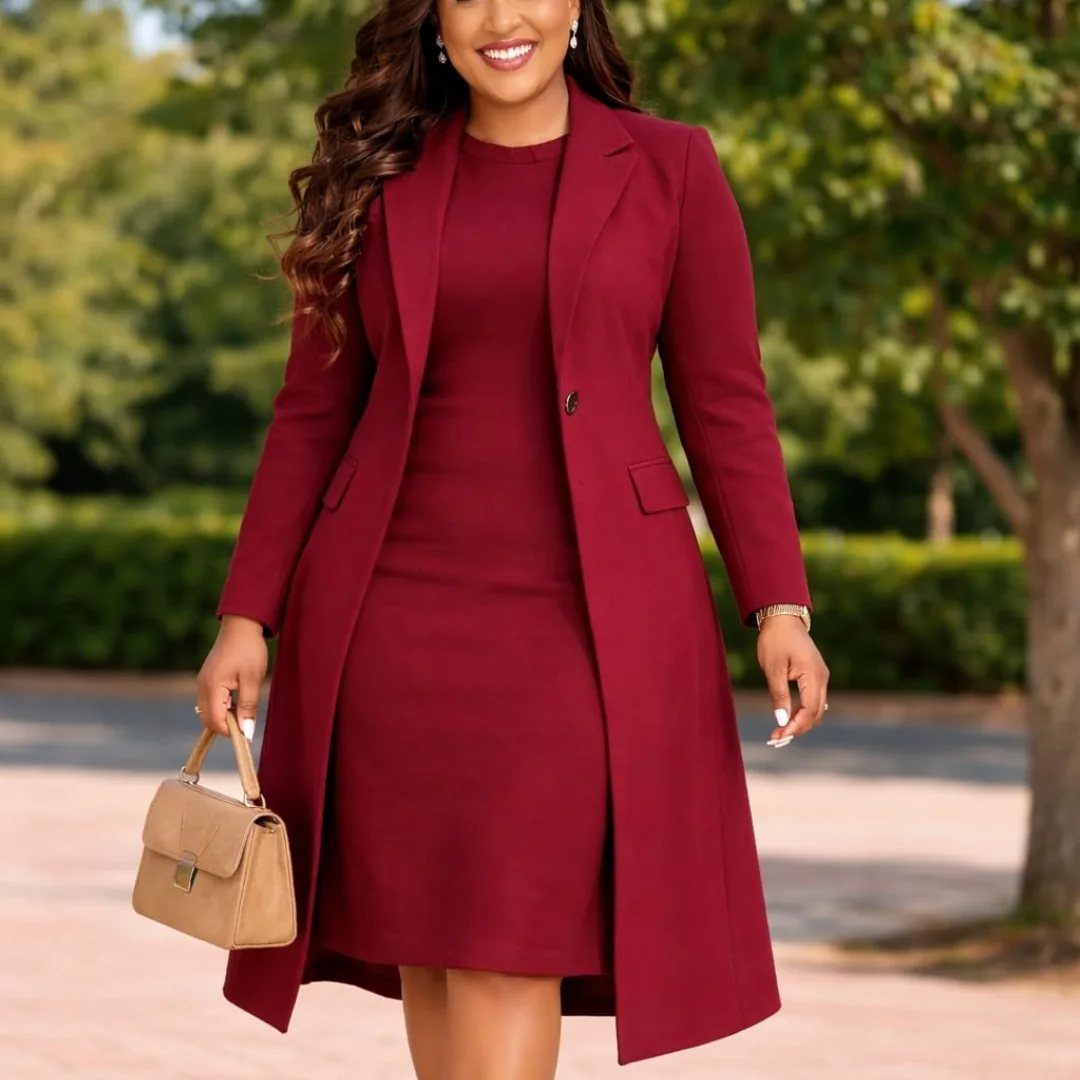
Matching dress and coat in burgundy solves the outerwear problem that ruins most polished outfits: the moment you add a random black puffer, the whole construction collapses.
Here the coat extends the dress rather than fighting it, and the knee length keeps you mobile without the tent effect of longer matched sets.
The tan bag is the release valve; without it, the burgundy would pool too dark. I’d keep shoes in the same tan family or go to a deep ox blood, never black, which would chop the leg line.
This pairing demands a setting where you will both be seen arriving and stay awhile: client presentations, board introductions, any day the walk from car to desk is part of the job.
It trades away the option to shed layers casually; the coat is the look, not an accessory.
16. Waistcoat and Tailored Trousers
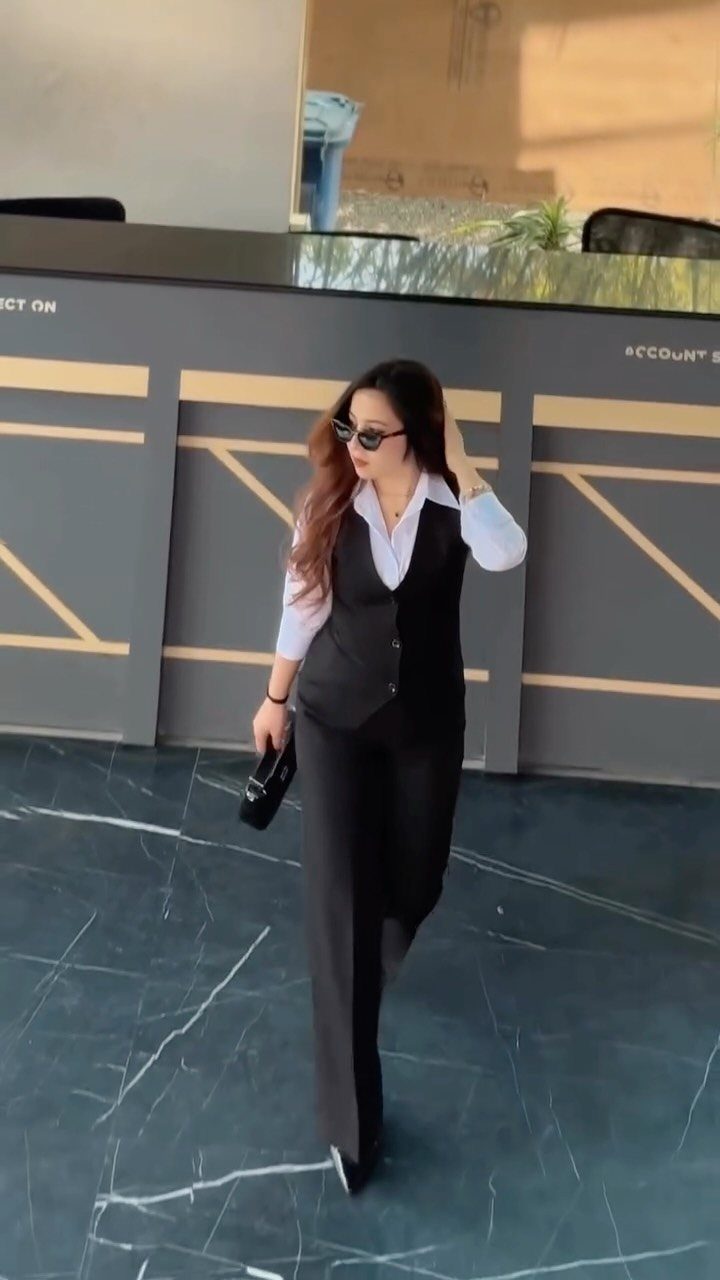
A waistcoat over a white shirt is the halfway point between a full suit and bare arms, and it reads as intentional only if the vest is sharply tailored.
The armhole should cut high and close; any gap and the effect is waiter, not director. Black vest, black trouser, white shirt: the starkness is the point.
The sunglasses here are doing work, adding a barrier that the outfit’s formality might otherwise lack. Without them, I’d add a watch with some presence, or a single ring that catches light when you gesture.
This combination runs leanest on a narrow frame; on curvier bodies, the vest line at the hip needs careful fitting to avoid pulling.
The shirt collar must stay crisp, which means a cotton with body, not a soft drapey weave that collapses by noon.
17. Suit with a Necktie
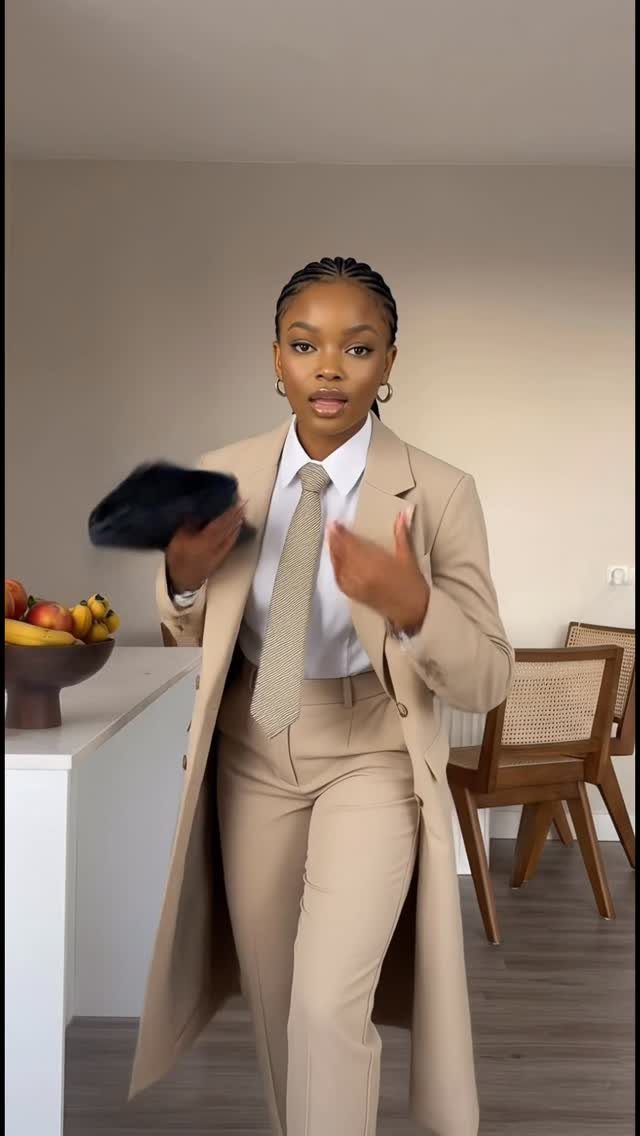
A necktie on a woman still reads as a deliberate choice, not a borrowed gesture. A beige suit with a tonal tie keeps everything within one quiet range, which is how you avoid looking like you raided a men’s department.
Gold jewelry warms up cream or tan suiting without fighting the tie for attention. I’d pick a fine-gauge knit or silk shell underneath rather than a stiff dress shirt; the soft layer keeps the tie from looking costume-y.
This works best for client presentations and leadership events where you want authority with a twist. Skip it if your office leans traditional; the tie will scan as provocation where a plain suit would scan as standard.
18. Blazer and Jeans

The black blazer and light-wash jeans behind that "THE BOSS" nameplate make the point without shouting it.
Clean, dark indigo reads more commanding than faded or distressed denim; if your wash is closer to the photo’s lighter blue, keep the blazer sharply tailored to balance it.
Pointed-toe ankle boots or leather loafers pull the look back from weekend territory. A structured tote helps too.
This combination suits creative offices, tech environments, and Fridays when the calendar still holds surprises. It trades some formality for comfort, so I’d wear it when I’m running the meeting rather than interviewing for one.
19. Blazer Over a Turtleneck
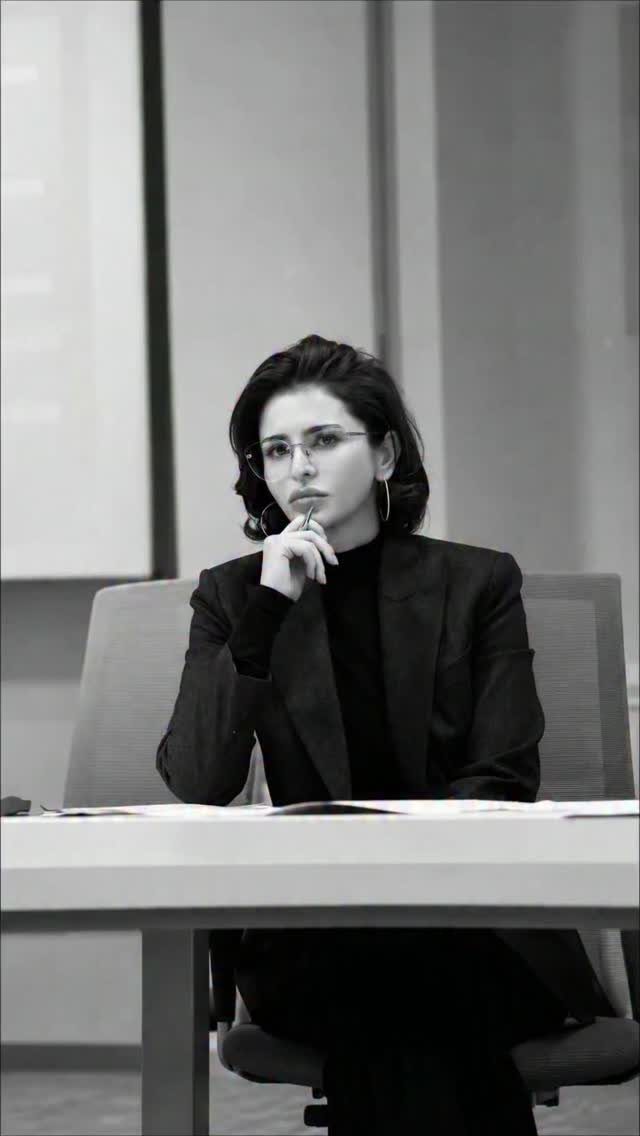
Layering a blazer over a turtleneck solves the gap problem: no shirt tails, no collar fighting the jacket’s line. Black-on-black reads sleek and slightly severe; hoop earrings soften it just enough.
A fine-gauge knit lies flat and stays put, while a chunky roll will bulk under the blazer’s shoulders. Burgundy leather works here too for fall, though that shifts the mood from minimalist to statement.
This pairing suits anyone who runs cold in over-air-conditioned offices or wants one less decision in the morning. Near-total coverage has its cost.
If you run warm or the room runs hot, keep a lighter shell in your desk drawer.
Psychology of Dressing
Researchers have a name for how clothes change your headspace: enclothed cognition, the idea that slipping into certain pieces actually shifts how your brain operates.
A tailored blazer flips that switch toward work mode in a way sweatpants at your desk simply cannot.
The people around you read it as respect for the moment and the space. Clothing that supports good posture, with structure at the shoulders and a clean waist, translates into more deliberate movement and a steadier voice.
The fit matters more than the label; a secure, non-fussy garment lets you forget your clothes and focus on the task. I’d choose structure over trend on days when the presentation or the client meeting needs my full attention.
Historical Context of Power Dressing
The power-dressing story really starts mid-century, when women began showing up in offices and boardrooms in numbers that could not be ignored.
The 1980s pushed the silhouette further with big shoulder pads and boxy blazers as more women entered executive roles. That era demanded a near-uniform to be taken seriously, often at the cost of hiding femininity.
The modern version trades rigid conformity for polish that still reads as individual. I’d take the current approach: authority without the costume.
Importance of Tailoring
Tailoring makes off-the-rack clothing work with your body instead of against it.
If you cannot grab a little looseness between thumb and finger, size up. Pants that drag or a jacket that strains across the back ruin the look faster than any fabric choice.
Buy for the shoulders and waist, then spend the extra on hem and waist adjustments. Clean lines suggest precision and control; loose or ill-fitting clothing reads as accidental.
I’d rather own one tailored blazer than three that almost fit.
Accessorizing Tips
One statement piece communicates more confidence than layers of competing detail. A bold watch, a structured bag, or sharp heels does the work; add earrings or a bangle and stop.
A structured bag with minimal hardware upgrades the whole outfit without swapping a single garment. A quality watch reads as consistently authoritative.
For footwear, pointed-toe heels or polished loafers reinforce the tailored feeling. Clean-lined sunglasses with some architectural weight to the frame carry the same authority outside as a good watch does indoors.
Jewelry is where personality shows, but the balance matters. In a room of grey suits, your piece makes you identifiable; too much reads as dressed for elsewhere.
I’d pick one focal point and let the rest stay quiet.
Frequently Asked Questions
What do female CEOs wear?
Tailored suits in navy, charcoal, or black with precise fit at the waist and shoulders remain the standard. A structured blazer over a sheath dress or crisp white blouse signals preparation without distraction.
Closed-toe pumps and minimal jewelry, small studs or a slim watch, keep attention on competence rather than costume. For cultures that allow personality, a red heel or matching bag works after the first meeting is won.
What does a boss lady look like?
She looks like someone who chose her clothes to project control rather than follow a uniform.
That might mean a sharply tailored suit, a monochrome look in deep tone or soft neutral, or a structured blazer over dark denim, depending on what makes her feel most authoritative.
The common thread is intention: fit, structure, and color selected to support presence before words. Personal identity shows in one confident focal point, not in chasing every trend.