
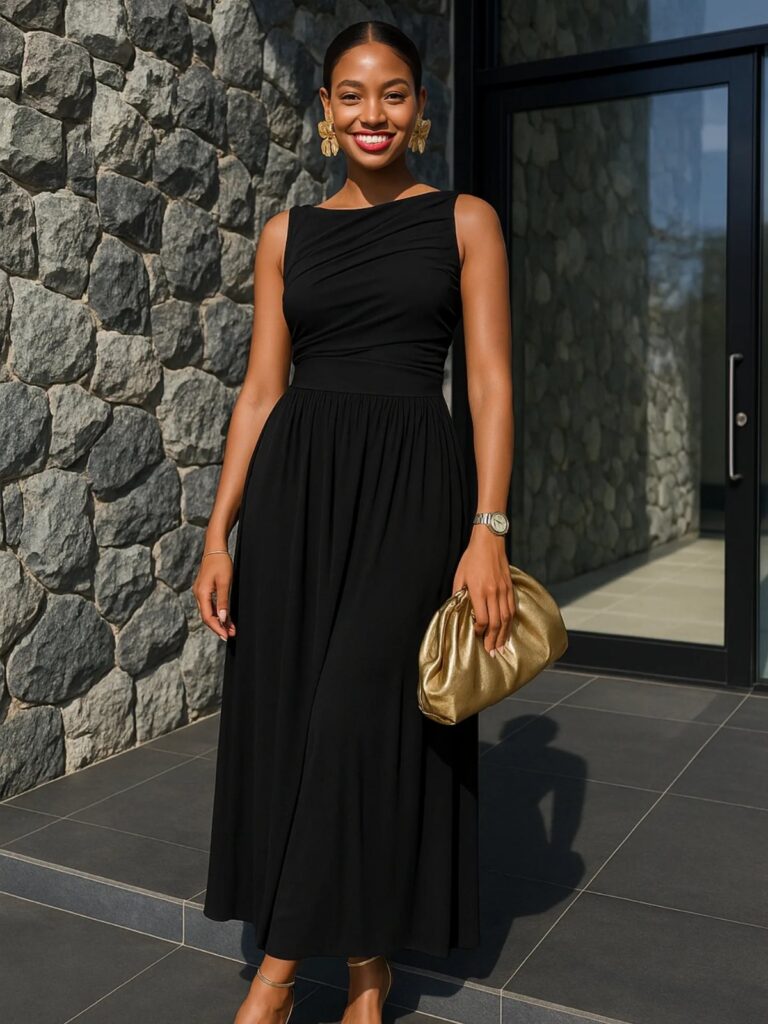
The right black dress idea depends less on trend than on where you’re taking it and what you already own, whether that means a quick belt fix or full-length lace.
A breathability check separates the maxi that works from the one that doesn’t; an inseam measurement decides whether the same hem drags or floats.
The post below gives the numbers to check and the exact accessory that shifts the same dress from office AC to after-dark, so you can choose by your calendar, not by runway season.
1. Minimalist Maxi
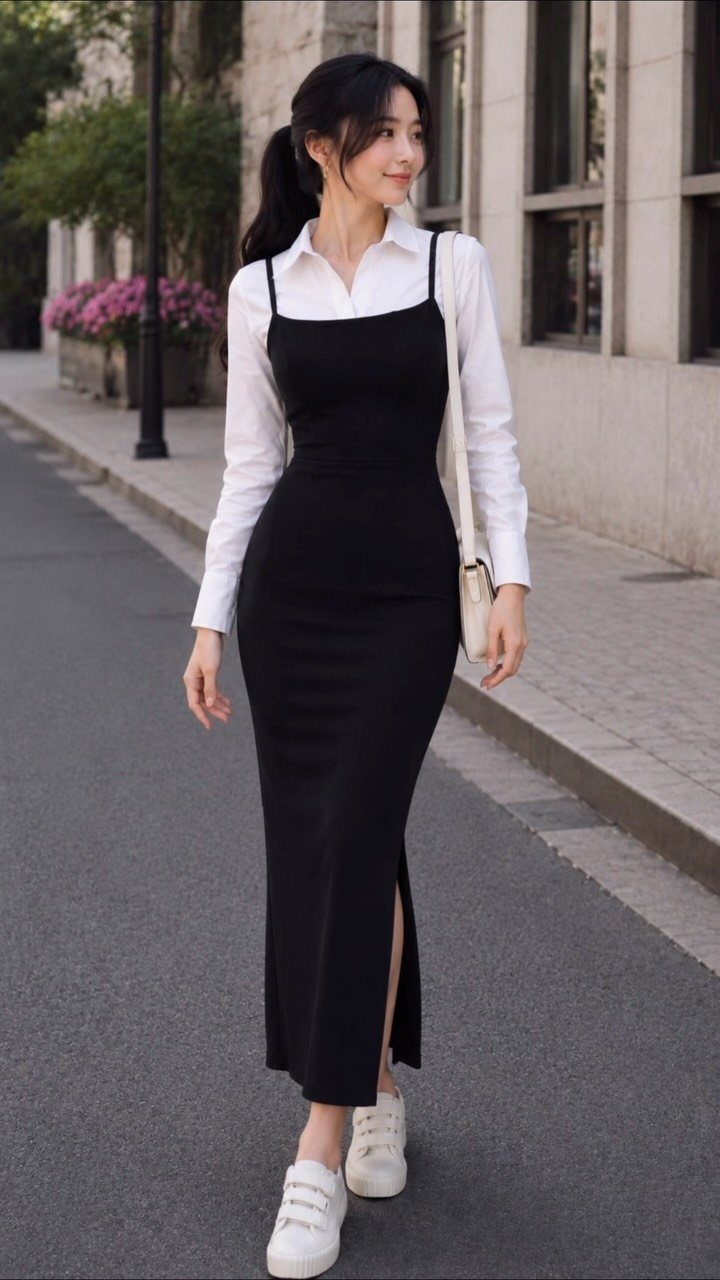
A fitted black maxi in a breathable fabric handles July heat without looking like you gave up. The long line reads as intentional, not lazy, especially when the cut skims rather than swallows.
For city summer days, I’d keep accessories in the same quiet register: leather sandals in a natural tone, a raffia tote that holds actual groceries, and black sunglasses with clean frames.
A thin shirt underneath adds coverage for offices that blast AC; skip it for outdoor-only plans.
This works best for women between 5’4" and 5’8" where the hem doesn’t drag or shorten awkwardly.
Petite readers should check inseam length before ordering; tall readers, look for brands that offer long cuts rather than sizing up and losing the shape through the torso.
2. Ultra Mini
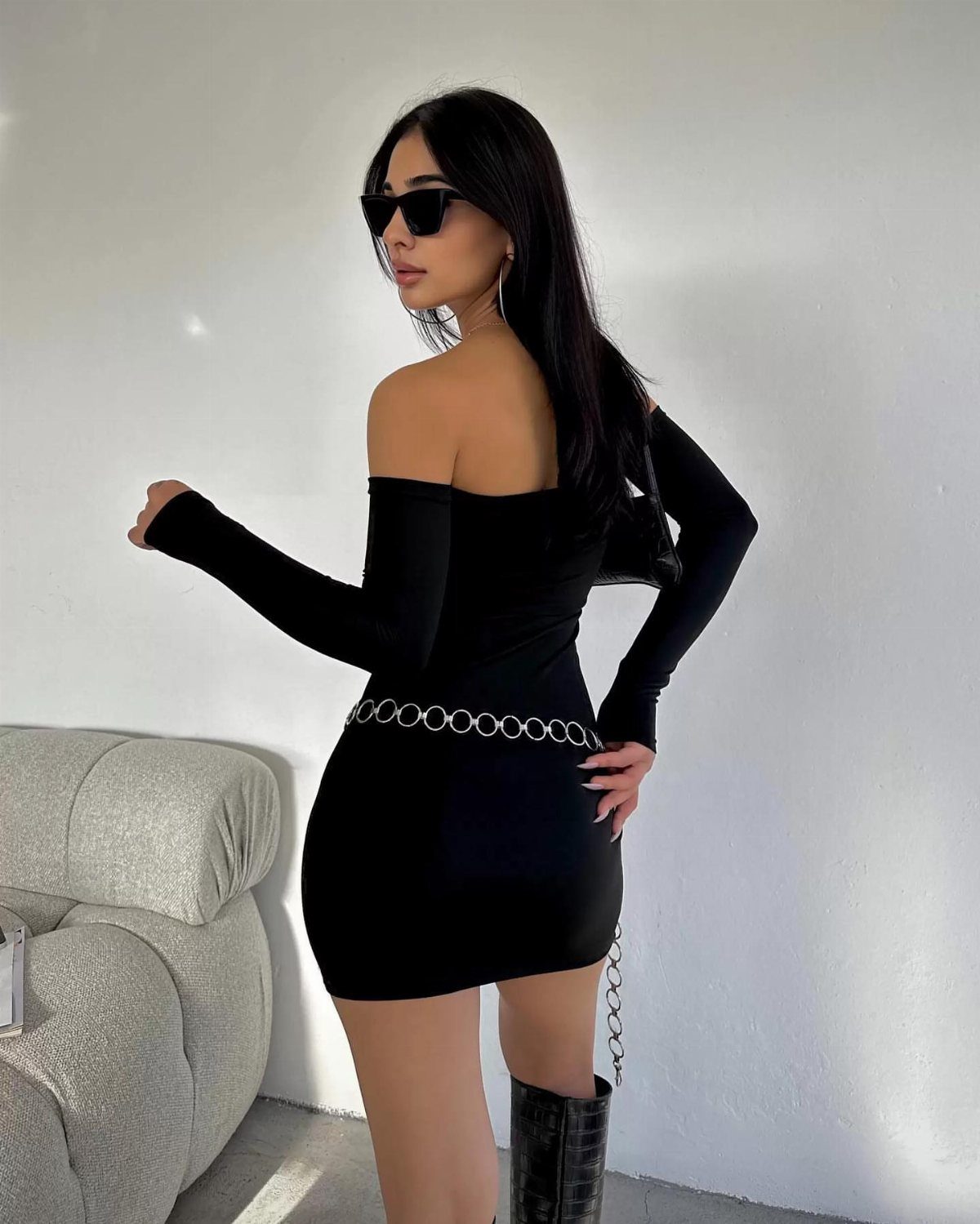
An open back shifts the focus so the short hem stops being the whole story. An off-shoulder cut sits secure enough that you’re not tugging it up through dinner.
Flat sandals ground the look for day; swap to knee-high boots once the weather turns. A silver chain belt at the hip, not the waist, keeps the proportion from going too ’60s costume.
For a casual turn, a colorful woven tote and a thin anklet do the work without clutter.
The mini length demands a fit that doesn’t ride. I’d test this sitting down, reaching up, and bending over before committing.
Women with broader shoulders often find the off-shoulder cut balances them; women who carry weight in their midsection may prefer the belt slung lower or omitted.
3. Date Night

The high neck and long sleeves on a short dress create tension: covered above, open below.
That contrast reads as thought-out rather than thrown-on, which matters when you want to look like you tried without looking like you tried too hard.
Sleek stilettos add height and formality; the heel shape should be thin enough to feel evening, not blocky like office pumps. A delicate necklace fills the space the high neck leaves without competing.
Sheer tights extend the season into fall; bare legs keep it spring and summer.
I’d pick this one for a small group dinner or a first date where the venue leans upscale casual.
The A-line flare through the skirt moves when you walk, which helps if you, like me, forget to think about posture after the second drink.
Women with straighter hips get more drama from the flare; curvier figures may prefer the fit to follow their line more closely.
4. Cocktail Parties
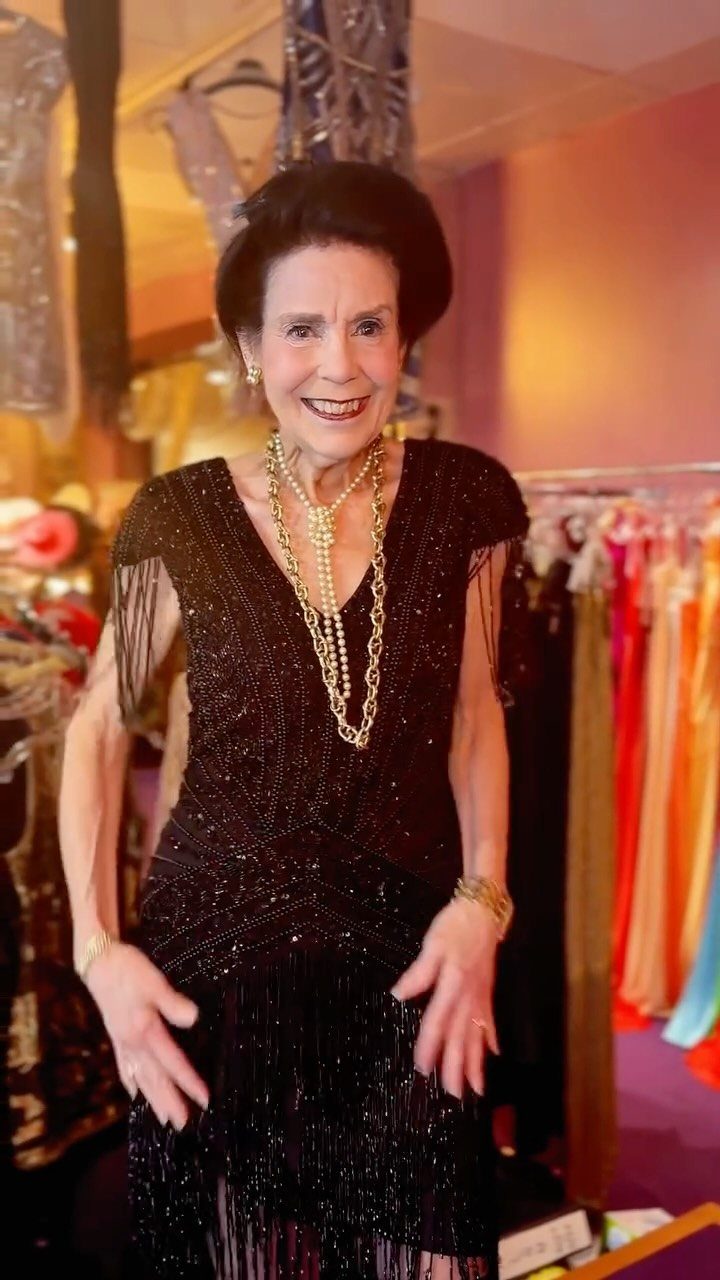
Beading and fringe catch light when you move, which solves the problem of a black dress going flat in a room full of them.
Strappy heels work here because the dress ends above the knee, showing enough leg that the straps don’t cut you off at a bad point. Statement earrings draw the eye up and balance the weight of embellishment at the hem.
The fringe moves, so test it seated: some versions pool strangely in a chair.
This suits women who want to arrive looking dressed up but not costumed. Beaded fringe snags on chair arms and car doors, so weigh that against how much moving you’ll do.
I’d wear this to a standing-room event over a seated dinner.
5. Weddings or Evening Events
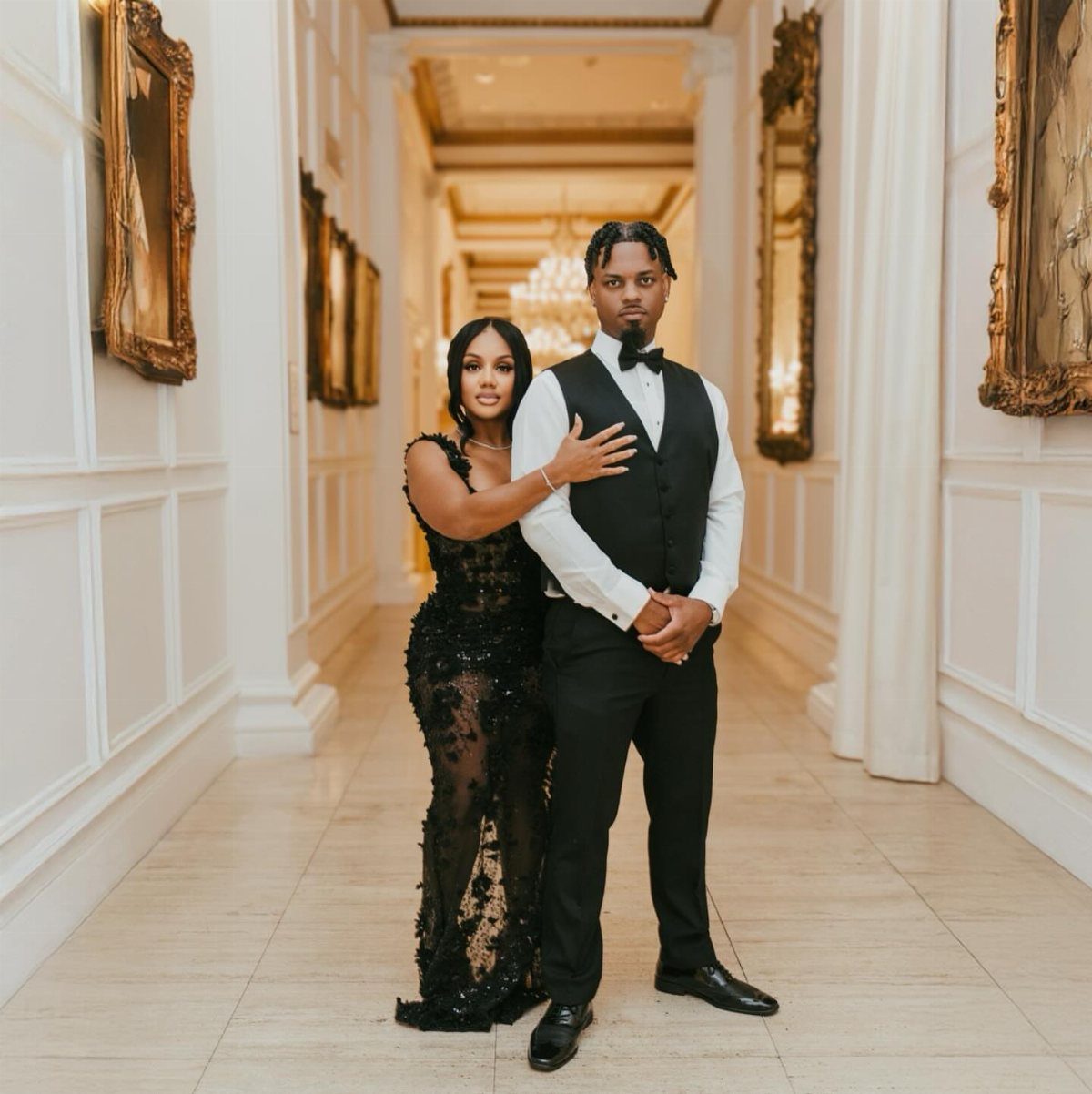
Black at a wedding requires care, but evening events and city ceremonies have loosened the old rules.
Lace reads as celebratory rather than mourning when the pattern is open and the lining stops short of the wrist and ankle, letting skin show through.
Metallic accessories lift the tone: a gold clutch that fits a phone, lipstick, and room key; silver earrings that catch candlelight. Coordinated formality works when your invitation says "black tie optional"; this floor-length cut answers without overreaching.
I’d check the venue before deciding. A hotel ballroom handles lace and sheen; a barn or garden wedding may need simpler fabric and flatter shoes.
The length demands a hem that clears your shoes by half an inch, no more, or the skirt drags and frays. Tall heels help; if you wear flats, have the dress altered.
6. Glam Night Out
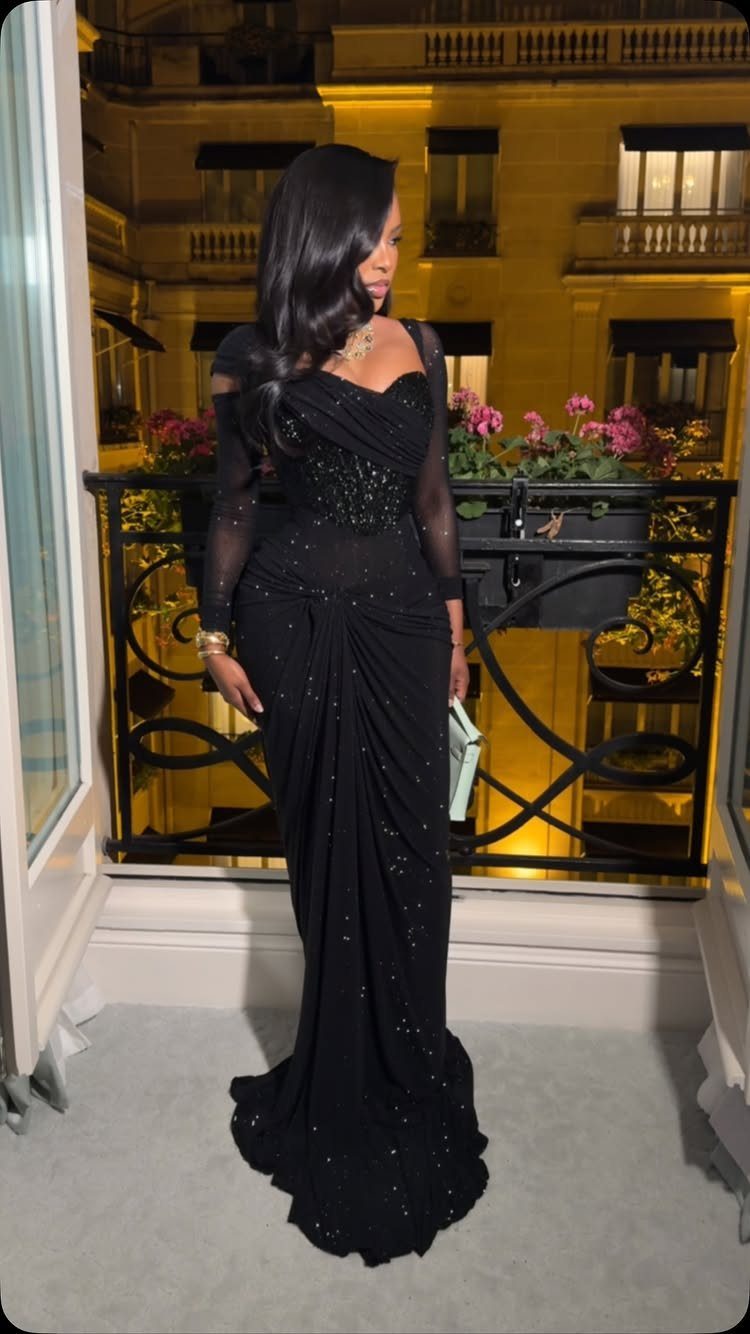
A black dress with subtle shimmer, not full sequin, moves between a restaurant dinner and a late bar without looking wrong in either.
Sheer sleeves give coverage for women who want it; the fitted silhouette keeps the shape defined under a jacket.
A faux fur layer adds warmth for November through March and signals "night out" in a way a wool coat doesn’t. The red lip, in my experience, needs checking after the first drink and again after any food with oil.
Sky-high heels look right here because the dress length covers most of the shoe, so the proportion doesn’t break at the ankle.
This trades walkability for presence. I’d cab or Uber to the door rather than plan a long walk, and I’d bring foldable flats if the night extends past midnight.
Women who run cold should note that sheer sleeves are sheer: the fur jacket stays on, or they accept goosebumps.
7. Accessorize Boldly
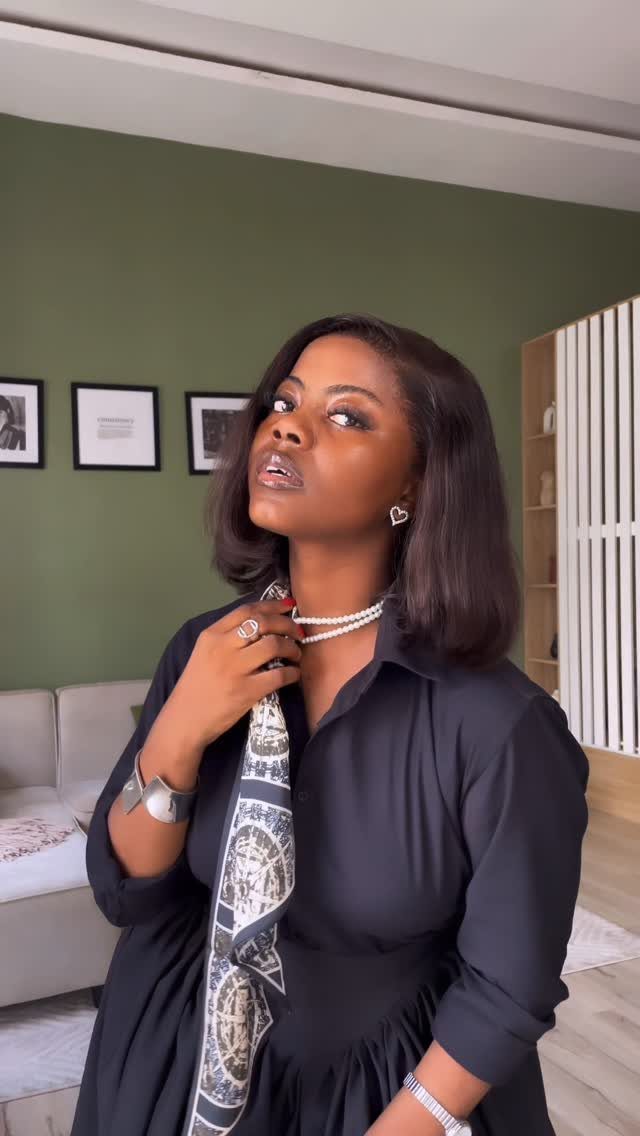
A black dress is the quietest thing in your closet, which is exactly why it can handle noise at your ears, neck, or wrist.
A printed silk scarf knotted at the throat, pearls stacked with a silver cuff: the clash of textures matters more than matching metals.
Start with one piece that reads as deliberate: a collar of heavy links, a silk square in a color that would fight with any other dress, or heels in patent red or cobalt.
If the dress is sleeveless or short-sleeved, the wrist is open territory for a wide cuff. Long sleeves call for a big ring or earrings that move.
This works best when the dress itself is plain, no cutouts or ruffles competing for attention. A statement necklace gets heavy by evening, and scarf knots need checking after a cab ride.
For a full day, I would pick one item and let it carry the whole look.
8. Belt It
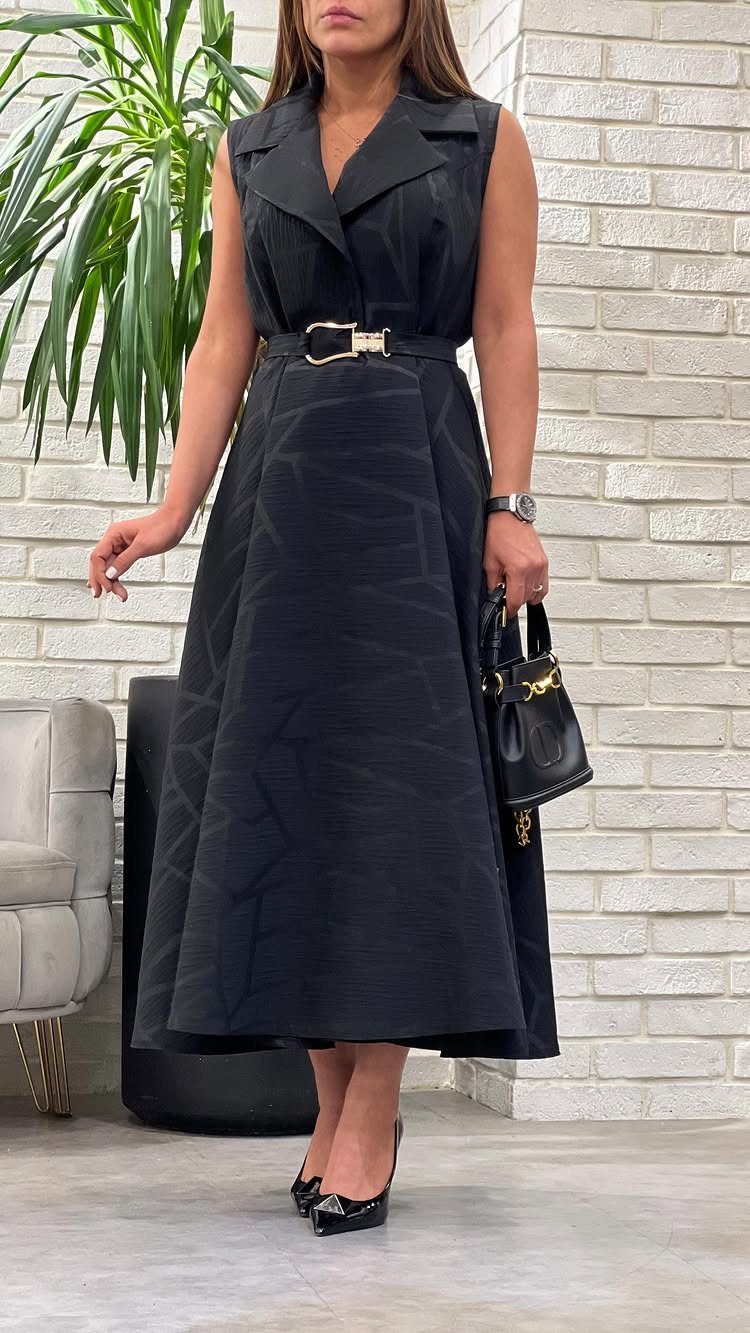
Shapeless black dresses are common, and a belt is the fastest way to claim a waist that got lost in the fabric.
A sleeveless midi-length dress, cinched with a wide black strap and a gold buckle that reads as hardware, not afterthought.
A wide belt in leather or suede adds structure to a shift or tent dress. A chain belt, heavier and cooler against the material, works when the dress is matte and the occasion runs later.
The belt should sit at your natural waist, not where the dress seam happens to fall; try it an inch higher or lower and the whole proportion changes.
This suits anyone whose black dress hangs straight from the shoulder and hides the middle.
The risk is over-belting: if the dress already has ruching, a wrap detail, or a defined waistband, adding a belt looks like you are trying to fix something. In that case, leave it alone.
9. Go Monochrome

Head-to-toe black reads as effort only when the pieces differ in surface and weight. A flowing skirt or dress under a tailored blazer, quilted bag against smooth fabric, sunglasses adding gloss at the face.
Nothing matched exactly, and that was the point.
To do this yourself, pair a satin or crepe dress with matte leather boots or a suede coat. A ribbed knit layered over a slip dress gives the same contrast in texture without adding color.
Keep accessories in the same family: all silver or all gold, not mixed, so the eye has one bright point to land on.
This approach suits mornings when you cannot coordinate, and evenings when you want to disappear and arrive at once. Cheap black reads as cheap faster when there is no color to distract.
If your dress pills or your coat shines at stress points, add one non-black item instead.
10. Layered Over a Blouse
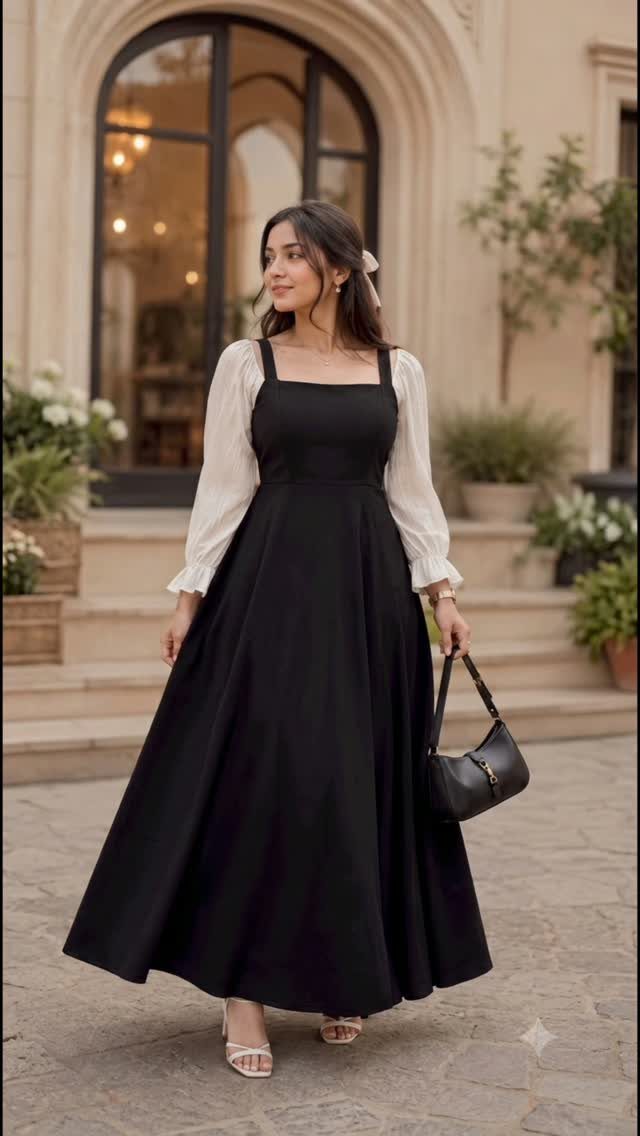
Layering a sleeveless black dress over a crisp white blouse turns one piece into a year-round option.
The square neck keeps the look clean rather than bulky, and the blouse collar or cuffs give you something to adjust for temperature or formality.
White sandals keep the palette quiet, but the real move is the bag: a small structured black purse signals intention, not accident.
This works best when the dress skims rather than clings; too tight and the blouse bunches at the waist.
I’d pick this for office-to-dinner days when you need one outfit to do both.
Time is the catch: getting the blouse to sit flat under the dress takes a minute in front of a mirror, not a rush in a parking lot.
11. Resort Midi Dress
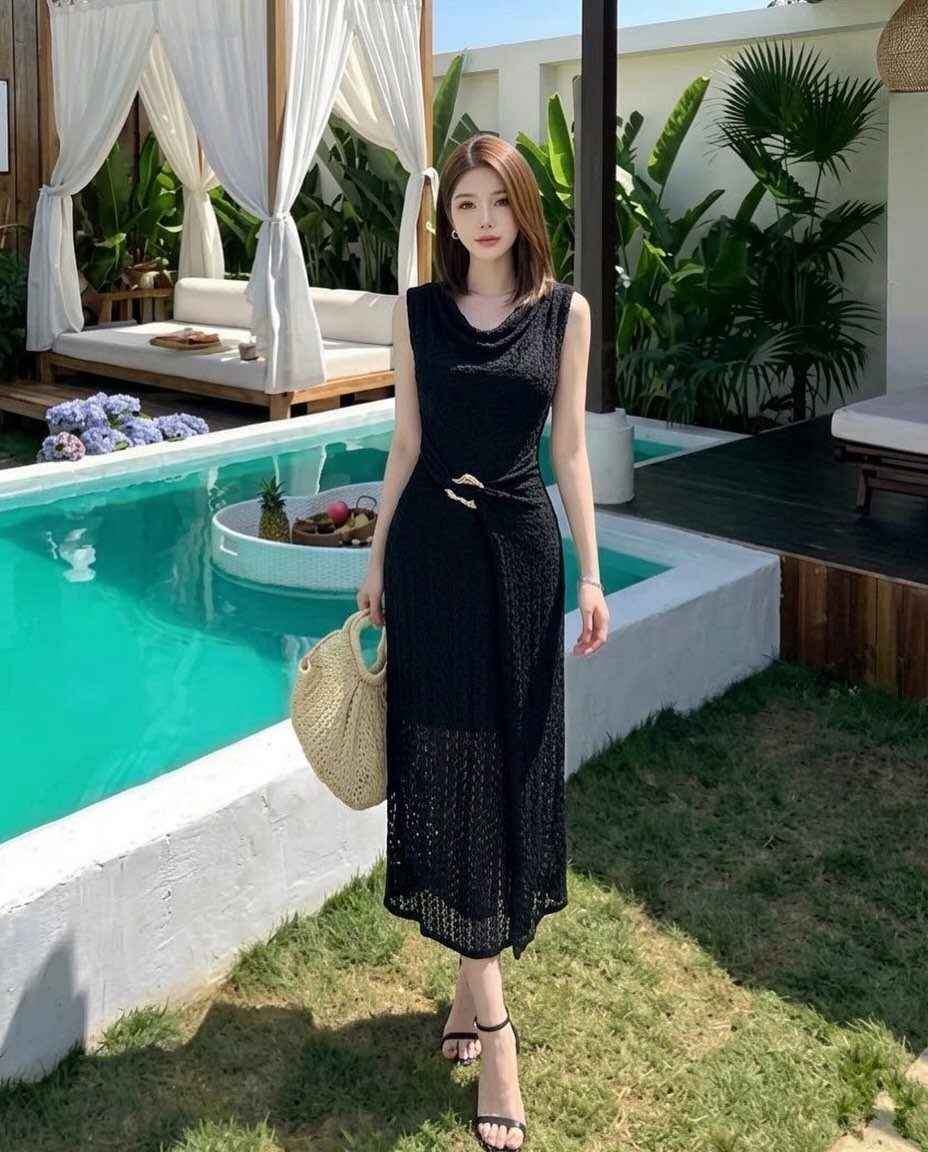
A textured black midi with a single gold knot at the waist reads resort without trying too hard. The sleeveless cut keeps it practical for heat, and the midi length works for poolside lunch or a hotel lobby bar.
The straw tote is doing more than carrying sunscreen; it softens the black so the look feels vacation-appropriate rather than city-formal. Gold at the waist draws the eye up, which matters more in a one-color dress than most people think.
This suits anyone who wants one dress for a warm-weather trip without packing separate day and night options. Skip it if you need real support through the bust; the knot detail sits high and doesn’t allow for much structure underneath.
12. Ruffled Off-the-Shoulder Dress
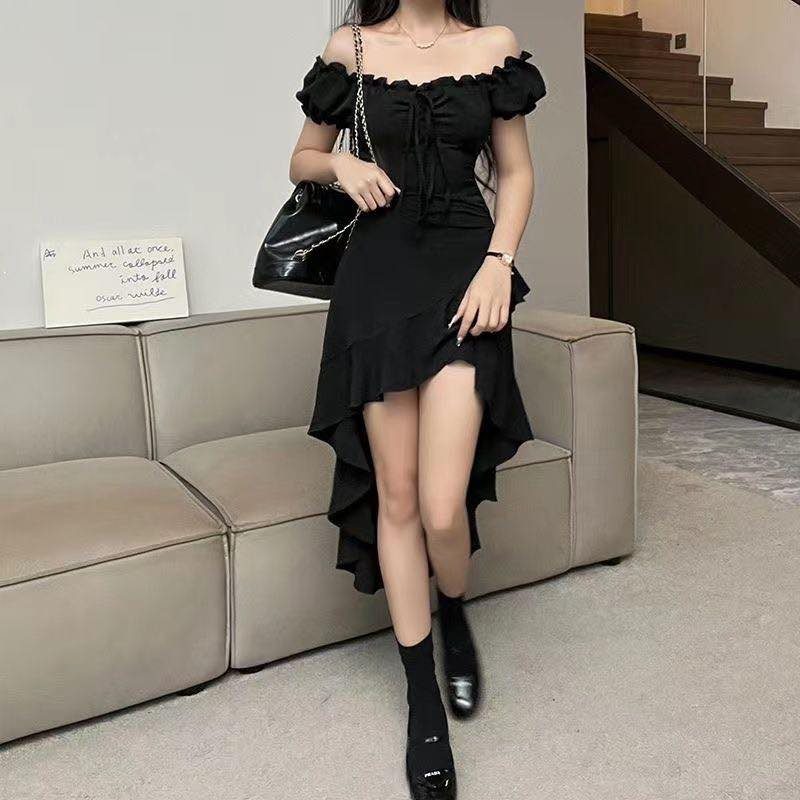
Ruffles at the shoulder and a high-low hem give a black mini dress enough personality that the rest can stay simple. Black loafers with socks, a small shoulder bag: the restraint keeps the dress from feeling like costume.
The off-shoulder cut works when the ruffle sits flat and the bodice is fitted enough to stay up without constant tugging.
I’d check that in a mirror with arms raised; if it slips, sizing down or a different brand solves it.
This styling suits someone who likes feminine details but wants to ground them with menswear shoes rather than heels.
Leg coverage is the catch: the high-low front is shorter than it photographs, so tights or a different shoe change the whole mood.
Why Black Dresses Are Essential
A black dress solves the "nothing to wear" problem without requiring a new purchase every season.
The color works on every skin tone because it creates contrast rather than competing with undertones, and the neutrality means a single piece moves from morning errands to evening plans with a change of shoes or jewelry.
The real value is in the blank canvas quality. A simple cut in quality fabric gives more actual outfits than a closet full of statement prints that only pair with one thing.
A Toteme cotton-poplin midi runs $560 while a Cos pleated maxi lands at $189, but the real spread worth watching is fabric weight and seam finishing; black shows construction flaws less forgivingly than people assume.
Bold and unexpected, even, black brings drama and rigor to a freewheeling summer day. And though the never-ending styling possibilities may seem daunting to some, the black dress’s versatility is also its strength.
— Vogue
Styling Tips for Black Dresses
Layering keeps a black dress from becoming a uniform. A denim jacket or leather blazer changes the register for transitional weather; an oversized cardigan or knit vest adds warmth without the formality of a coat.
The texture clash matters more than the color match.
Mixing materials prevents monochrome from going flat. Satin against chunky knit, suede boots with a smooth dress, velvet headband against matte crepe: the eye reads these differences even in the same color family.
The belt question depends on the dress structure. A wide leather strap or chain belt reclaims shape in a flowy cut, but on a dress with ruching, wrap detail, or defined waistband, it reads as apology rather than intention.
Skip it.
Occasions for Black Dresses
The same black dress handles multiple settings if the fabric and cut suit the most demanding occasion you will face in it.
A matte jersey that works for a casual dinner looks underdressed at a cocktail party; a beaded or fringed piece that suits a standing-room event feels costumed for a seated dinner.
The J.Crew lace-trim mini beach dress at $98 sits at the casual end, beach-appropriate with sandals. The Dôen Ischia midi at $350 and the Matteau open-back mini at $335 cover the middle range.
Seasonal Styling
Summer black demands breathable fabric and strategic exposure. Cotton poplin, lightweight crepe, and open weaves handle July heat; long sleeves in sheer material give coverage without trapping warmth.
The long line of a maxi reads intentional rather than lazy when the cut skims the body and the hem clears the ground by half an inch.
Winter asks for layering that adds texture, not just bulk. A tailored blazer over a satin slip dress, matte leather boots against smooth fabric, a quilted bag creating surface variation: the monochrome holds because the materials differ.
A Leset Lauren maxi and a Banana Republic bias-cut maxi work across seasons with shoe and layer changes.
Fabric weight makes or breaks the year-round claim: too light and winter layers look piled on; too heavy and summer becomes a struggle.
Frequently Asked Questions
What are the different styles of black dresses?
The main styles are minimalist maxi, ultra mini, date night with high neck and long sleeves, cocktail with beading or fringe, formal floor-length for weddings and evening events, and glam with subtle shimmer.
Each has a specific cut and fabric that suits different body shapes and occasions rather than following runway trends.
What are the best black dress outfit ideas for different occasions?
For city summer days, a fitted black maxi with leather sandals and a raffia tote works. An ultra mini with flat sandals suits casual daytime, while knee-high boots carry it into fall.
Date night calls for a high-neck, long-sleeve short dress with stilettos. Cocktail parties need beaded or fringe above the knee with strappy heels.
Weddings and evening events take lace floor-length with metallic accessories. Glam nights out use subtle shimmer with sheer sleeves and a faux fur layer.
Why is a black dress a must-have in every closet?
A black dress solves the problem of having nothing to wear because it works across seasons and can be styled endlessly with accessories, layers, and shoes.
The plain base handles bold jewelry, printed scarves, or colorful heels without clashing, and the right cut flatters your specific body shape rather than forcing a trend on you.
How can you style a black dress creatively?
Accessorize boldly with one deliberate piece like heavy link earrings, a printed silk scarf at the throat, or patent heels in red or cobalt.
Belt a shapeless dress at your natural waist with leather, suede, or chain to reclaim your shape. Add sheer tights, a faux fur layer, or a tailored blazer to shift the same dress between seasons and occasions.
What are those black dresses called?
The short classic version is the little black dress, or LBD.
Specific styles take their names from their cut and length: maxi for floor-length, midi for mid-calf, mini for short, slip for bias-cut and often satin, sheath for fitted straight cut, and wrap for the crossover closure.
A black dress with embellishment like beading or fringe is usually named by that detail rather than a separate category.