These thirteen ideas range from a single swapped shoe to a full layered look, and the deciding factor is how much of your summer wardrobe you are ready to retire.
A lightweight bomber jacket over a ribbed knit and dark denim is one reliable formula for the days you need structure without weight, while tan lace-up boots turn shorts and a light sweater into an autumn outfit without changing anything else.
1. Lightweight Bomber Jacket
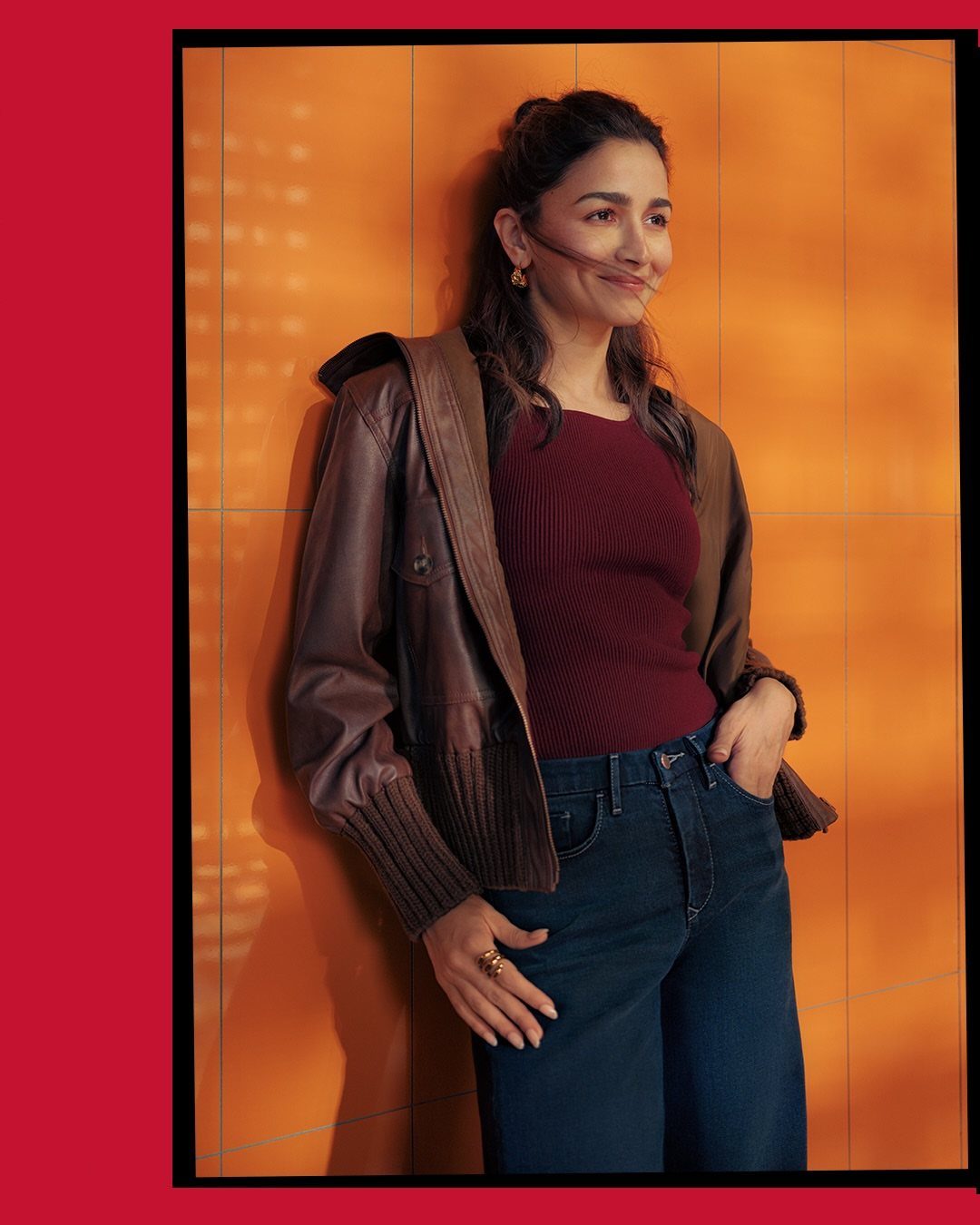
A lightweight bomber jacket lands right in that middle space where summer still lingers but the evening air has turned.
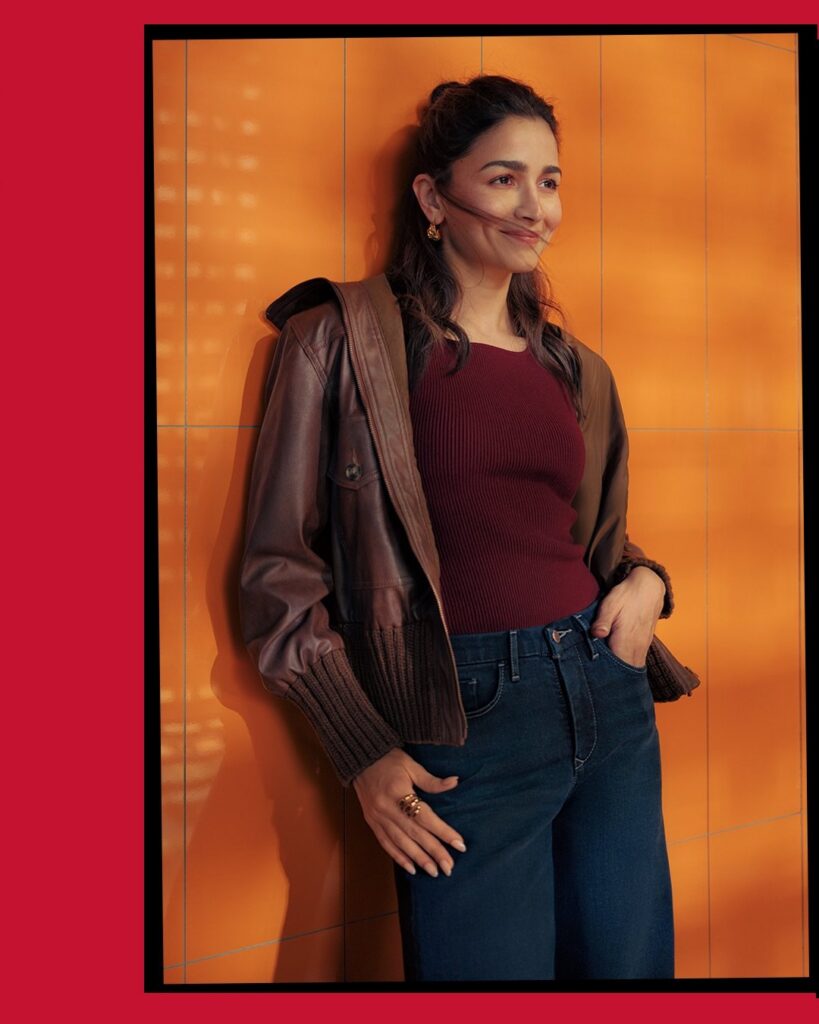
A brown leather bomber over a ribbed knit and dark denim is one reliable formula: structured jacket, soft layer underneath, clean leg line below.
I reach for mine most often over a thin tank with tailored trousers and sneakers for daytime, or swap in a blouse and satin midi skirt when I need to look pulled together after dark.
The cropped cut keeps it from swallowing a smaller frame, and the slight sheen of leather reads more intentional than nylon.
For anyone building from pieces already owned, a cream or tan bomber plays against almost every neutral already in the closet.
Skip the scarf details and puff sleeves if you want this to last past one season; clean lines age better.
2. Long-Sleeve Tops
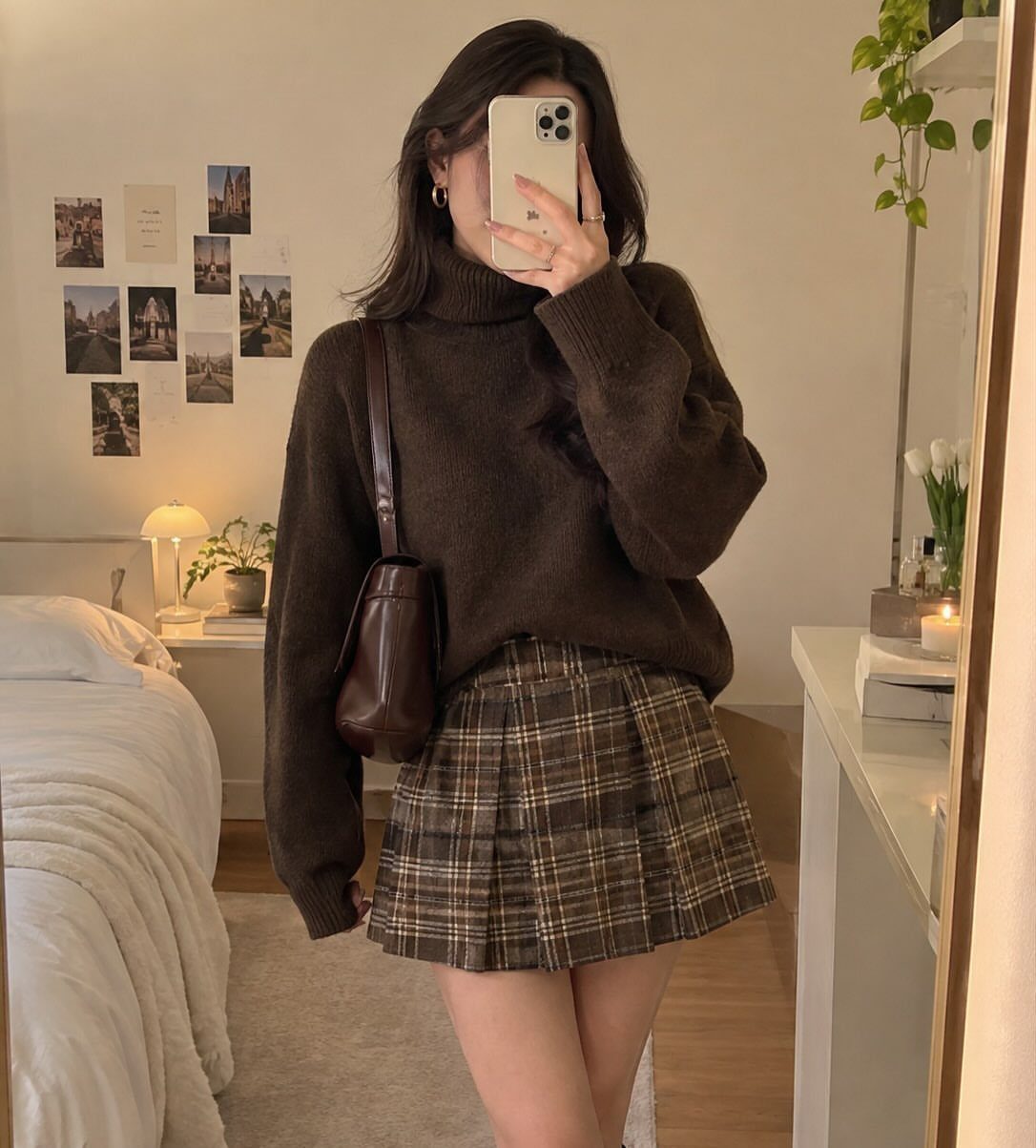
Long-sleeve tops are the workhorse piece most closets already contain but rarely exploit.
I wear mine under sleeveless dresses I am not ready to retire, or over a tank with the sleeves pushed up when the afternoon still hits seventy degrees.
A thin ribbed knit in a deep tone bridges the gap between bare arms and full sweater weather, and the turtleneck specifically buys you a scarf you do not have to carry.
The denim skirt revival is not required here; this same top works with trousers, with a longer skirt, with the jeans you already own.
Size for the shoulder seam to sit right, since a clean line under or over something else is what makes the piece work.
3. Trench Coats
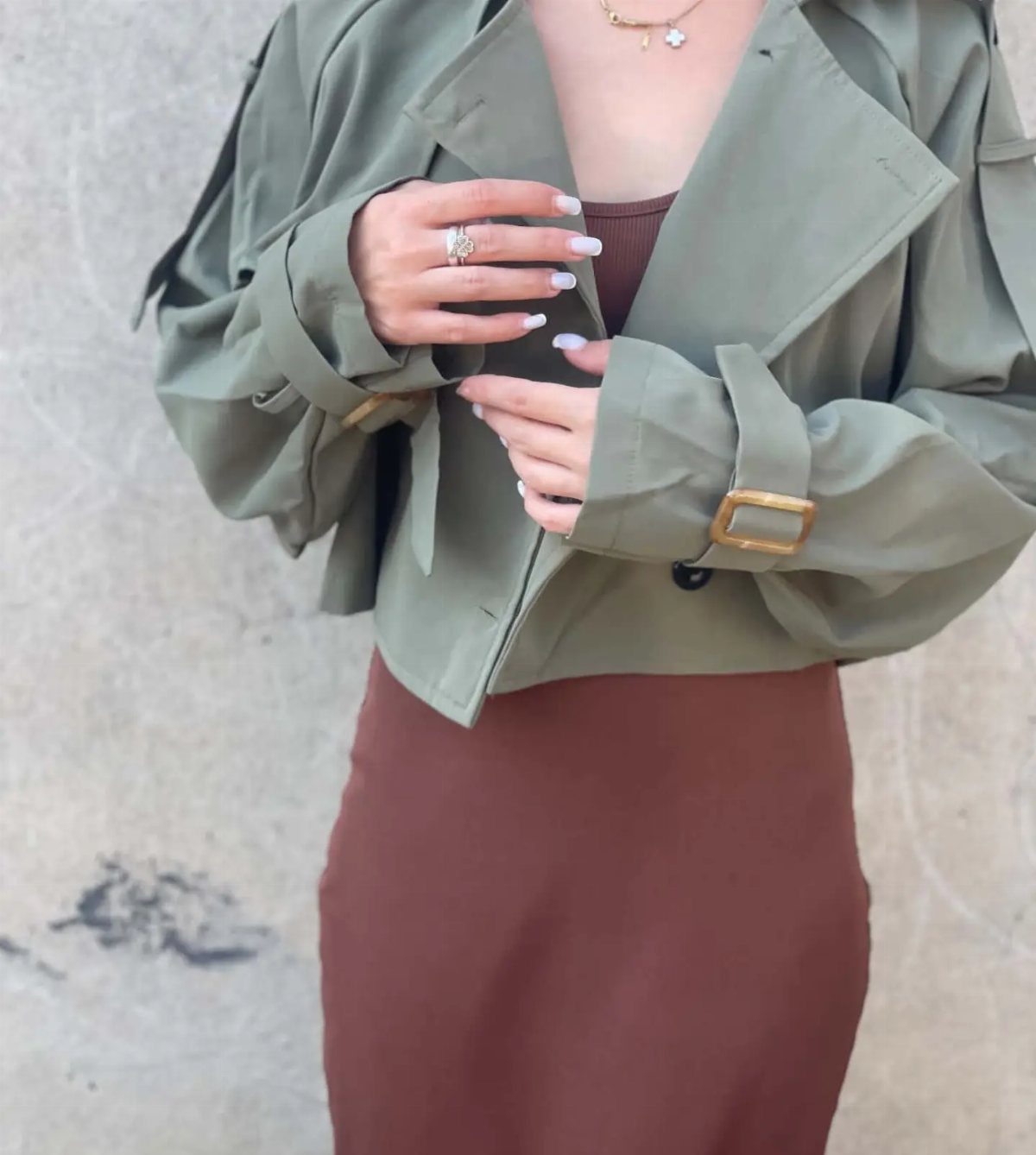
Trench coats carry a reputation for full-length drama, but a cropped olive cut has its own logic for early fall.
It leaves the line of a midi dress visible, which a longer coat would interrupt, and the weight feels right when you are still walking through warm afternoons.
I wear mine open over a sleeveless shirtdress with boots once September hits, or belt it over a light turtleneck layered under that same dress when October turns colder.
The wide lapels and buckled cuffs give structure without formality; this is not office outerwear unless your office allows for personality.
For the budget-conscious, a cropped trench asks less fabric and often costs less than its full-length equivalent while doing more of the transitional work. The neutral olive reads as color without committing to a palette you will tire of.
A long trench coat is the ultimate MVP of transitional dressing. It takes any look and immediately gives it a sophisticated touch.
— Elle
4. Wide-Leg Jeans
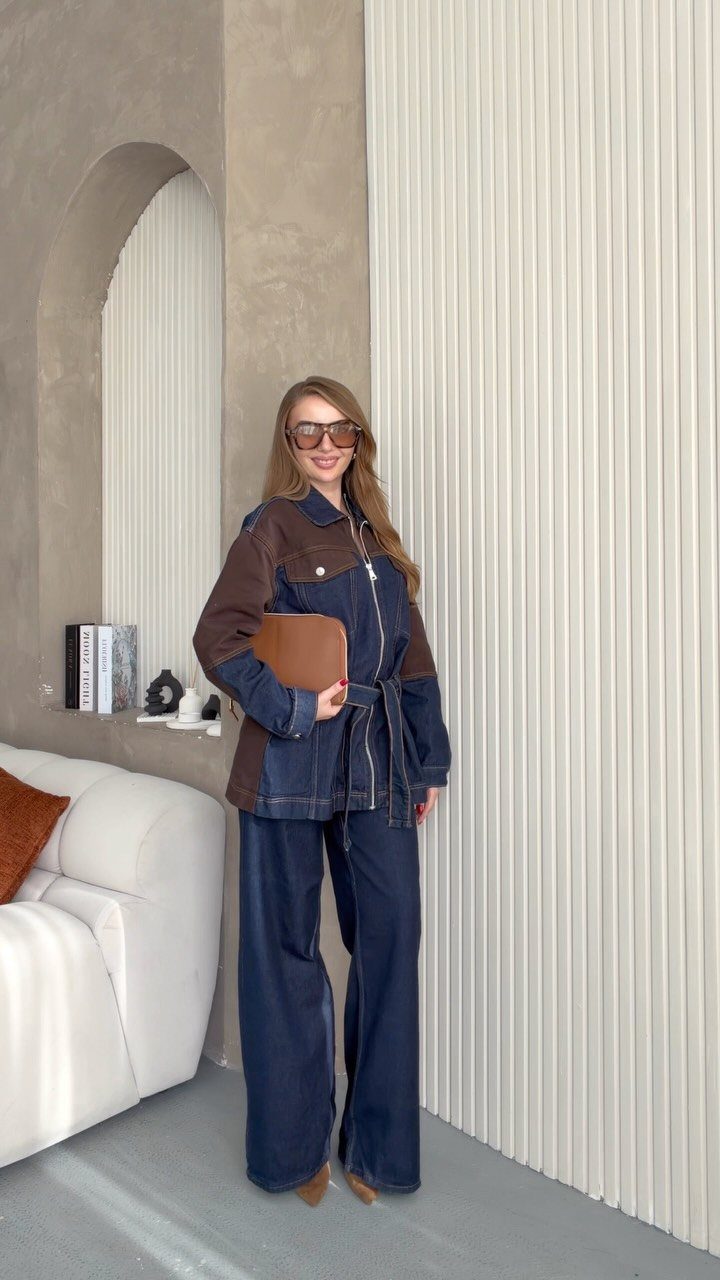
Wide-leg jeans returned from the nineties with better proportions and actual structure, which makes them usable in ways the original version rarely was.
A dark wash balances a heavier top half without looking swallowed, especially paired with a matching denim-and-brown jacket. A chunky knit on top keeps the look casual, a sleek blouse pulls it toward dinner out.
The leg opening needs to clear your boot shaft or the whole line collapses, so try this on with the boots you will actually wear. For anyone who packed denim away all summer, this is the shape worth unpacking first.
5. V-neck Knit
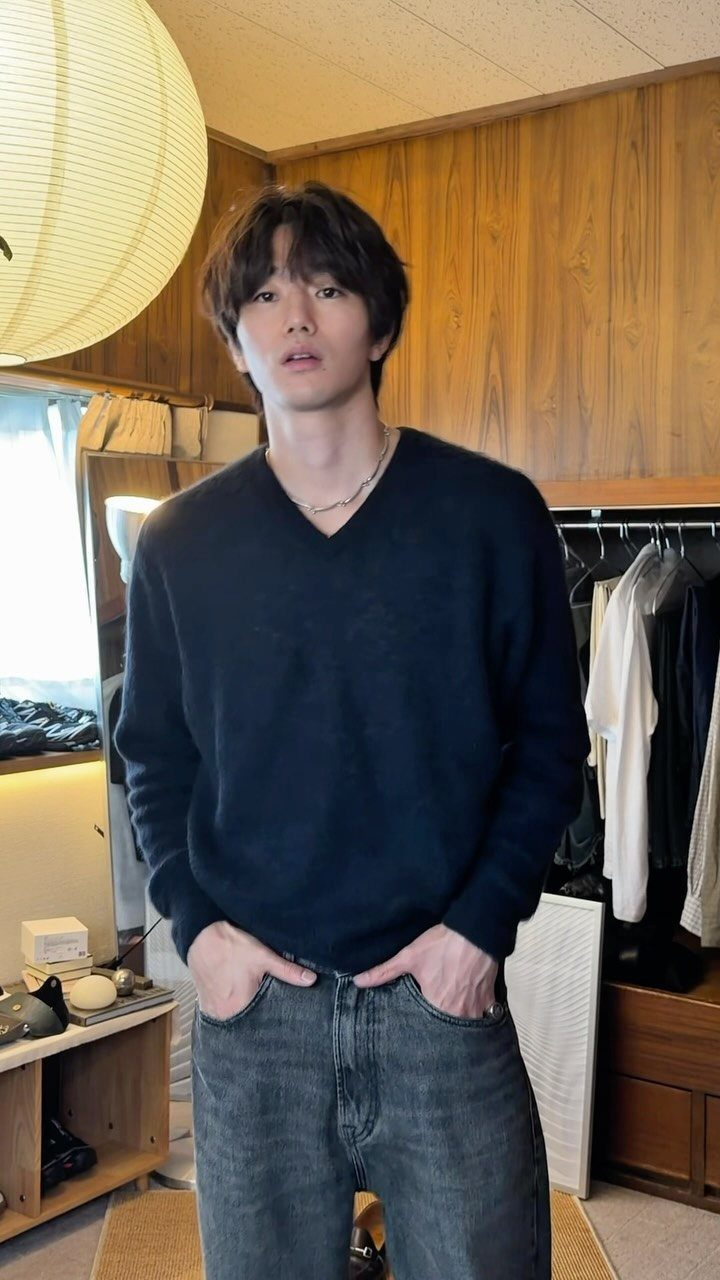
A V-neck knit solves the specific problem of early fall, when a crew neck feels too closed and a scoop neck leaves too much skin exposed to a sudden breeze.
A navy V-neck knit needs little else to look finished: grey denim and a simple chain do most of the work.
The neckline elongates without plunging, which matters if you are layering over a collared shirt or under a jacket that will sit open.
I would wear this with the sleeves pushed to three-quarter length on a warmer day, or let them fall full when the temperature drops.
The knit weight matters more than the label: too thin and it bags at the elbows by noon, too thick and the V loses its clean line.
For the weeks between seasons, this is the sweater I reach for when I do not yet know what the day will demand.
6. Relaxed Cotton Shirt
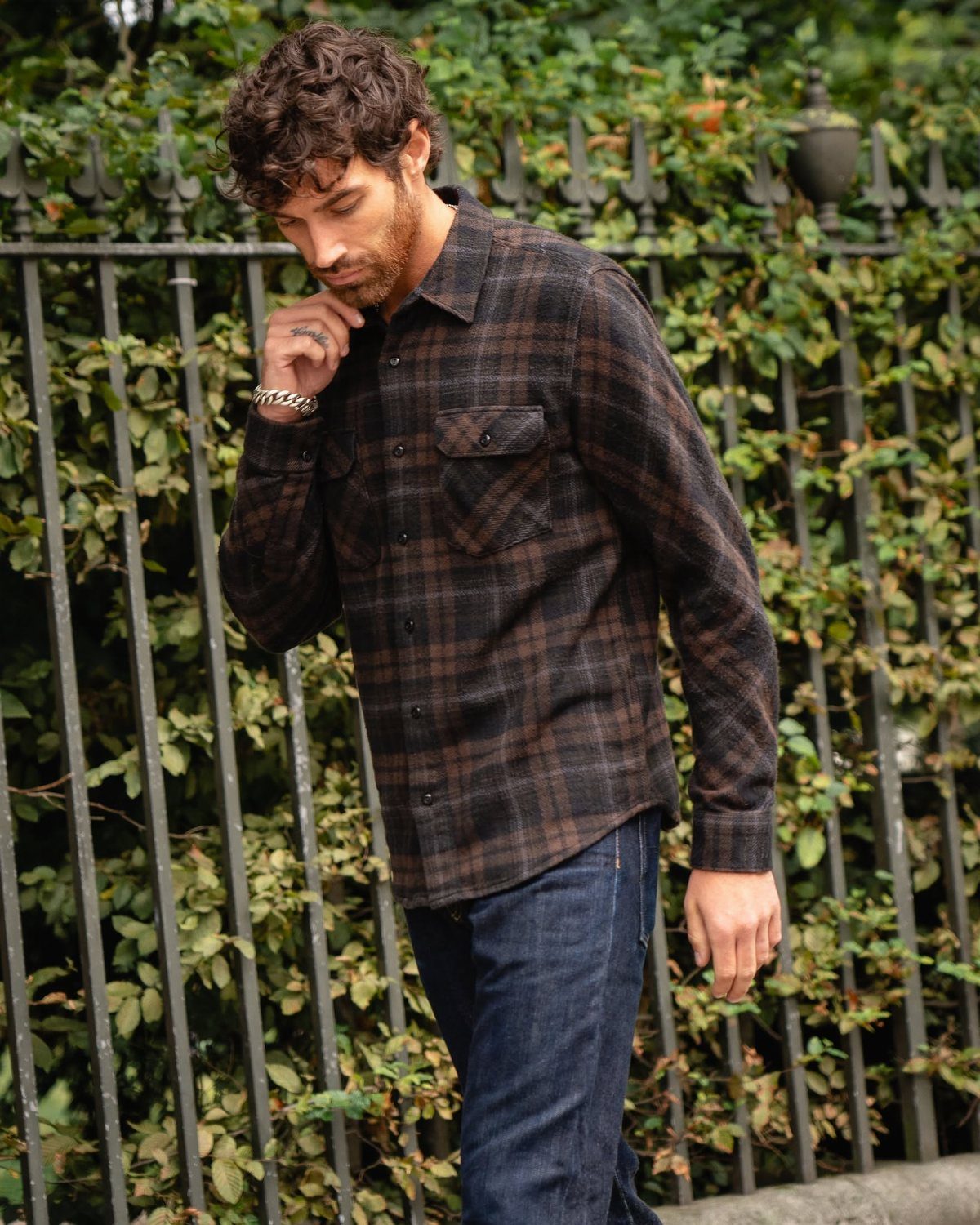
A relaxed cotton shirt in a dark plaid reads as fall without the stiffness of heavier flannel, and a brown-and-black pattern stays grounded in neutral territory.
The cut matters more than the print: shoulders that sit slightly past your actual shoulder line, a hem that can be untucked without looking like you forgot to finish getting dressed.
I swap my linen shirts for cotton at exactly this point in the year, and the same piece works with jeans, with a longer skirt, or with Bermuda shorts on days that still warm up.
The "off-duty model" effect the style promises depends on the shirt looking deliberately loose, not accidentally large, so check the sleeve length; too long and you look like you are wearing someone else’s clothes.
For early fall specifically, a darker plaid in a matte cotton bridges the gap between summer’s bare ease and the heavier layers coming next.
7. Boots with Summer Outfits
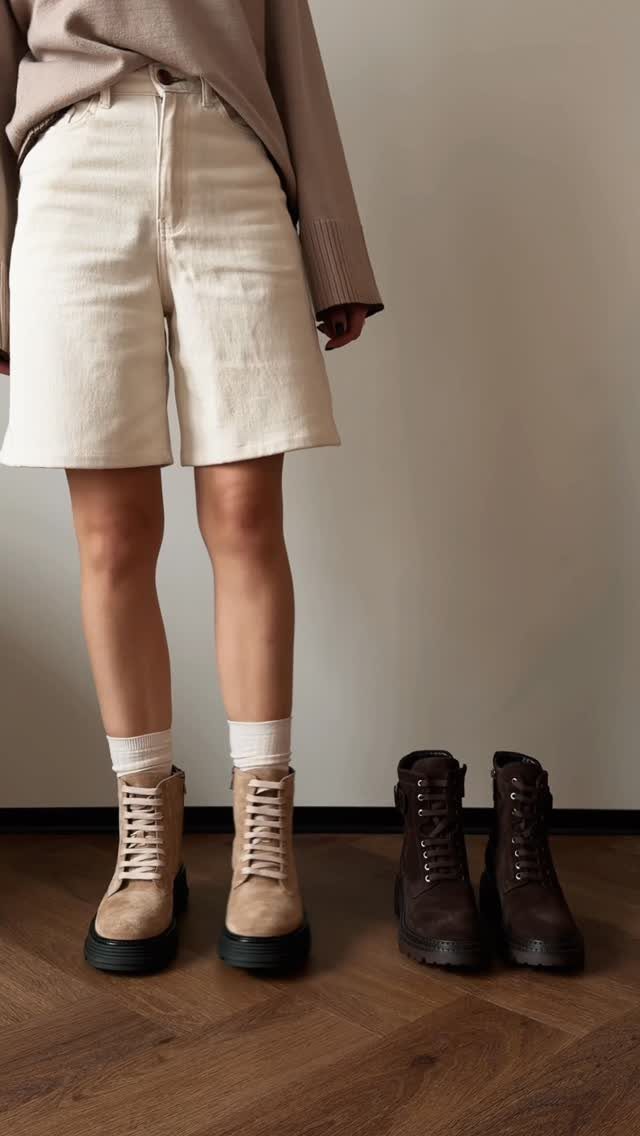
Swapping sandals for boots is the fastest way to push a summer outfit into September. Tan lace-up boots turn shorts and a light sweater into an autumn outfit without changing anything else.
Knee-high boots carry sundresses into cooler evenings without looking like you grabbed the wrong season. Ankle boots work the same trick with denim skirts or cutoffs.
Western styles add texture; cleaner shapes keep the line simple.
The cost stays low because nothing else in the outfit changes. I’d point shorter women toward ankle height; knee-high can shorten the leg unless the hem sits well above the boot top.
8. Casual Layering
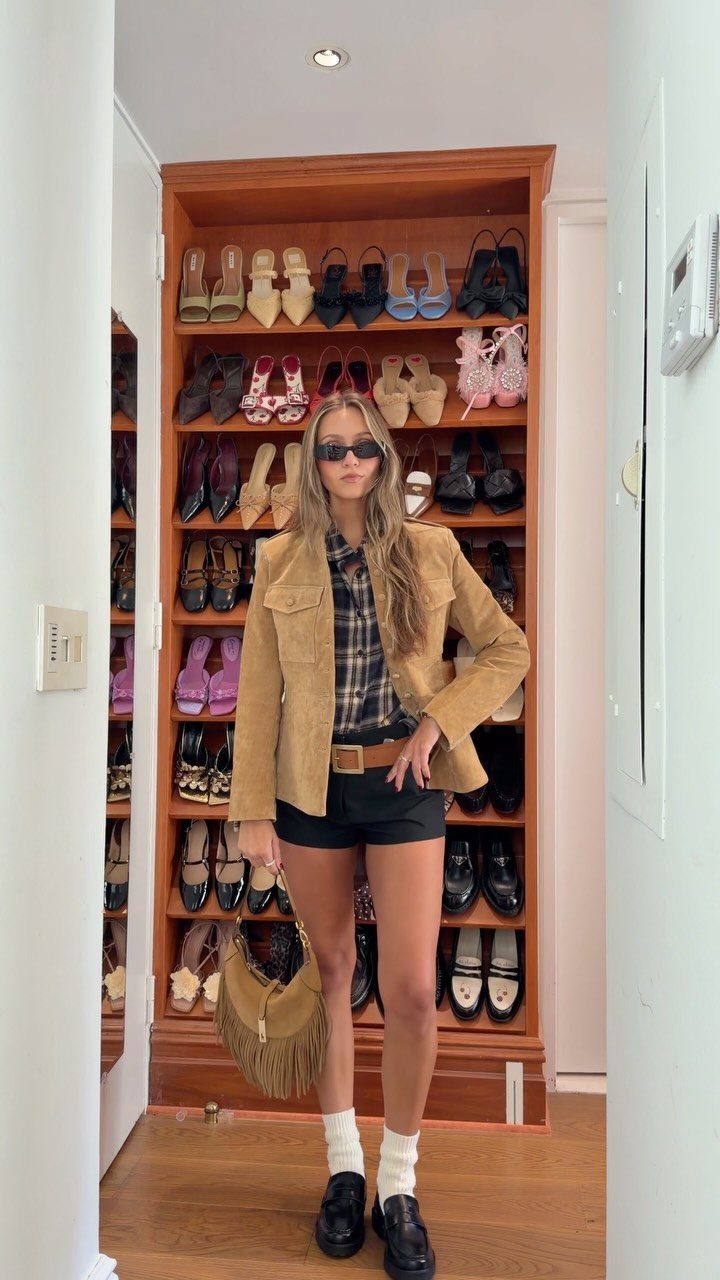
A suede jacket over plaid reads fall instantly while the shorts underneath still handle afternoon sun. That balance, warm layer on top and bare leg below, is what makes transitional dressing practical.
The cardigan or oversized sweater versions work the same way: throw one over a tee and jeans, or a slip dress, and remove it if the afternoon warms up.
Ponte knit dresses layer even easier; add sneakers now, tall boots and a jacket later as temperatures drop.
This approach suits anyone whose office runs cold or whose commute crosses microclimates. You do gain bulk at the waist or shoulders.
If that bothers you, a cropped jacket or a finer-gauge cardigan keeps the silhouette closer to the body.
9. Mixing Textures
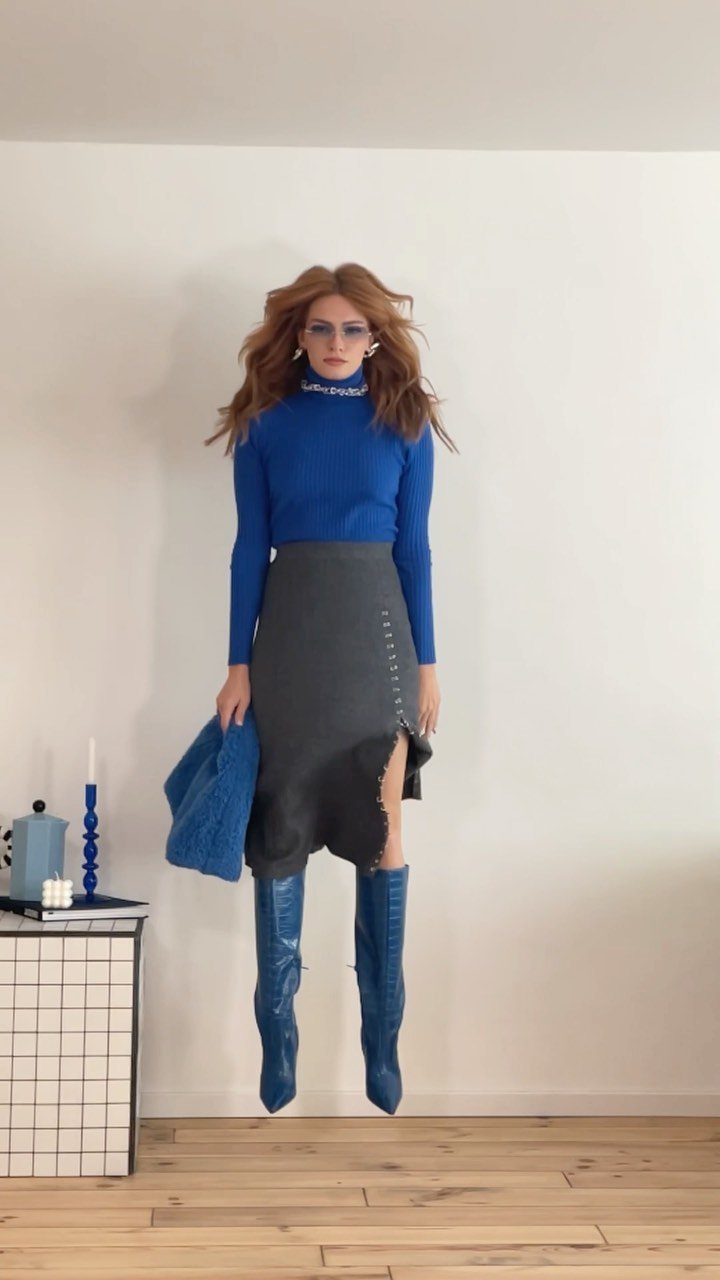
Texture does the seasonal work that color alone cannot. A blue turtleneck against grey wool reads autumn because the fabrics differ in weight and surface, not because either is a classic fall shade.
Cable knits against smooth denim, or a leather skirt with a cotton tee, create the same effect. One heavy piece is usually enough.
Faux leather gives the look without the heat of the real thing, and bare legs keep a short skirt wearable at 80 degrees.
Corduroy, velvet, or wool each signal fall, but stack two together and you risk overheating. I’d reserve full texture mixing for days that stay cool from morning through evening.
For now, a single fall fabric paired with summer-weight pieces underneath gets the point across without the sweat.
10. Brown Leather Jacket and Scarf
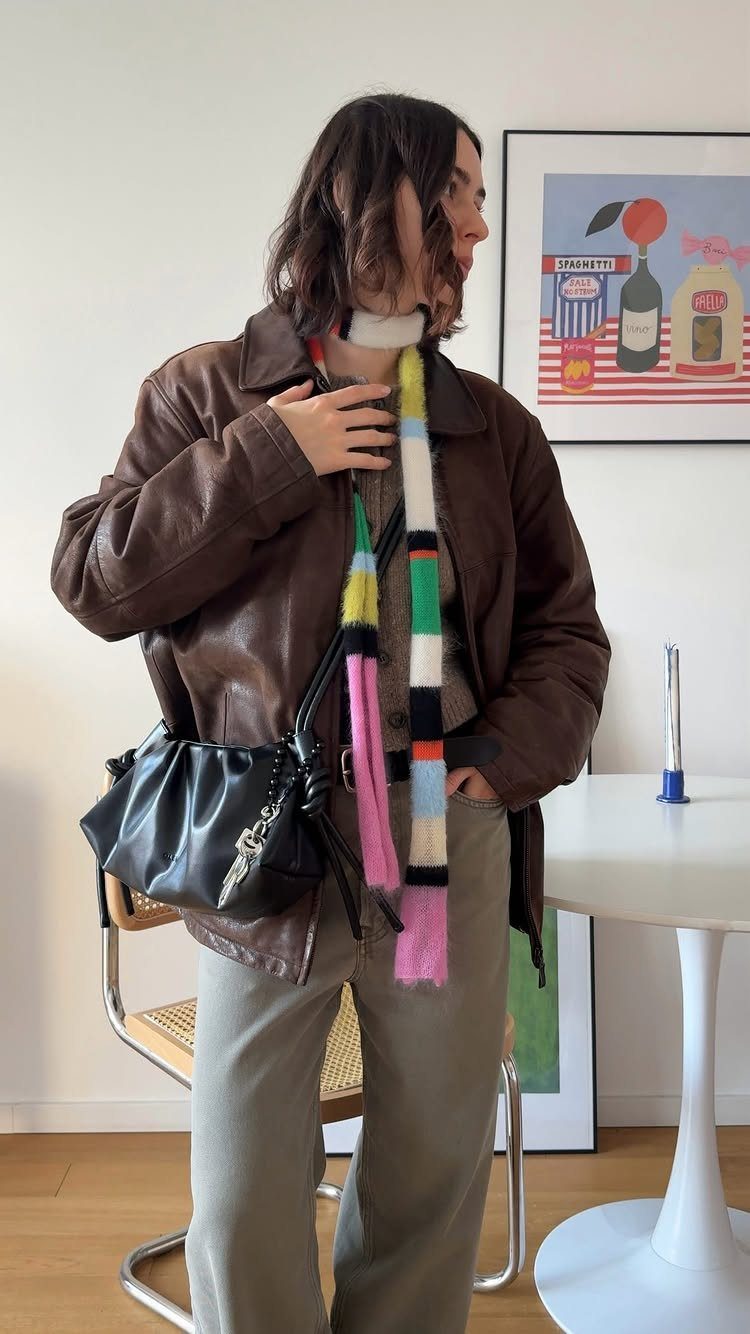
Brown leather reads warmer than black against September light, and an olive-tan pairing keeps the palette grounded without going full earth-tone.
The skinny scarf does the actual transition work: cotton or silk weight, knotted loose, it adds color without bulk you would later store.
I would keep the trousers slim or straight, not wide; the jacket’s structure needs a clean line below to avoid costume territory.
A crossbody bag sits flatter than a tote under the jacket’s hem, which matters more than it sounds if you are commuting or walking between temperatures.
Skip the scarf and this becomes basic. Add it and the outfit carries into October without a coat check.
11. Ribbed Top with Maxi Skirt
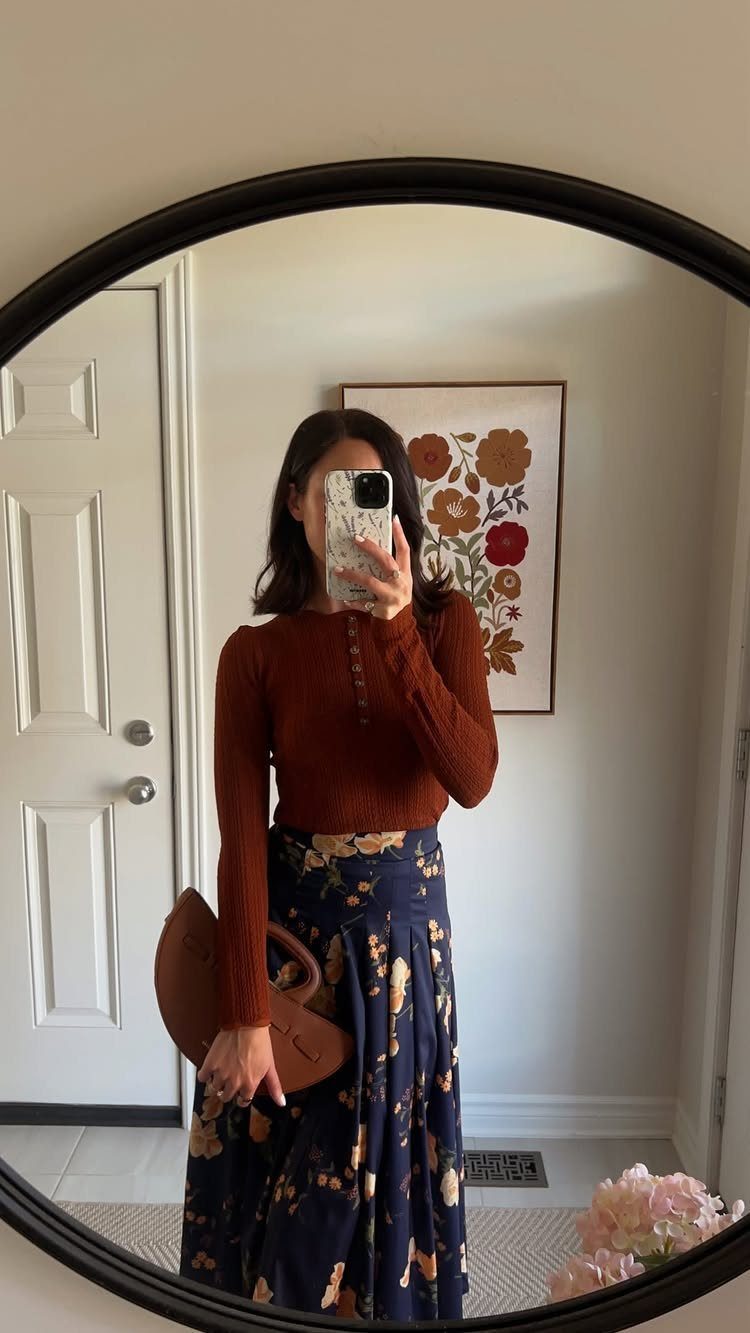
A ribbed top gives the stretch and grip that a smooth knit loses by noon, and the rust here picks up the faded florals without matching them exactly.
That tension between pattern and texture is what makes the pairing read intentional rather than leftover.
The skirt length matters most: maxi, not midi, because the long sleeve already shortens your vertical line. Petite frames need the hem to skim the ankle bone, not the floor; taller readers can go longer and still move.
For the bag, something structured. The soft top and flowing skirt need one hard element to keep the silhouette from going slack.
12. Long-Sleeve Midi Dress
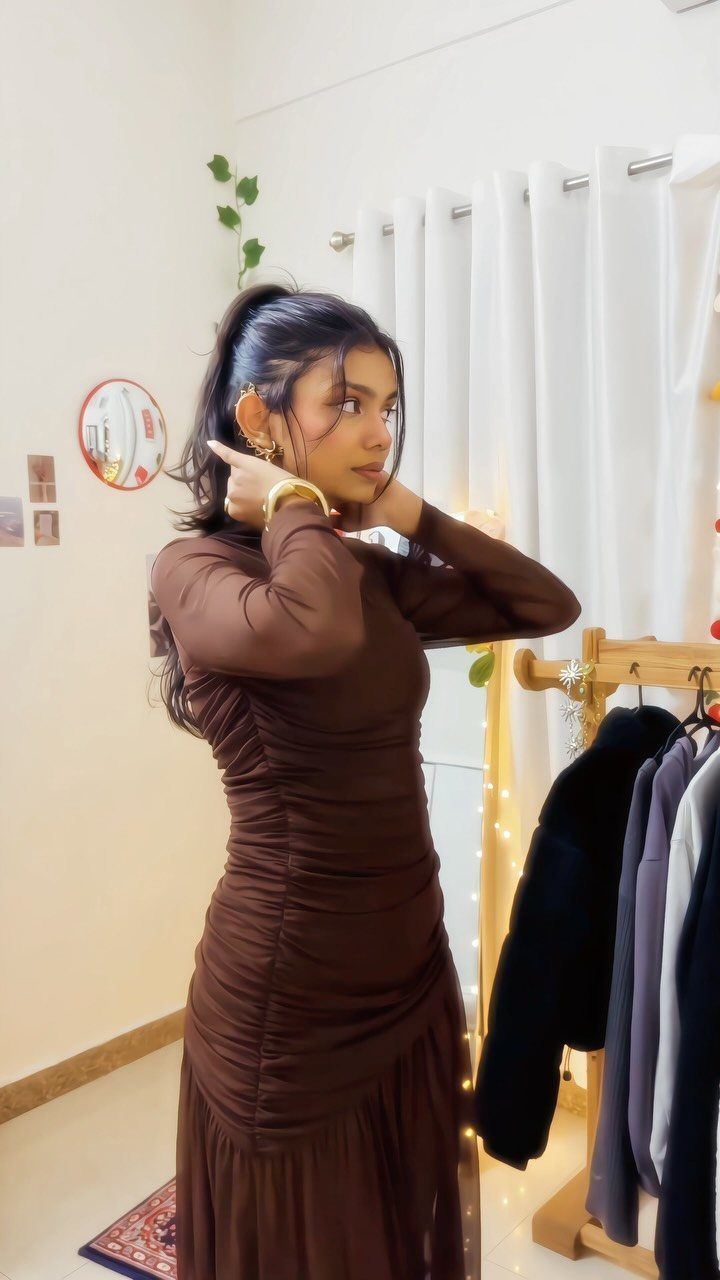
Ruching does two jobs at once: it adds visual weight appropriate to cooler months, and it forgives the fit when you are between sizes from summer into fall.
The long sleeve here is fitted, not ballooned, which keeps a midi length from reading matronly.
Ponte or a dense jersey holds the ruching in place through a day of sitting and standing; thinner knits sag by evening and need adjusting.
I would wear this with ankle boots now, tall boots later, sneakers only if the dress is casual enough to begin with.
The brown here is versatile but not safe; burgundy or forest green suit readers who already own enough neutral.
Layering Techniques
A good base layer is the part you forget you are wearing until the temperature drops. A thin ribbed tank or a soft tee under everything else lets you add and subtract without the outfit falling apart.
One trend piece on top does the heavy lifting for style: a printed jacket, a textured cardigan, something that reads intentional even when you are down to just that layer over your base.
The seasonal basics in between, your light knits and open shirts, are what you actually remove and carry.
By late afternoon the button-down tied around your waist has done its job, and once the sun sets a cardigan over the shoulders takes over.
This is the practical core of transitional dressing: three levels, any two of which can handle the weather you are actually in.
Footwear Swaps
The boot swap changes the whole message of an outfit without touching anything else. Cowboy boots, knee-high boots, and ankle boots each push summer pieces into autumn territory; dresses, skirts, even denim shorts stay in rotation.
Closed-toe pumps and loafers work the same shift for anyone whose day runs more formal than boots allow. Bone or off-white booties give contrast against darker fall colors without the starkness of pure white, and they carry through into winter.
Freda Salvador offers a 10% discount with code 10JESSICA if you are shopping this category now. I would break out booties even while the weather still warms up; the look reads fall even when the temperature has not committed.
Color Choices
Autumnal hues do not need to dominate an outfit to register. Brown and tan do the heavy lifting as neutrals, while smaller hits of burgundy, mustard, dark green, or navy signal the season without asking for a full color overhaul.
Suede accessories in darker tones push a basic sweater-and-jeans combination into fall territory. Chocolate brown boat shoes and a matching shopper tote create that coordination; burgundy socks add the same touch at a smaller scale and lower heat.
The white tee underneath serves a double purpose. It gives a point of contrast against heavier layers, and it stays on if you shed the sweater by noon.
Cuffing the sleeves is a small move that reads as styling detail while actually cooling you down.
Versatility of Pieces
A piece earns its closet space by working across at least three combinations you will actually wear. The lightweight bomber from the list handles daytime trousers, evening skirts, and weekend denim without changing its character.
The V-neck knit moves from pushed sleeves at seventy degrees to full length when the forecast drops.
Even the trench, cropped or full-length, layers over a dress or a turtleneck-and-dress combination as October turns colder.
This is the test: if you cannot style it three ways with what you already own, it is not versatile. It is just new.
Frequently Asked Questions
What is the 3-3-3 rule for clothes?
The 3-3-3 rule suggests having three tops, three bottoms, and three shoes for a versatile wardrobe.
I build my fall transitions around a similar principle: a lightweight bomber, a long-sleeve top, and a trench coat handle most of my layering, paired with two or three pant shapes and one reliable boot.
The idea stays the same: fewer pieces that each work across multiple outfits instead of a closet full of single-use items.
What are the trendy looks for fall 2026?
Oversized layers, knee-high boots, and mixing summer pieces with fall staples are the directions I see most often. I put these into practice with a suede jacket over shorts, or knee-high boots carrying a sundress into cooler evenings.
The bomber jackets, wide-leg jeans, and texture mixing I rely on fit right into this approach without requiring a full closet replacement.