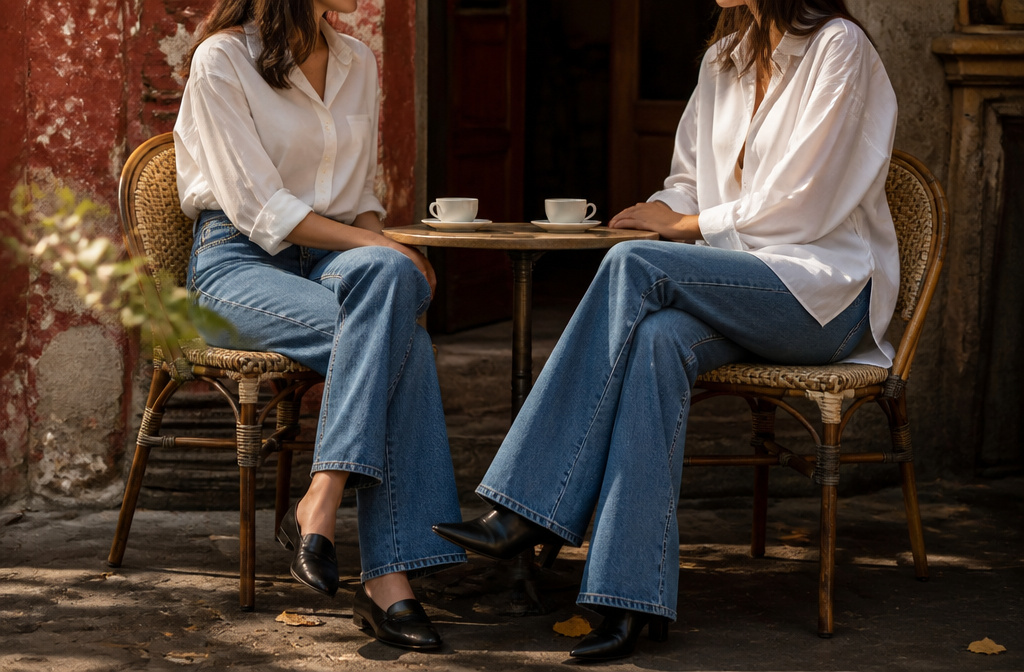
A white shirt and jeans is the outfit that resets between trends, but only if the proportions are deliberate. Volume on top demands fitted or clean lines below, or the whole thing collapses into looking accidental rather than styled.
Princess Diana knew this in 1997, and the same formula still reads as understatement rather than laziness.
Oversized White Shirt with Straight or Skinny Jeans
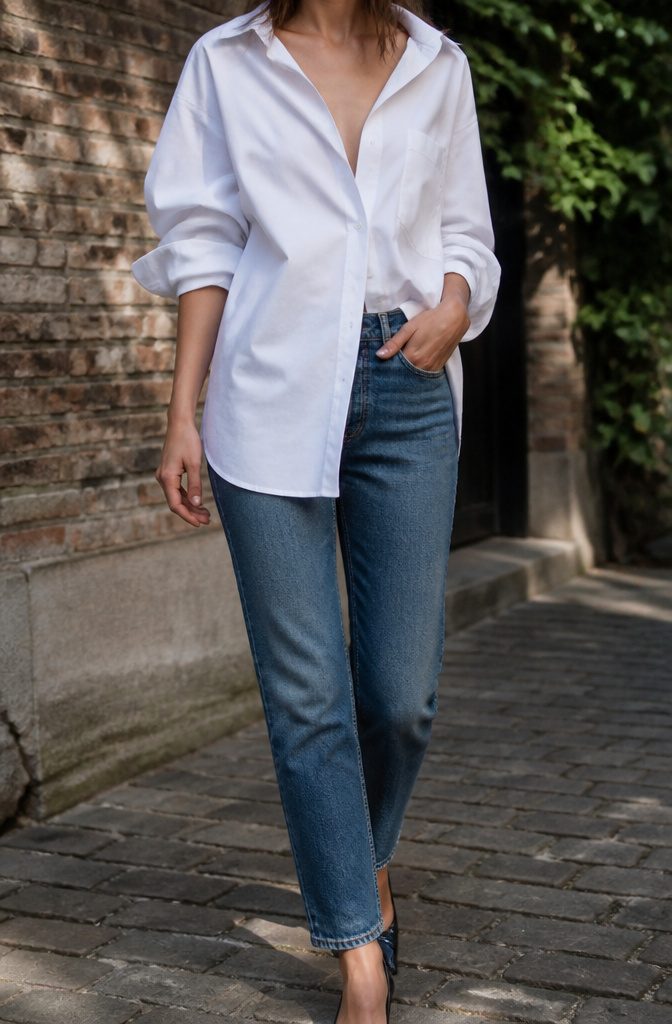
An oversized white shirt with an impeccable cut, worn slightly unbuttoned as if borrowed from a partner’s wardrobe, lands best against straight-leg or skinny jeans. Volume on top needs clean lines below, or the whole shape looks swallowed.
Princess Diana chose exactly this pairing during her 1997 visit to Bosnia and Herzegovina, and the formula still reads as understated elegance rather than trend-chasing.
The ’90s run of this look, captured in vintage photographs of Amber Valletta, anticipated the minimalist aesthetic that dominates now.
Sarah Burton pushed it further at Givenchy with oversized jeans that almost reached the floor, but for daily wear the slimmer jean keeps the silhouette intentional, not accidental.
Volume on top demands fitted or clean lines below; anything else turns relaxed into sloppy.
Tailored White Shirt with High-Waisted Jeans
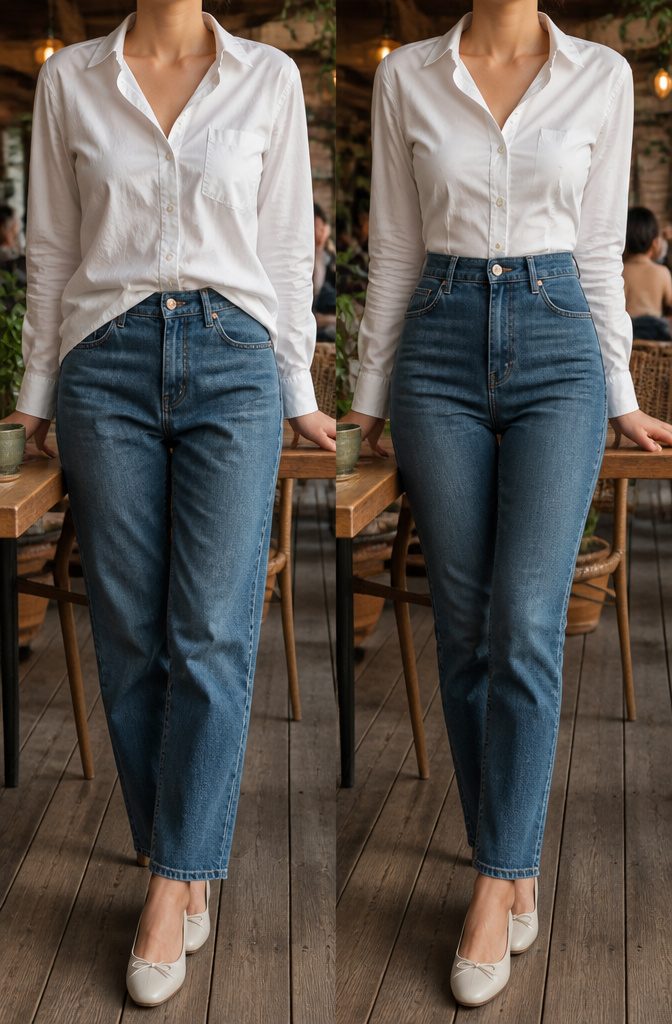
A fitted white button-up tucked into high-waisted jeans does the opposite work of the slouchy look. The waistband sits at the narrowest point, and the shirt’s clean lines draw a vertical seam from collar to hem.
Princess Diana wore exactly this pairing during her 1997 Bosnia visit, and the photographs still read as intentional rather than accidental. The structure lengthens the torso because nothing breaks the eye at the hip.
The contrast between the two silhouettes is what makes this combination worth owning. One direction borrows proportion from menswear; the other pulls from tailoring.
Both use the same two pieces. Sarah Burton showed the hybrid version at Givenchy, almost reaching the floor with the jeans, but the tucked-and-belted waist remains the more reliable choice for most bodies.
I reach for the fitted cut when I need to look like I planned the outfit ten minutes earlier than I did. The oversized shirt asks for rolled sleeves and careful half-tucking to avoid looking like you grabbed laundry.
The tailored version asks for almost nothing: button it, tuck it, add a shoe with some weight to balance the clean line.
Tucked with a Statement Belt
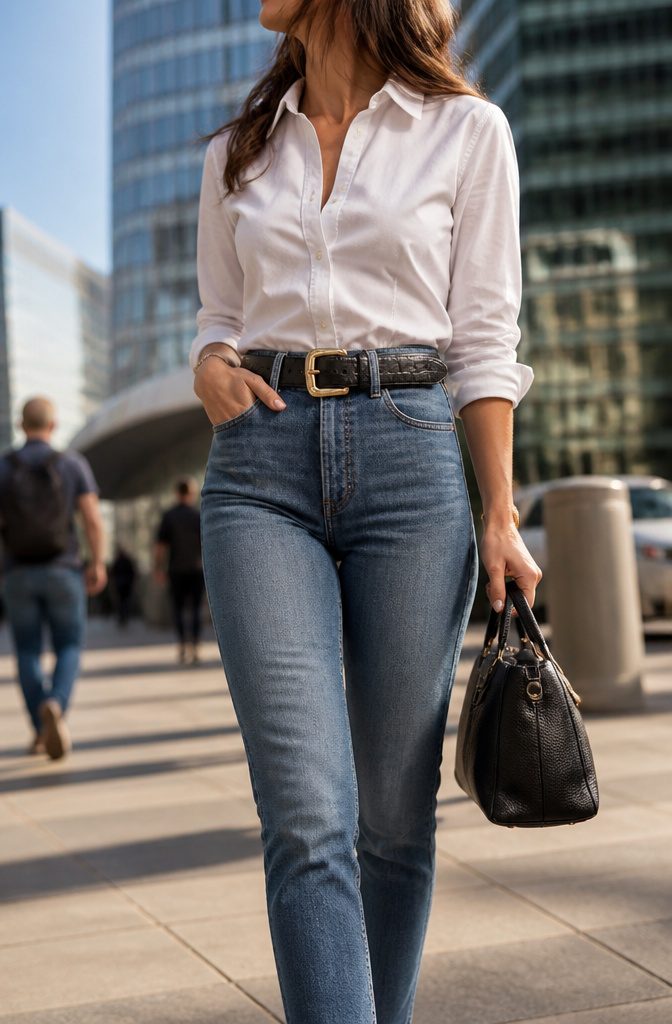
A white shirt tucked into jeans reads like you grabbed the first clean thing. Add a statement belt and the same two pieces look like a decision.
The belt breaks the horizontal line of the waist, adds texture or hardware, and gives the eye somewhere to land.
Tucking matters too. A full tuck with a wide belt and high-waisted jeans pulls the silhouette together and lengthens the leg.
A half-tuck, front only, with the shirt tail loose in back, keeps the belt visible without looking too finished. Both work; the belt is what keeps either from looking accidental.
This is where paying attention to details actually pays off. The jeans and shirt are neutral territory.
The belt, the tuck, the proportion of one to the other, those are the choices that make the outfit intentional rather than default.
Open Over a Tank or Camisole
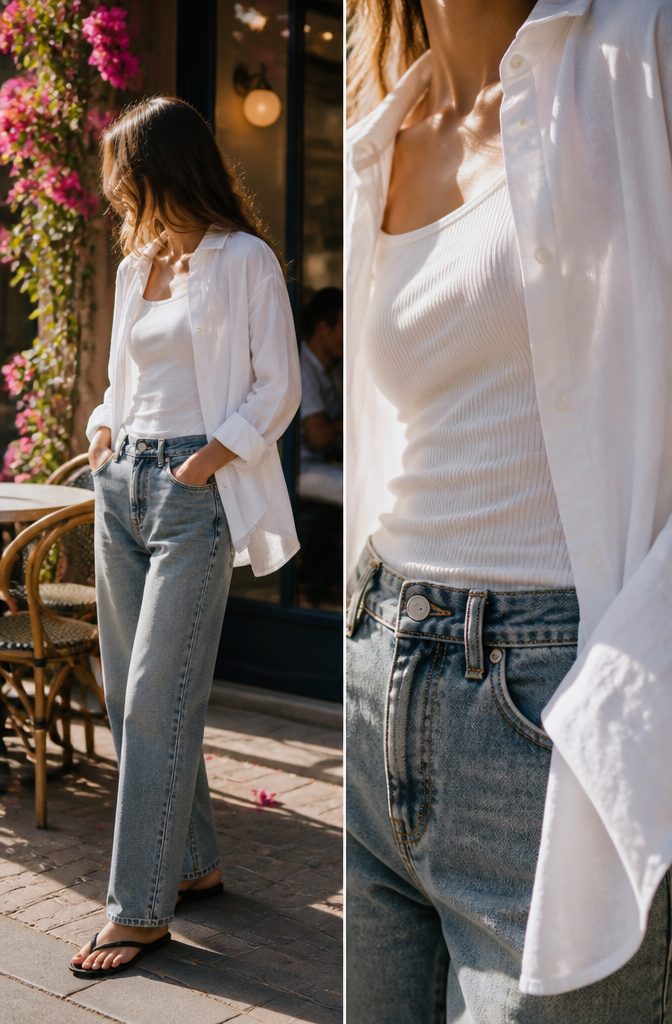
A white shirt worn open over a tank or camisole gives jeans an entirely different silhouette than the standard tucked-in look.
The vertical lines of the unbuttoned front create a longer frame, and the slight flare of the shirt hem adds dimension without any real complexity. Keep the base layer fitted so the overall shape stays intentional rather than bulky.
Temperature shifts make this worth knowing. A fitted tank under an open shirt takes you from morning errands to afternoon coffee without changing anything.
The camisole handles the warm hours, and the shirt layer goes back on for air-conditioned interiors or evening breeze. For proportions, an oversized white shirt with an impeccable cut, slightly unbuttoned, pairs naturally with straight-leg or skinny jeans underneath.
The result reads relaxed but still refined, like something borrowed from a partner’s wardrobe and actually made to fit.
Rolled Sleeves for a Relaxed Look
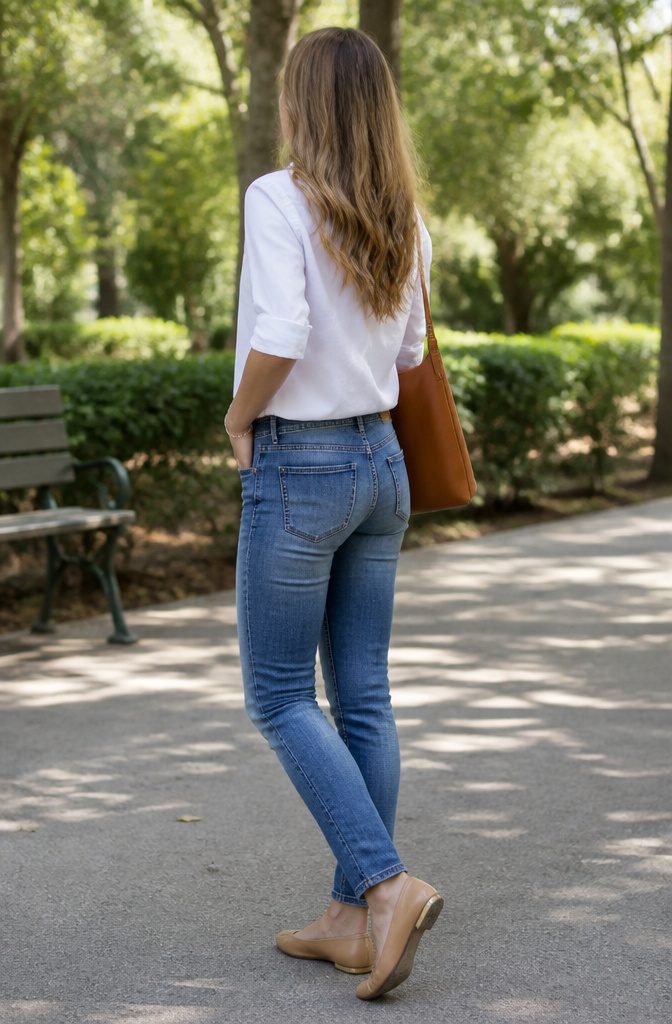
A crisp white shirt with jeans can read as borrowed-from-the-office until the sleeves get involved. Rolling them to the forearm or elbow breaks the vertical line of the arm and shifts the whole proportion from formal to intentional.
The fabric stacks in clean folds rather than bunching, which signals you meant to do this, not that you outgrew the shirt or gave up on it.
Roll the sleeve just past the wrist bone, low enough to show a watch or thin bracelet but high enough to keep the elbow free. Pushing higher than mid-forearm starts to look like prep work, not style.
I check the roll in a mirror from the side: the bulkiest part of the sleeve should face away from the body, not jut out toward the room. One neat turn, pulled snug, then folded again.
A single sloppy roll looks like you are running late; two tight ones look like you planned the whole outfit around your forearms.
Necklaces and Belts as Finishing Touches
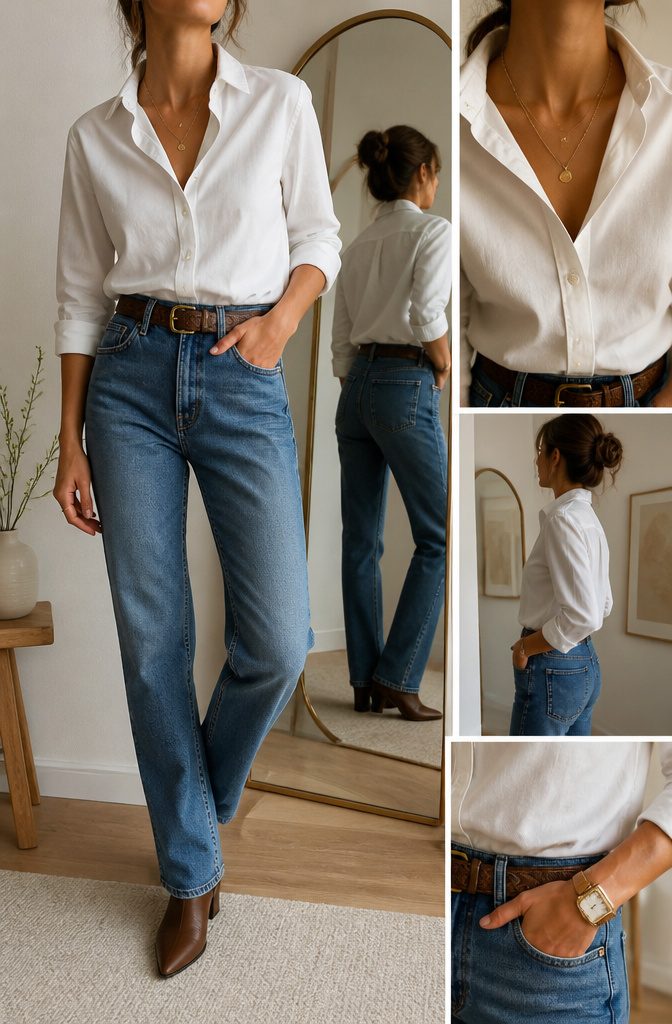
A white shirt and jeans without anything at the neck or waist reads unfinished, like you got halfway dressed and walked out. The fix is usually two small additions, not ten.
Layered necklaces give the eye somewhere to land below your face. Two thin chains at staggered lengths, maybe both gold, create a stacked effect that feels intentional without trying hard.
One statement piece works too, but the layered route tends to read more modern and less office-casual.
The belt is where most people play it too safe or too loud. A bright belt can add a pop of color against the neutral base, but the leather itself matters more than the shade.
Smooth, medium-width straps suit high-waisted jeans; wider, more textured styles balance an oversized shirt left half-tucked. The belt should relate to the outfit, not announce itself first.
Jewelry competition is the real trap. If the neckline is busy with layers, keep earrings simple studs or small drops.
If the belt has hardware or an unusual buckle, skip a bracelet on that side. Add one thing, not five.
These finishing touches are what turn the uniform into something personal. Same shirt, same jeans, different necklace or belt, and the whole impression shifts.
A few good accessories do more than another base layer ever could.
Sneakers or Flats for Casual Days

Clean white sneakers push the outfit toward errands, school pickup, or a Saturday market where you will walk more than you sit.
The same jeans and shirt with loafers or ballet flats reads more pulled-together for a casual office or a lunch where you might run into someone you used to work with.
Simple sandals in summer keep it from looking like you gave up, but the wrong sandal, something too strappy or too flat, can tip the whole thing into looking like you grabbed what was closest.
The shoe is what tells people which version of casual you meant.
I have worn this outfit to both a backyard barbecue and a meeting I thought was going to be more formal than it was, and the only difference was swapping canvas sneakers for leather loafers.
The shirt and jeans stayed the same. The same jeans and shirt work for dinner if you swap sneakers for heels.
Heels or Ankle Boots for Polished Occasions
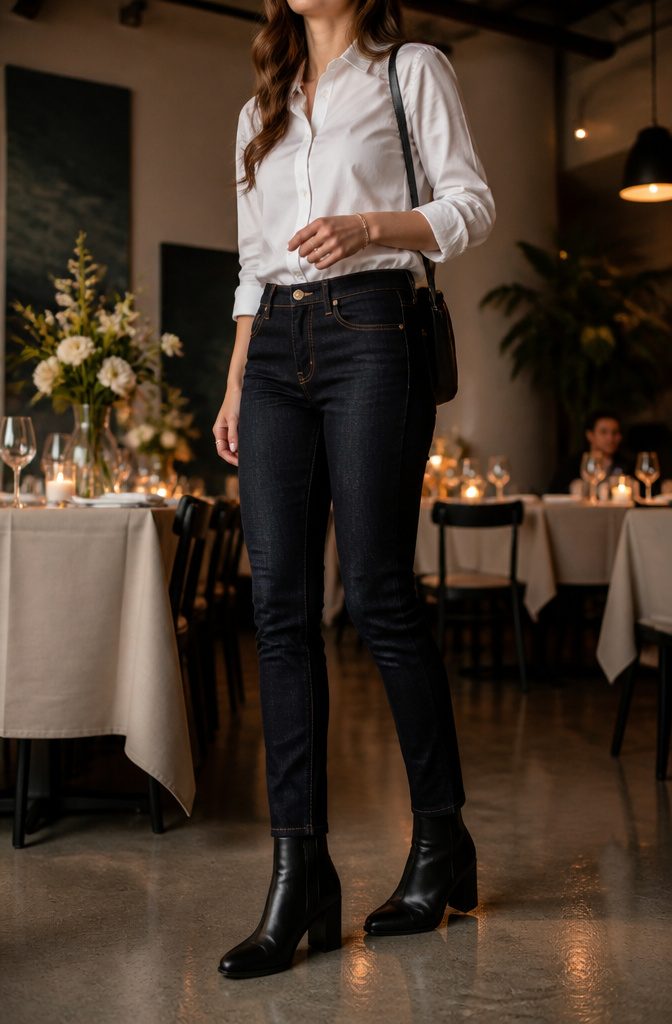
Pointy shoes add an elongating effect that changes how the same jeans and white shirt read in a room full of people dressed up.
I learned this the hard way at a dinner where I wore rounded ballet flats with dark denim and spent the evening feeling underdressed next to colleagues in block heels.
Block heels, pointed pumps, or ankle boots sharpen the outfit enough for meetings, dinner reservations, or events where you need to look intentional, not like you grabbed what was clean.
The shirt still needs to be pressed and free of wrinkles; a crisp white cotton shirt looks more polished than something sheer or creased, and the jeans should skip rips if the occasion leans formal.
The heel height matters less than the line of the shoe. A pointed toe does the visual work of making legs look longer even at two inches.
Ankle boots work best when the hem hits right at the boot shaft, no bunching.
This combination will not carry you into black-tie territory, but for the dressier end of business casual or a nice restaurant, the right shoe makes the jeans and white shirt women look feel completely appropriate.
Distressed Jeans for Easy Attitude
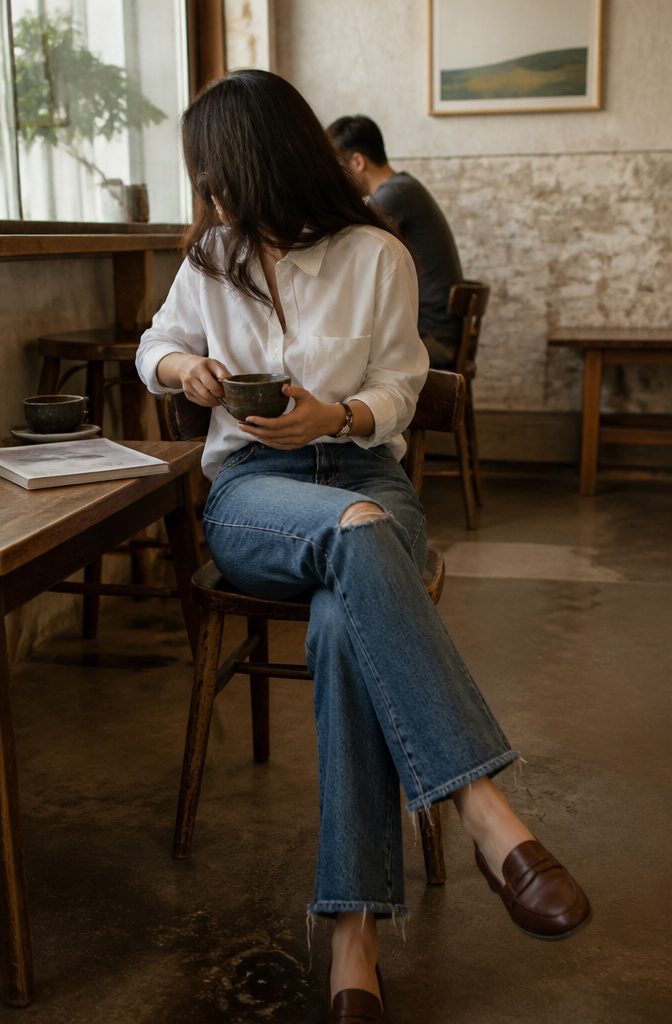
Distressed denim sits at the opposite end of the jeans spectrum from dark rinse or raw selvedge, and that is exactly where it earns its place.
Rips, fading, and worn-in edges add character that reads as effort rather than effortlessness, which is a harder balance to strike than it looks. Let the shirt keep its structure so the roughness reads as choice, not accident.
A crisp poplin or a pressed oxford against frayed knees and faded thighs creates the contrast that keeps the outfit from sliding into looking sloppy.
The shirt does the work of pulling the look together; the jeans do the work of keeping it from feeling too pulled together.
I have seen this pairing go wrong when both pieces are fighting for the same casual register, a soft drapey shirt with blown-out knees ends up looking unintentional rather than styled.
Keep the shirt crisp and the distressing reads as choice, not accident.
Light distressing under a structured white shirt works for errands, coffee, or anywhere the dress code is technically casual but you still want to look like you thought about it.
Heavy distressing, full rips and shredding, narrows the occasions and asks more of the shirt to compensate.
For most days, a single knee rip or some honest fading at the thighs hits the right note without limiting where you can walk in.
Light-Wash Jeans for Fresh Styling
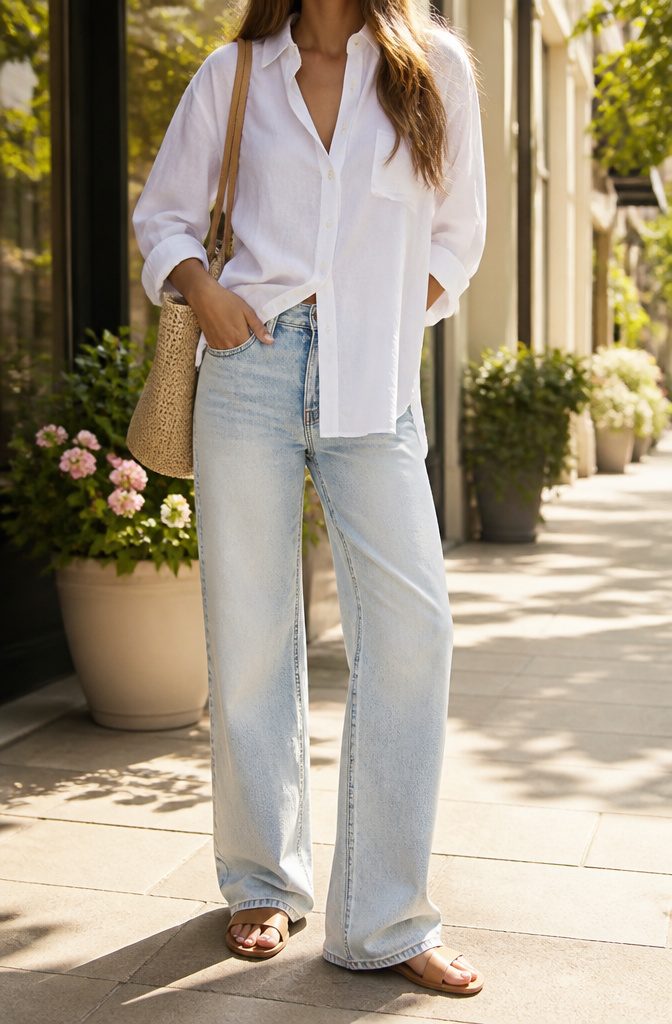
Light blue denim against a white shirt drops the visual weight of the whole outfit.
Where dark indigo reads heavy and grounded, a pale wash catches light and moves with it, so the same white shirt suddenly feels like summer rather than a uniform.
The shift is immediate and useful: you look dressed for the temperature, not just the calendar.
The combination stays interesting because the jeans themselves vary so much. A rigid, high-rise straight leg in pale denim gives a 1970s line that a soft, low-rise wide leg in the same wash does not.
I keep reaching for different cuts to see which silhouette the white shirt needs that day. A cropped flare with a tucked shirt reads beach-town errands; a full-length bootcut with the shirt half-tucked reads lunch that runs long.
The wash is the constant, but the style of the jean does the actual work of changing the mood.
White on light blue also forgives texture. A crisp poplin shirt against pale denim looks intentional and clean; a slubbier linen against the same wash looks relaxed without drifting into careless.
The pairing holds either way, which means one less decision in the morning and more use from both pieces.
Dark Jeans for Sophistication
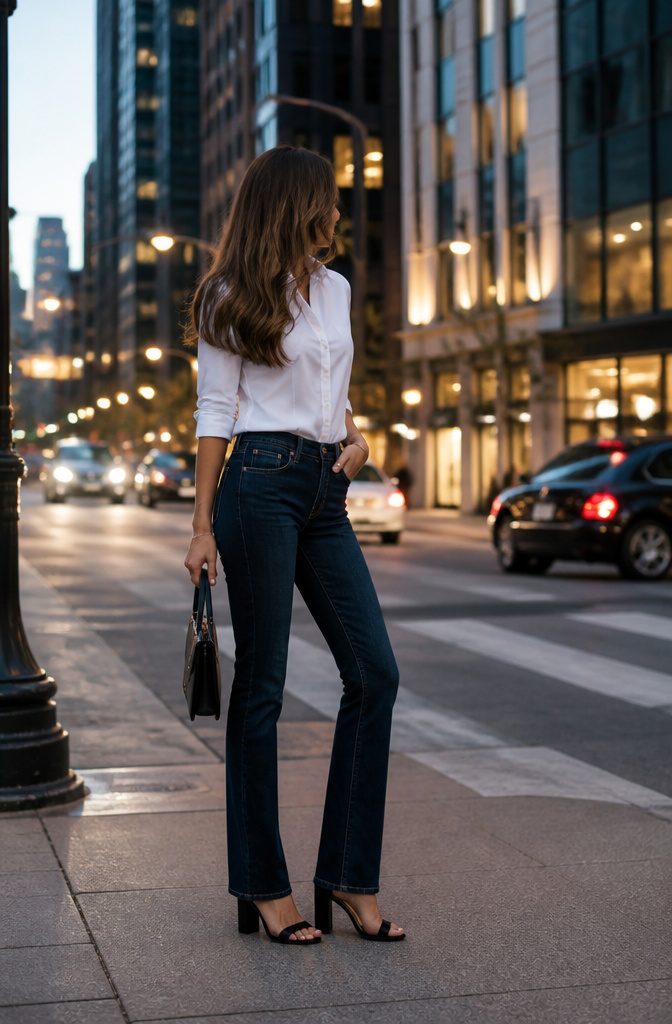
Dark denim narrows the silhouette in a way light washes simply cannot. The deep indigo or black shade draws the eye vertically, creating a longer line from shoulder to hem.
With a white shirt, the contrast reads sharper and more deliberate than casual.
Princess Diana understood this during her 1997 visit to Bosnia and Herzegovina: the same two pieces, but the dark jeans made the combination feel appropriate for a formal engagement rather than weekend errands.
The darker the jean, the closer you move to evening or desk-appropriate territory without changing anything else. Straight-leg or skinny cuts in a dark rinse carry that refinement best; the clean edge at the ankle keeps the look intentional.
Sarah Burton’s Givenchy collection pushed this further with oversized dark denim nearly brushing the floor, though that length demands the right heel to avoid looking swallowed.
For most of us, a true dark wash with no distressing and a crisp white shirt, sleeves rolled to the forearm, reads as approachable without trying too hard.
It completes the spectrum: light wash for Saturday morning, dark wash for Saturday night, same shirt, different statement.
Why This Outfit Lasts
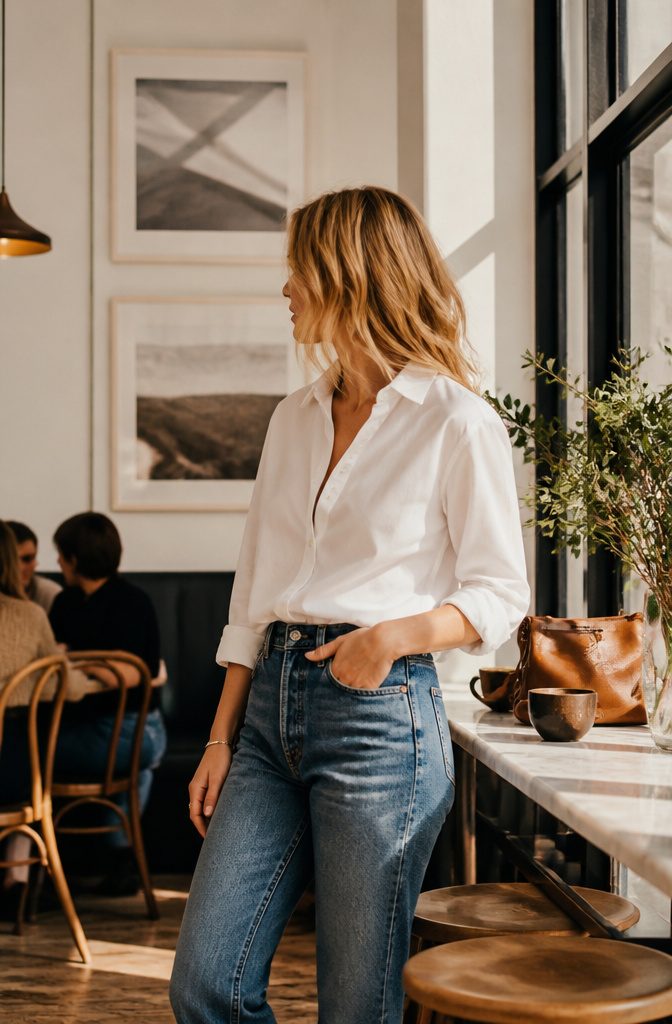
Princess Diana wore a white shirt and jeans to Bosnia and Herzegovina in 1997, and the photograph still circulates as shorthand for understated elegance. That same pairing appeared on Amber Valletta in the nineties, anticipating the minimalist wave that followed.
The outfit keeps resurfacing because it functions as a blank canvas that shifts with whoever wears it. Dua Lipa and Nicole Kidman have both reached for it recently; Kidman specifically favors the Charvet shirt made for Chanel.
Runway collections keep proving the range. Sarah Burton at Givenchy sent the shirt out as a hybrid piece with floor-grazing oversized jeans, while Guram Gvasalia at Vetements pushed it toward something bolder for spring 2027.
Brandon Maxwell emphasized fluidity instead. The common thread is that the combination absorbs direction without losing its core shape.
A slightly unbuttoned oversized shirt with straight-leg or skinny jeans reads borrowed and relaxed; a crisper cut reads deliberate.
Either way, the silhouette outlasts the trend cycle because it asks the wearer to supply the personality, not the other way around.
Small Details That Change Everything
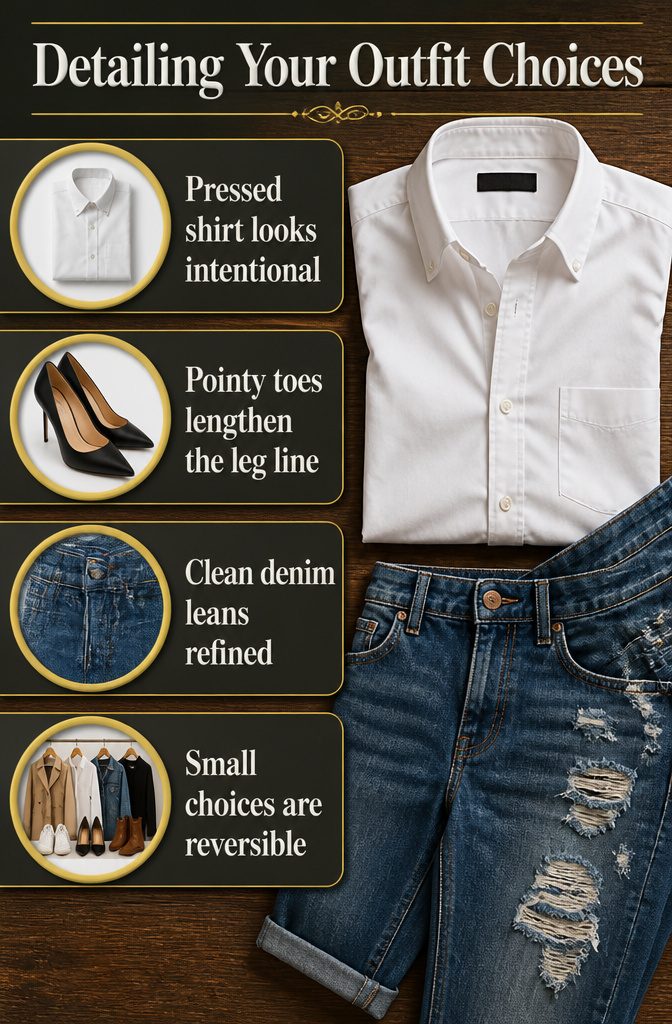
A pressed shirt changes the whole message. Wrinkles read as rushed; the same cotton, smoothed, reads as intentional.
The fabric matters too: crisp cotton holds its shape and looks polished where a sheer weave can look accidental by noon.
Shoe shape is the other silent signal. Pointy toes, whether on a flat or a heel, lengthen the leg line in a way rounded toes do not.
Sneakers or flats keep the day casual; heels or ankle boots shift it toward evening. The swap takes thirty seconds and rewrites the occasion.
Distressing on the jeans works the same way. Clean denim leans refined; rips add ease.
Neither is wrong, but mixing them without meaning to, like a pressed shirt with shredded knees, can look unconsidered rather than eclectic.
The outfit wins because each small choice is reversible. You are not locked into a look.
You adjust the variables, fit, fabric, shoe, finish, until the total reads as the single coherent thing you meant to wear.
Shirt Fit and Jean Shape Compared
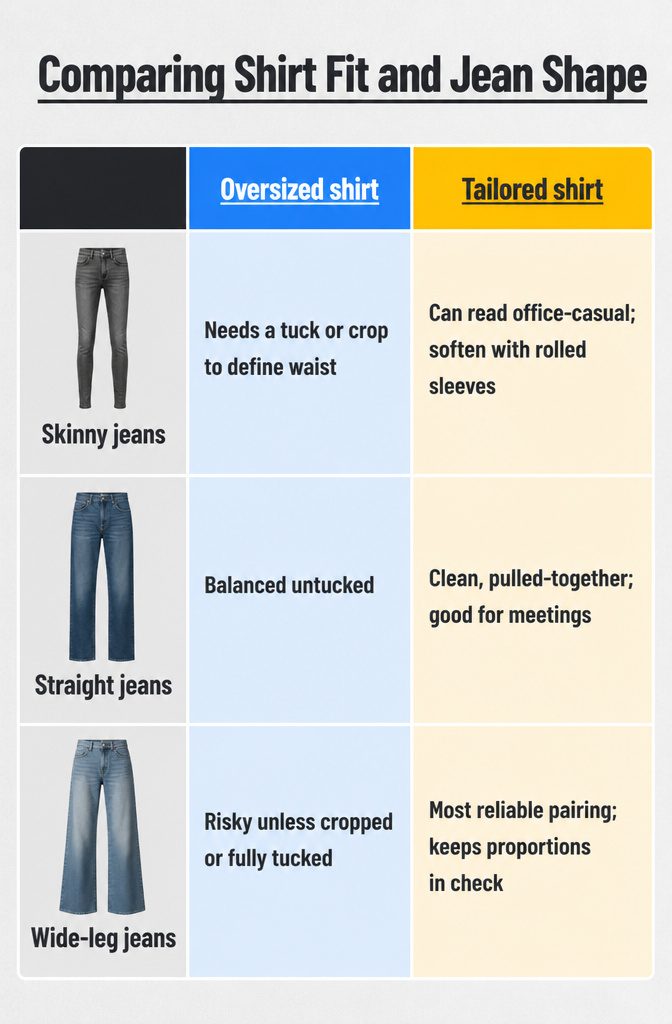
An oversized shirt with skinny jeans can read borrowed-from-him in the right way, or it can swallow your shape entirely.
The difference is usually the hem: something has to break the vertical line, whether that’s a front tuck, a half-tuck, or the shirt cut short enough to hit at mid-hip.
Straight-leg jeans give you more room to let the shirt hang, since the leg width balances the volume up top.
Wide-leg jeans with an oversized shirt only works if the shirt is cropped or very intentionally tucked; otherwise you’re wearing a tent.
Tailored shirts are the safer bet with wide-leg or straight jeans. The fitted shoulder and waist keep the silhouette defined, and the clean line down to the hem of a high-rise pair looks intentional rather than accidental.
With skinny jeans, a tailored shirt can feel stiff unless you roll the sleeves or undo the second button.
| Oversized shirt | Tailored shirt | |
|---|---|---|
| Skinny jeans | Needs a tuck or crop to define waist | Can read office-casual; soften with rolled sleeves |
| Straight jeans | Balanced untucked; works slightly unbuttoned | Clean, pulled-together; good for meetings |
| Wide-leg jeans | Risky unless cropped or fully tucked | Most reliable pairing; keeps proportions in check |
Occasion matters more than trend here. A slightly unbuttoned oversized shirt with straight jeans handles brunch or a casual Friday.
The same shirt with wide legs looks like you dressed around a trend rather than your own shape.
A tailored shirt with straight jeans and a half-tuck is my default for anything where I need to look like I planned the outfit, because it works on a rectangle or a curve without recalibration.
What I Got Wrong Learning This
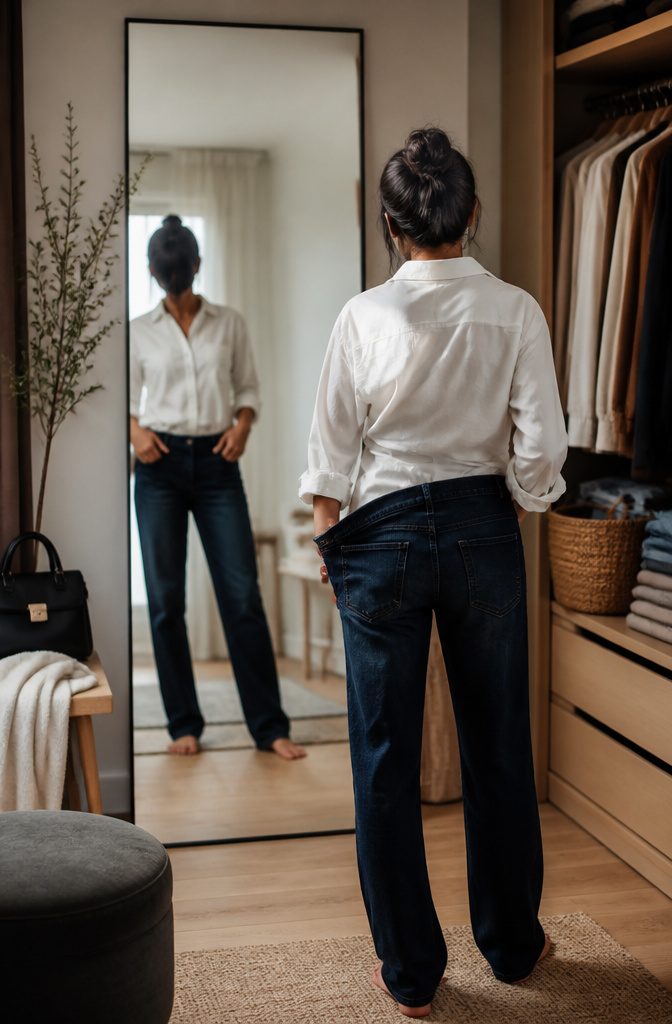
A white shirt with no darts, no stretch, nothing holding it to the frame will hang like a tent. It looked clean on the hanger.
On my body it turned into a sail. The fabric billowed at the sides and the back, and instead of reading as effortless it read as careless, like I had grabbed a cover-up and forgotten to change.
A white shirt without some internal structure needs to be tucked or it needs to be cut closer than you think. I learned that after wearing it three times and hiding in photos.
Then there were the jeans that sat exactly at my natural waist but had no rise to speak of, so every time I lifted an arm the shirt untucked itself. The outfit fought itself all day.
I also over-accessorized once, stacking a belt, a long pendant, and a scarf because each piece looked fine in isolation. Together they turned a simple pairing into noise, and not interesting noise.
Shoes changed the intent in ways I did not expect. Heeled boots with a crisp shirt and dark jeans read corporate to me, not polished-casual.
The same outfit with loafers relaxed immediately. I had not planned for that shift; the boots just happened to be by the door.
Now I decide the shoe first and let it set the temperature.
Frequently Asked Questions
How do I style a white shirt and jeans?
Start with fit: volume on top needs clean lines below, so pair an oversized shirt with straight or skinny jeans and a tailored shirt with high-waisted or wide-leg cuts.
Add a statement belt, roll the sleeves to the forearm, and finish with layered necklaces or simple jewelry to keep the look intentional rather than accidental.
What shoes should I wear with a white shirt and jeans?
Clean white sneakers or flats keep the outfit casual for errands and weekends.
Block heels, pointed pumps, or ankle boots sharpen it for meetings, dinners, or dressier occasions where you need to look planned rather than like you grabbed what was clean. The shoe tells people which version of casual you meant.
Can I wear a white shirt and jeans for a formal occasion?
Yes, up to the dressier end of business casual or a nice restaurant. Choose dark rinse jeans with no distressing, a pressed crisp cotton shirt, and pointed heels or ankle boots.
The combination will not carry you into black-tie territory, but the right shoe and dark denim make it appropriate for polished settings.
Are jeans and a white shirt okay?
Yes. The pairing has lasted decades because it functions as a blank canvas that shifts with the wearer.
Princess Diana wore it for formal engagements in 1997, and it still reads as understated elegance rather than trend-chasing. Match the fit, wash, and accessories to where you are actually going.
What color jeans look best with a white shirt?
Dark indigo or black narrows the silhouette and reads sharper for evening or desk-appropriate settings. Light blue denim drops visual weight and feels fresh for warmer weather.
Distressed or faded jeans add attitude for casual days, provided the white shirt stays crisp enough to balance the roughness.