
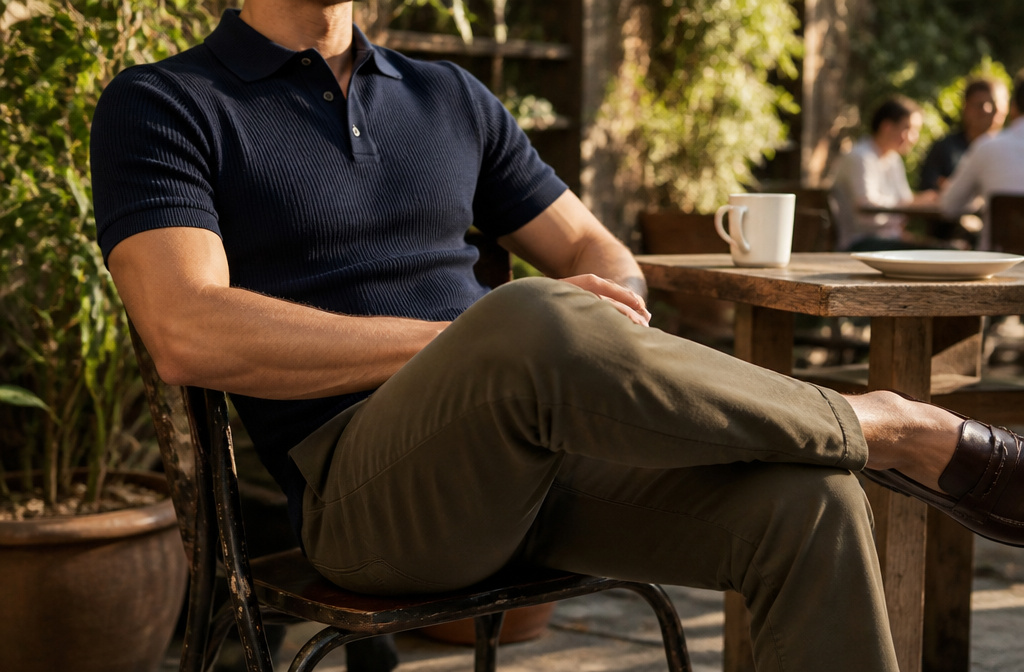
A polo shirt outfit lands anywhere from weekend casual to office-ready depending on what you pair it with and, more importantly, which fabric you choose.
The same navy polo reads golf-course sloppy under a blazer if it is pique weave, but intentional knitwear if it is fine-gauge ribbed knit.
That fabric decision is the condition most people miss, and it is what separates the combinations that earn compliments from the ones that look like you grabbed the first clean shirt.
The article below breaks down ten specific pairings, starting with the chinos-and-loafers combination that convinced me this shirt belongs in a work wardrobe, not just Saturday rotation.
1. Polo Shirt with Chinos and Loafers
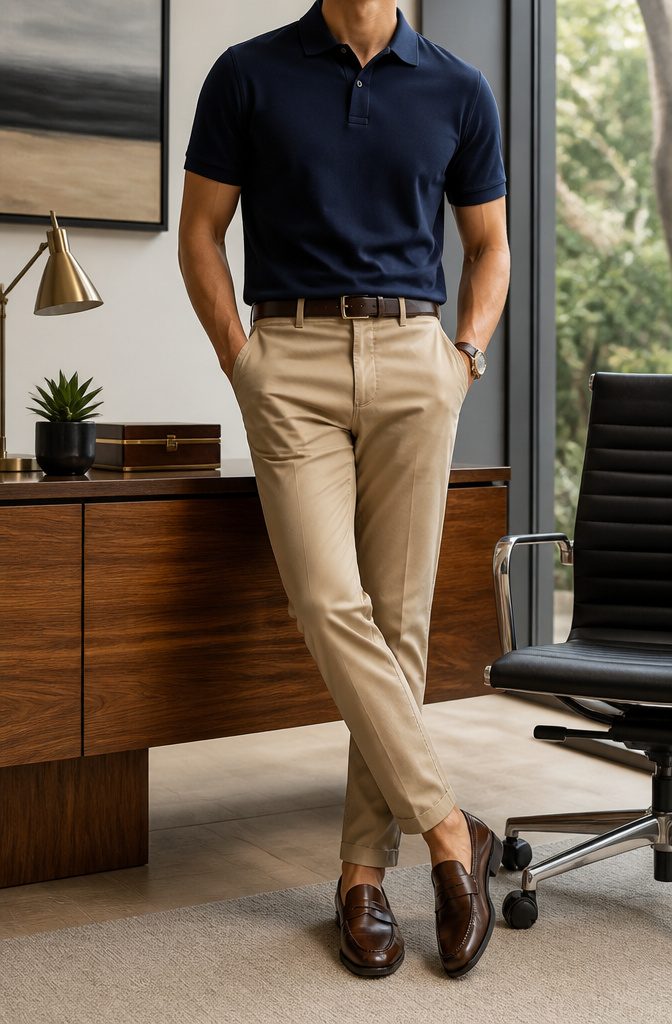
The navy polo with tan chinos and leather loafers is the combination that convinced me the shirt belongs in a work wardrobe, not just weekend rotation.
The structured collar does the heavy lifting here: it reads as intentional where a crew neck would look underdressed, and that small detail pushes the whole thing into business-casual territory without trying too hard.
Fit makes or breaks this. The shoulders should sit clean at the edge of your shoulder bone, and the body needs to taper gently at the waist so the polo skims rather than billows.
A boxy cut turns this into golf attire; a proper taper keeps it sharp. I tuck for client-facing days and leave it untucked with the sleeves pushed to mid-bicep for a lunch that might stretch into drinks.
The loafers should be leather, not suede, if there’s any chance of a meeting. Suede reads relaxed even when the rest doesn’t, and mixing signals in one outfit is where this pairing usually goes wrong.
2. Polo Shirt with Jeans and Sneakers
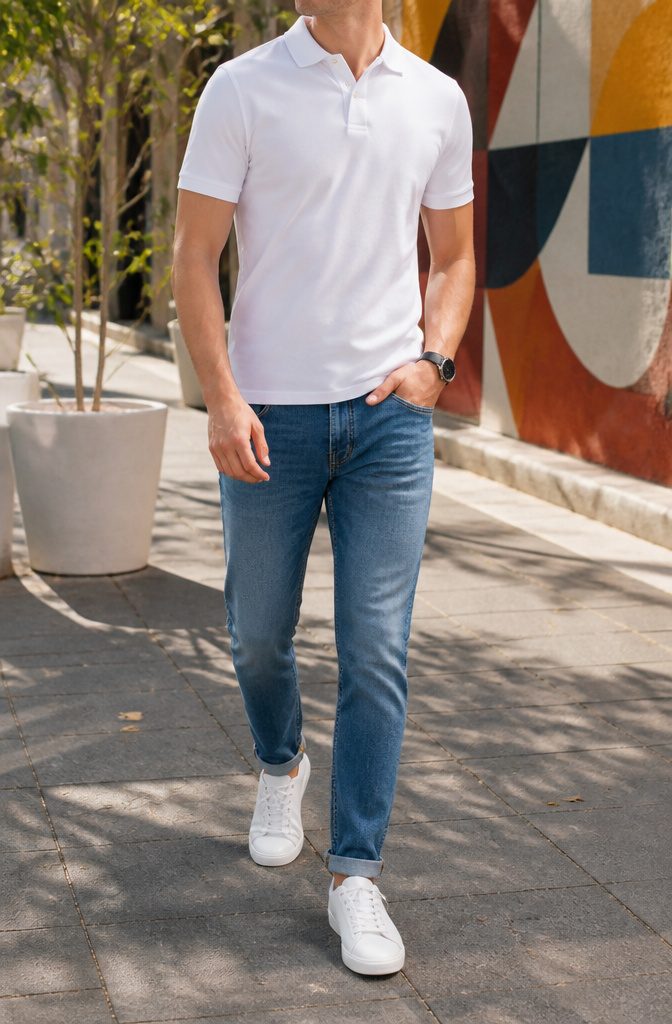
A white polo with mid-wash blue jeans and clean white sneakers is the pairing that shows up most in search data, and for good reason.
The contrast reads fresh without trying too hard. The structured collar keeps the denim from sliding into sloppy territory, and the white-on-white top and shoe line does more leg-lengthening work than most people expect from something this casual.
For evening, the same formula shifts intentional with a black polo and darker denim. Black with navy works, though the monochrome reads heavy unless something breaks it: a grey jean instead, or dark brown leather rather than black shoes.
The controlled, edgier tone comes from keeping everything in the same value range without matching exactly.
The tuck decision is where most outfits win or lose. A full tuck polishes the line and lengthens the leg.
A front-only tuck adds a relaxed break that still signals styled. Fully untucked only works when the polo is cropped or cut short enough to hit at the hip.
Below that widest point, the silhouette turns boxy fast. An untucked full-length polo is the exact shape that reads unfinished, not easygoing.
3. Polo Shirt with Tailored Trousers
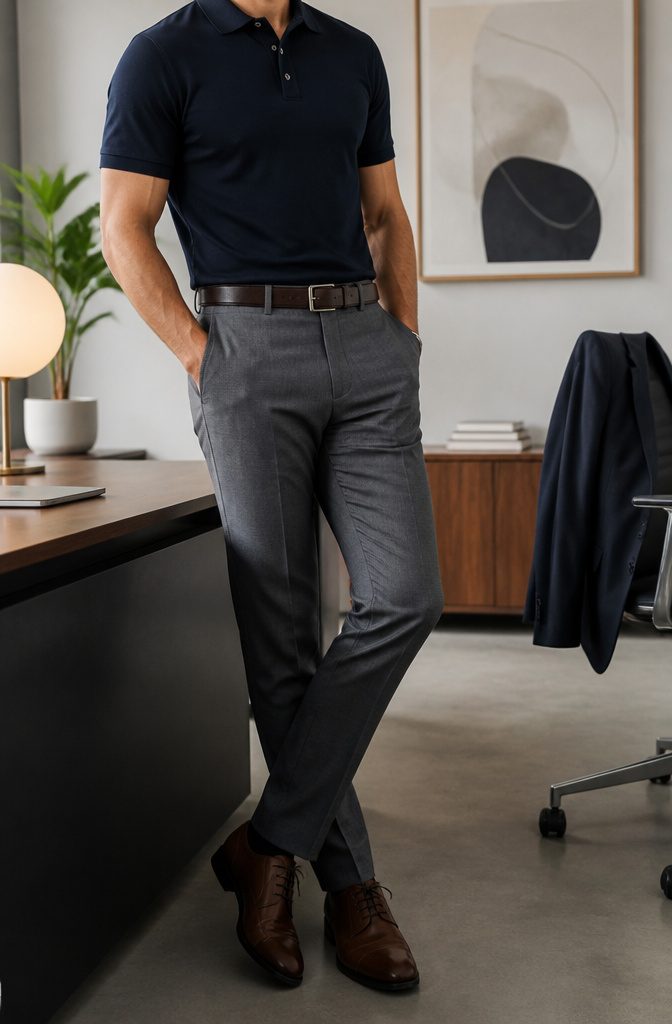
A navy polo with grey dress pants and dark brown leather derbies reads office-ready the minute the shirt is tucked in and belted.
Without that full tuck and a slim belt, the same pieces look like you grabbed breakfast in work clothes and forgot to finish dressing.
Knit polos carry this combination better than pique. The textured weave of a standard pique polo is durable and breathable, but it carries the strongest "uniform" association.
A fine-gauge or ribbed knit drapes softly, photographs as more expensive, and reads as intentional knitwear rather than borrowed sportswear. Reserve pique for genuinely sporty days or hot weather when breathability matters more than polish.
The frame matters most here: pants that fit close through the thigh and land cleanly at the shoe make any neutral color work, but the navy-grey-brown trio stays reliable because each piece is easy to source and replace.
A structured layer like a blazer or overcoat anchors the look further, though the polo and trousers alone suffice for offices where smart-casual actually means something.
4. Polo Shirt with Shorts
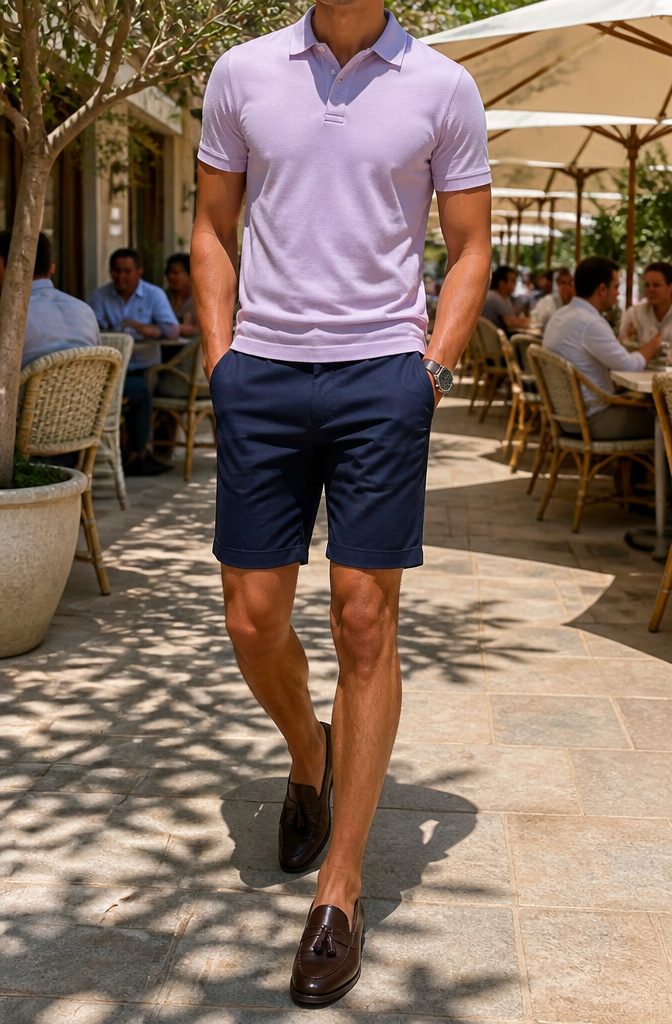
Tailored shorts, not the baggy cargo kind, are what keep a polo from looking like you grabbed the first clean thing on a Saturday morning.
The right length is 1–2 inches above the knee: any longer and the proportions start to slouch; shorter risks reading like poolside attire.
A pastel polo or a clean white one against navy or khaki shorts gives you the easiest color logic in warm-weather dressing.
Boat shoes work, but loafers or a slim leather sandal pull the whole thing into territory where you could walk into a lunch reservation without feeling underdressed. The upgrade is in the shoe, not the shirt.
5. Polo Shirt with a Blazer
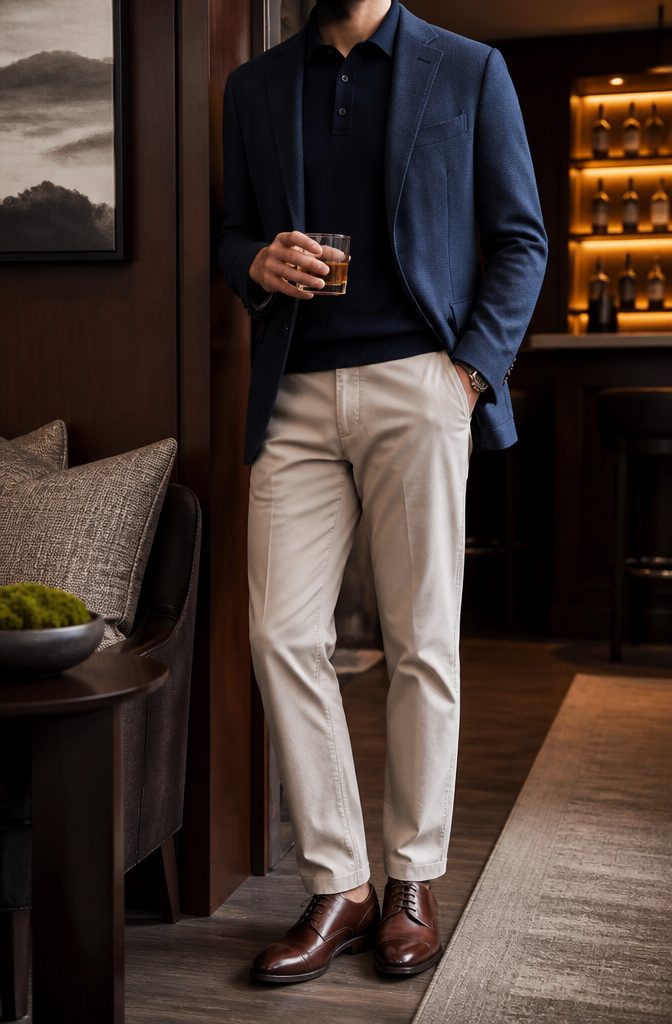
A knit polo sits cleaner under a blazer than any crew neck tee because the collar gives the jacket something to frame.
The structured collar stays visible above the blazer neckline, and that small detail reads as intentional rather than like you grabbed a t-shirt on your way out.
Pique polos, the textured weave most of us own already, carry a strong uniform association and add bulk where you do not want it.
A fine-gauge or ribbed knit drapes softly and photographs as expensive, which matters when the pairing only works if it looks like you planned it.
Fit here is what separates polished from sloppy. The blazer should skim the polo underneath; if you feel the jacket squeezing your shoulders, the polo is too thick or the blazer is too slim.
Sleeve length needs to show about half an inch of polo cuff. That small strip of fabric at the wrist proves the layers are deliberate, and it gives the relaxed knit collar its proper contrast against the tailored jacket.
For casual Fridays or evening drinks, pair a navy polo with a structured navy or grey blazer, add chinos, and finish with brown or black leather shoes.
Skip the tie entirely; the polo’s collar already does that work, and a pocket square in burgundy, navy, or a subtle plaid adds enough finish without competing.
6. Polo Shirt with a Pleated Midi Skirt
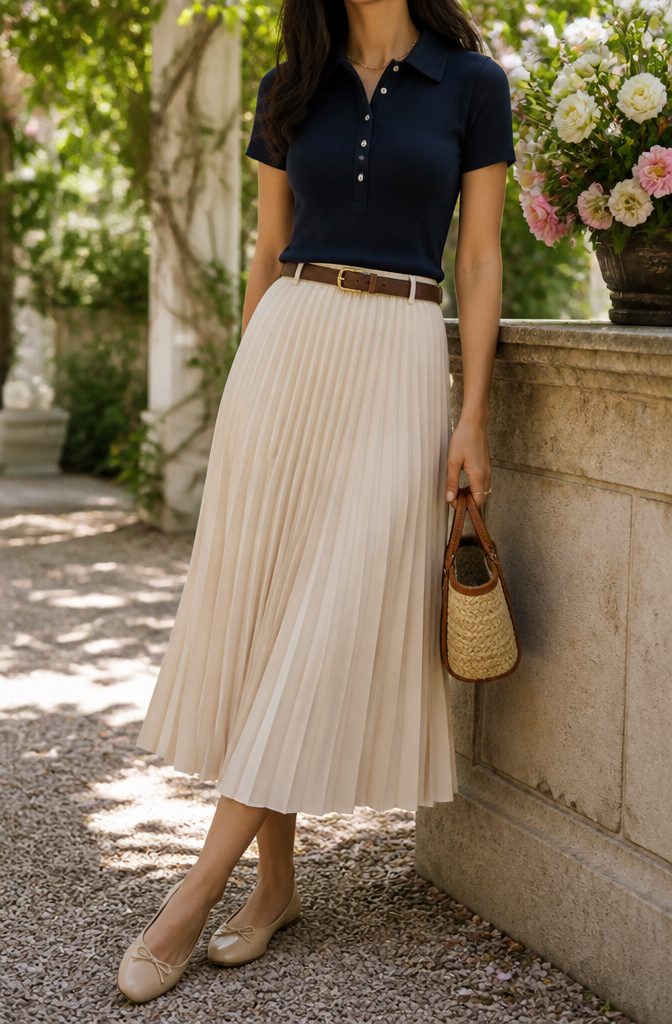
A pleated midi skirt softens the sporty structure of a polo into something that reads romantic rather than athletic. The contrast is the point: the skirt supplies movement, the polo anchors it.
If the hem falls below your widest point, tuck it.
A full tuck at the high waist elongates the leg and reads polished; a half-tuck, front-only, keeps the break intentional and relaxed. Either way, the waist needs definition.
A cropped polo hitting at or just above the high waist does this naturally and avoids the boxy silhouette a full-length untucked polo drapes over the hips. The proportions stay neat, and the skirt remains the star.
A leather belt in a matching tone pulls the eye to the waist and ties the whole look together without adding a second statement.
For a bridal shower, keep it to ballet flats and a slim chain necklace; swap in low block-heel sandals and the same belt for a gallery opening. The outfit travels between occasions with only the shoes and the jewelry changing.
Don’t hesitate to pair a skirt with your polo. This combination of a midi style and cropped shirt offers an effortlessly cool twist on the trend.
— Elle
The cropped polo is what makes this advice practical: it defines the waistline without demanding a perfect tuck every time.
7. Polo Shirt with a Maxi Skirt
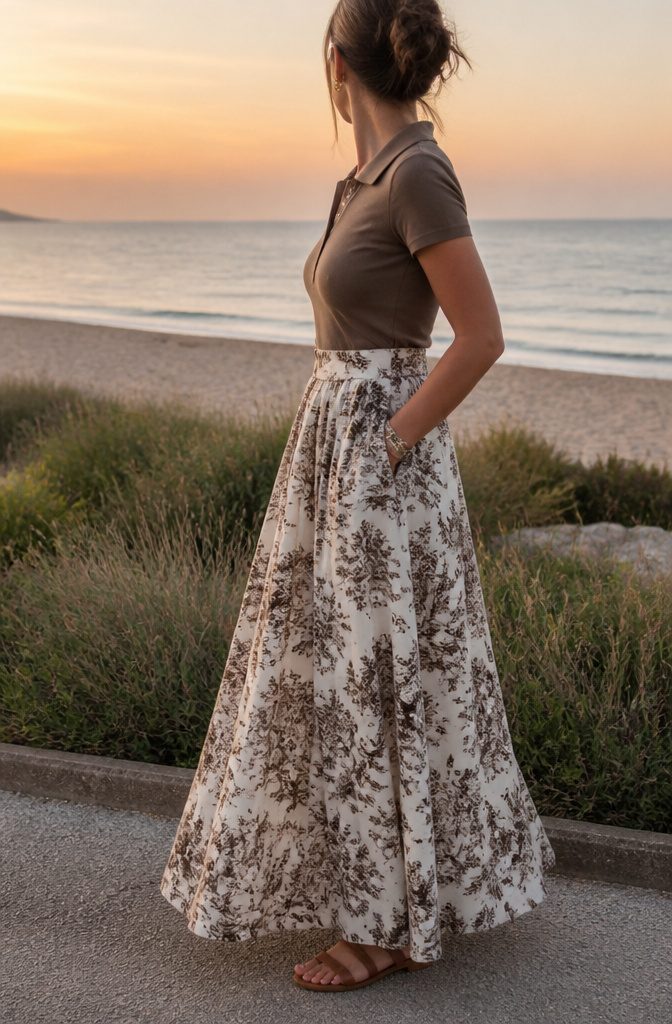
A fitted polo shirt tucked into a maxi skirt creates the kind of vertical line that actually adds height rather than drowning it in fabric.
The slim top half keeps the volume below from turning into a tent; without that contrast, the whole silhouette goes shapeless.
I learned that the hard way after trying a boxy cut polo with a tiered skirt and spending the evening looking like I was wearing a lampshade.
A solid color polo against a patterned maxi reads intentional; two prints fighting each other just looks like you got dressed in the dark.
Lightweight cotton or linen for the skirt, with a thin belt to anchor the waist, keeps the proportions deliberate: the belt gives the tuck somewhere to live.
Shoe choice shifts the whole register. Flat leather sandals or minimalist slides keep it grounded for daytime walking, but swap in a heeled sandal or mule and the same outfit turns up at a beachside dinner without looking underdressed.
The vertical line from the maxi length does the leg-lengthening work either way; the heel just decides whether the room is a boardwalk or a restaurant.
8. Polo Shirt with Cargo Pants
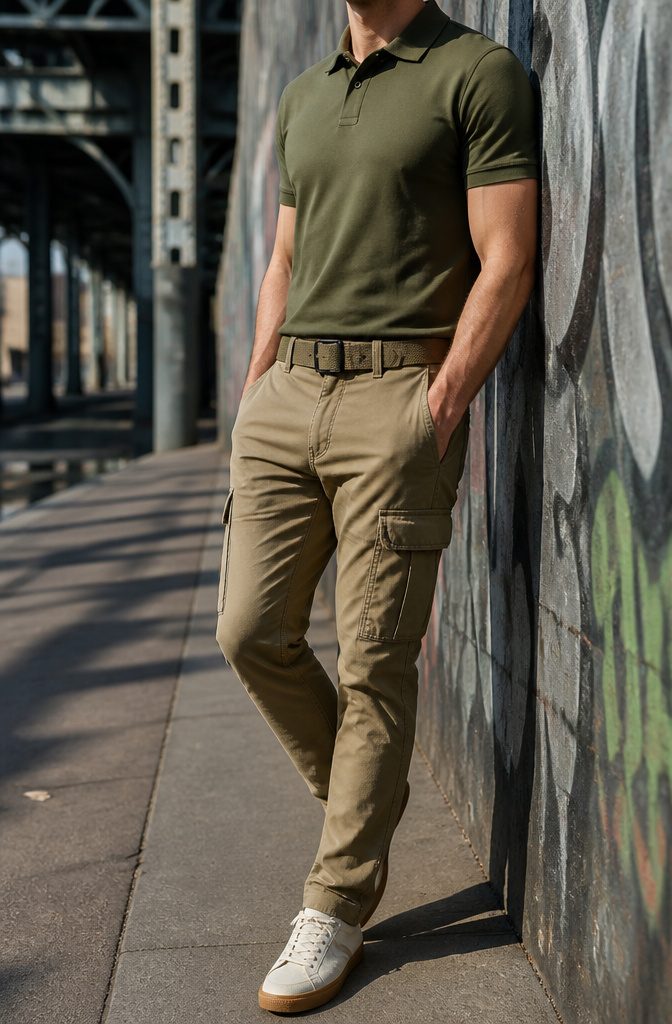
Cargo pants read military surplus unless the cut is deliberate.
Slim or tapered legs keep the silhouette modern; baggy pairs swallow the polo and turn the whole thing into a costume. A fitted polo in olive, navy, or white grounds all those pockets so the look feels chosen, not issued.
If the hem falls below your widest point, tuck it.
A full tuck with a webbed or canvas belt signals intent. That belt matters: it breaks the line and says "styled," not "shift’s over."
The polo should taper at the waist and sit cleanly on the shoulders so the tuck stays neat without bunching. Sleeves ending mid-bicep keep the proportion balanced against the heavier pant.
Leave the polo untucked only if it’s cropped enough to hit at the hip.
A full-length untucked polo with cargo volume reads boxy and frumpy. The full tuck wins here for leg-lengthening and polish.
9. Polo Shirt with Leather Pants
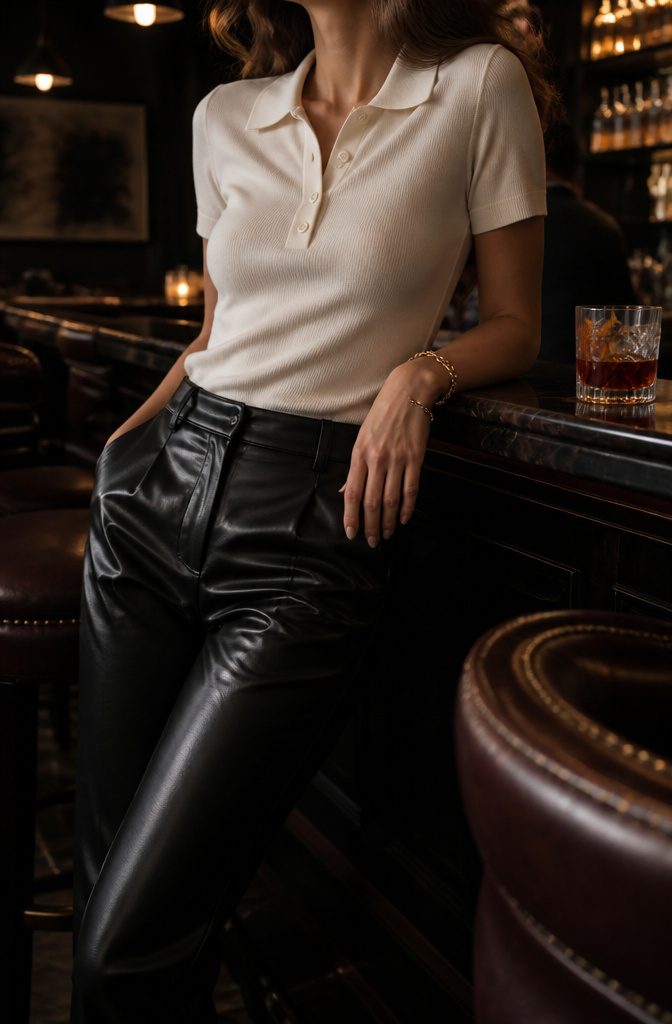
A polo shirt with leather pants only works if the polo reads as intentional knitwear rather than weekend sportswear.
The matte knit of a fine-gauge polo against the shine of leather creates texture contrast that photographs as expensive, while standard pique weave collapses into "uniform" territory against that much drama in the bottom half.
Color direction matters more here than in most pairings. Black on black is the safe default, but the risk is flatness: two different textures in the same dark value can read as one shapeless mass under evening light.
Cream or burgundy against black leather carries more depth and gives the eye somewhere to land.
Fit is where this combination lives or dies. Leather already carries visual weight; a polo that billows at the waist or hangs past the hip throws the silhouette completely off balance.
The shirt should sit cleanly on the shoulders, taper at the waist, and keep sleeves ending mid-bicep so the proportions stay streamlined against the pants.
Slim or straight-leg leather trousers anchor the look best; anything fuller fights the polo’s clean lines for dominance.
10. Polo Shirt with a Denim Mini Skirt
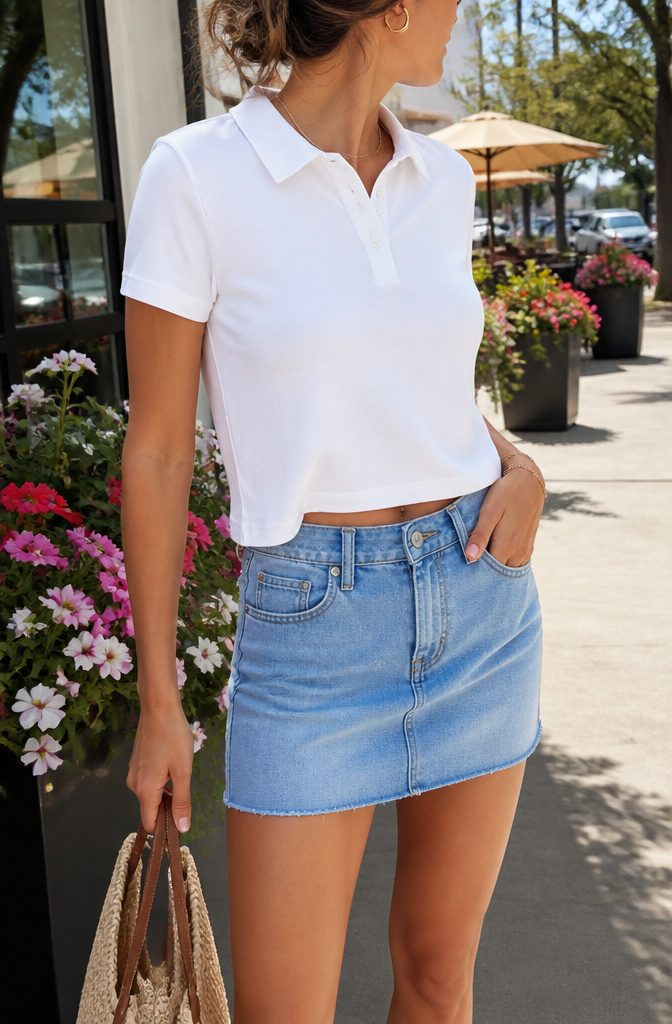
A polo and denim mini skirt is one of those warm-weather pairings that can read either polished or sloppy depending on one small choice: where the hemline hits relative to your waist.
The long-over-short silhouette works only when you break the line deliberately. A slightly cropped polo does this on its own, hitting right at the hip rather than falling past your widest point.
If the polo is full-length, a full front tuck or at minimum a French tuck keeps the shape intentional and elongates the leg rather than boxing it in.
Wash pairing matters more than most people bother with.
Lighter denim with a darker polo gives you enough contrast to look considered; darker denim with white or pastel polos does the same job in reverse. Matching mid-wash to mid-tone just flattens everything into one shapeless layer.
Accessories are where this usually goes wrong.
Small hoops, a thin chain, and nothing else keeps the preppy-casual balance intact. The moment you add a statement belt, stacked bracelets, or oversized earrings, the outfit starts working too hard for what should look effortless.
The mini skirt already shortens the visual line; let the accessories stay minimal so the proportions stay clean.
Fit and Tailoring Check
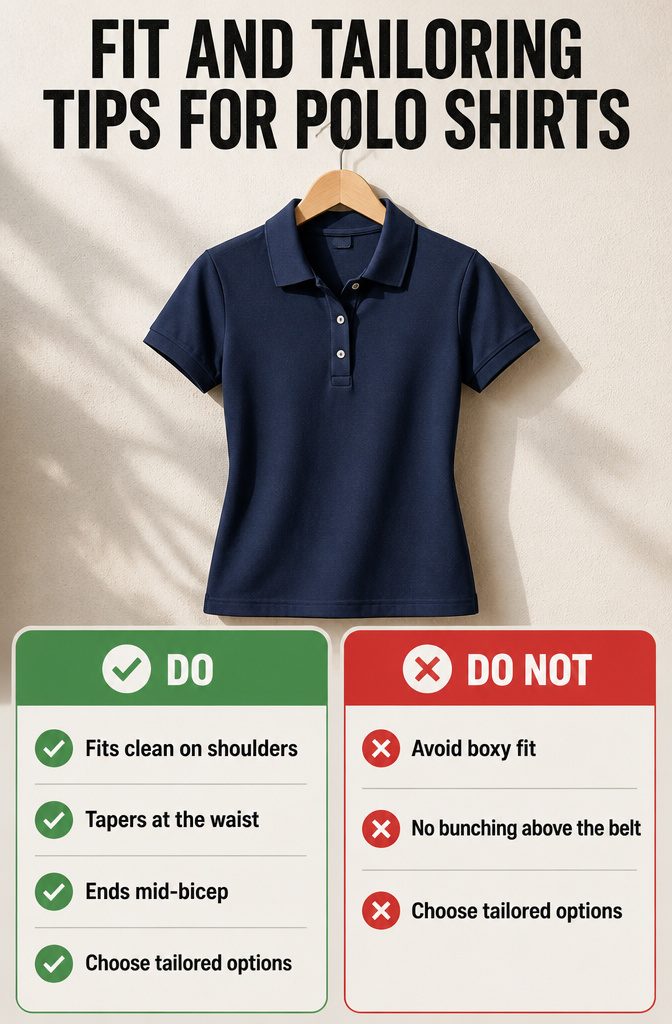
A fitted polo sits clean on the shoulders, tapers at the waist, and ends mid-bicep on the sleeve.
Boxy or ill-fitting reads frumpy, which is the single biggest fix the community on r/femalefashionadvice keeps coming back to: shape is everything, and a polo that skims the body instead of hanging off it changes the entire look.
Two quick tests work across all ten outfits. Raise your arms: the polo should not ride up to expose midriff.
Sit down: it should not bunch above the belt line. If it fails either, sizing down or choosing a women’s-cut polo rather than a unisex work-issued one usually solves it.
For a mandated uniform polo, a discreet tailor can take in the side seams for a few dollars, then tuck and belt it so the eye reads a waistline as styled, not shapeless.
Color Pairing Rules
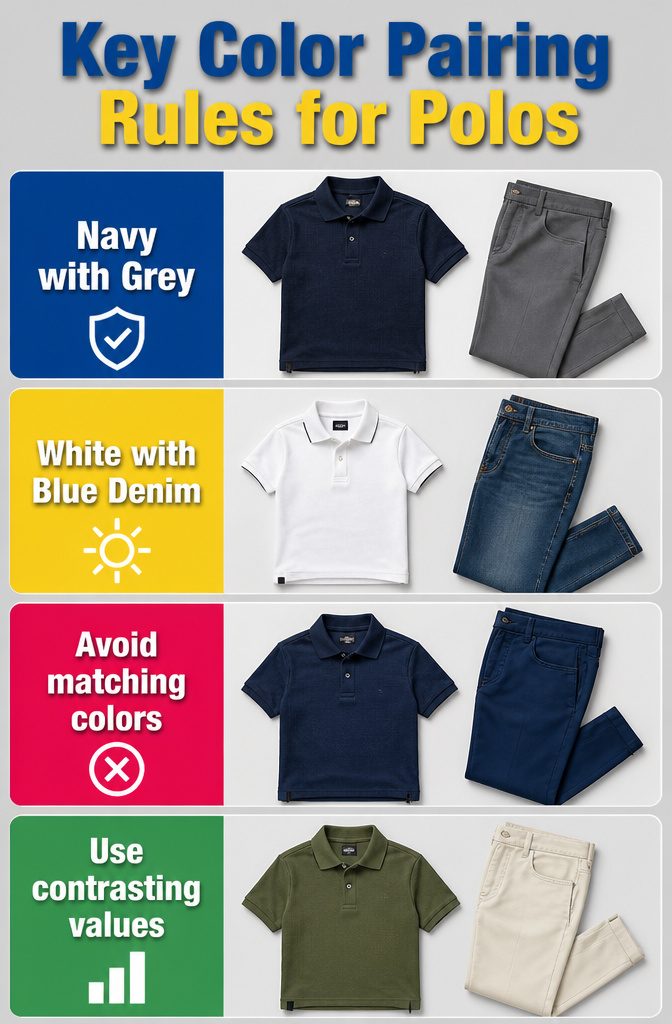
Neutrals do the heavy lifting when a polo needs to look intentional rather than thrown-on. Navy, white, grey, and black read as finished because they recede and let cut and fit take focus.
A navy polo against grey dress pants is the standard for business-casual settings; the two tones sit close enough to stay calm but far enough to keep the eye moving.
White polos with blue denim work the same way, the crisp value jump between top and bottom keeping the pairing from going flat.
Pastels and brights signal the opposite intent: off-duty, weekend, low stakes. The shift is useful once you notice it.
I used to reach for a soft pink polo and wonder why it felt less put-together with khakis; the color was doing casual while the pant was trying for neat, and the mismatch sat wrong without my naming it.
The polo and bottom should differ in value to avoid that washed-out, single-note look.
Olive with cream gives enough separation for the outfit to register as composed. Burgundy with black works when the fabrics contrast, matte knit against woven cotton or denim, so the near-darkness doesn’t pool into one shape.
Matching navy polo to navy chinos is the common mistake; unless the textures fight each other deliberately, the body reads as a block.
Fabric Makes the Difference
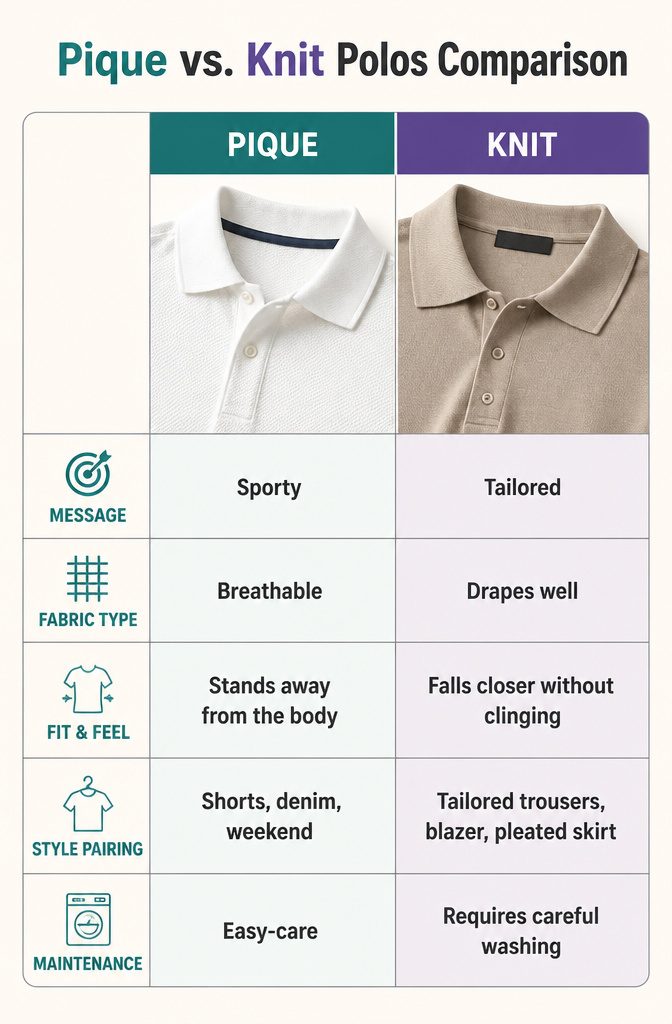
Pique and knit polos carry two completely different messages, and the wrong choice sinks an outfit before it starts.
Pique, that textured, breathable weave you’ll recognize from every golf course and service uniform, reads sporty and casual. It works with shorts, denim, anything weekend.
But a fine-gauge knit polo drapes like intentional knitwear and photographs expensive. The soft body and clean collar line up properly with tailored trousers, a blazer, even a pleated skirt.
Merino, cotton knit, silk blends: these fabrics fall closer to the body without clinging, which is why they pair cleanly with structured bottoms. Pique stands away from the body, adds bulk at the waistband, and fights smarter layers.
What you gain in looks you lose in upkeep. Knits pill.
The softer the gauge, the faster the surface breaks into those tiny fiber balls that cheapen the whole look. Gentle cycle, cold water, flat dry.
A pique polo survives the dryer; a knit one comes out looking like a rag. Buy the fabric that matches the occasion you actually dress for, then treat it like the investment it is.
Accessories That Work
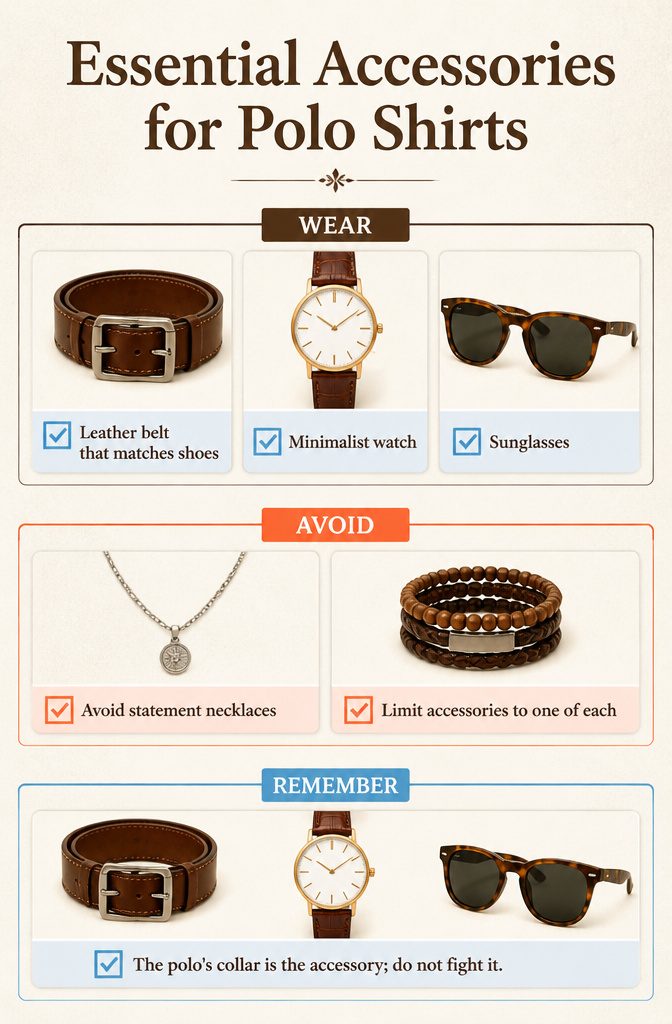
A leather belt matching your shoes is the cleanest way to finish a polo outfit; it pulls the eye from waist to foot without demanding attention.
Add a simple watch, maybe in gold if your trousers run warm-toned or silver if they run cool, and sunglasses for daytime polish.
That trio is the ceiling. A polo with jeans and sneakers needs no belt at all, and the look is often better for the omission.
The collar itself is doing accessory duty.
A statement necklace fights it for space at the neckline. Multiple bracelets snag on the sleeve during the day.
A scarf adds bulk where the polo already has structure. The polo’s collar is the accessory; do not fight it.
Over-accessorizing reads as insecurity, like the outfit needs rescue from the shirt itself. One good belt, one watch, one pair of frames: the restraint is what makes the polo look expensive, not the spend.
Occasion Quick Guide
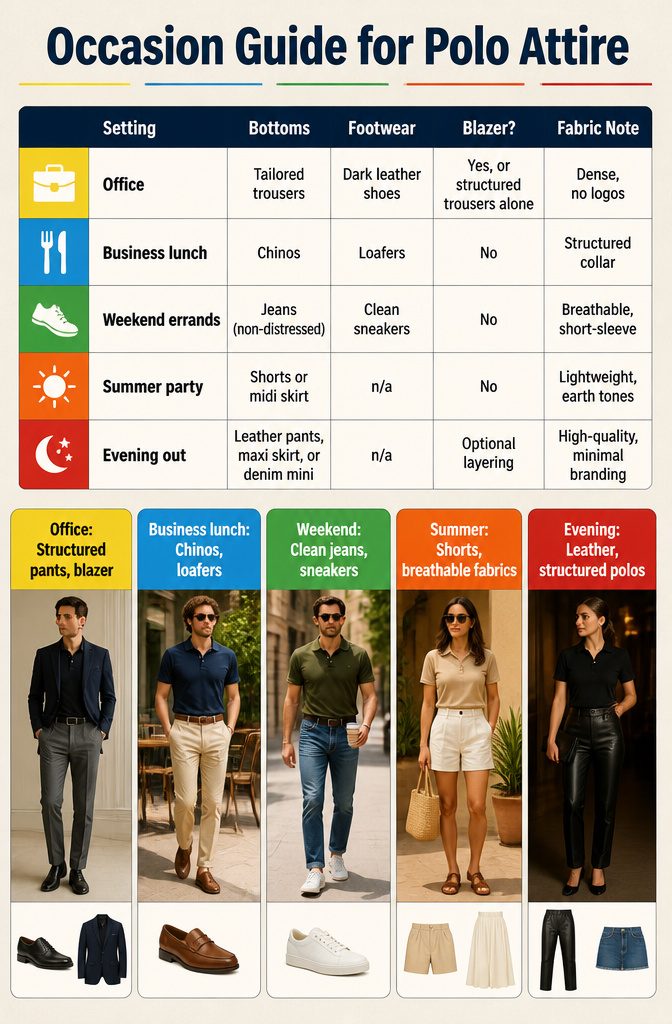
A polo shirt works in more places than most people give it credit for, but the line between sharp and sloppy sits in what you pair it with.
Whether the office look needs a blazer depends on who you ask: one side calls it a guarantee for business-casual credibility, the other says structured trousers and leather shoes alone handle the job if the polo is dense, tailored, and logo-free.
I lean toward the blazer when the meeting matters and skip it when the day is mostly desk work.
For the rest of the week, the moves are cleaner. Chinos and loafers handle the business lunch without the jacket.
Jeans and clean sneakers work for weekend errands if the denim is not distressed and the polo is tucked. Summer parties call for shorts or a midi skirt in breathable fabric.
Evening shifts the ground: leather pants, a maxi skirt, or a denim mini all raise the stakes, but the polo itself needs to be the structured, minimal kind or the look collapses into casual by accident.
| Setting | Bottoms | Footwear | Blazer? | Fabric Note |
|---|---|---|---|---|
| Office | Tailored trousers | Dark leather shoes | Yes, or structured trousers alone | Dense, no logos |
| Business lunch | Chinos | Loafers | No | Structured collar |
| Weekend errands | Jeans (non-distressed) | Clean sneakers | No | Breathable, short-sleeve |
| Summer party | Shorts or midi skirt | n/a | No | Lightweight, earth tones |
| Evening out | Leather pants, maxi skirt, or denim mini | n/a | Optional layering | High-quality, minimal branding |
Frequently Asked Questions
How do I style a polo shirt so it doesn’t look frumpy?
Fit is everything. A polo that skims the body, tapers at the waist, and ends mid-bicep reads intentional; anything boxy or billowing turns into golf attire or a shapeless block.
For women especially, a fitted or slightly cropped cut defines the waistline and keeps proportions clean.
Can I wear a polo to a smart-casual event?
Yes, and the collar does the heavy lifting.
A knit polo tucked into tailored trousers with leather shoes reads office-ready; the structured collar signals intent where a crew neck would look underdressed. Add a blazer when the meeting matters, skip it for desk days.
Should I tuck or leave a polo untucked?
Tuck it for polish, especially with tailored trousers, chinos, or any bottom where the hem falls below your widest point.
A full tuck lengthens the leg and separates styled from sloppy. Untucked only works if the polo is cropped short enough to hit at the hip; anything longer turns boxy fast.
What bottoms go with a polo — skirts, wide-leg pants, or denim?
All three work, but each sends a different signal.
A pleated midi or maxi skirt reads feminine and romantic; wide-leg trousers read modern and elevated; straight denim reads easy weekend. The common thread is a defined waist so the tuck has somewhere to live.
How do I make a plain polo look more expensive?
Upgrade the fabric first. A fine-gauge or ribbed knit drapes softly and photographs as expensive, while standard pique carries a uniform association.
Keep accessories minimal: one leather belt matching your shoes, one watch, done. The polo’s collar is already doing accessory duty; fighting it with layers reads insecure.
What looks good with a polo shirt?
Chinos and loafers for business lunch, jeans and clean sneakers for weekend errands, tailored trousers and leather derbies for the office, shorts or a midi skirt for summer parties, and leather pants or a maxi skirt for evening.
The polo’s structured collar anchors each pairing so it never looks thrown-on.
What kind of pants look best with a polo shirt?
Slim or straight cuts through the thigh keep the polo’s clean lines intact.
Flat-front chinos, slim jeans, or tailored trousers all work; avoid baggy or heavily tapered shapes that fight the shirt’s proportions. The inseam should hit cleanly at the shoe with no excess break.