These seventeen sections run from what semi-formal actually means to the specific mistakes that blow it, and the deciding factor is still the invitation’s wording plus the clock on the event.
1. What Is Semi-formal Attire?
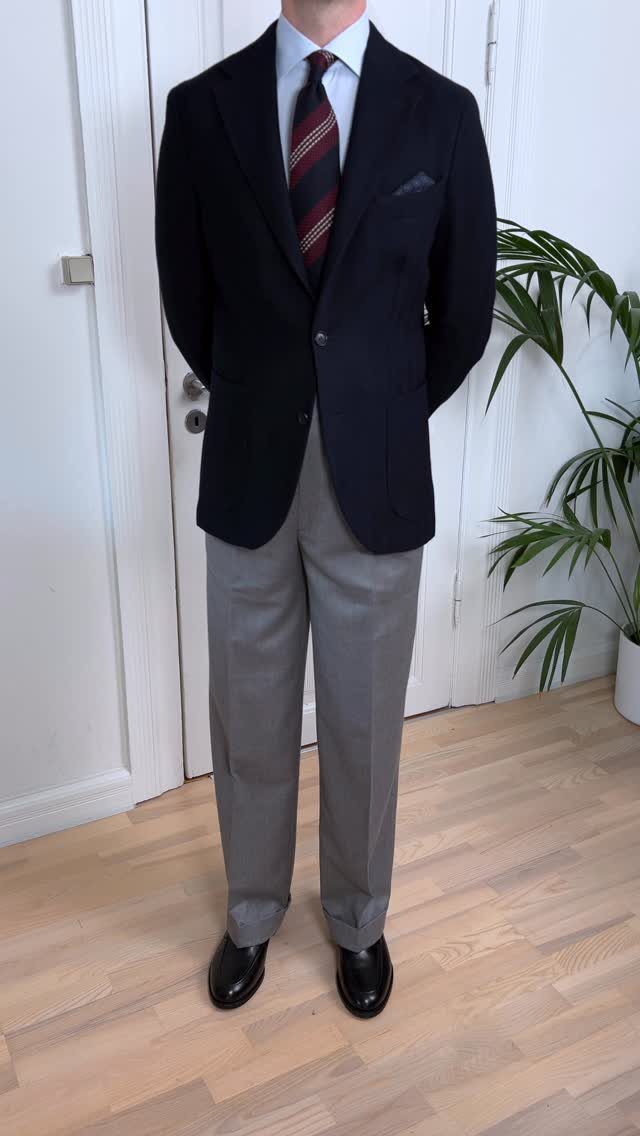
Semi-formal sits in the narrow space between cocktail attire and what you’d wear to a nice dinner out.
Navy or charcoal with a crisp cotton shirt usually carries it, though the tie can stay home if the rest reads sharp enough.
Pleated trousers with a cuff, a striped tie, and leather soles set the standard. That stiffness in the collar matters; a button-down collar reads too casual for most semi-formal rooms.
Black leans more formal than most semi-formal events want, and brown shoes with a navy suit trade some safety for personality. A pocket square helps balance an open collar when you skip the tie.
Semi-formal wear or half dress is a grouping of dress codes indicating the sort of clothes worn to events with a level of formality between informal wear and formal wear.
2. Jeans in Semi-formal
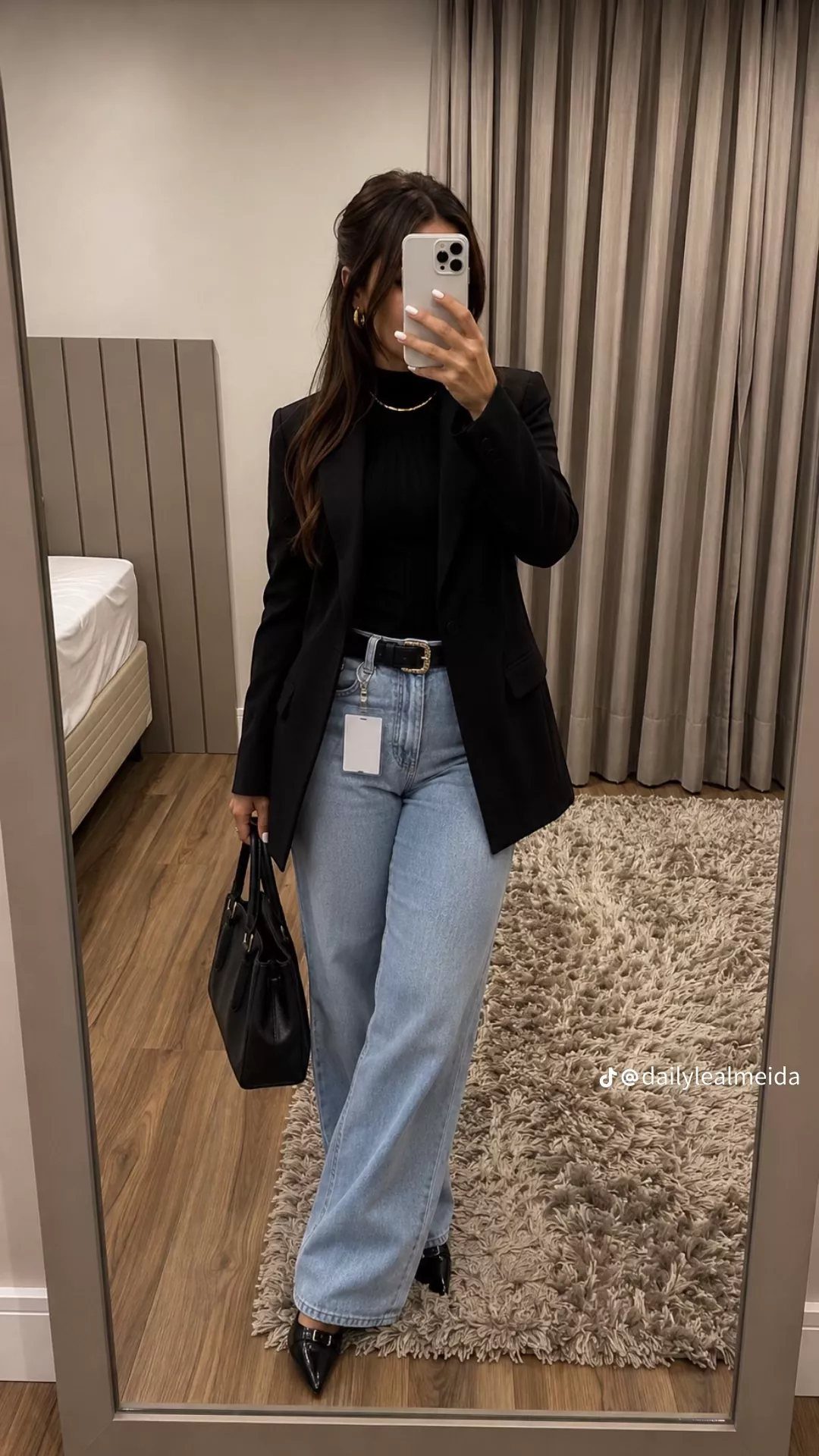
Denim is the fabric that kills the code fastest. Even dark, tailored jeans with a blazer land in smart casual, not semi-formal, because the texture reads too relaxed for the setting.
The exception lives at the dressy-casual edge: a modern venue, a daytime event, a host who said "creative" somewhere on the invitation. Then dark jeans with no distressing, a structured blazer, and polished leather might pass.
The host’s wording matters more than your wishful reading.
When in doubt, chinos or wool trousers keep you safe. The swap is simple: same black turtleneck and blazer, but trousers carry the refinement jeans cannot.
3. Weddings
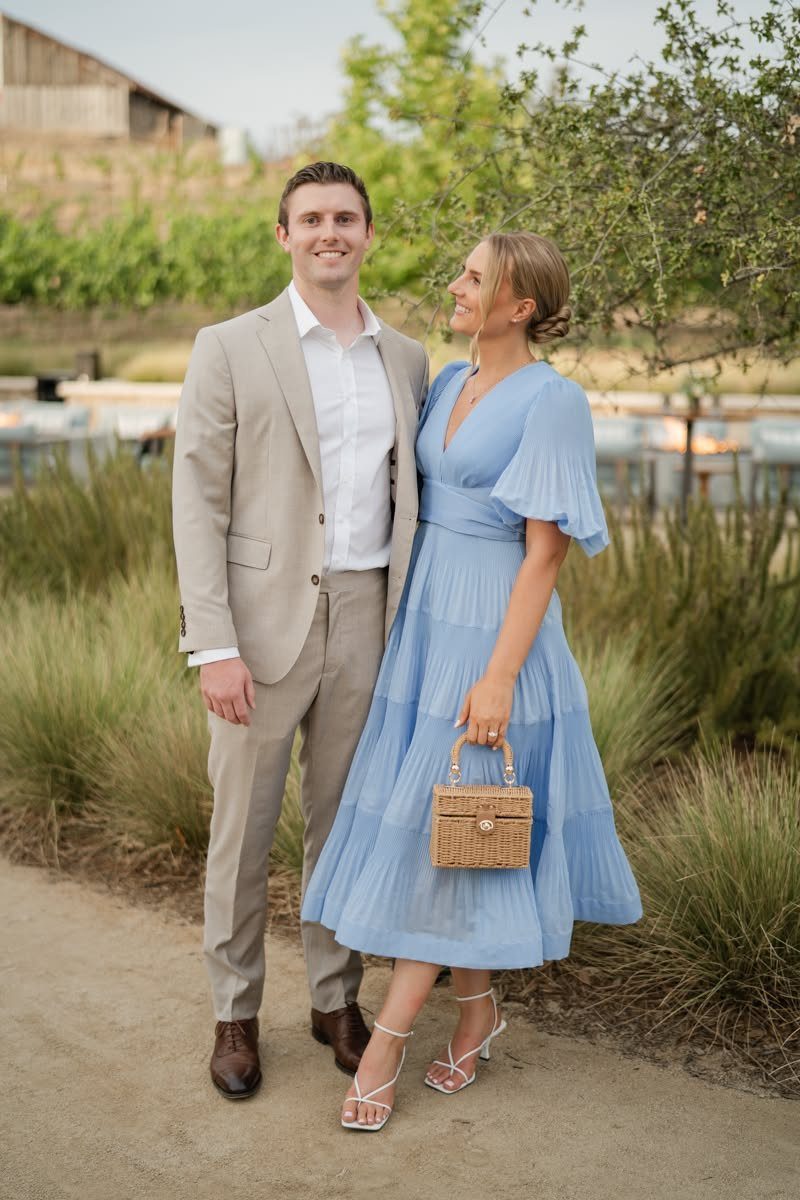
Weddings are where semi-formal gets the most use, and the most anxiety. A navy or charcoal suit works year-round; soft beige or light gray fits daytime and summer without looking like you forgot the occasion.
Black reads funeral in most Western weddings unless the couple requested it. White and ivory belong to them, full stop.
For women, knee-length or midi dresses in cheerful colors, chiffon, or restrained florals hit the right celebratory note.
Tan and light blue suit an outdoor setting; season and venue shift the palette. A silk tie and clean dress shoes finish the look; loud colors or competing patterns draw the wrong kind of attention.
4. Color Choices
Color sets the temperature of semi-formal faster than cut does. Navy, charcoal, and medium gray stay timeless because they read intentional without shouting; they also forgive mismatched jackets and trousers better than black or brown.
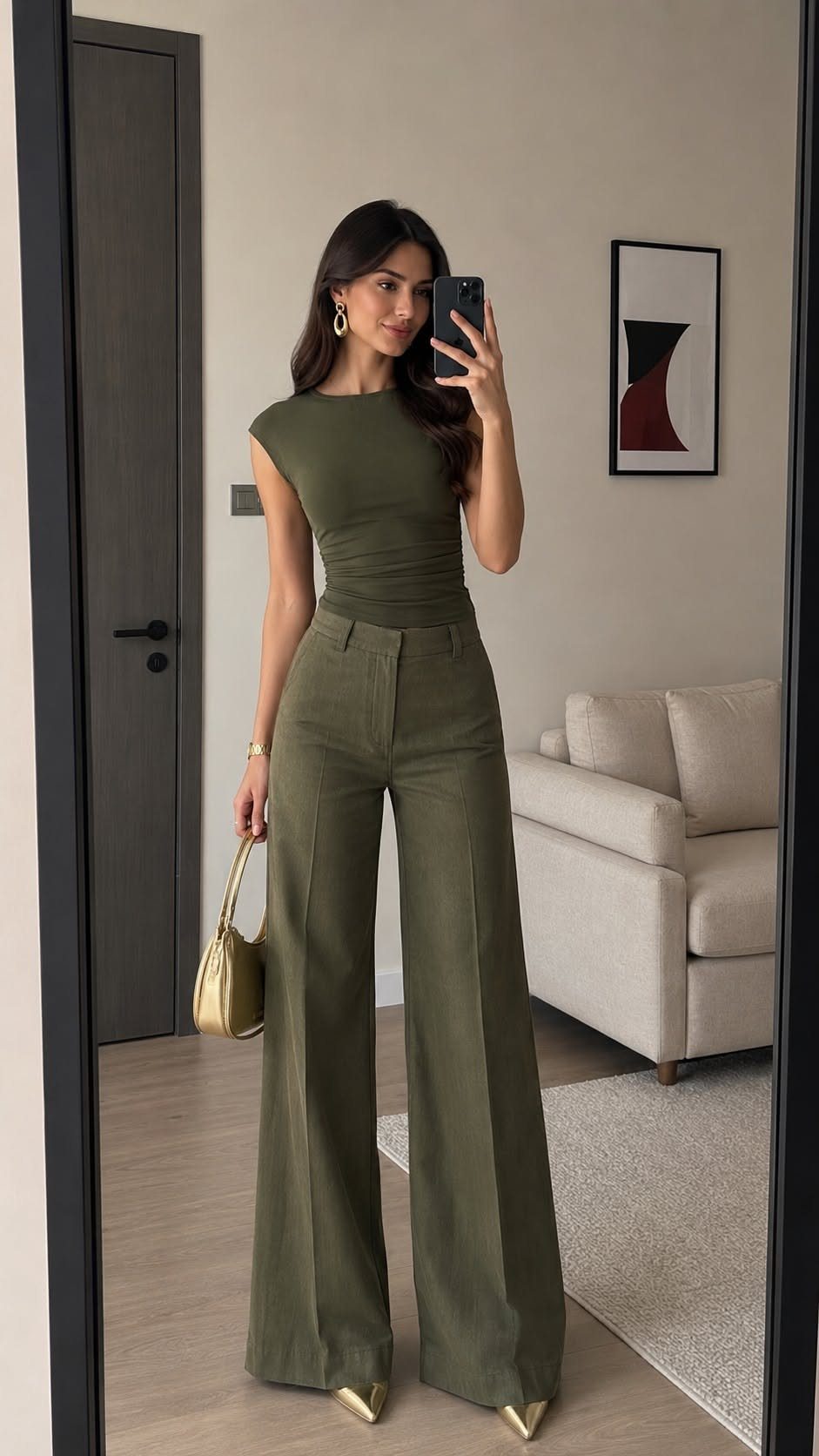
Daytime events open the door to lighter colors: tan, soft gray, olive monochrome. Evening pulls everything darker and richer.
Fabric weight follows the same logic. Summer outdoor semi-formal wants 8–10oz linen or a 250–280g/m2 fresco wool with an open weave; winter indoor calls for 280–320g/m2 worsted wool that holds structure under artificial light.
Velvet, crepe, and satin work for women in cooler months or evening events. The sheen does the celebratory work so the color does not have to.
5. Avoid Overly Casual Fabrics
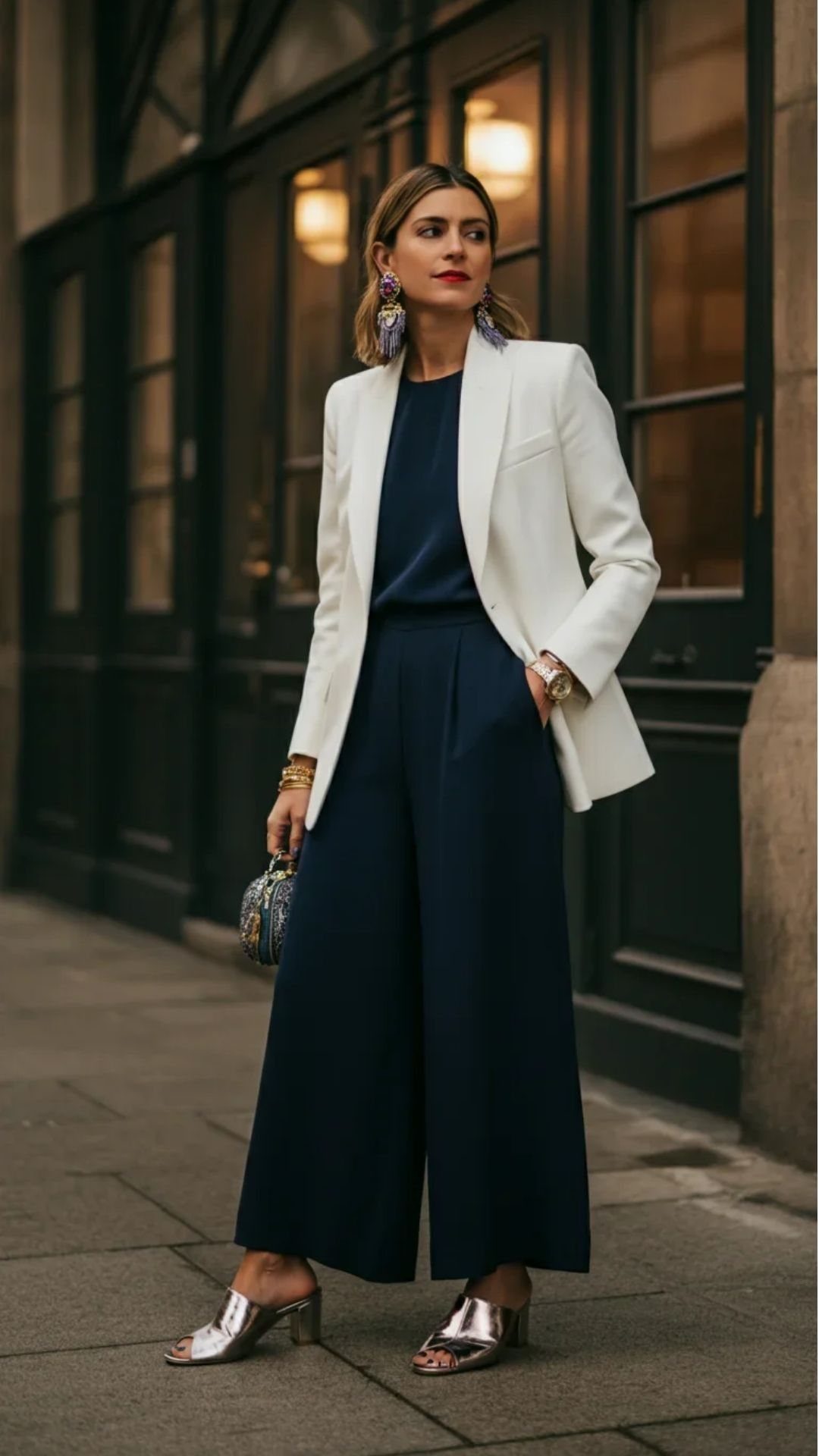
Jersey and flannel belong in casual wardrobes, not semi-formal ones. The fabric needs enough body to hold a line through an evening of sitting, standing, and reaching for drinks.
Wool, cotton blends, and linen in the right weight carry that structure.
A fabric that catches light the wrong way, or collapses into wrinkles by the salad course, undoes the polish the code requires. Touch the material before you buy; if it feels like a t-shirt, it will read like one.
6. Minimalism in Semi-formal
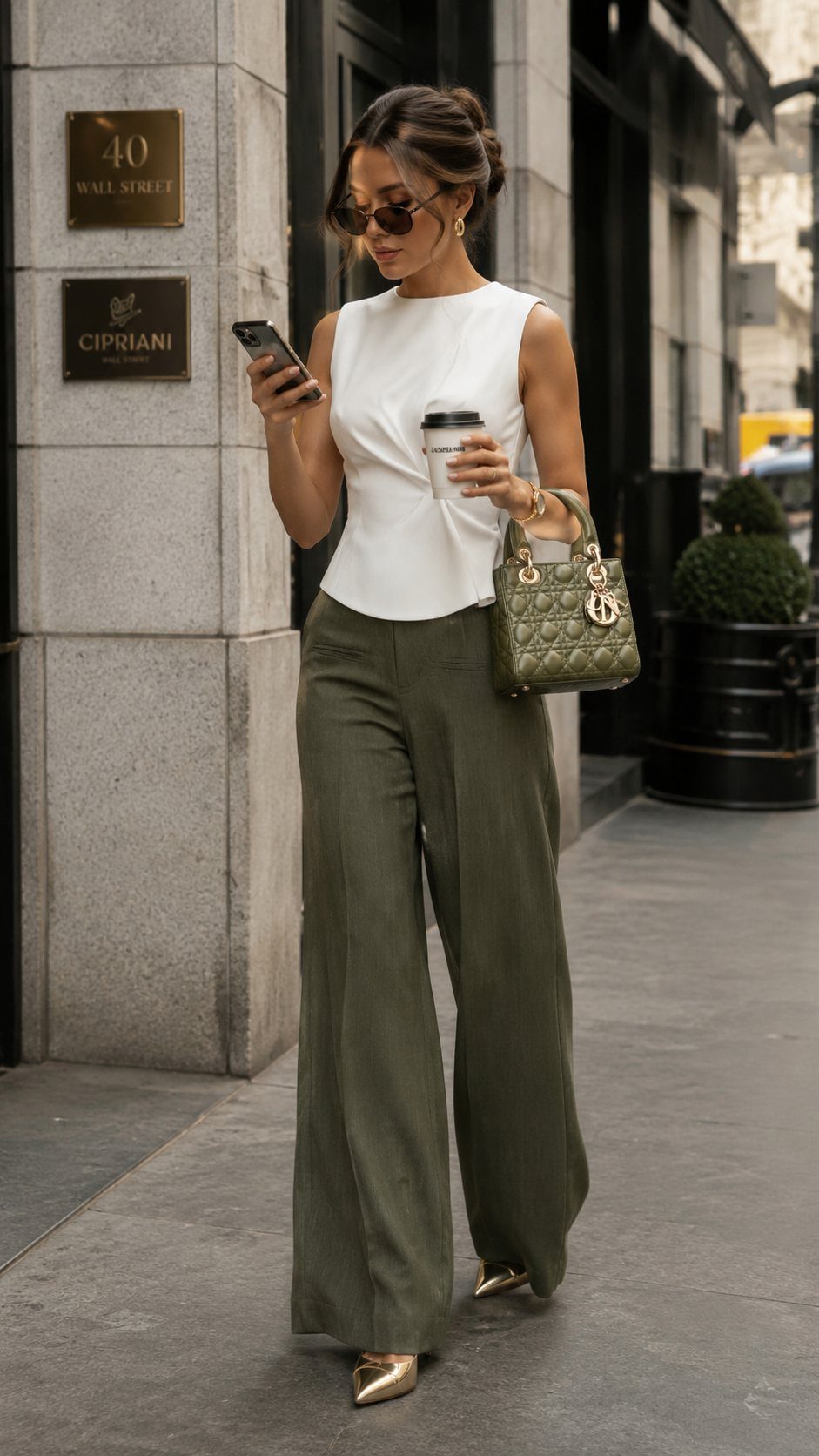
Minimalism in semi-formal means every piece earns its place. Olive trousers and a white top carry the look with two colors, clean lines, and no jewelry beyond what fits in a pocket.
Flashy prints and stacked accessories fight each other for attention; semi-formal wants the person to arrive before the outfit does. A single statement piece, large earrings or a sculptural bag, works if the rest stays quiet.
For anyone building a semi-formal wardrobe from pieces they already own, this is the most forgiving entry point.
7. Avoid Brightly Colored Socks
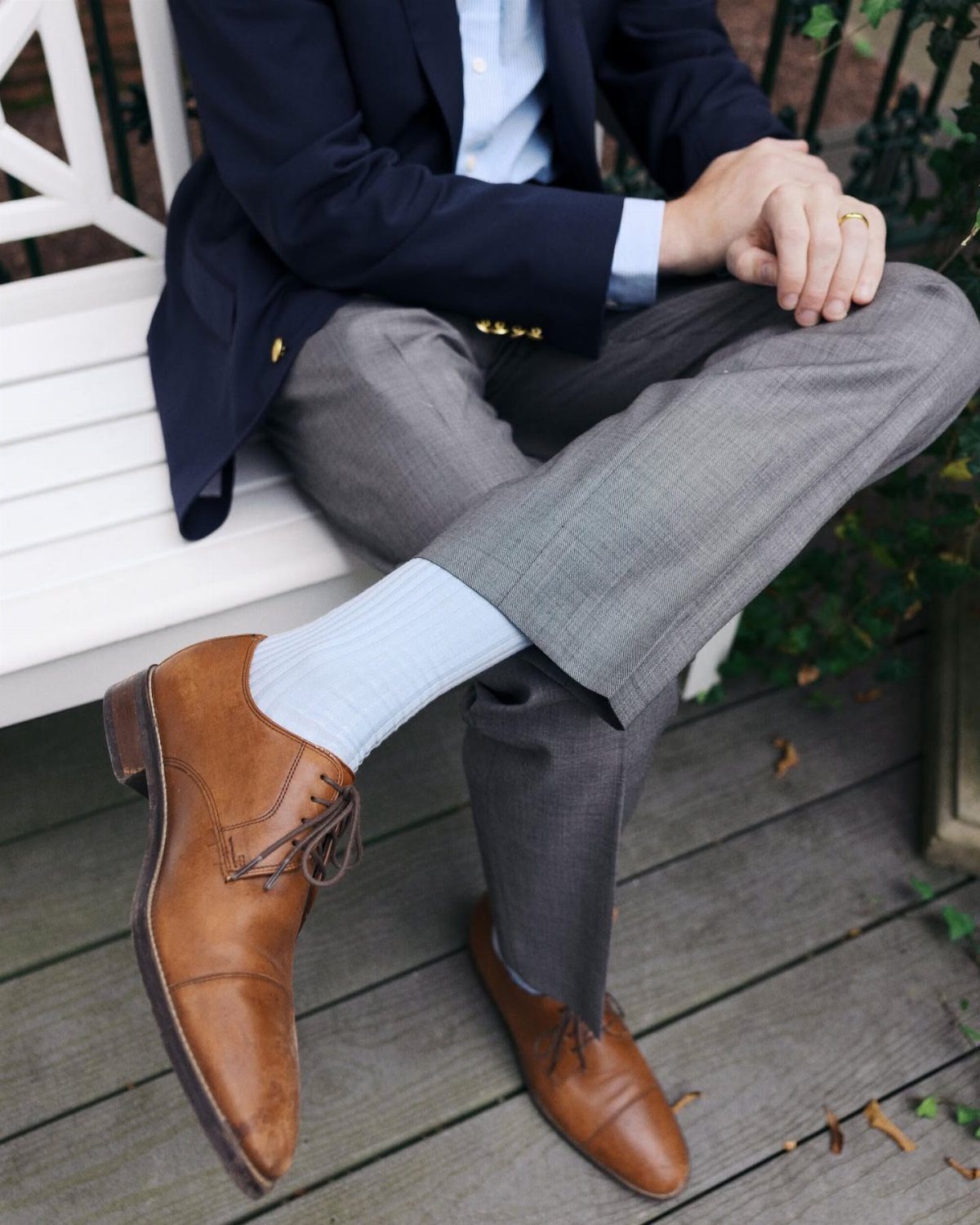
Bright blue or cherry-red socks peeking above a shoe line read like a joke at a semi-formal event.
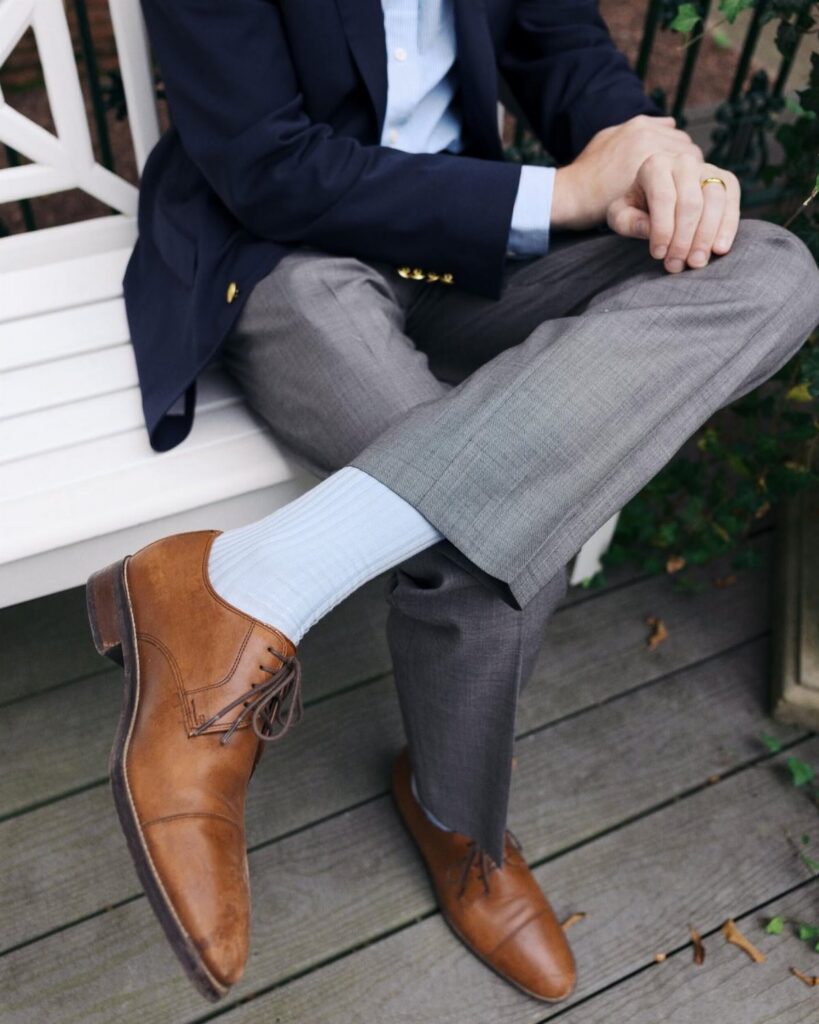
The visible example pairs light blue socks with a navy blazer and grey trousers, which works because the tone stays muted and belongs to the same family as the shirt.
For your own outfit, match socks to either the trousers or the shoes in a darker shade. Charcoal trousers call for charcoal or black; navy trousers, navy or a deep burgundy if you want slight contrast.
The cost of getting this wrong is low in dollars but high in looking like you dress without thinking.
Save the colors for when the invitation says festive or creative.
8. Avoid Flashy Prints
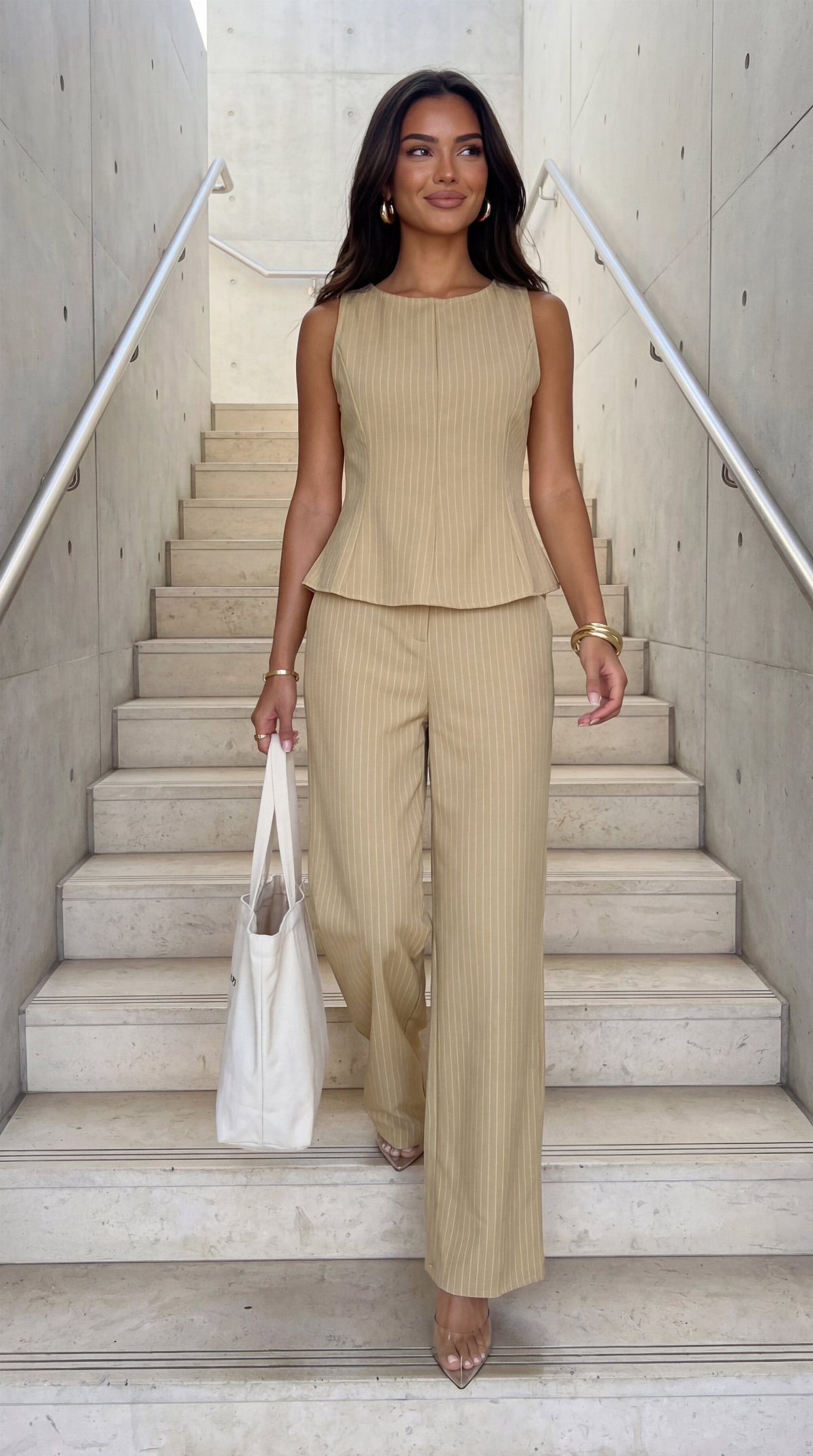
Narrow, tonal stripes work in semi-formal dress because they read as texture from a few feet away, not as a statement print. That quiet level is the ceiling for pattern in this dress code.
Small checks in muted colors, a faint herringbone, or solid textures like a fine grenadine weave give interest without shouting.
What fails: large florals, animal prints, slogans, or anything that would photograph as the main event rather than the person wearing it.
A simple tote and small gold pieces keep attention on cut and proportion instead of competing with it. That is the tradeoff pattern makes here; you get to show taste, not personality through print.
9. Corporate Events
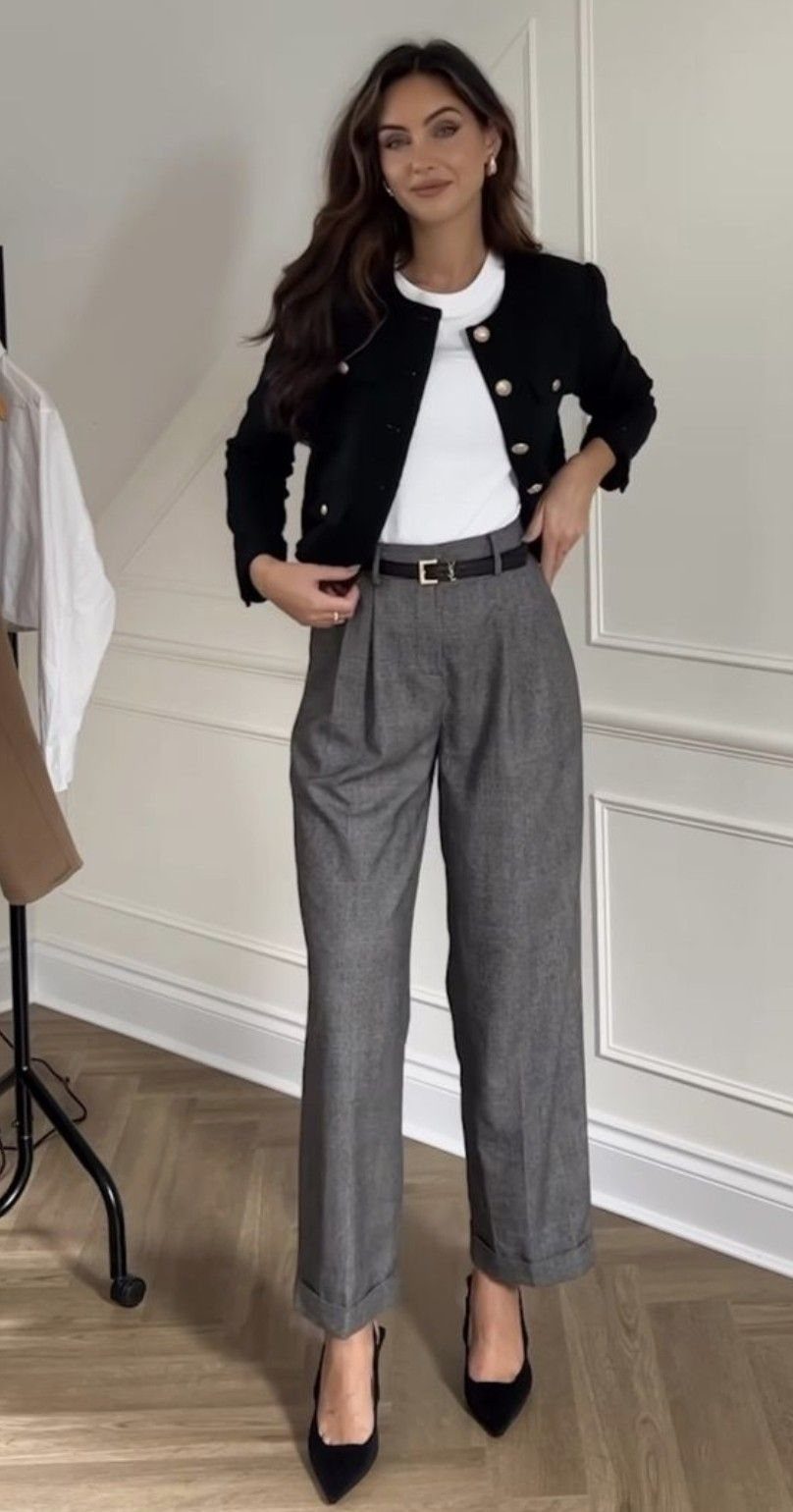
The structure says you understood the assignment; the slight play in proportion keeps it from feeling like a uniform.
A hotel ballroom or client dinner where invitations lean black-tie in tone needs one; a restaurant team dinner, skip it.
Women have more latitude: a structured jumpsuit or sheath dress with a blazer projects the same confidence. The limit is anything that reads weekend, which means no denim, no sneakers, no untucked shirts.
10. Holiday Parties
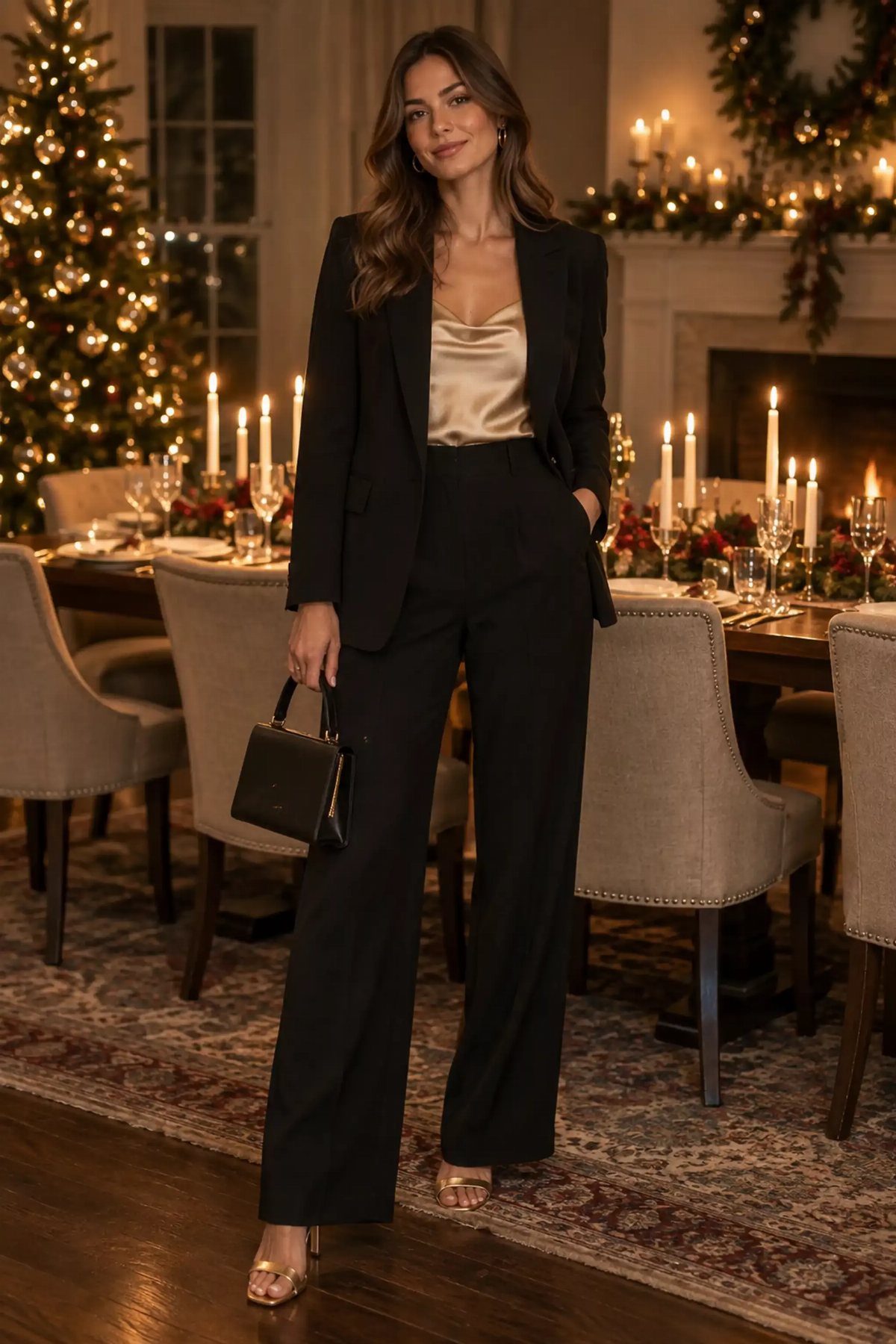
Holiday semi-formal is where the dress code loosens enough to let you breathe. The visible black pantsuit with a gold satin top works because the fabric carries the festivity, not a novelty tie or reindeer motif.
Jewel tones, velvet, a touch of metallic or sparkle: these are your tools. Emerald, deep ruby, sapphire, or champagne silk all read as celebration without leaving semi-formal territory.
The same navy or charcoal suit from your corporate rotation works here too. Add the tie if the venue is formal, lose it for a restaurant gathering.
The difference between stiff and right is usually one texture choice or a richer color than you would wear in March.
11. Semi-formal for Women
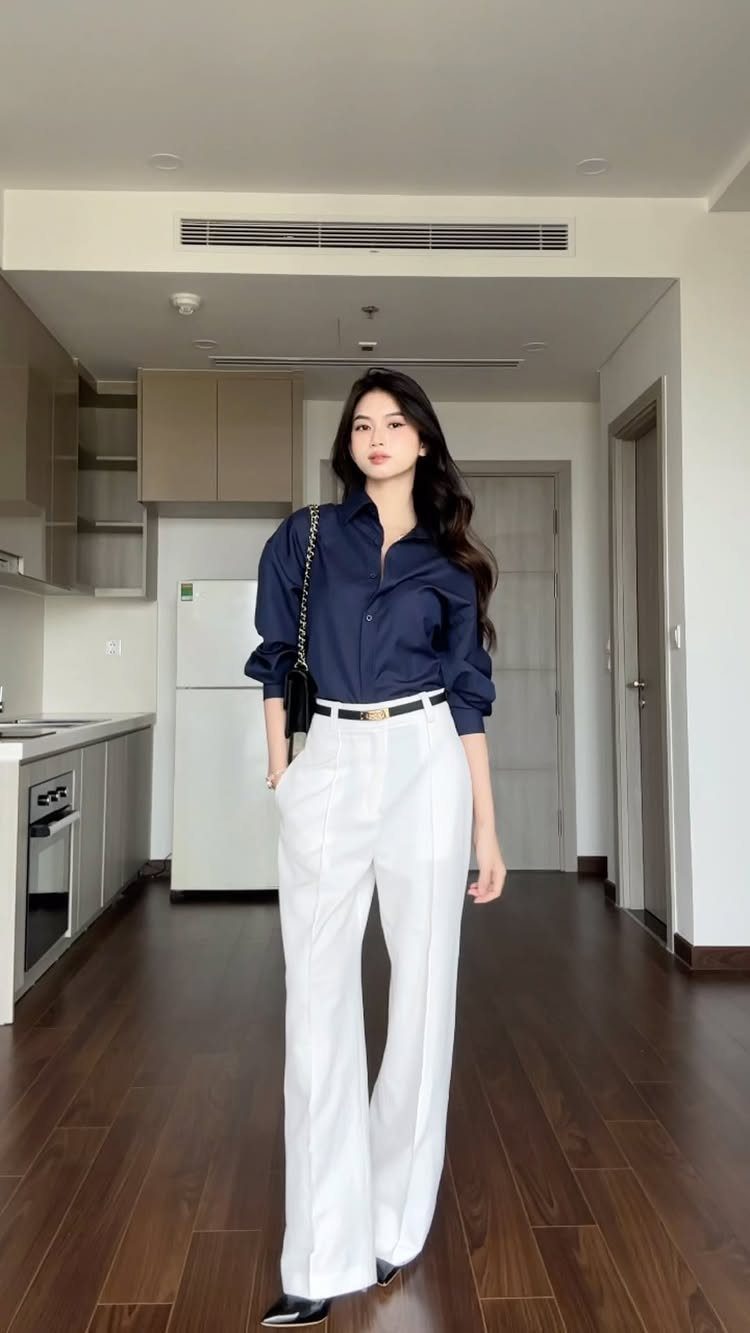
Knee-length dresses in crepe, silk, or fine wool work. So do elegant jumpsuits.
What does not work: floor-length ball gowns, which belong to formal events, or anything that reads as office casual without elevation. Silhouette, fabric, and accessories have to work together; one weak link and the whole thing slips.
Get two right and you can coast on the third.
For your own version, a sheath dress with a blazer gives you the same polish and more flexibility to remove a layer if the room runs warm.
12. Tailored Fit
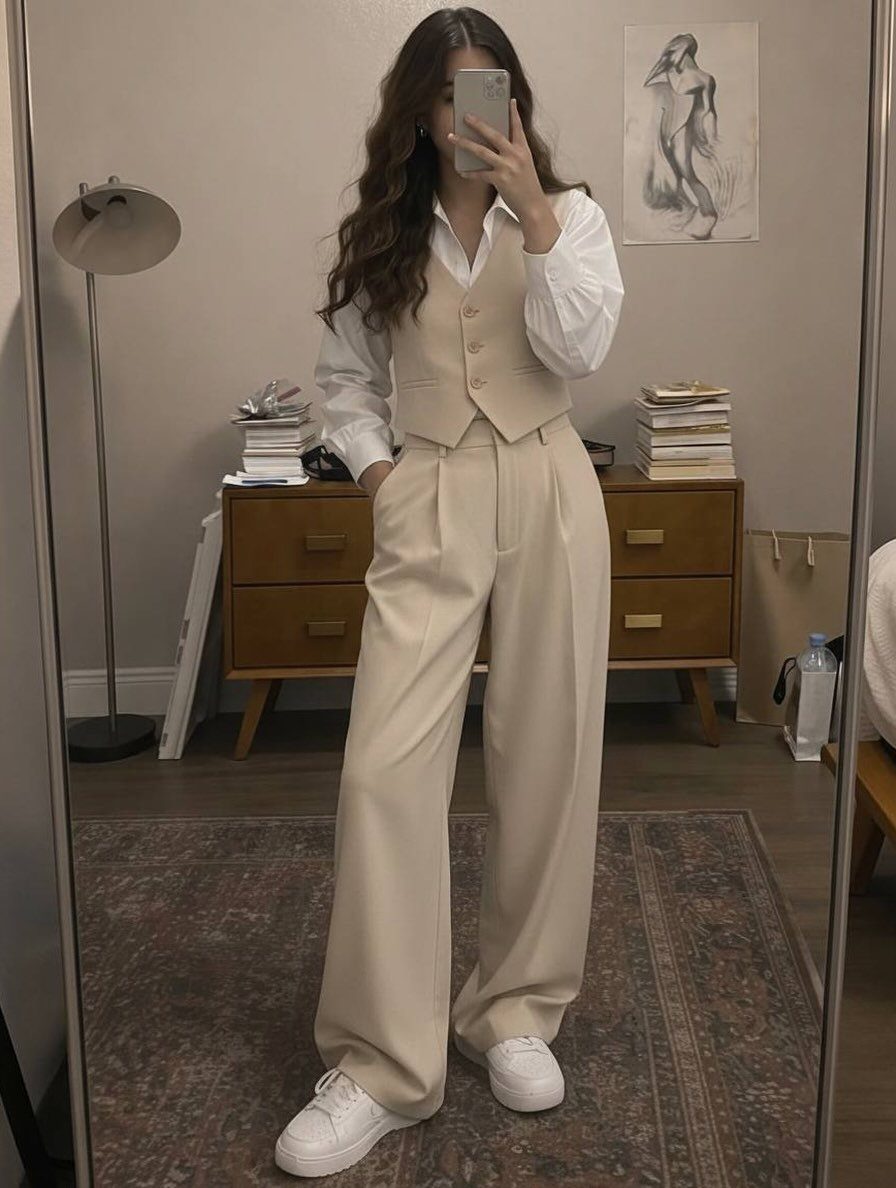
The white sneakers in the visible look are a deliberate choice that trades some formality for modernity. I would keep leather shoes for events where you do not know the host well.
Fit is the place to spend money if you have it; a cheap fabric that fits well outperforms expensive cloth that hangs like a sack.
13. Structured Trousers
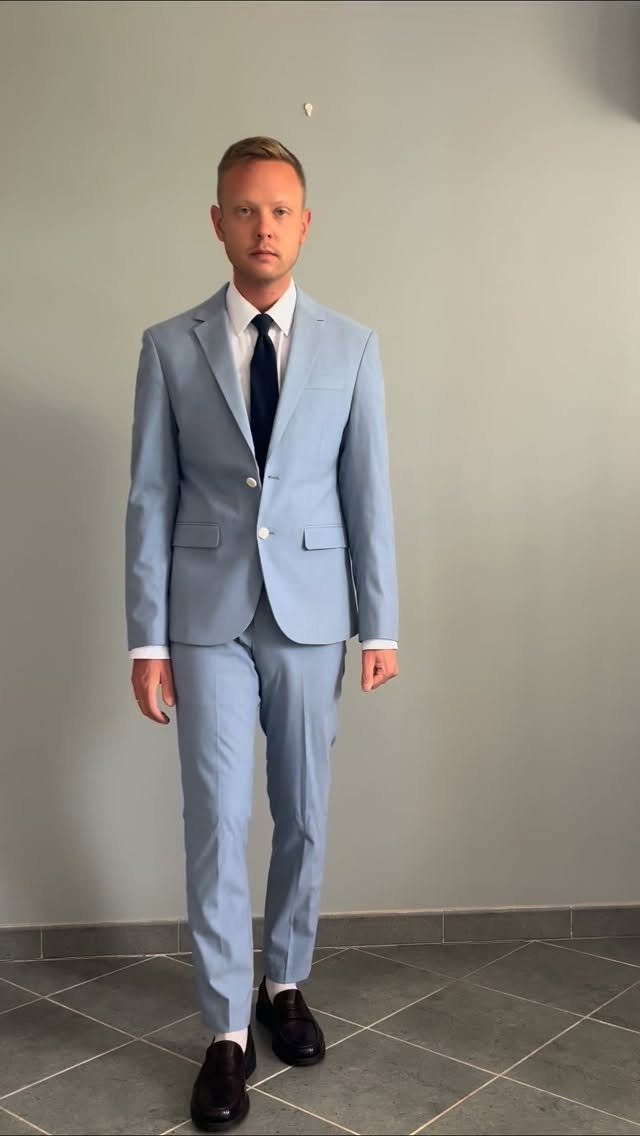
The fabric and cut do the work here. Pressed chinos in tan or navy handle garden-party and afternoon wedding duties without the weight of a full suit; after six, switch to wool dress trousers.
The trouser needs to read as tailored.
A mismatched jacket and trousers land in the right zone: charcoal pants with a mid-grey blazer, or a subtle check jacket over plain navy pants.
Let the shirt stay quiet, then add one hit of personality through a pocket square or a narrow knit tie. This combination fits cocktail hours and agency openings where a full suit would look like you tried too hard.
The limit: this mix trades some formality for personality. If the invitation reads "strictly semi-formal," stay with a matched jacket and trousers.
14. Tailored Waistcoat with Dress Trousers
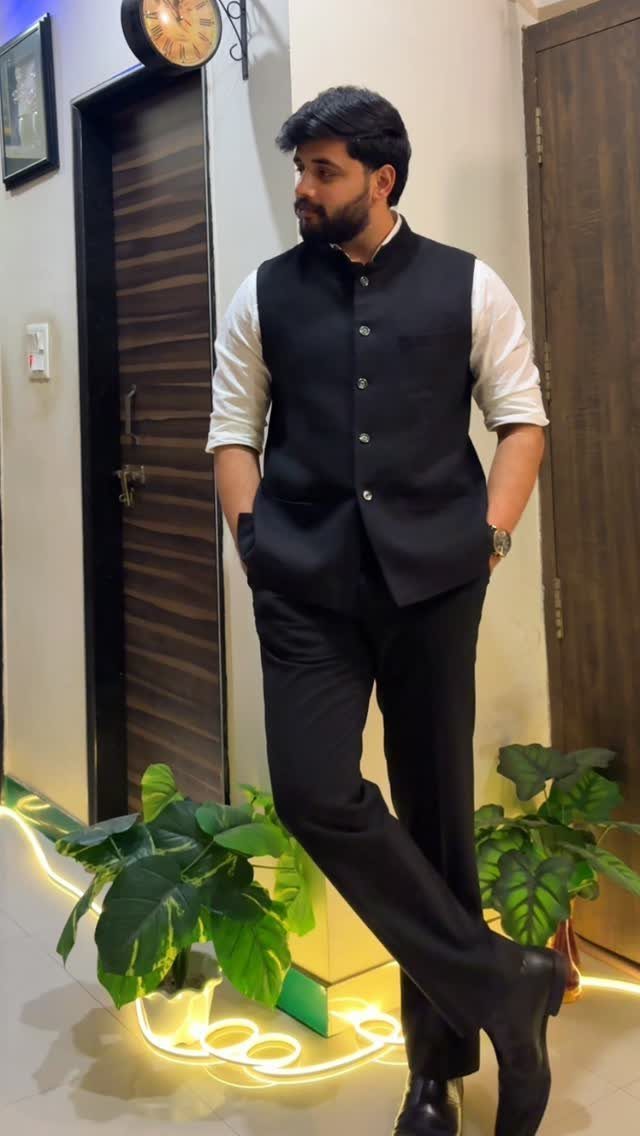
A mandarin-collar waistcoat sharpens the familiar shirt-and-trousers formula without asking for a tie.
The collar itself does the framing, so the shirt underneath stays plain and pressed; rolled sleeves loosen the look for an indoor afternoon event but would read underdressed once evening sets in.
Black on white is the safest opening move, though charcoal or navy waistcoats pair cleanly with cream shirts for summer weddings.
The trousers need to match the waistcoat’s formality: dress wool or a pressed cotton with a crease, never chinos with patch pockets. I’d add a pocket square in a muted tone if the event leans cocktail rather than dinner.
This setup suits men who own a suit but want to wear its pieces separately, and the waistcoat hides a multitude of shirt-tucking sins across a long evening.
15. Embroidered Formal Tunic Set
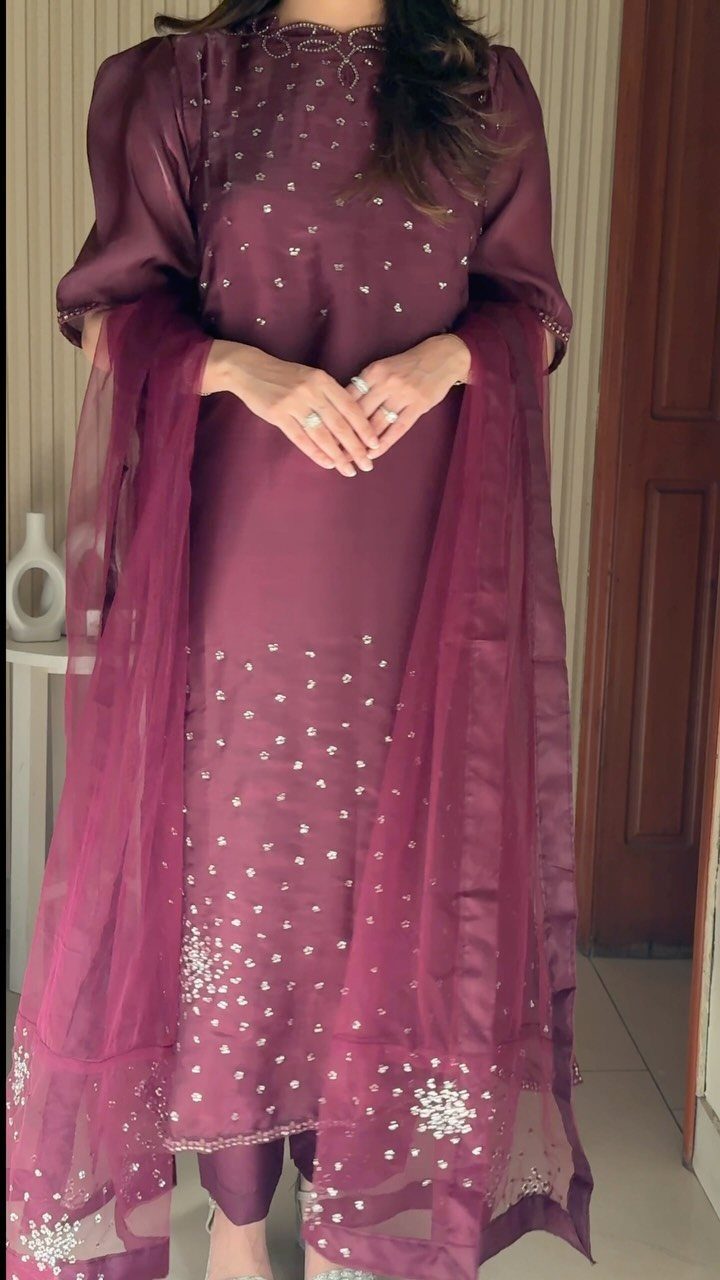
Embroidery on a tunic reads ceremonial without drifting into full formal wear, which makes this set useful for South Asian weddings, Diwali gatherings, or any event where Western cocktail attire feels like a mismatch.
The sheer dupatta layered over the arms adds movement and covers shoulders for temple or family-home settings where bare arms would raise an eyebrow.
Silver thread on plum carries enough depth to work across skin tones and seasons. For daytime events, I’d look for lighter bases: ivory, sage, or powder blue with gold or copper embroidery.
The trousers stay matching and slim, never flared, so the silhouette stays current rather than costume.
Fit matters more than ornament. The tunic should hit mid-thigh and the trousers taper cleanly; too long or too loose and the embroidery looks like it is wearing you.
16. Flutter-sleeve Midi Dress
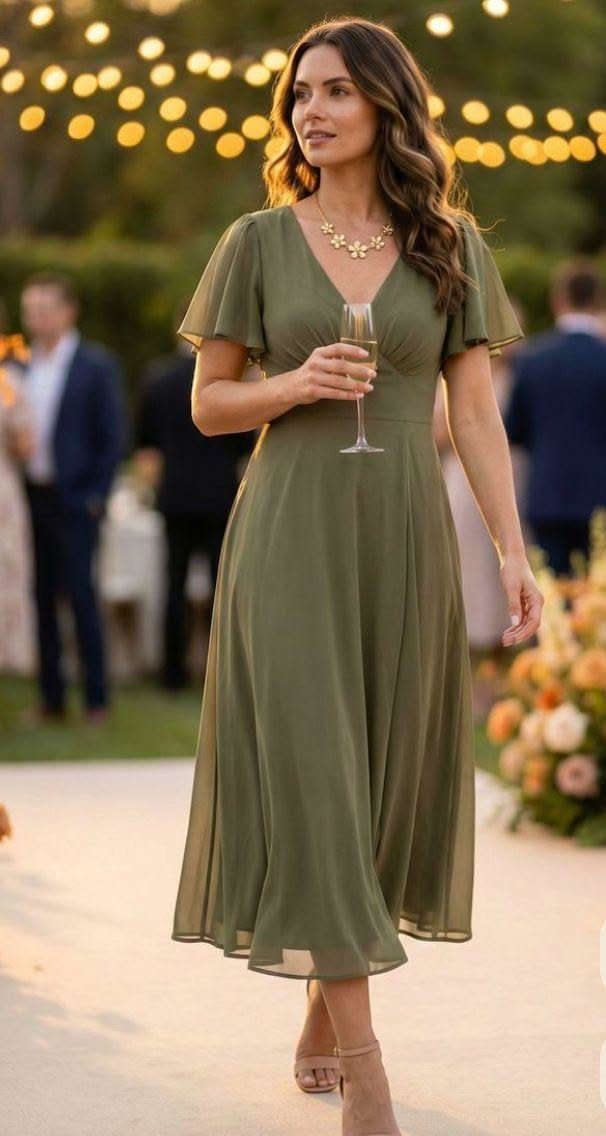
Flutter sleeves do the work of a statement earring: they draw the eye up and out, which balances hips and adds presence without jewelry.
Olive reads richer than black under evening string lights and photographs without the harsh contrast that black can throw in outdoor flash.
The midi length lands below the knee, which keeps it semi-formal rather than cocktail; for a wedding guest, that distinction matters if the invitation splits the difference.
The V-neckline needs a well-fitted undergarment or a camisole insert if the plunge sits lower than your comfort.
I’d pick this for garden events where the ground may be uneven: the hem clears ankles, the sleeves stay out of appetizers, and the fabric looks intentional enough for photos but moves well enough for mingling.
A heel gives it authority; metallic flats keep it practical for grass or cobblestones.
17. Tiered Strapless Cocktail Dress
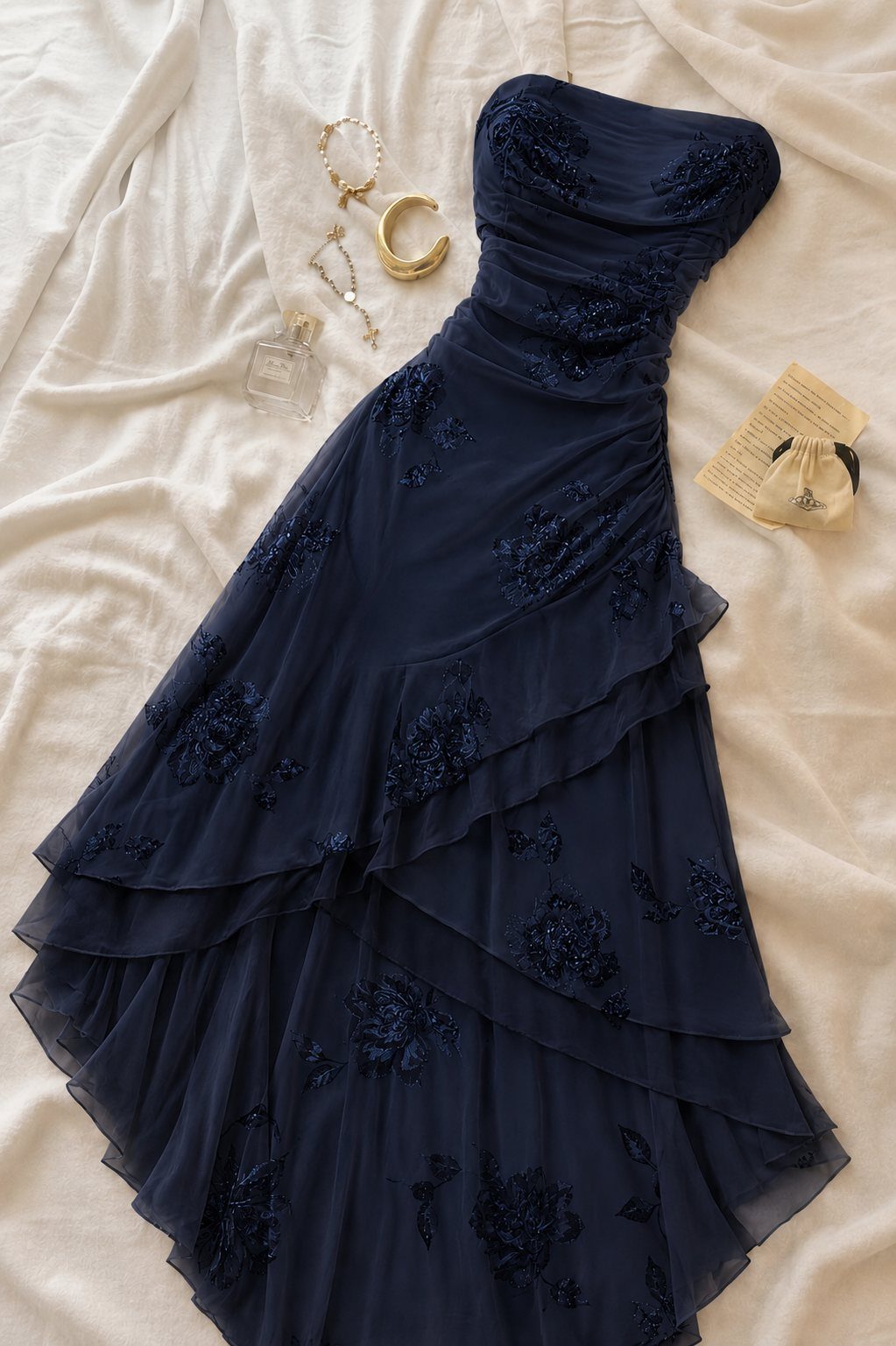
A strapless cut demands either a strong shoulder or a strong accessory to keep the eye from drifting; tiered ruffles supply both, building volume downward so the neckline stays clean for a pendant or drop earrings.
Navy absorbs light rather than reflecting it, which flatters under indoor chandeliers or candlelight where brighter colors can glare.
This is a cocktail-length dress, not semi-formal by strict definition, though the tiers and embroidery lift it into overlap territory.
For a semi-formal event, I’d check the time: once evening sets in, with the right shoes and a clutch rather than a shoulder bag, this passes. During daylight hours, the strapless cut and ruffle volume read party rather than polished.
The flat lay shows gold jewelry; I’d keep to that warmth rather than silver, which can turn cool against navy in photographs.
18. Smart Polo Shirt with Trousers
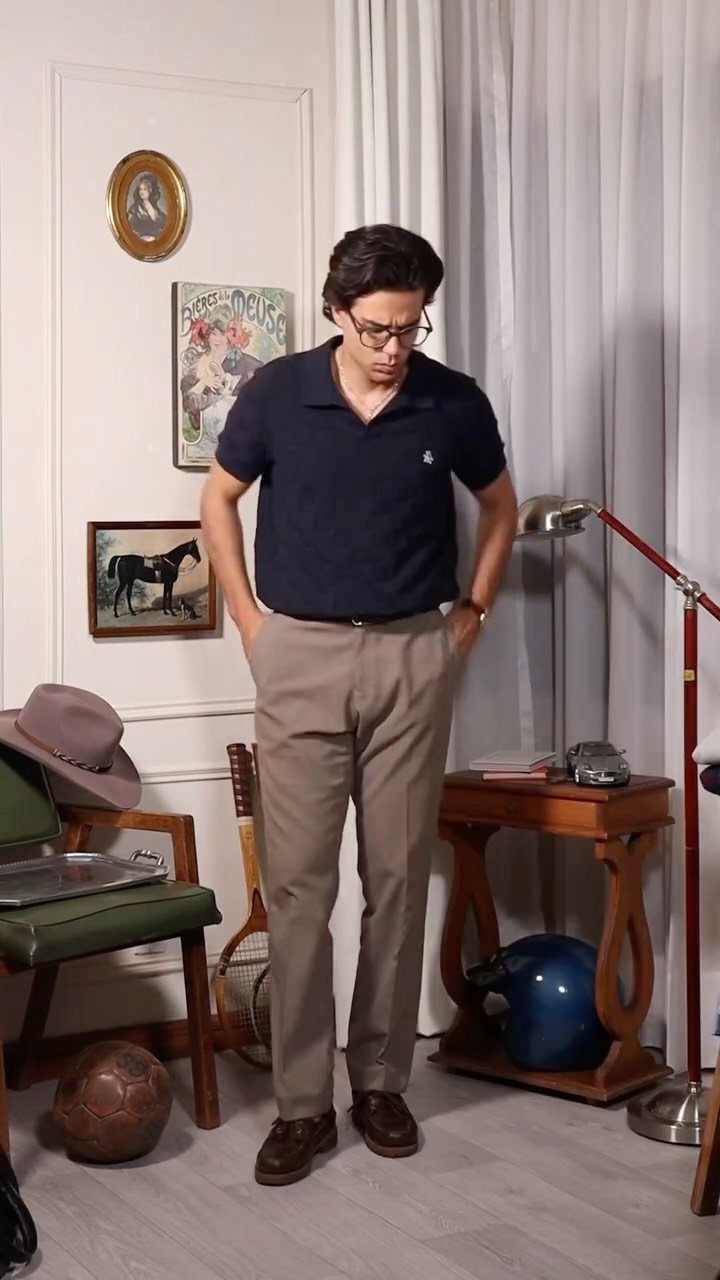
The polo shirt’s collar has structure enough to sit upright under a blazer, which separates a smart polo from its weekend cousin.
Tucked into tailored tan trousers with leather shoes, it hits a narrow window: daytime semi-formal where a full suit would feel stiff and a button-down without jacket would feel underdressed.
Navy is the reliable anchor; burgundy, forest green, or a deep plum work for autumn events. The fabric should be pique or a fine knit with body, not the thin cotton that pills at the collar.
For evening events, this combination steps down; swap the polo for a dress shirt and add a jacket.
I’d wear this to a corporate summer party, a daytime awards lunch, or any event held outdoors in heat where wool would be cruel.
The tan trousers keep it approachable; charcoal or black trousers would push harder toward formal and leave the polo looking like a compromise rather than a choice.
Understanding Semi-formal
Shirts stay collared, tucked, and pressed; jackets fit the shoulders cleanly; trousers hold a line without looking stiff. Leather shoes with a closed toe ground the outfit without stealing attention.
Dress Code Flexibility
Semi-formal has become the default because it leaves room to move. Unlike black tie, which pins you to a uniform, this code lets color, fabric, and proportion speak for you.
The freedom runs across the whole outfit. Checks and pinstripes bring pattern in quietly; mismatched jackets and trousers read intentional when the tones coordinate.
Women get the same latitude.
Common Mistakes
The fastest way to miss the mark is reaching for denim or sneakers. Swap them for pressed chinos or wool trousers in the same color; the rest of the outfit stays identical.
Scuffed heels, a shirt that sat crumpled in a drawer, or a bulky canvas tote can undo an otherwise solid look. Steam or press before you leave, and carry something that matches the scale of the event.
A ball gown overshoots in the other direction. The fix is a midi dress with the same elegance and none of the formality.
Polished leather dress shoes work for men; women have more room to move between heels and dressy flats.
Importance of Fit
The cut matters more than the label.
Aim for a silhouette that skims the body, slim enough to look intentional without straining at the seams. Boxy jackets and baggy pants undercut the polish no matter what you spent.
If off-the-rack leaves gaps at the waist or bunching at the shoulder, tailoring is worth the cost.
This applies to separates as much as to suits.
For women, the same rule holds through dresses, jumpsuits, and blazers.
Frequently Asked Questions
What is semi-formal dress code?
Semi-formal means you have dressed for the occasion, not for the office or the beach: a suit or tailored separates with enough polish that your arrival looks deliberate.
A navy or charcoal suit with a pressed cotton shirt does the work; skip the tie if the cut of the jacket and the shine on the shoes still signal intent.
Structure in the fabric and the fit carries the look, not the black-tie level of formality.
What should a woman wear to a semi-formal event?
Crepe, silk, or fine wool in a knee-length or midi cut does the job, and a jumpsuit with clean lines earns the same invitation.
Floor-length gowns belong to formal events, and office casual without some lift does not belong here at all.
What not to wear to a semi-formal wedding?
Jeans, sneakers, and overly casual fabrics like jersey or flannel kill the code no matter how expensive they were. Floor-length ball gowns or tuxedos land overdressed, while denim and t-shirts land underdressed.