These sweater winter outfits move from a one-shoulder swimsuit price point all the way to cashmere investment pieces, with the deciding factor being what your day actually demands: office thermostat wars, school pickup, or a dinner that starts at six.
The cable knit thickness is the detail that separates the pieces meant for layering from the ones that do the heavy lifting alone.
1. Cardigan
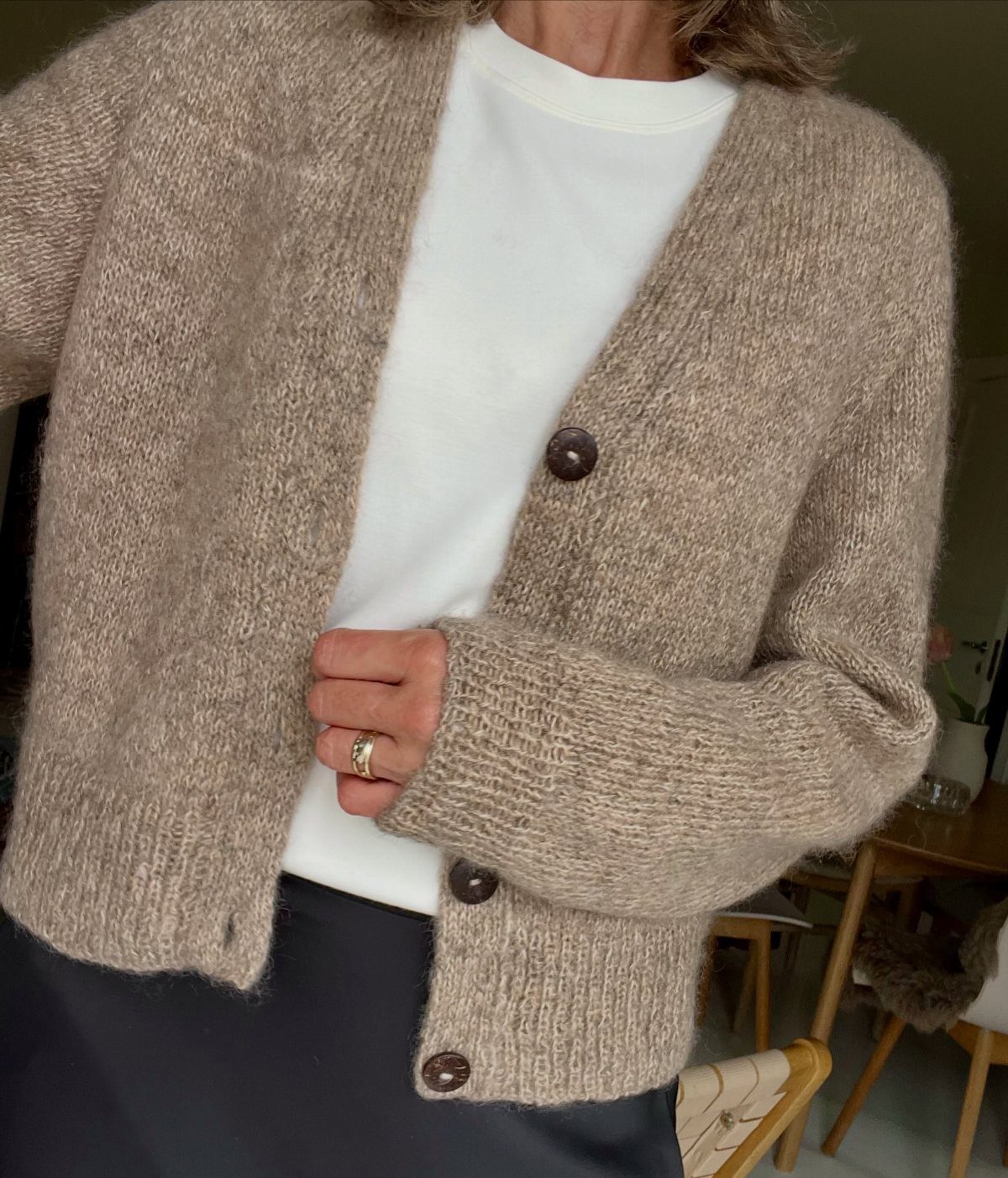
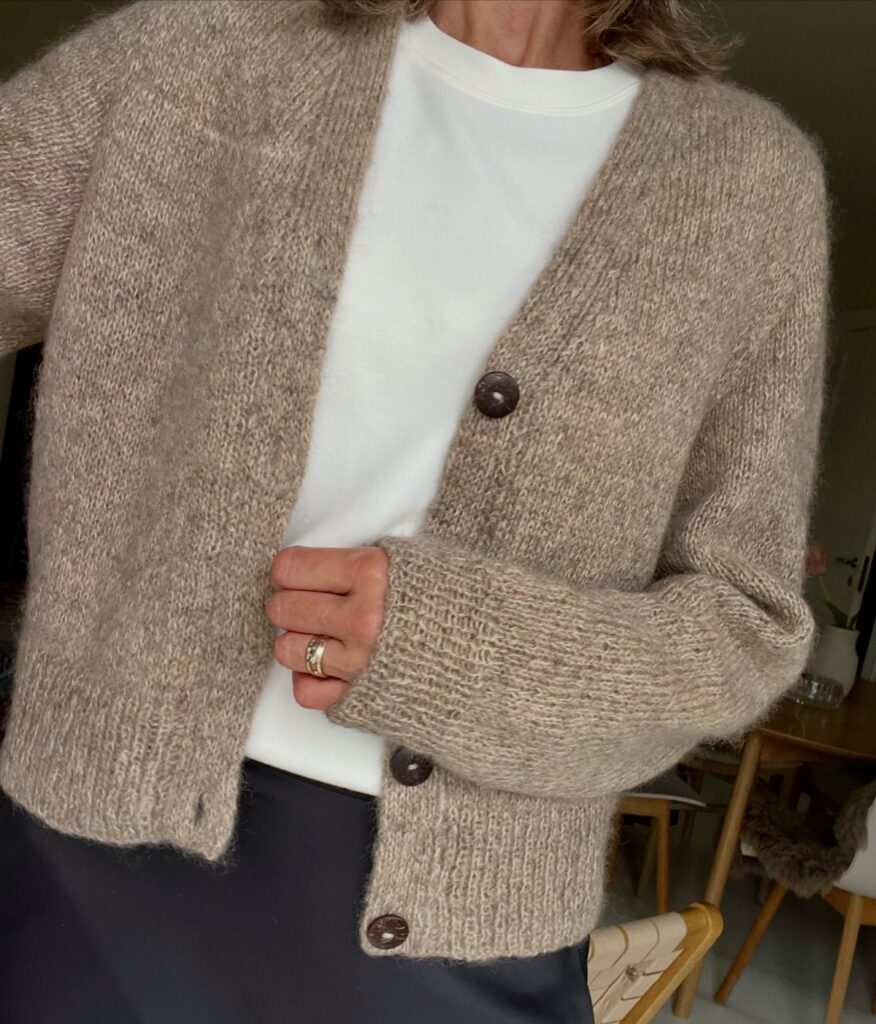
A boxy cardigan left open over a white tee and dark skirt hits that sweet spot between pulled-together and actually comfortable.
The oversized fit works because the layers underneath stay slim; wide-leg denim or a midi skirt underneath gives the shape some architecture.
Cropped silhouettes pair cleanly with high-rise anything, and belting a longer cut at the waist keeps it from swallowing your frame.
I’d reach for fuzzy knits in camel or chocolate brown; they read richer than black and hide the wear that comes from actually living in something.
Best for rectangle and hourglass shapes who want one piece that covers office to couch.
2. Oversized Crewneck
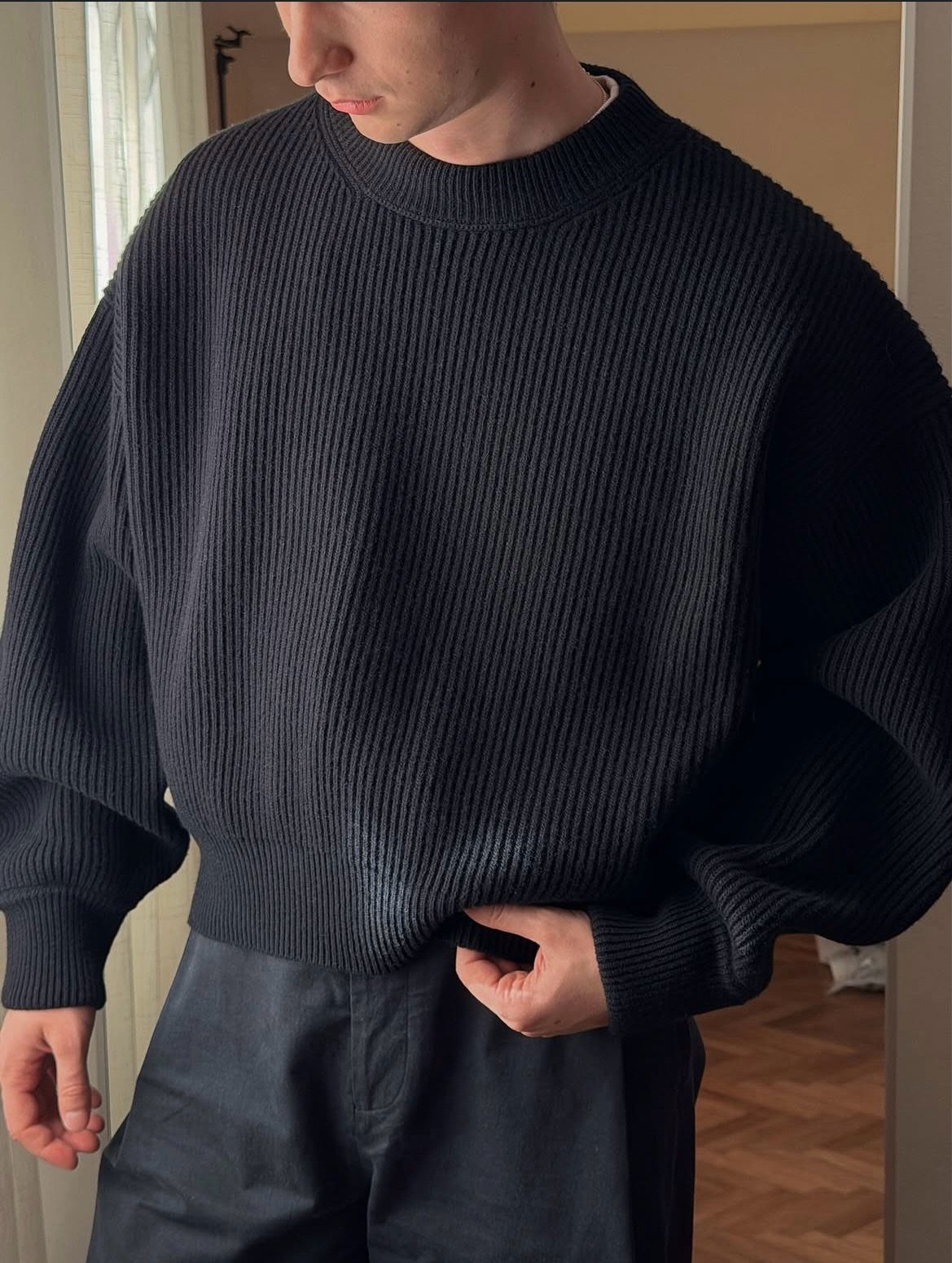
Dropped shoulders and sleeves that pool past your wrists turn a basic crewneck into something with intention. A ribbed black crewneck works because the volume up top meets something structured below: straight-leg trousers, clean boots, dark denim without distressing.
Proportion is the whole game here. Too slim on bottom and you look like you’re drowning; too loose and it’s pajamas.
Plush wool or cashmere blends hold the shape better than cotton, and the longer sleeve length means you can push them up or let them stack.
This one suits pear and apple shapes best, since the horizontal line across the shoulders balances hips below.
3. Striped Sweaters
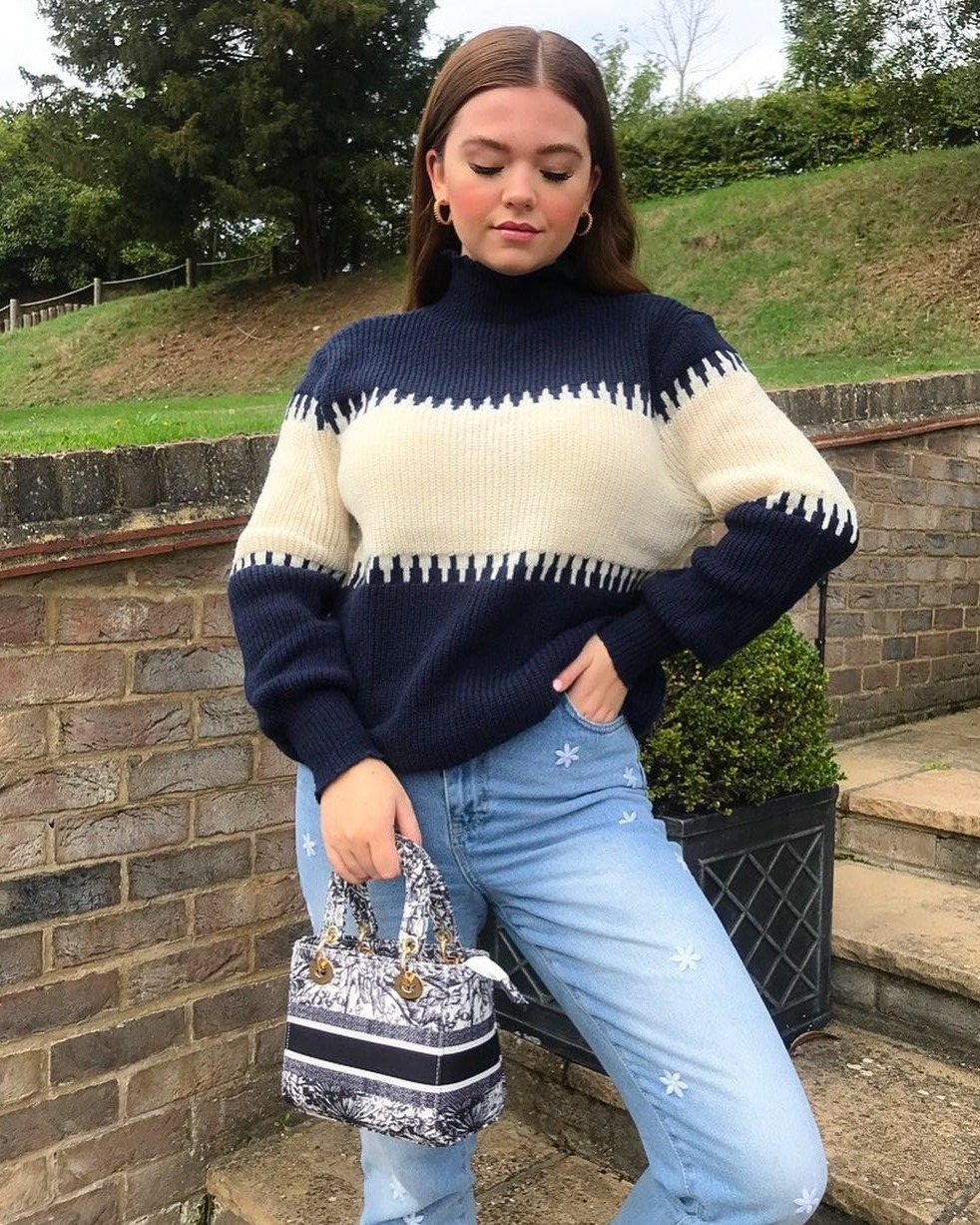
Navy and cream stripes on a turtleneck read collegiate without the costume feel of brighter color combos. The stripe width matters: broad bands like these lengthen the torso, while thin stripes can chop it up.
Light-wash denim keeps the palette fresh; white sneakers or loafers finish it clean. For a variation, burgundy-navy-gold colorways from vintage Ralph Lauren stock turn up secondhand and feel expensive without the price.
I’d avoid red-white-blue unless you want to look like you’re headed to a yacht you don’t own. This pattern flatters most body types, though petite frames should watch sleeve length so stripes don’t overwhelm.
4. Turtleneck Sweater
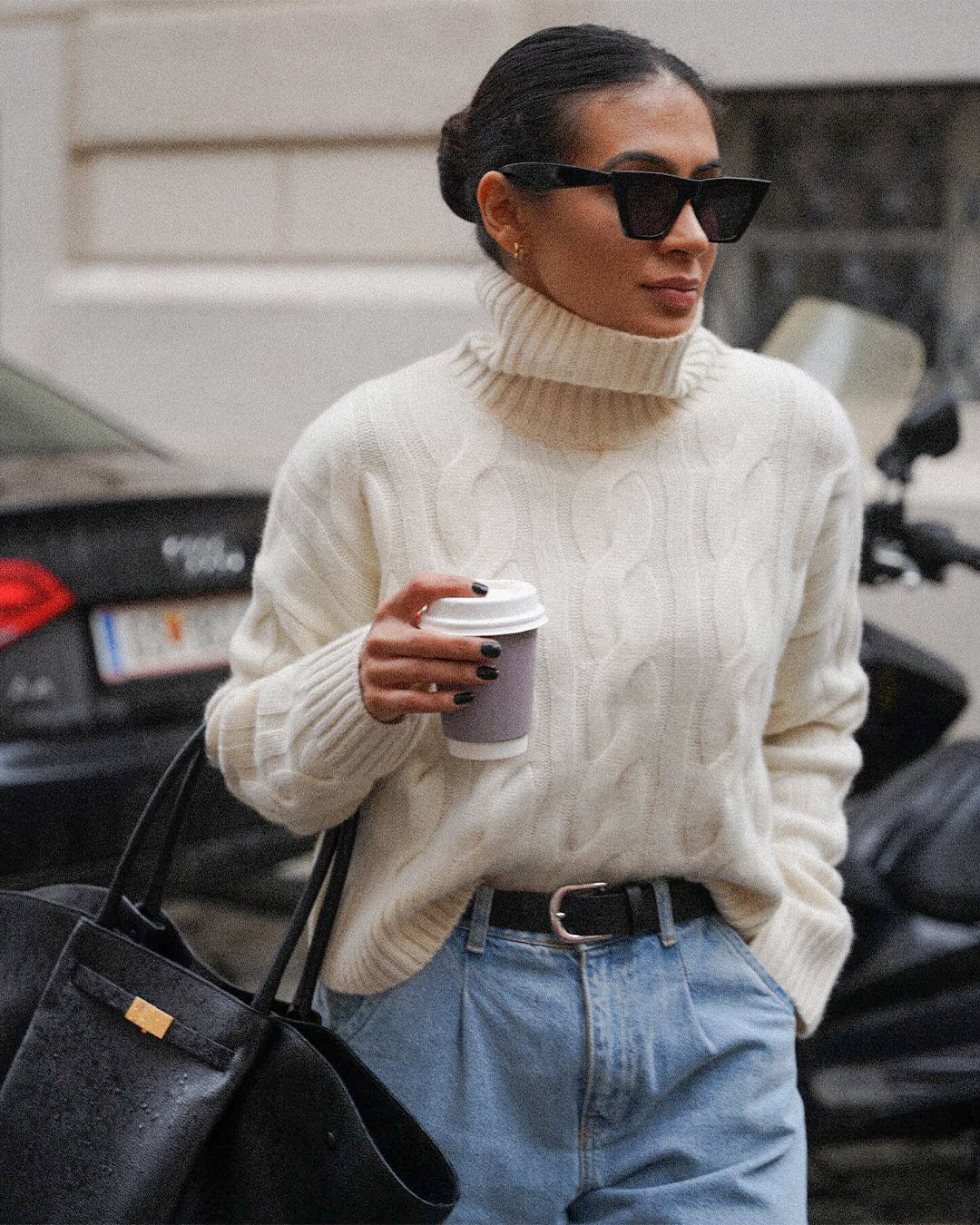
A cream cable-knit turtleneck works as a standalone statement or as a base layer you build around.
Chunky ribbed versions like this one look intentional left loose over jeans with a belt to break the volume; finer merino turtlenecks tuck cleanly into tailored trousers for offices that still want some polish.
Layering one under a slip dress or sleeveless jumpsuit you already own stretches that piece into February, and tonal styling (ivory on ivory, camel on camel) reads as expensive even when the pieces aren’t.
Best for longer necks and narrower shoulders; the fold adds bulk up top that can overwhelm a petite frame.
5. Fair Isle Sweater
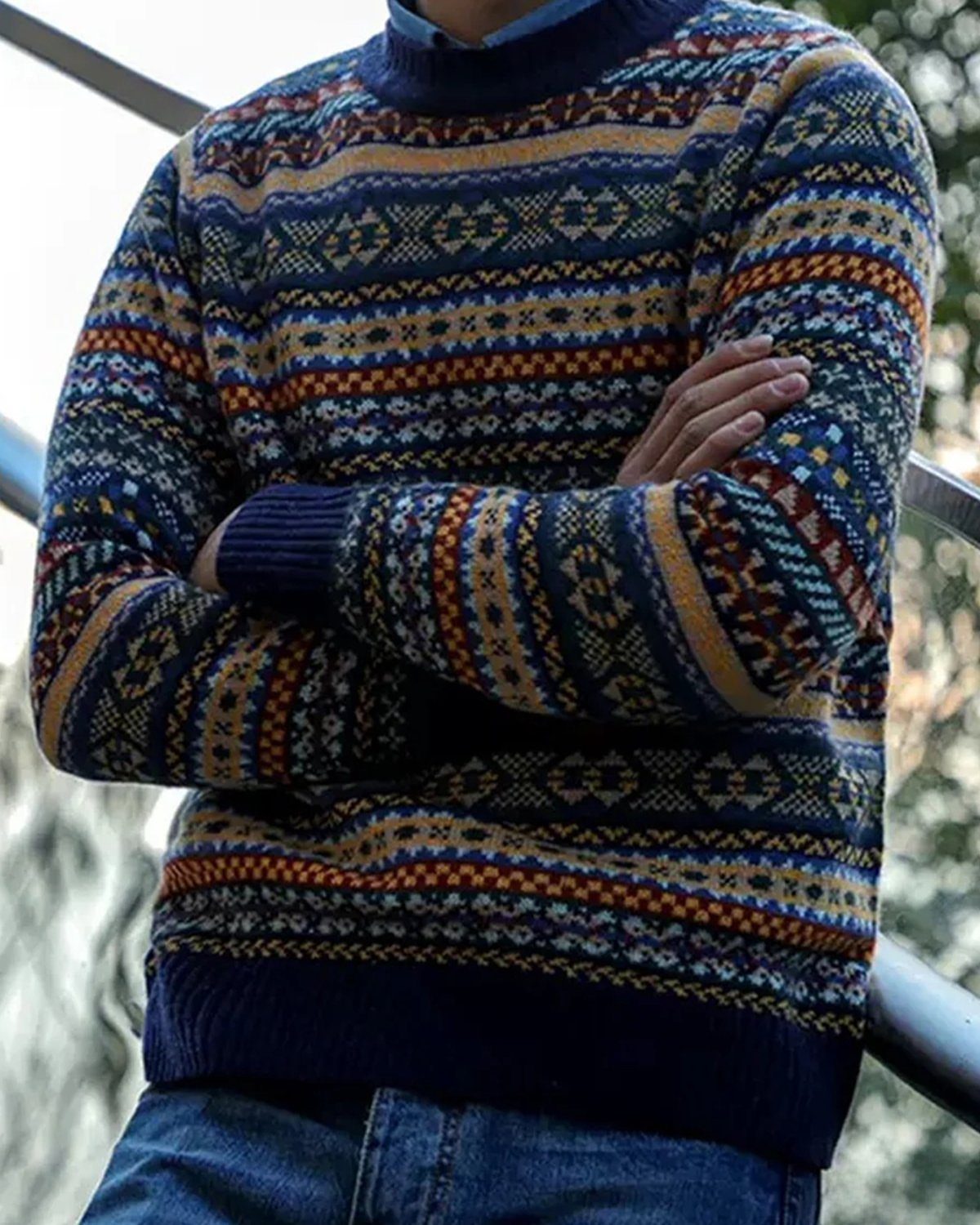
Fair Isle patterns carry that handmade quality even when they’re machine-knit miles from Scotland. The blue, yellow, and red version above works because the colors stay relatively muted; neon takes on this pattern read holiday-only and feel wrong by January.
Pair it with dark denim and leather boots for a look that lasts past New Year’s, or try a pleated wool skirt if you want something more intentional than jeans.
Skip the reindeer and snowflakes so you can wear it past New Year’s without feeling seasonal. I’d pick this for hourglass and rectangle shapes; the busy pattern adds interest where you don’t need structure.
6. Argyle Sweater
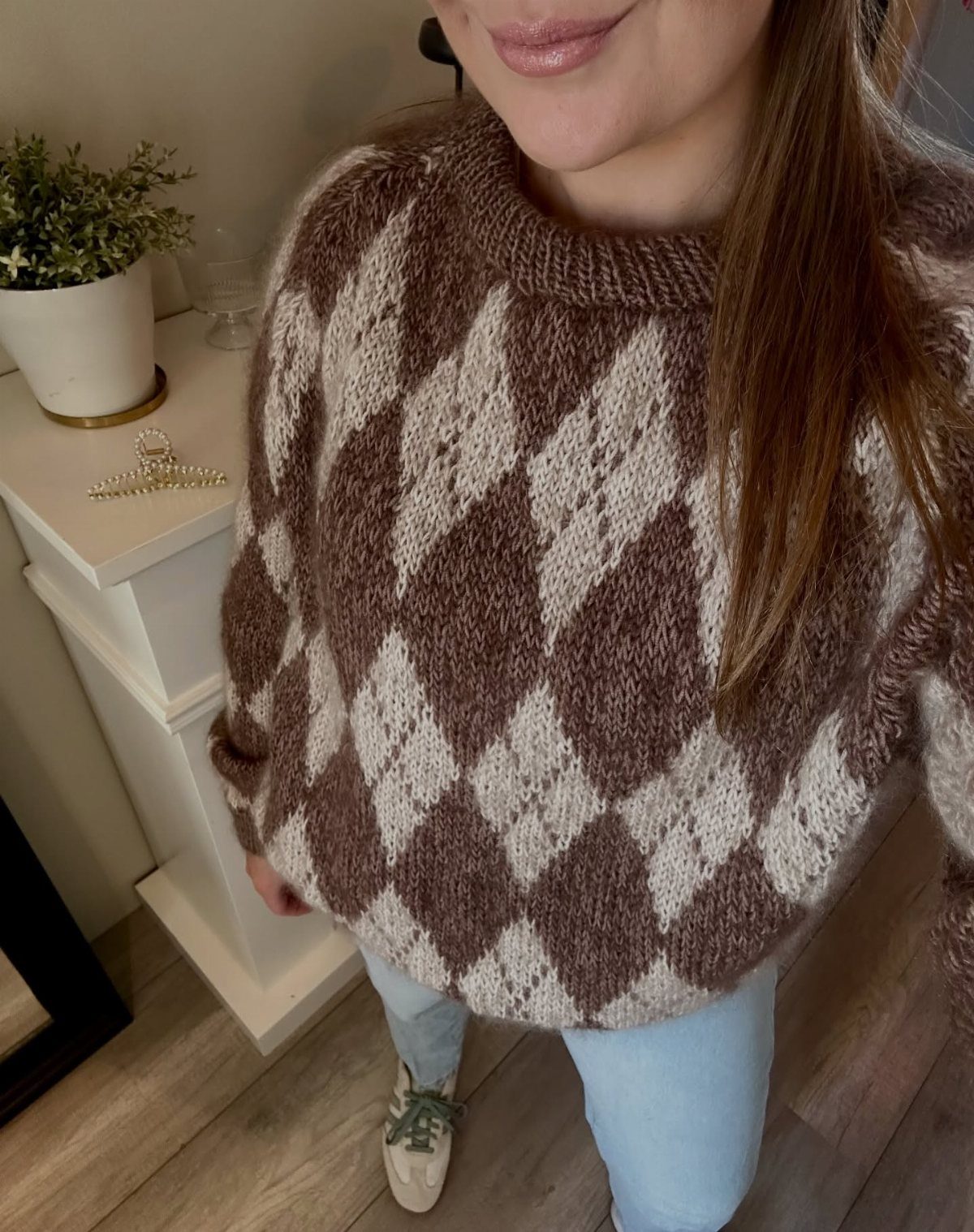
Brown and cream argyle has shaken off its prep-school baggage and landed somewhere more interesting, especially in oversized cuts that pool past the hip.
Large-scale diamonds read modern, not vintage; pair them with wool trousers or a pleated skirt if you want to lean into the academic thing, or with baggy jeans and sneakers to pull it back to now.
Wool construction matters here since the pattern shows every pilling flaw. Best for inverted triangle shapes who can carry the visual weight across the chest.
7. Collared Sweater

A collared sweater in 2025 reads as intentional rather than borrowed from a golf course.
I’d aim the hem at your hipbone or just below, then layer a blazer on top for structure without the bulk of a full shirt collar.
Cream against cream keeps the line clean; a darker knit under a lighter jacket works the same way for evening.
Gold hoops finish it. This one suits anyone whose winter calendar mixes client calls with school pickup and no time to change in between.
8. Tunic Sweaters
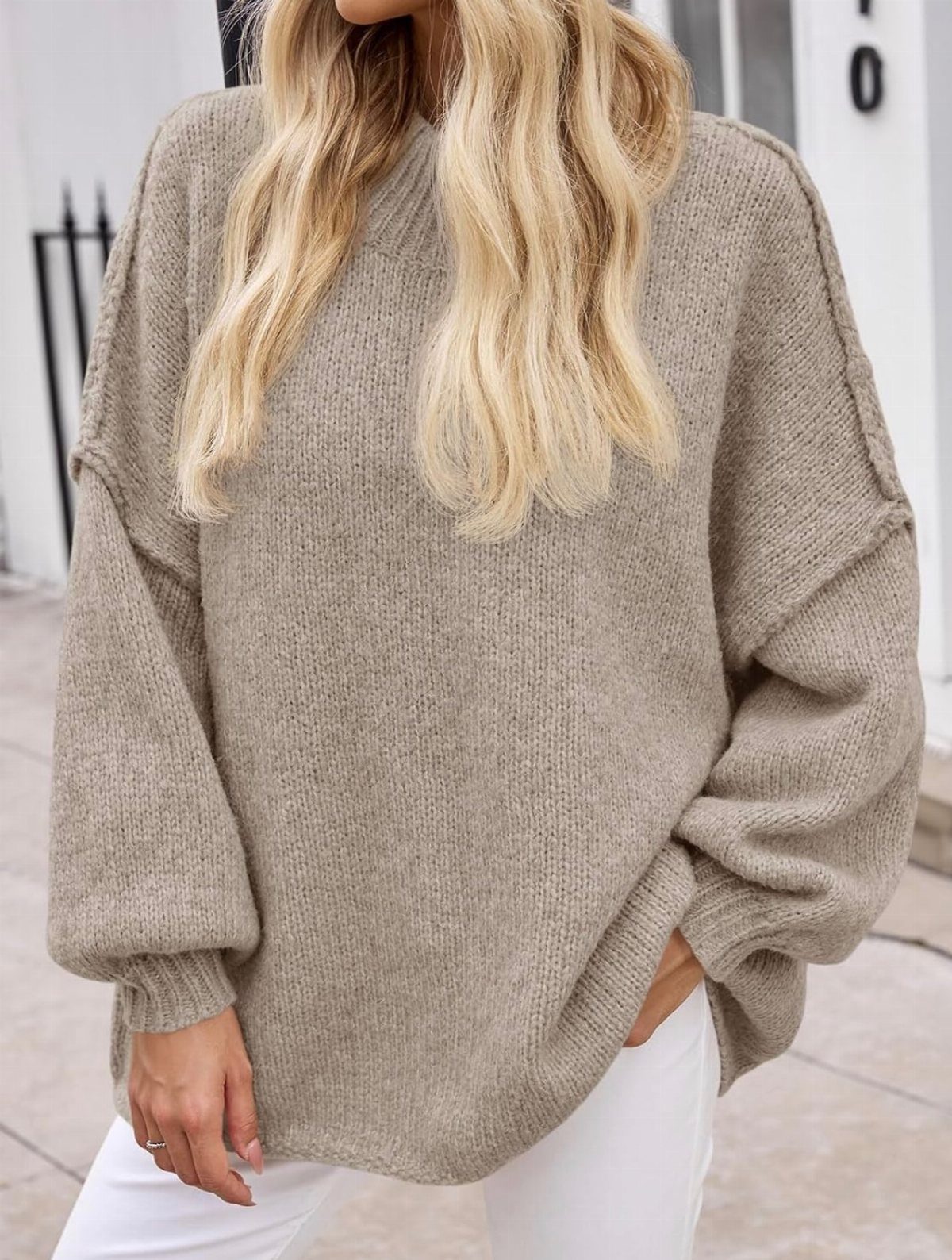
The tunic defies easy category. It hangs lower than a standard sweater, flares rather than tapers at the hem, and works as either top or dress depending on your height and nerve.
For winter, I treat it as a sweater with options. A long beige knit over white trousers carries the ease of a uniform; on a shorter frame, the same piece with leggings and boots reads as a dress.
The cut matters more than the neckline, mock or crew or V.
Most are pullovers, which means no fussing with buttons. I’d add a belt if the fabric has enough weight to hold it, or leave it loose for travel days when comfort outranks everything else.
9. Quarter-Zip Sweaters
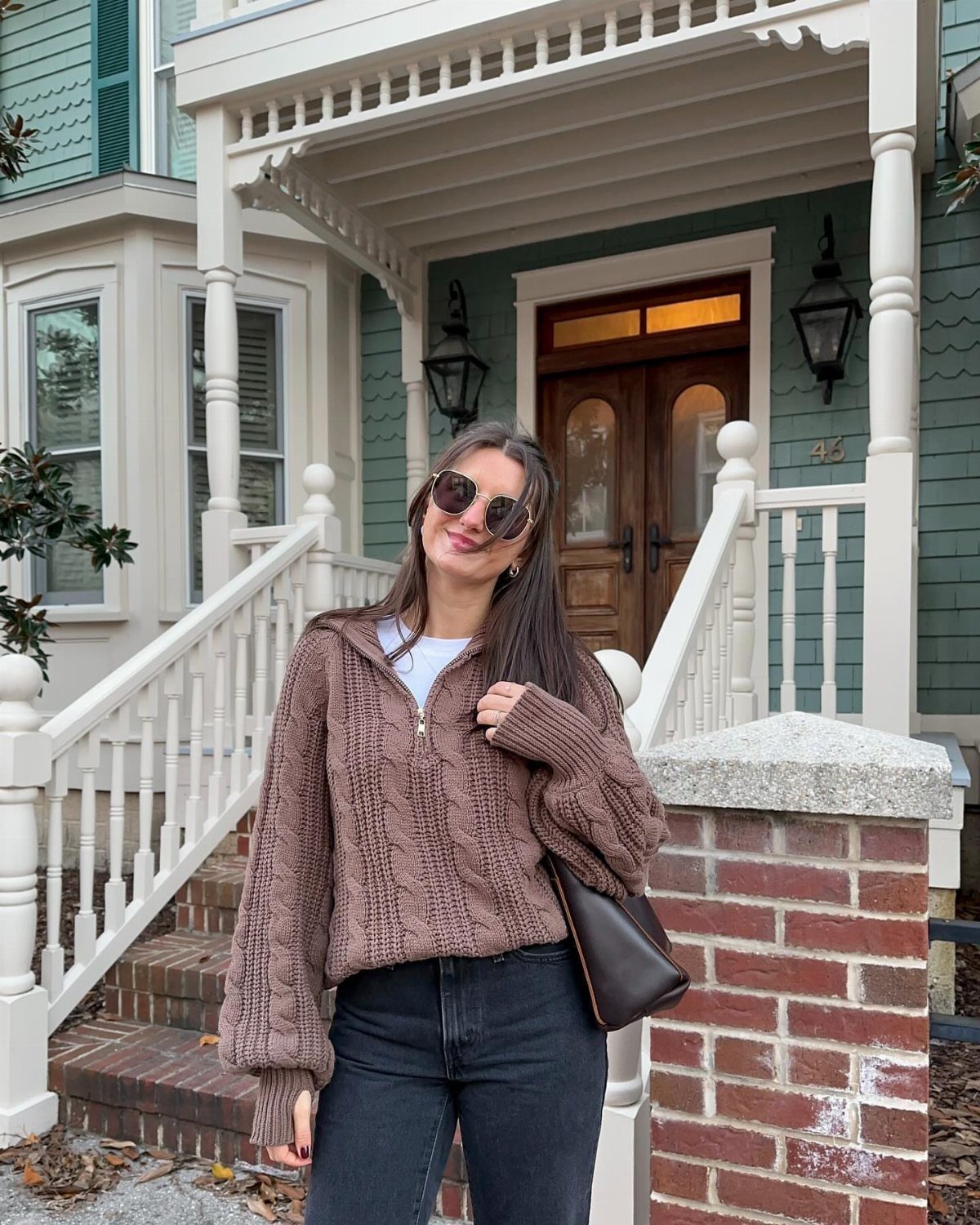
The quarter-zip borrows its collar geometry from a V-neck but adds a zipper that stops part way down. That small mechanical detail changes everything: you can vent heat without stripping layers, and the line stays cleaner than a full cardigan.
Cable knits run thicker and warmer than flat knits, which makes this the sweater I reach for when the office thermostat wars begin.
A white tee underneath gives you something to push the sleeves against and catches the eye at the collar.
Dark jeans keep it casual; swap in trousers and you have a piece that passes for professional without the stiffness of a blazer. The zipper does the work of a tie, drawing the eye upward.
10. Heathered Slouchy V-Neck Sweater
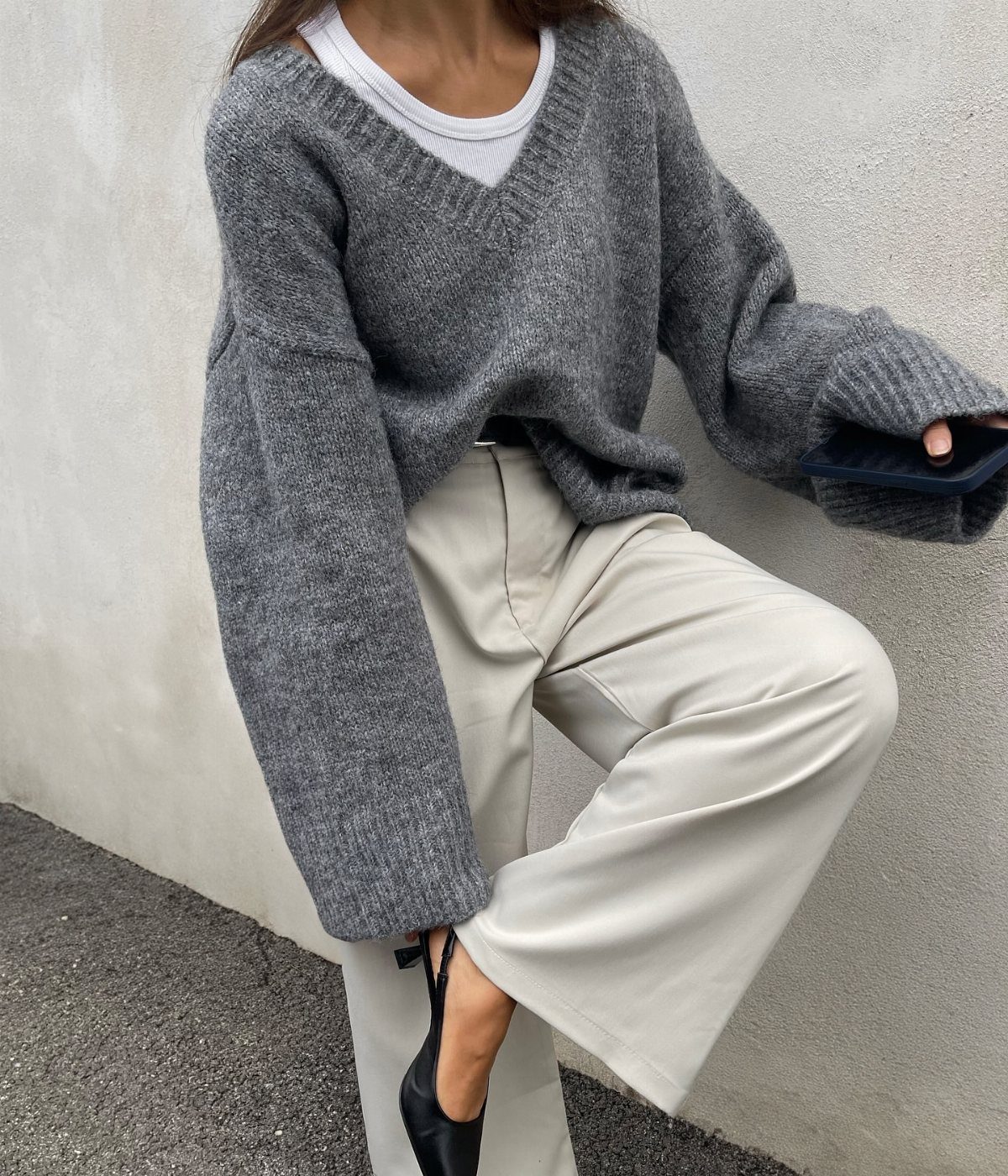
Heathered grey carries the visual texture of effort without any actual pattern-matching required. A slouchy V-neck layers over a white shirt with enough room that nothing pulls, then tucks into cream trousers that balance the volume up top.
The dolman sleeve is the detail that makes or breaks the fit. It drops from the shoulder rather than setting in at the armhole, which gives that relaxed silhouette but can swallow a narrow frame.
I took my true size and found the slouch intentional rather than overwhelming; size down if you prefer structure.
Slingback heels sharpen the look for dinner. For daytime, this same sweater over leggings works with the ease of a uniform.
11. Matching Sweater Set
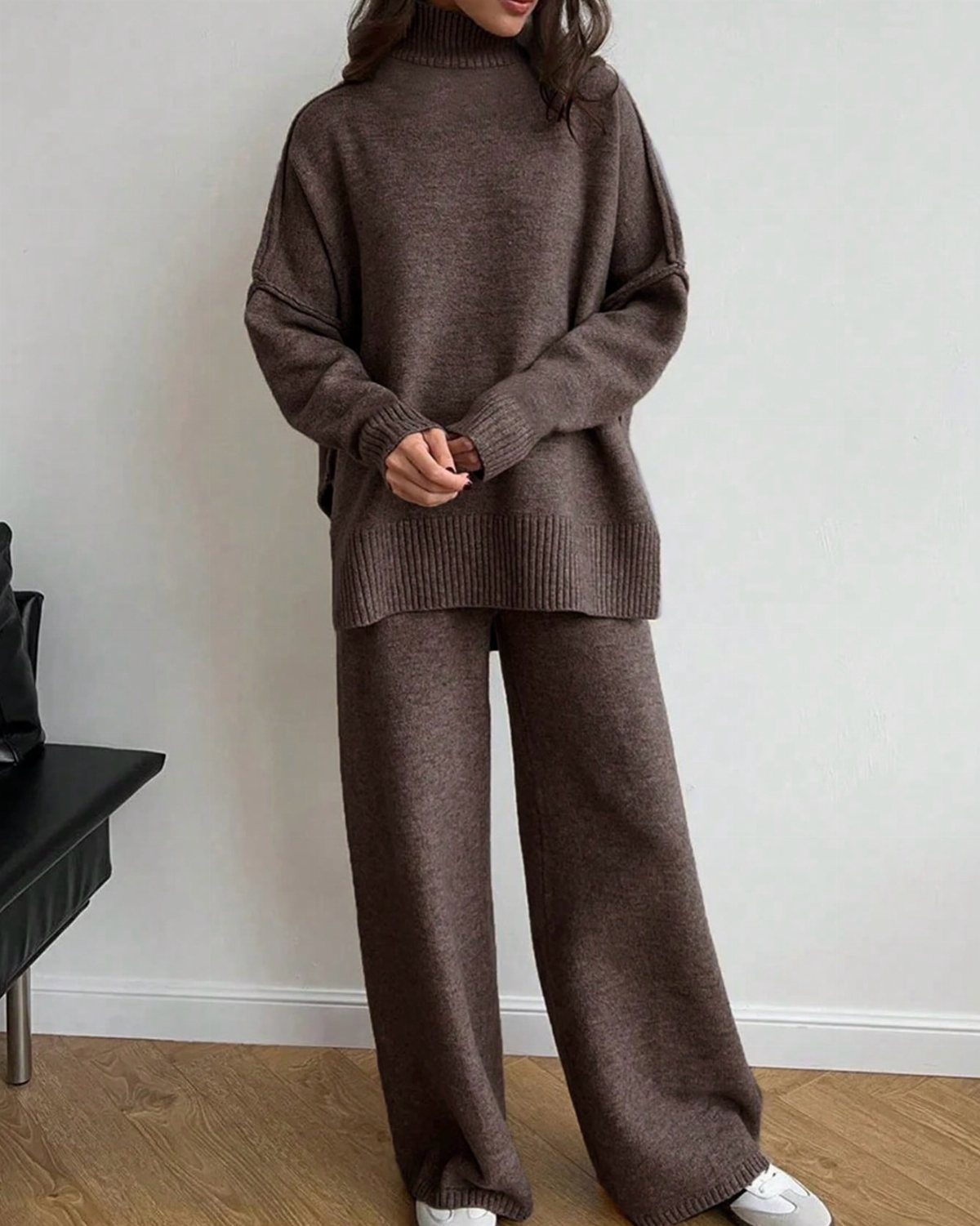
A matching knit set solves the morning decision fatigue of what goes with what. An oversized turtleneck and wide-leg trousers in a single brown tone read as considered without requiring any actual consideration.
For travel or working from home, this is the outfit that looks presentable from the waist up on a video call and feels like loungewear everywhere else.
The ribbed waistband on good versions holds you in without digging; I’d check that detail before buying, since a loose band defeats the purpose.
White sneakers keep it grounded. Gold jewelry and loafers carry the set through brunch that turns into an all-day affair, or stay neutral and let the texture do the work.
Sweater weather is well underway, meaning it’s time to round out your knitwear selection for the season.
12. Sweater with Leather Skirt
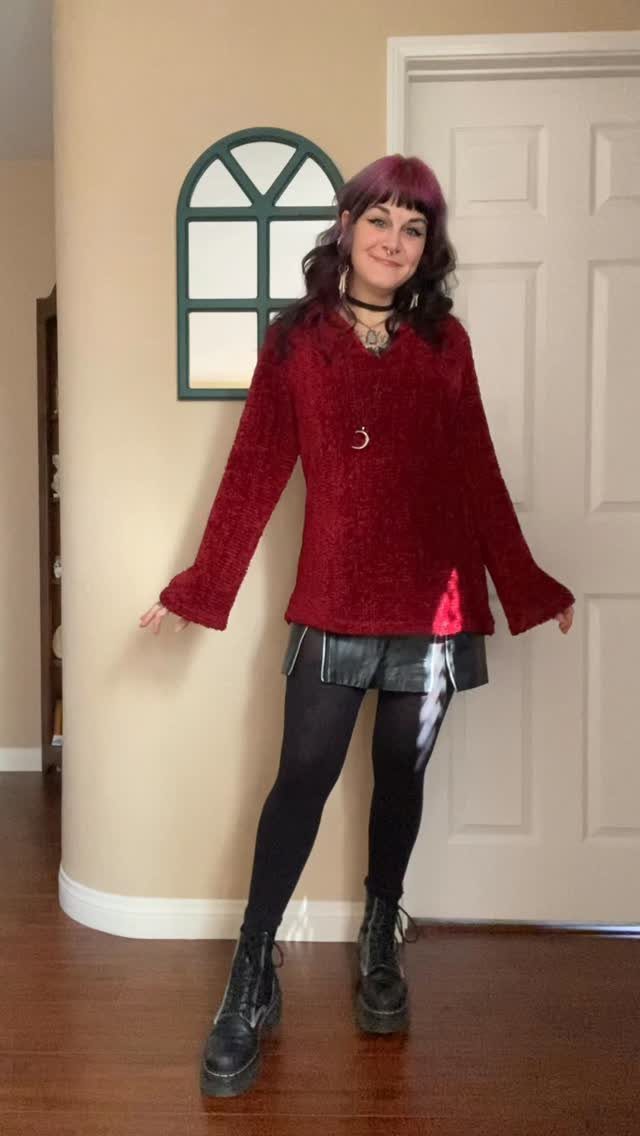
Burgundy against black leather hits a note that wool alone rarely reaches. A textured sweater over a short leather skirt carries the deliberate clash of soft against hard, matte against shine.
Tights and combat boots extend the season of a skirt that would otherwise hibernate until April. The proportion to watch is where the sweater ends: at the hipbone, as here, it flatters most bodies.
Any longer and you lose the skirt entirely; any shorter and the visual weight drops wrong.
This pairing suits anyone whose winter style leans toward edge over ease. For a quieter version, swap the boots for knee-high leather and the combat attitude stays but softens.
Layering Techniques
A turtleneck under a crewneck sweater adds warmth without the bulk of a scarf, and the double collar frames your face better than either piece alone. I leave the inner neck slightly loose so it doesn’t read tight.
Cardigans work harder when you treat them as outerwear. A fine-gauge knit under a heavier cardigan gives you three temperature levels: buttoned, open, or peeled off entirely.
Keep the base layer thin so your arms still move freely.
The shirt should be slim-cut; anything roomy bunches at the elbows and ruins the line.
A coat over everything needs enough room in the shoulders and chest. Try the full stack on before you buy the coat, not after.
Choosing Quality Sweaters
I learned this the hard way with a stack of discount knits that looked tired by February.
Check the ribbed waistband on any sweater set or tunic before buying. A loose band defeats the purpose of the structure, and a band that stretches out after ten wears isn’t worth the savings.
Fiber content matters more than brand. A merino turtleneck from a smaller label often outlasts a blended piece from a bigger name at twice the price.
I look for 7-gauge or heavier for cable knits; anything lighter won’t keep its texture.
Hand-washing extends life, but a good sweater shouldn’t require it to survive one season.
Accessorizing Outfits
A belt breaks the volume on oversized cuts and gives the eye somewhere to rest. I use a slim leather belt in a tone that matches the sweater rather than contrasts; structure matters more than statement.
Gold hoops warm up cream and camel knits without competing for attention. For cooler palettes like heathered grey or navy, silver reads more natural.
Footwear changes the register. Ballet flats under a cardigan and jeans keep the look feminine and light; swap in loafers and the same outfit turns academic.
Combat boots against a leather skirt push toward edge, while knee-high leather boots soften the same pairing.
Small detail, but it separates intentional from thrown-on.
Color Coordination
All-neutral outfits work best when the white carries some cream rather than reading pure and cold.
Beige on top with white below reverses the expected order and reads more modern than the reverse; taupe and soft grey layered together stay interesting through texture variation alone.
Olive green has settled in as the neutral beyond grey and black. It pairs cleanly with chocolate brown or butter yellow, and against burgundy it carries enough depth to feel bold without shouting.
I reach for it when black feels too heavy and cream too bright.
For Fair Isle and argyle, let the pattern’s busiest color guide the rest of the outfit.
A blue-yellow-red knit needs dark denim to ground it; pulling one accent color into a scarf or shoe tends to look like you’re trying too hard. The pattern is doing enough.
Frequently Asked Questions
What are the sweater trends for 2026?
Oversized silhouettes, matching knit sets, and classic patterns like Fair Isle and argyle are the main directions. Collared sweaters in zip-neck and polo styles bridge cozy and polished, while heathered textures and cable knits carry through from last year.
I’d put money on brown tones, cream, and muted blues over black for the color story that feels current.
How to wear a sweater in winter?
Slip a thin turtleneck under that sleeveless jumpsuit you bought for summer and it carries straight through to February, or belt a chunky knit over straight-leg jeans so the volume has a shape to land on.
The quarter-zip over a white tee lets you cool off without peeling everything off, and a collared sweater under a blazer gives you the shirt look without the shirt bulk.
The rule is proportion: volume up top needs something structured below.
What are some good outfits I can style with a sweater?
Pair an oversized crewneck with straight-leg trousers and clean boots, or a striped turtleneck with light-wash denim and loafers. For travel or working from home, a matching knit set looks presentable on video calls and feels like loungewear everywhere else.