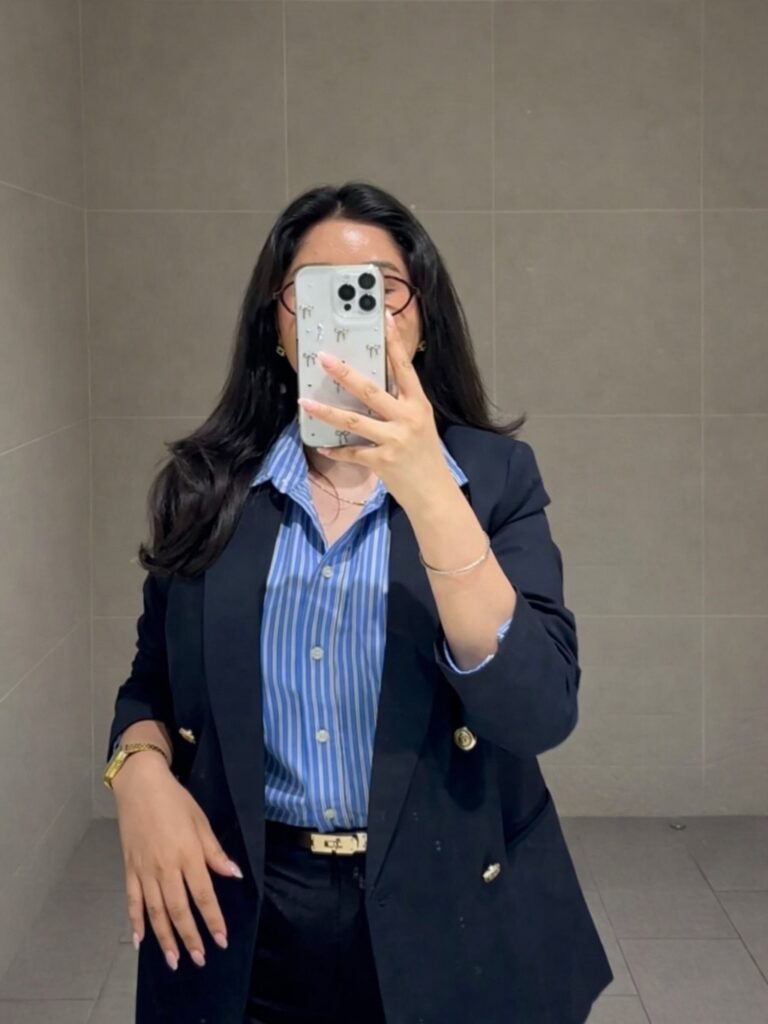
A womens blazer outfit can run from Saturday errands in linen and dark wash jeans to a double-breasted cut with velvet for evening. The right choice depends on whether your day demands structure, ease, or the balance between them.
A cropped version hitting at or above the waist needs high-waisted jeans beneath it; anything lower and the break looks accidental.
1. Casual Blazer Outfits
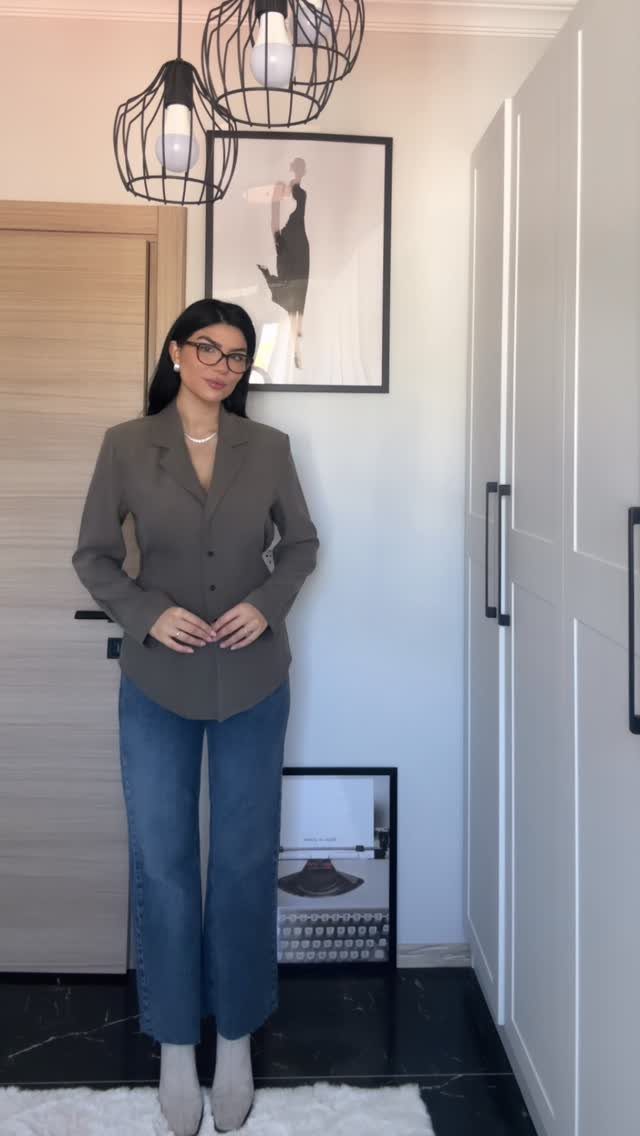
An unstructured blazer in a light color turns Saturday errands into something pulled-together without trying hard. I reach for mine when I want the shape of a jacket but not the stiffness of office wear.
The fabric matters more than the cut here. Linen and cotton blends keep the look warm-weather appropriate, and a stripe or soft check reads playful rather than corporate.
Pair it with dark wash jeans and a thin black turtleneck for that neat but relaxed oxford class feel, or throw it over a summer dress with loafers or chelsea boots. Silver or gold jewelry, kept subtle, finishes it.
This works best for casual outings where you might run into someone you know. An unstructured blazer loses the waist definition of a tailored jacket, so a half-tuck or cropped top underneath keeps the line from going boxy.
2. Blazer with Shorts
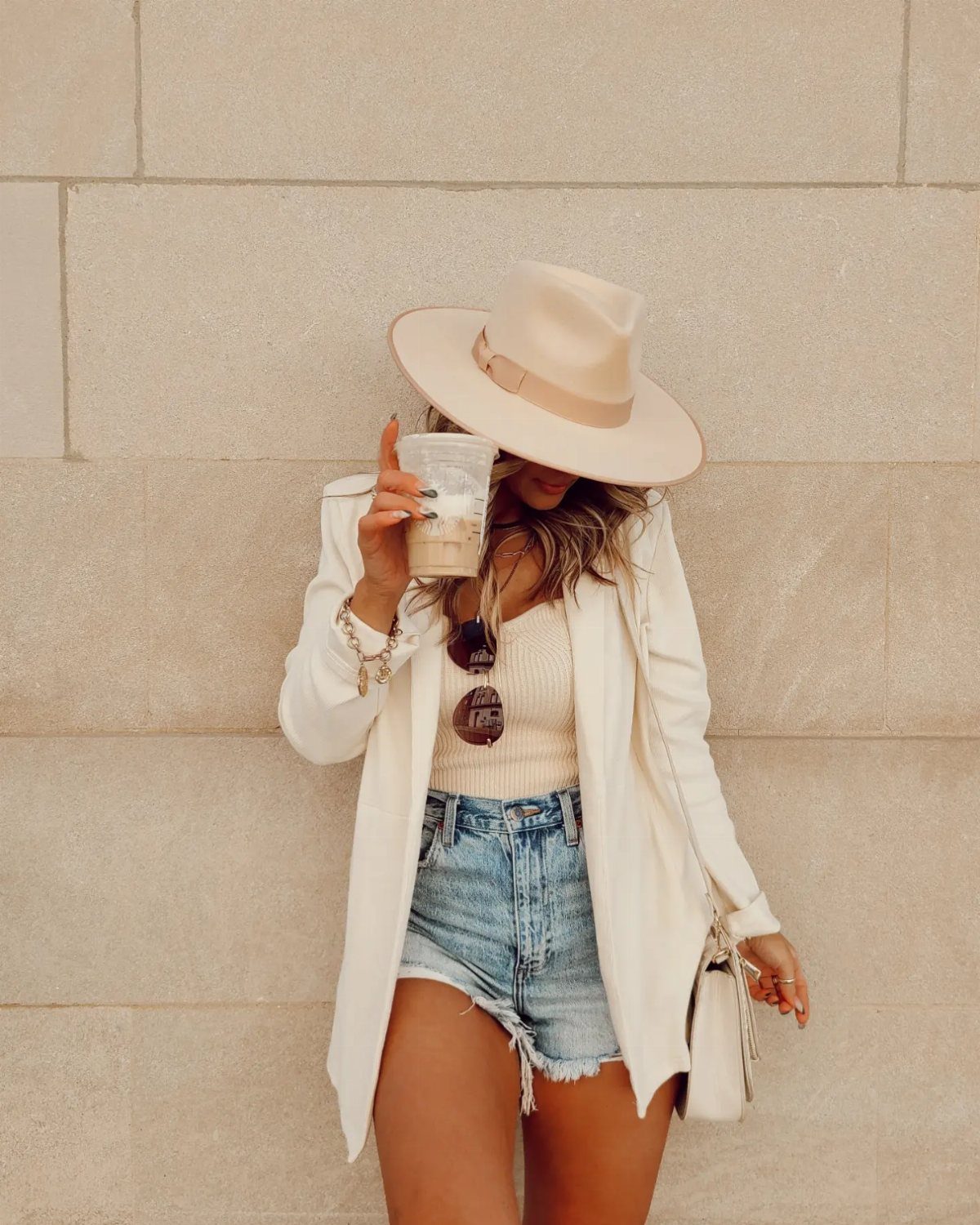
Shorts with a blazer sounds like a contradiction until you see it done. The jacket supplies the structure, the shorts keep it from feeling like you forgot to change after work.
Linen or lightweight cotton blazers in ivory or cream pair naturally with denim cutoffs or tailored shorts in a matching neutral. A wide-brim hat pushes the look toward vacation without tipping into costume.
For footwear, sandals or clean white sneakers keep the casual promise; heels fight the shorts too much.
The matching set option, when you can find it, solves the color balance problem instantly. Otherwise, keep the shorts simpler than the blazer so the eye has somewhere to rest.
Best for outdoor brunches, casual gatherings, or any summer day that starts with coffee and ends with dinner. The risk is length: shorts that hit mid-thigh work better here than anything shorter.
3. Double-Breasted Blazer

A double-breasted blazer carries the weight of the 1980s power suit, but worn right it feels current rather than costume. The extra buttons and wider lapels give you presence in rooms where a single-breasted jacket would disappear.
Fit determines everything. Buttoned, it should pull in at the waist without straining; unbuttoned, it reads as outerwear over a fitted top or thin knit.
Velvet works for evening; wool or structured cotton handles daytime. The deep V neckline that double-breasted cuts create balances well with high-waisted trousers or a midi skirt underneath.
I tend to keep mine buttoned for meetings where I need the authority, open for dinners where I want the shape without the formality.
A double-breasted cut adds visual weight across the torso, so pear-shaped figures may prefer it worn open with a column of color underneath.
4. Blazer Over Dress
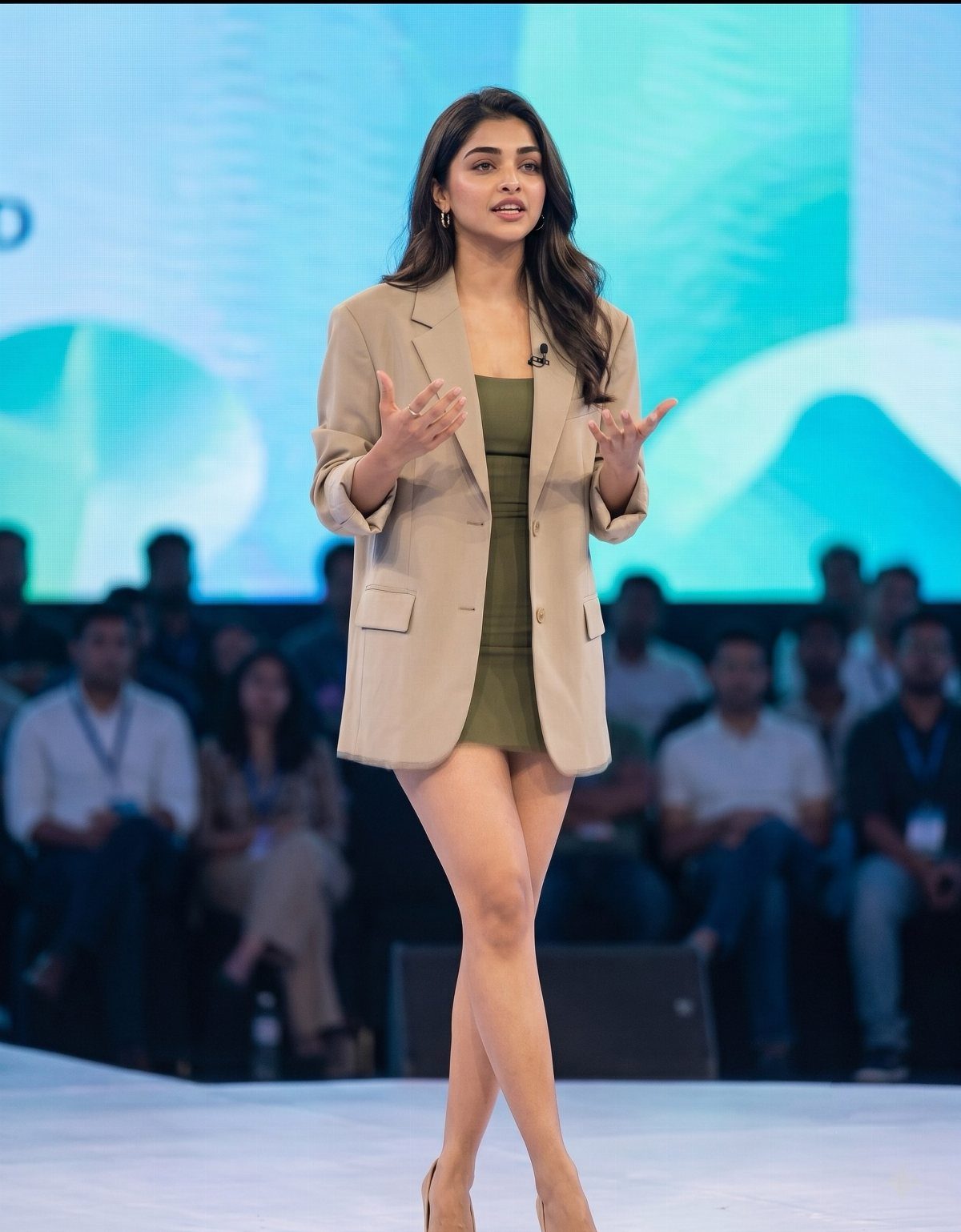
Layering a blazer over a dress solves the problem of a sleeveless or short-sleeved dress in air-conditioned offices or transitional weather. The jacket becomes the outfit’s anchor; the dress supplies the interest.
Sheath dresses work best for professional settings, the clean line continuing under the blazer’s structure. A flared or mini dress needs a longer or oversized blazer to keep the proportions from going juvenile.
Roll the sleeves to forearm length if the dress has any pattern or bright color; it signals intention rather than afterthought.
For creative workplaces or after-work plans, this combination moves between contexts without a change of clothes.
A cropped blazer over a short dress can look like you grabbed the wrong jacket, so check the hem relationship in a mirror before you leave.
5. Blazer Outfits for Work
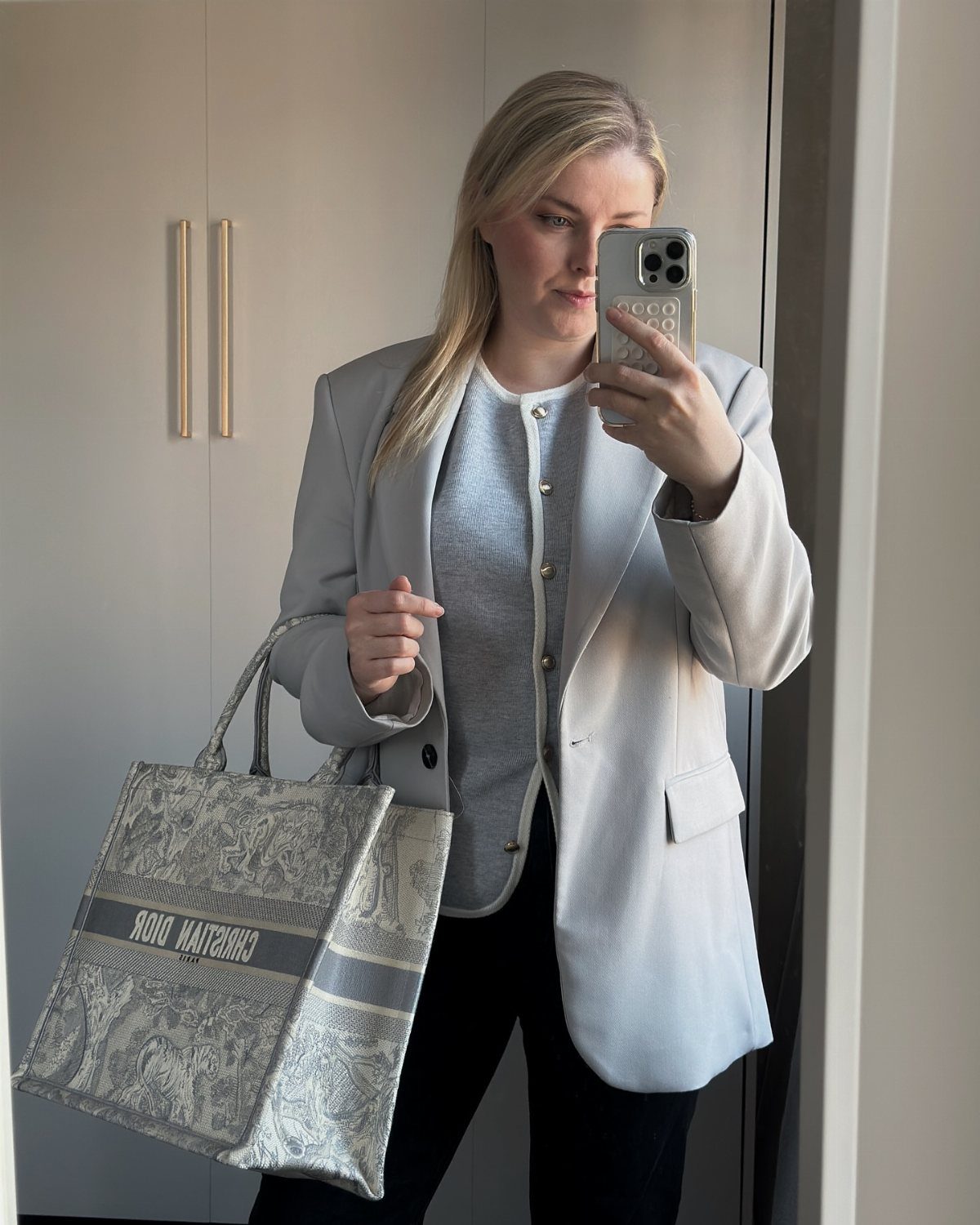
A work blazer earns its keep by bridging the gap between what your office requires and what you actually want to wear. The right one layers over knits, blouses, or even a cardigan without bulking at the seams.
Neutral colors and subtle patterns carry furthest across industries. The fit should hit at your wrist bone and pull in slightly at the waist; anything boxier reads casual, anything tighter restricts movement.
I layer mine over a tucked white shirt and pencil skirt for formal days, swap in black dress pants and low boots for winter, and throw it over a thin cardigan and jeans when the dress code loosens.
Structured tailoring balances softer pieces underneath, so a flowy top or knit benefits from the contrast. The cost of versatility is boredom: a navy or grey blazer repeated weekly needs good accessories to keep it alive.
Check your workplace’s actual rules before buying bold textures or prints; creative fields allow what corporate ones punish.
6. Oversized and Effortless
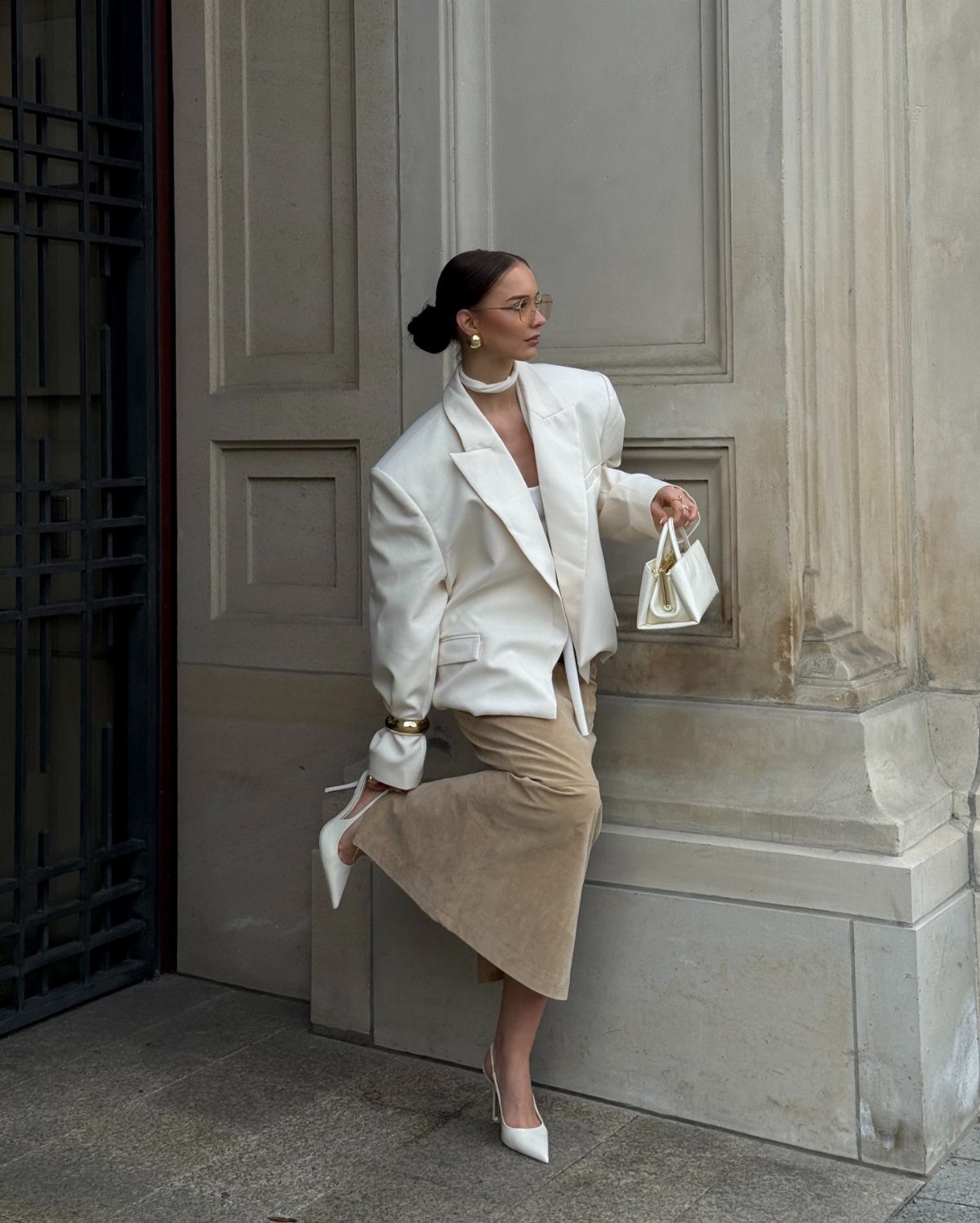
An oversized blazer trades precision for ease. The shoulders drop past your natural line, the sleeves pool slightly, and the whole thing reads as borrowed rather than fitted.
The proportion game matters here. A structured oversized cut needs a slimmer bottom half to keep the silhouette from becoming a tent: a tan midi skirt or straight trousers work, wide legs do not.
Pointed-toe heels or slingbacks add back some of the length the jacket takes away. For a younger take, a crop top and thigh-high boots underneath push the look toward evening, though that version trades away most of its practicality.
The fabric must hold the shape; cheap oversized blazers collapse into sad rectangles. Look for weight in the material, structure in the shoulder even if it sits lower than usual.
Best for days when you want to look considered without looking assembled.
7. Patterned Blazers
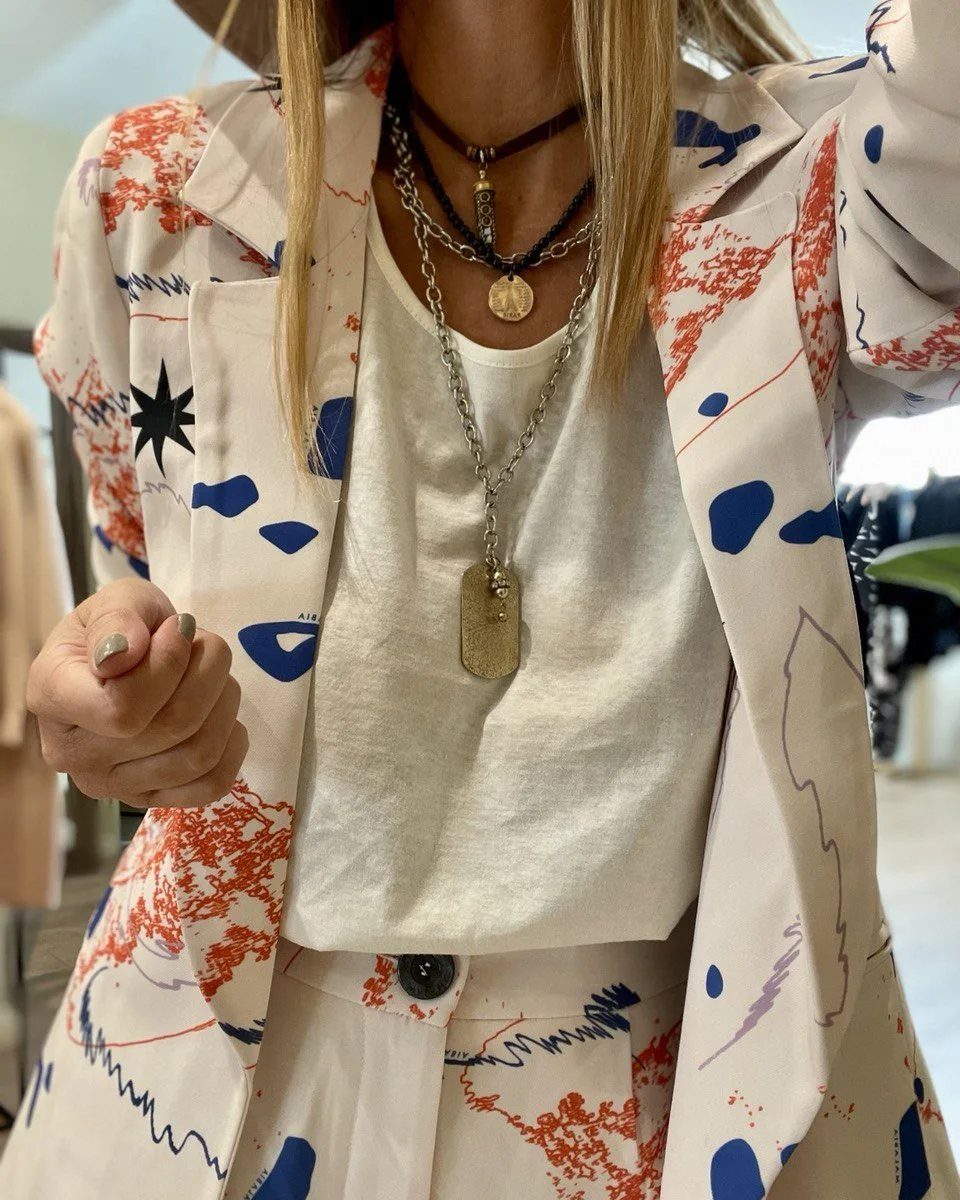
An abstract print on a blazer turns the whole piece into the outfit’s statement.
The rest of the look stays quiet: solid trousers or a plain tee underneath, one color pulled from the print itself so the eye has somewhere to rest.
Layered necklaces work with this, but keep them fine rather than heavy; the pattern already did the loud part.
Small prints read as texture from across a room and suit someone easing into the idea. Large, bold shapes need confidence and a fairly simple day; errands in a loud graphic blazer can feel like a costume by hour three.
Check the scale against your frame before buying. A print that overwhelms a petite shoulder line sits perfectly on someone taller.
8. Cropped Blazer
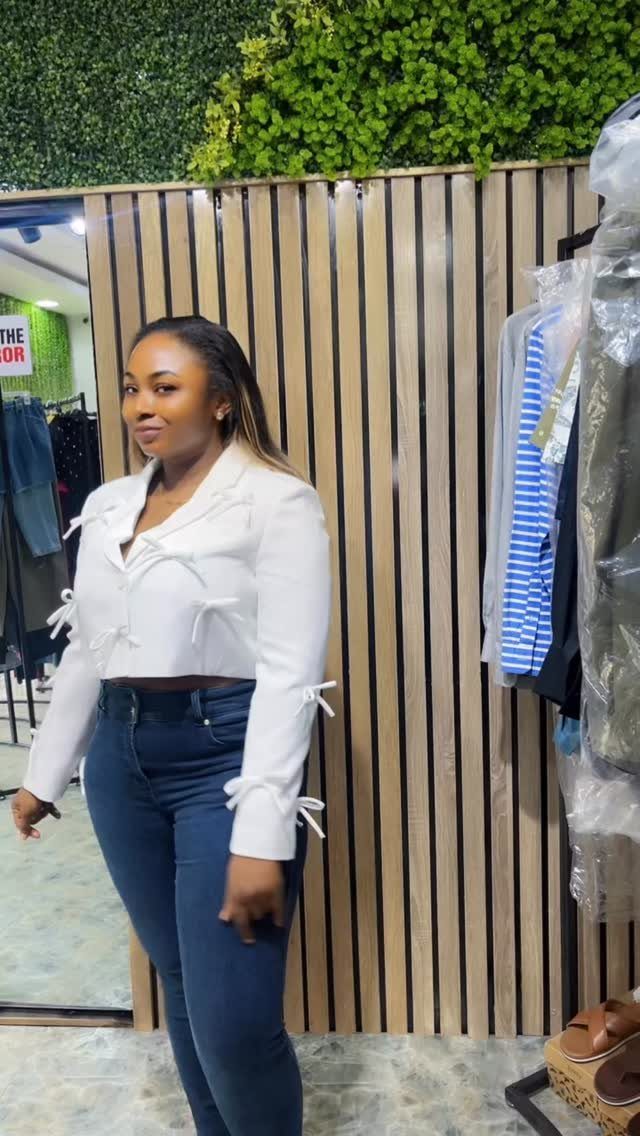
A cropped blazer hits at or above the waist, which changes every proportion underneath. High-waisted jeans are the natural partner; the gap between jacket hem and waistband is deliberate, not a mistake.
Bow ties on the sleeves add a softer detail than hardware would, but the cut itself still reads sharp.
This length sacrifices the coverage a standard blazer gives across the hips and seat. If you usually rely on a jacket to smooth that line, the cropped version puts pressure on the trouser or skirt to do the work instead.
A mid-rise bottom underneath rarely flatters; the break looks accidental.
Best on someone who likes structure but wants to show shape rather than hide it. The edge reads current without trying hard.
9. Colorful Blazer Outfit
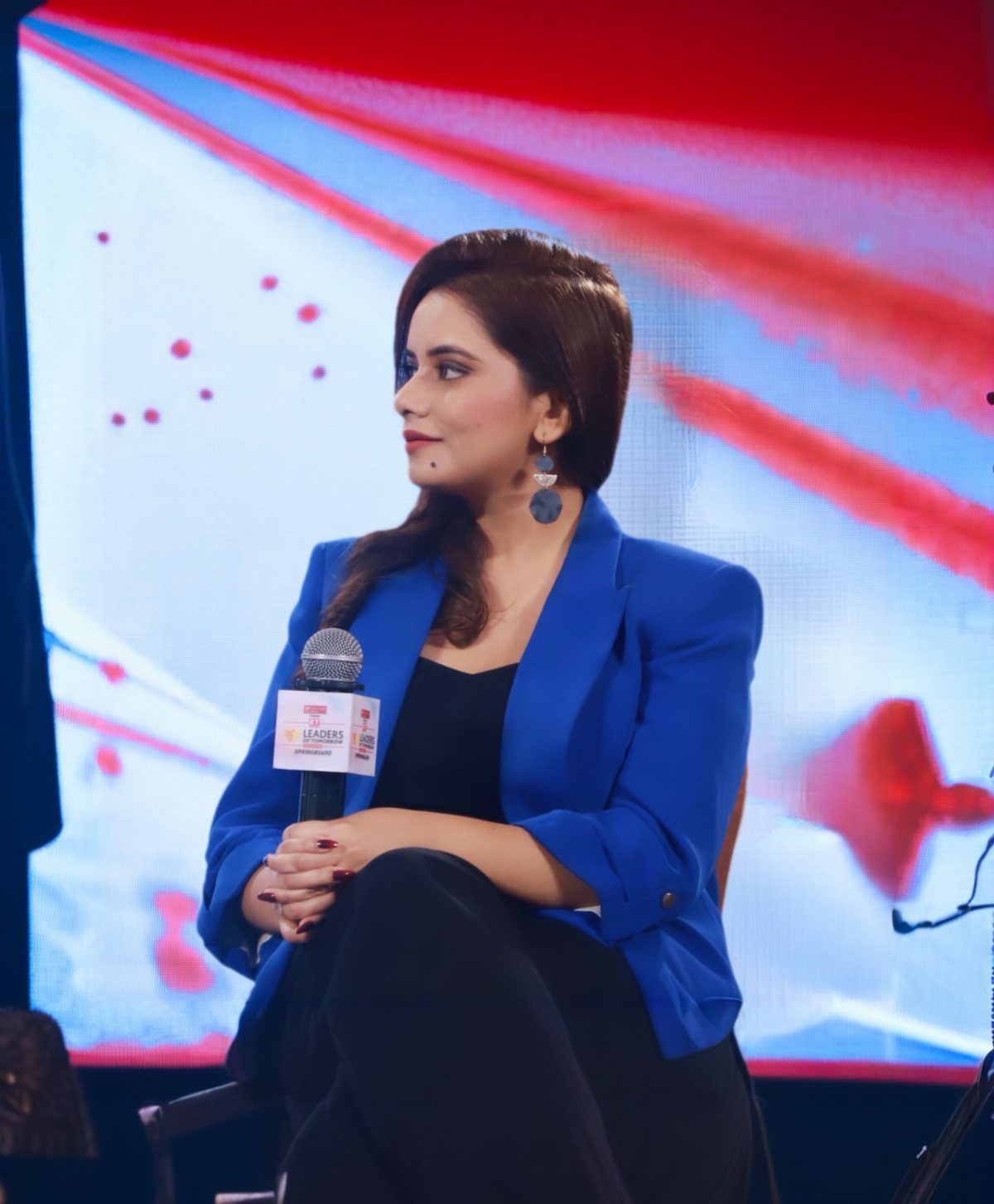
A cobalt or electric blue blazer against black separates reads as confident without trying for trendy. The color does the work, so the cut stays simple: one button, narrow lapels, hitting at mid-hip.
I keep the base entirely matte. Black cotton or a fine knit, no shine, no competing hardware.
The trousers can be slim or wide; the blazer length matters more than the leg shape. Too long and the color block looks accidental, too short and the proportions turn costume.
Jewelry stays minimal. A thin chain or small hoops, nothing that catches light the way the blazer does.
Shoes in black or a tone that picks up the blue, not a third color.
This suits someone whose wardrobe is mostly neutral and wants one piece that changes the room. A bright color only works if the blazer fits well; in a sloppy cut, it looks like a mistake rather than a choice.
10. Blazer with High-Waisted Trousers

The black blazer and black top here function as one long vertical line, broken only by the belt and the warm brown of the trousers. That break is the point: the eye goes to the waist, then the legs.
High-waisted trousers need to sit exactly at your natural waist, not near it. An inch too low and the whole proportion collapses.
I check this in a three-way mirror if possible, or photograph from the side; the front view lies.
The belt should be slim and match the shoe color, or match the trousers. A wide belt competes with the blazer hem.
Trousers with a slight flare or a clean wide leg work better than skinny here; the volume balances the blazer’s structure.
This pairing travels well. The pieces separate into three other outfits, and the whole look works for dinner, a meeting, or a flight if the fabrics have some stretch.
Best for someone who wants polish without a dress or a suit set.
Choosing the Right Fit
The sleeve starts where your shoulder naturally ends; too broad across the back and the jacket smothers your frame rather than shapes it.
The waist should nip in slightly and rest close to the body, with buttons that stay flat when you stand relaxed.
Lightweight linen blends work for warm weather. Structured wool, ponte, crepe, and stretch blends handle the rest of the year without looking seasonal.
You will find fitted cuts with a defined waist, relaxed oversized shapes, sleeveless options, and double-breasted fronts. How tailored or easy you want the whole outfit to feel decides which cut works.
Accessorizing Blazer Outfits
When the jacket itself does not define the waist, a belt worn over the blazer does the job. For professional settings, keep jewelry minimal and let the tailoring speak.
In more casual contexts, a statement necklace or bolder piece adds personality without competing.
Workplace blazers do best in neutral colors and subtle patterns, with rich textures replacing bold prints. A crisp white shirt or turtleneck tucked into a knee-length pencil skirt, paired with matching low heels, reads feminine without sacrificing authority.
Low-heeled boots with silk stockings work for winter; black dress pants with a belt substitute when the dress code allows.
After all, the polished topper has evolved beyond workwear and seamlessly compliments even the most casual looks.
— Vogue
Seasonal Considerations
Linen and cotton blends handle summer heat without looking like you gave up. Wool and structured fabrics hold their shape through winter months.
Seasonless stretch fabrics bridge the gaps when the weather cannot commit.
The fabric choice should match the weight of the day, not just the temperature. A lightweight linen blazer over a summer dress keeps the look intentional; the same linen in a freezing office looks like poor planning.
Layer accordingly.
Blazer Trends
Right now, bold colors and textures carry the look if you want the blazer to do the talking. A slightly fitted cut in a neutral shade gives you the balanced, smart-casual option instead.
Two-tone pairings create contrast when you want it: a bright piece under an easy white blazer, say, with accessories that pull from one of those colors to tie it together.
A belt breaks up the color blocks; a mesh layer beneath introduces depth if the base colors feel too flat.
Oversized and cropped cuts are the current shapes. The oversized version needs weight in the material to hold its structure; cheap versions collapse.
Frequently Asked Questions
What to wear with a woman’s blazer?
Fitted tops, dresses, and casual bottoms like jeans or shorts all work, depending on the occasion.
A black turtleneck and dark jeans read polished without trying hard; throw the same blazer over a sundress and loafers and the whole thing loosens up.
What are the blazer trends for 2026?
If the blazer is doing the heavy lifting this season, strong color or texture carries it; for something quieter, a close-but-not-tight cut in a neutral keeps the line smart without stiffness.
Unstructured shapes in linen and cotton handle warm weather, and double-breasted cuts with wider lapels bring presence back for evening or professional settings. Oversized silhouettes with dropped shoulders and slightly pooled sleeves trade precision for ease.
Are ladies blazers still in style?
Yes, and they have moved well beyond office-only territory. The current range runs from unstructured linen for Saturday errands to double-breasted velvet for evening, with cropped, oversized, and patterned versions filling the space between.
A blazer now functions as the outfit’s anchor or its statement piece, depending on the cut you choose.