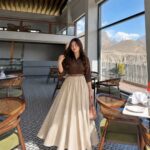
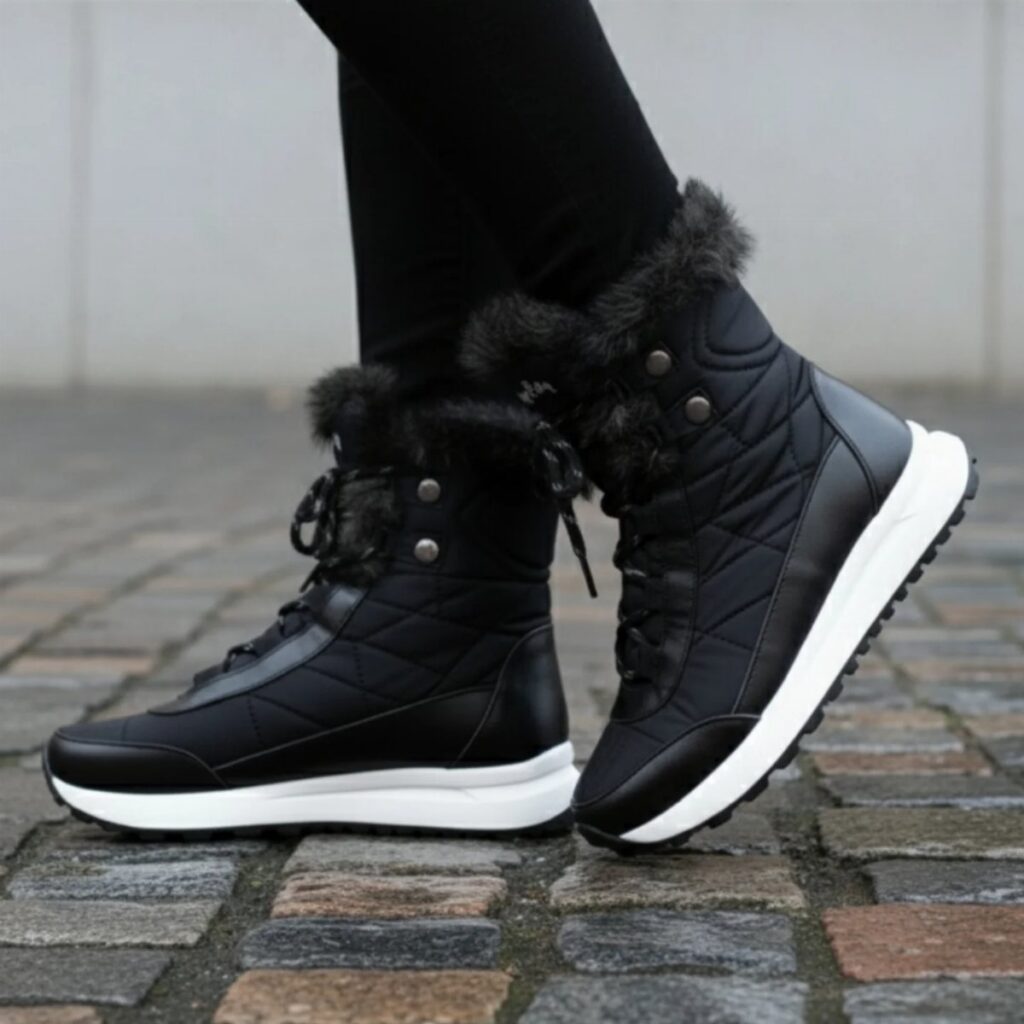
These 8 ideas run from a basic puffer with leggings to a full-length wool coat over a knit maxi, and the right one depends on whether your day calls for looking pulled together or staying upright in slush.
The through-line is choosing each piece for winter rather than adapting summer rules: a ribbed turtleneck dress needs only boots and a coat draped over the shoulders, while a midi demands the sweater’s weight match the dress fabric or the silhouette splits in two.
1. Accessories for Winter
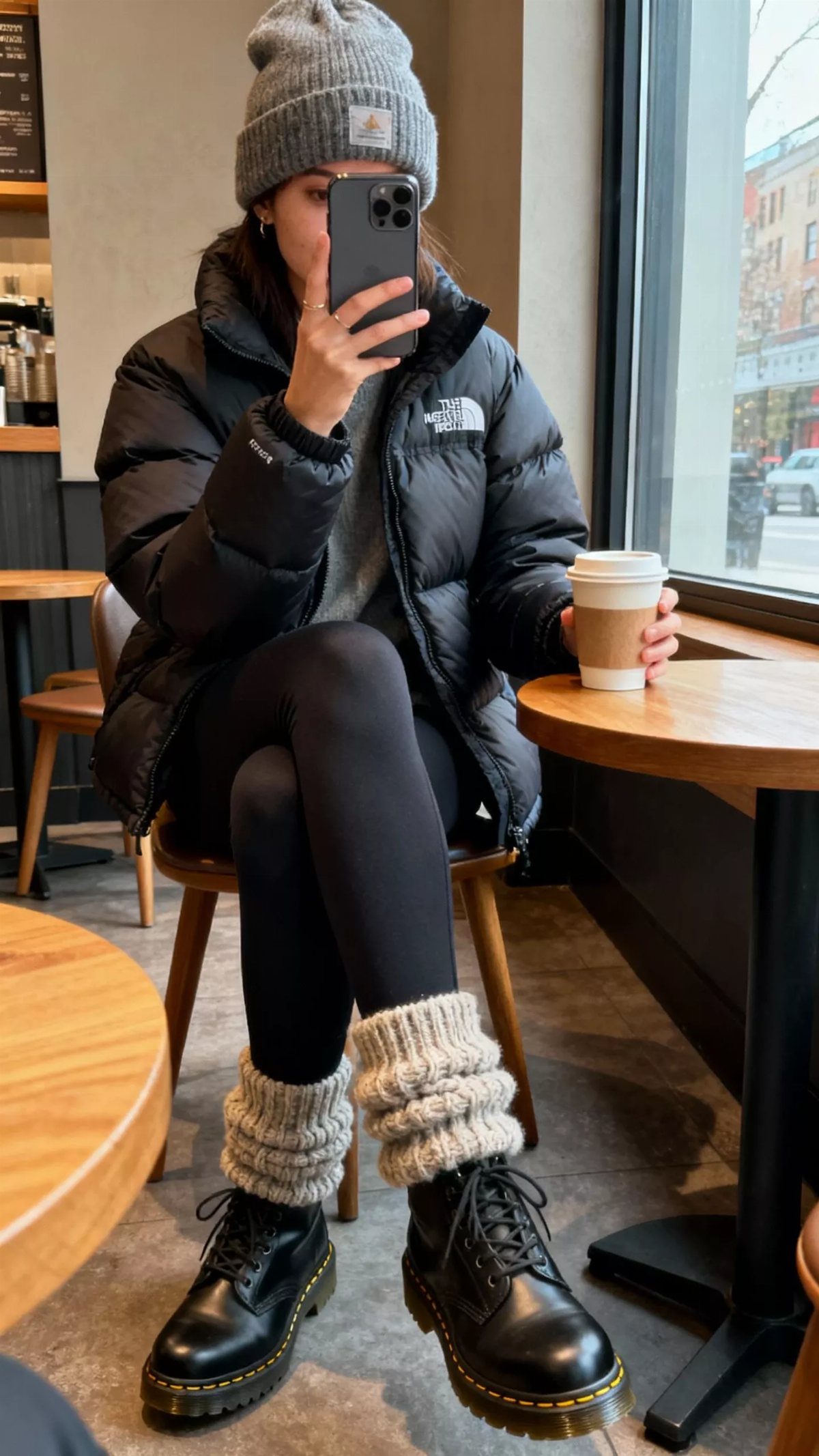
A beanie and leg warmers turn the most basic puffer-and-leggings uniform into something worth photographing. One texture should lead: ribbed knits read casual, cable knits feel heritage, and smooth wool blends skew minimal.
I reach for grey or oatmeal when I want the outfit to feel intentional without trying to coordinate, and save bold colors for days when the coat itself is black from hood to hem.
Oversized scarves work the same way. Drape a thick one over a fitted jacket and the silhouette balances; wrap it twice around a boxy coat and you lose your neck entirely.
Structured handbags help too, especially against soft outerwear. The contrast keeps you from looking like you rolled out of bed, even when you basically did.
2. Chic Winter Coats
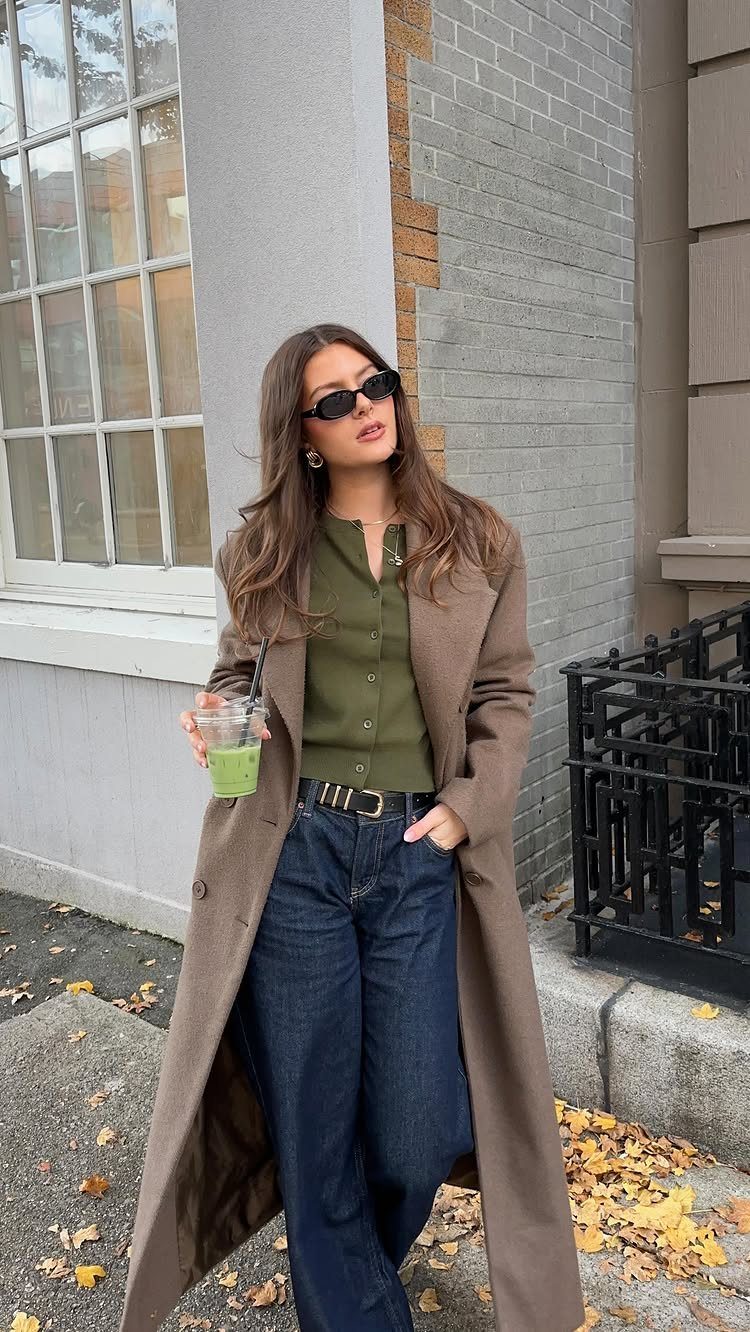
The coat is where winter money goes, and the difference between a good one and a great one usually comes down to length.
A long brown wool coat like this hits mid-calf, which means your thighs stay warm and your proportions elongate. Shorter coats force you to think harder about what’s underneath; this length forgives almost anything.
Oversized cuts add the attitude that tailoring removes. I size up when I want to layer thick knits underneath, or when I just want to look like I borrowed something from someone taller.
Puffer jackets serve a different purpose: they read sporty and urban, not polished, so I wear them with slim pants to keep the shape from going completely rectangular. Faux fur demands the simplest base possible.
Jeans, a thin turtleneck, done.
3. Stylish Boots
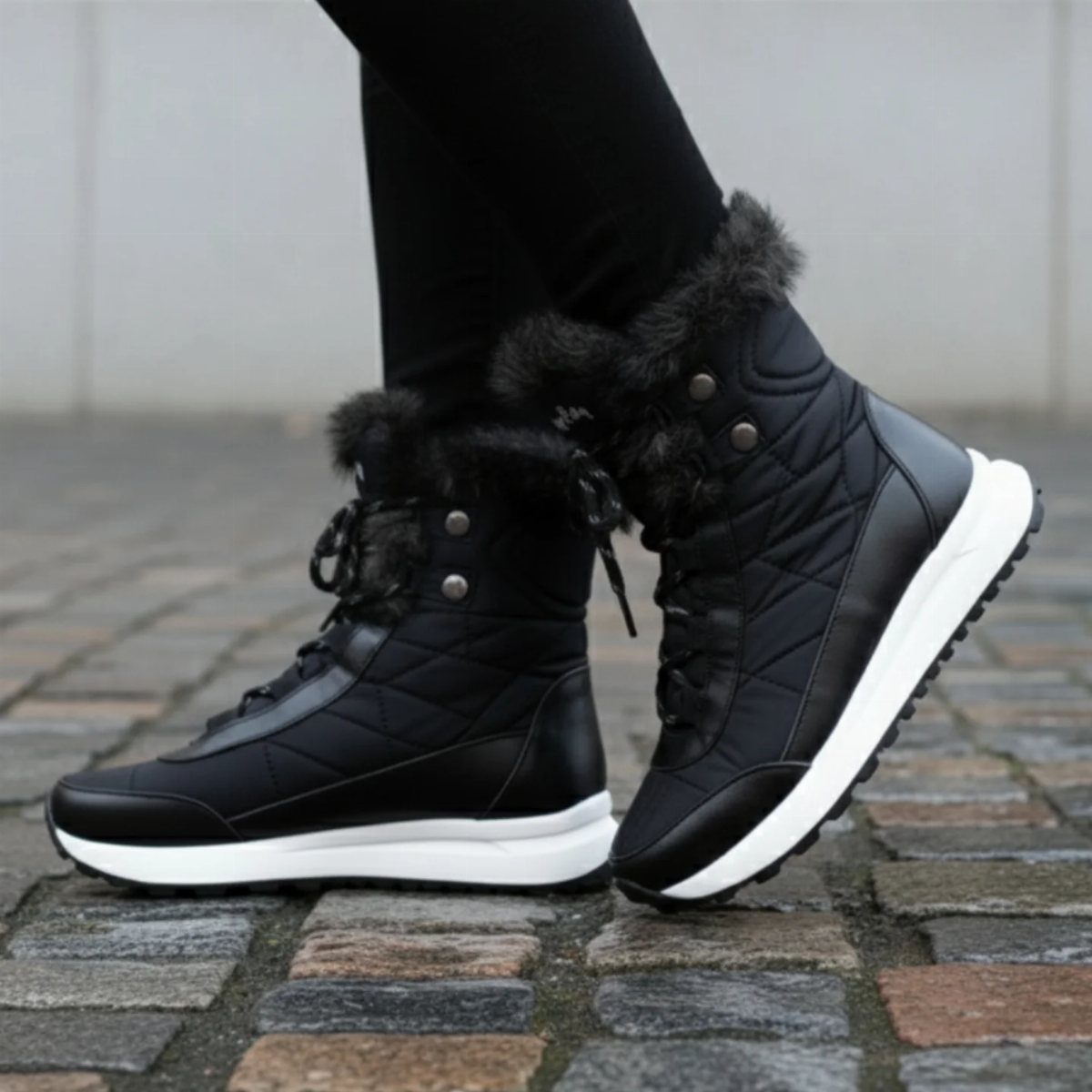
Boots ground the whole outfit, and winter is not the season for dainty. Chunky soles keep you above slush, and the visual weight balances heavy coats better than a slim heel ever could.
I wear knee-high boots most often: they bridge the gap between hem and pavement when skirts get involved, and they make leggings feel like an actual choice rather than a default.
Combat boots work when the rest of the look needs softening. A floral dress with thick tights and lug soles reads intentional; the same dress with ballet flats reads confused.
Ankle boots are the practical minimum, but check where the shaft hits your calf. Too short and they truncate the leg; too tall and they fight with skinny jeans.
Ankle-height boots hit the forgiving zone, where the leg narrows and the silhouette stays clean.
4. Winter Dresses
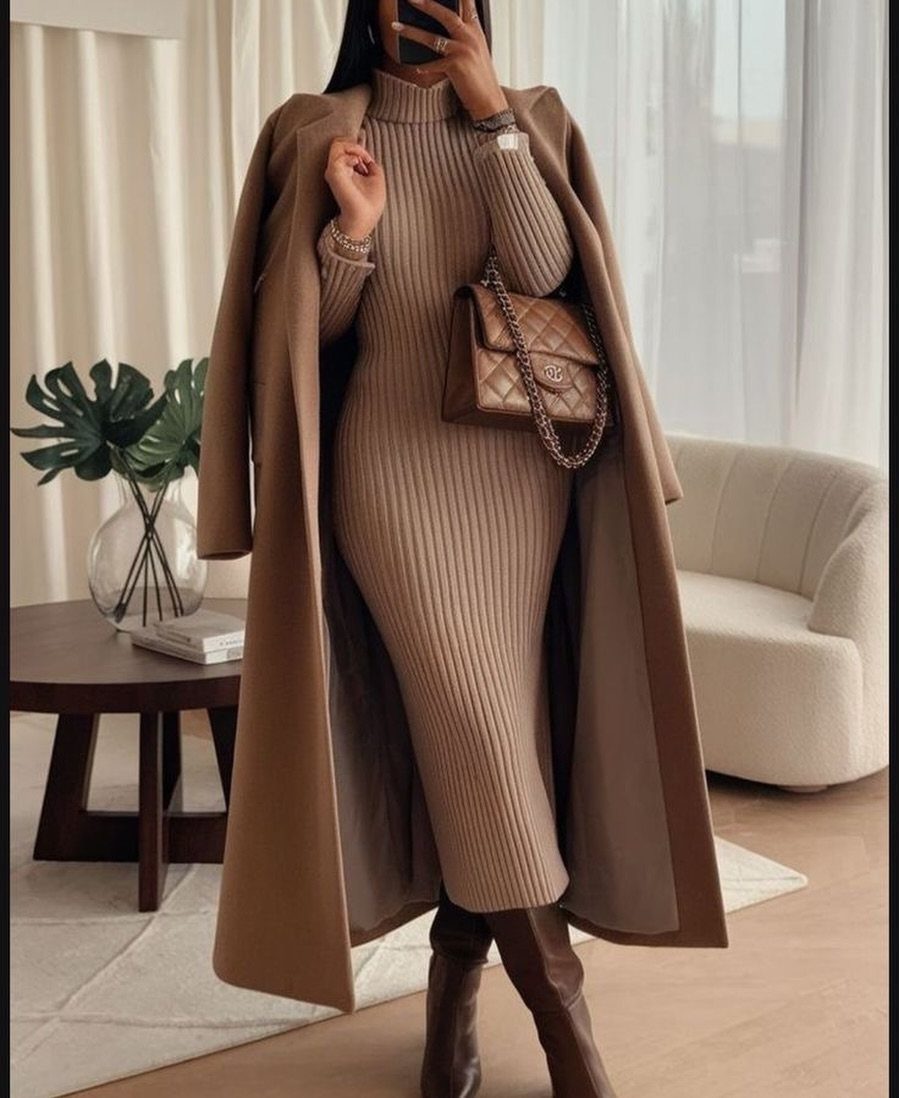
Knit dresses solve the winter problem of wanting to wear one thing and actually needing to wear four.
A ribbed turtleneck maxi like this one needs only a coat draped over the shoulders and boots to feel complete; the texture does the work that pattern would do in summer.
I layer knee-high boots underneath for warmth and proportion, though tights work if the boots are ankle height.
Midi lengths need more thought.
A shorter dress with a sweater layered on top can read as two separate outfits fighting each other, so I match the sweater’s weight to the dress’s fabric: thick with thick, or deliberately sheer over substantial.
Shirt dresses under long coats streamline the silhouette rather than breaking it. The common mistake is treating winter dresses like summer ones with a jacket thrown on.
They need to be chosen as winter pieces from the start.
5. Casual Winter Outfits
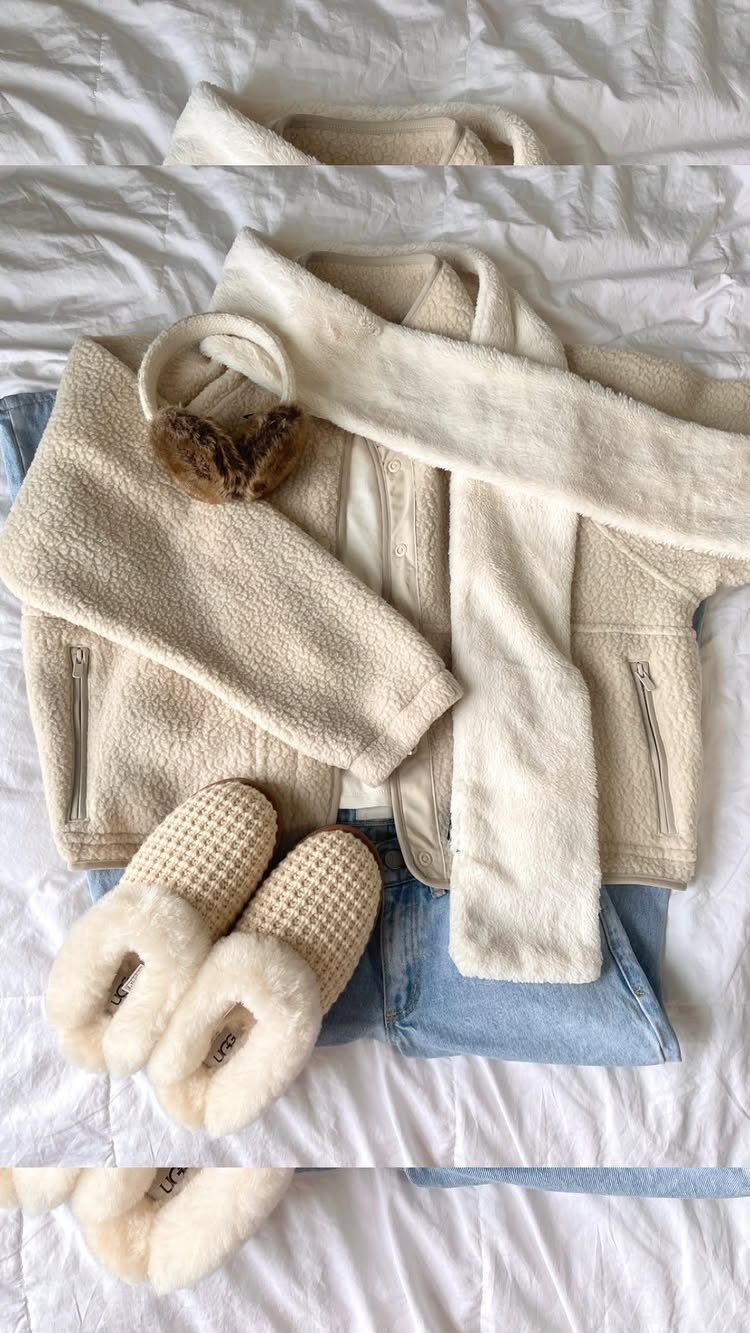
The best casual winter outfits borrow from sleepwear without actually being pajamas. Fleece jackets, shearling-lined slippers, oversized scarves: these are comfort items that photograph well because their textures read as intentional.
I pair a cream fleece like this one with light-wash denim to keep the palette clean, and add earmuffs when a hat would flatten my hair.
Dark wash skinny jeans with a wool coat and sneakers is the formula I repeat most. The sneakers keep it from feeling like I’m trying too hard; the dark denim keeps it from looking like I gave up.
Scarves add the warmth that the coat’s open front loses. Softer fabrics all over work for home or a very casual coffee run but start to look underdressed if you add a structured bag or jewelry.
Pick a lane and stay in it.
6. Colorful Winter Outfits
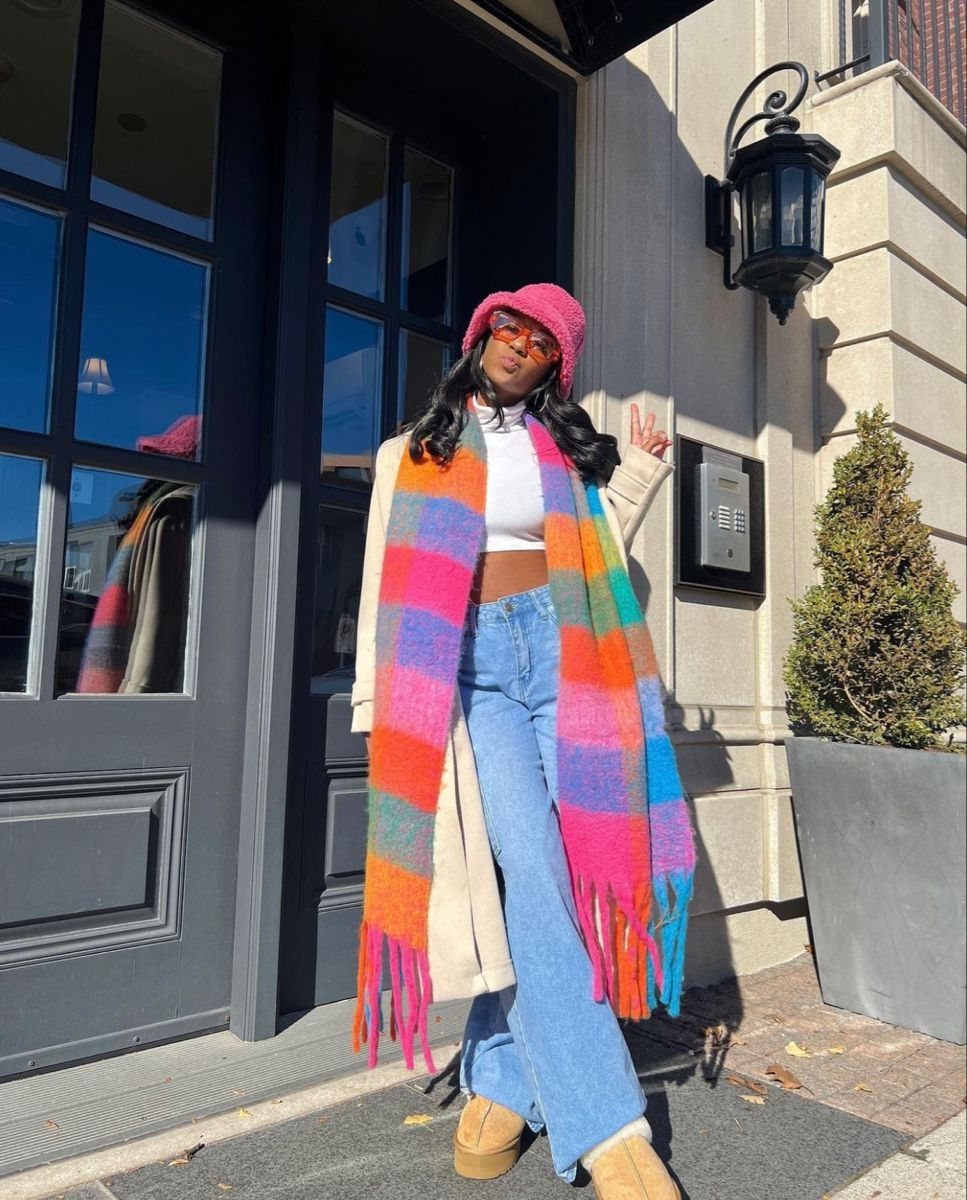
Winter color is about placement, not volume. A bright pink hat with a neutral coat pulls the eye up and makes the face the focus; a full pink coat demands everything else quiet down.
I use color in accessories when I’m not sure about the mood of the day, and in outerwear when I want to commit.
The rainbow scarf here works because the base outfit is nearly monochrome. White top, blue jeans, cream coat: let the scarf carry the color.
Reverse that ratio and you look like you’re wearing every gift you received at once. Light colors and pastels read fresh against grey skies, though they show salt and slush faster than black or camel.
I save my pale coats for days after fresh snow, when the streets are still clean.
7. Mixing Textures
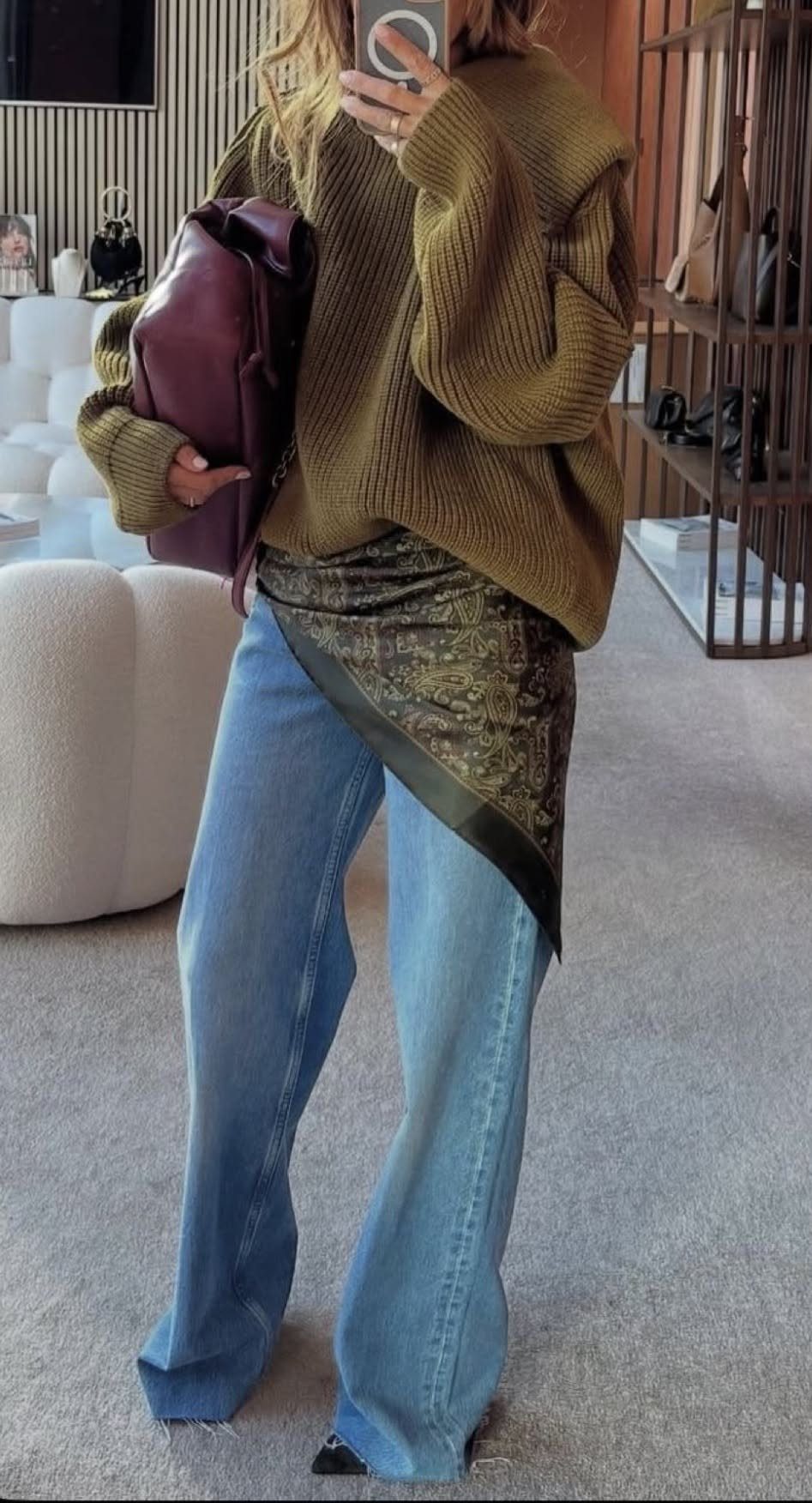
Texture mixing turns a basic sweater-and-jeans uniform into something that holds attention without adding bulk.
The olive knit against denim here already has two textures going; the silk scarf at the waist and the leather bag add two more without crowding because each piece stays in its own zone.
I keep the shine to one item, the rough to one, and let the rest play support.
Too many competing surfaces and the eye gets tired fast. A safe start: pair one chunky knit with one smooth leather or waxed cotton piece, everything else matte and quiet.
Wool with denim works the same way; the denim softens the wool’s formality.
This approach suits anyone whose winter wardrobe has gone flat but who does not want more volume. Time getting dressed stretches out when you are balancing textures rather than grabbing a single fabric head to toe.
8. Long Skirts in Winter
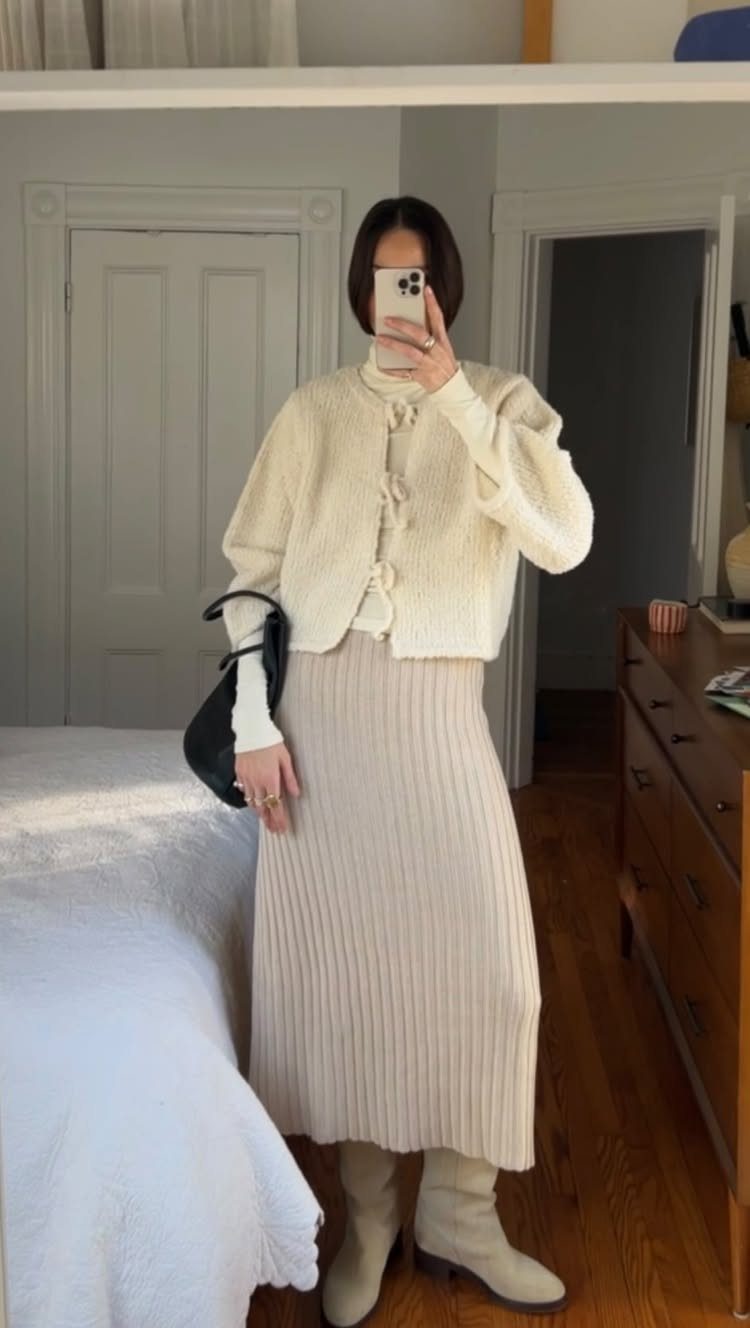
A long skirt in winter only works if the fabric has enough weight to stand on its own.
A ribbed knit thick enough to keep its shape through a day of sitting and walking reads as intentional in cream rather than leftover summer.
I would add tights underneath once the temperature drops; the boots need to hit at least mid-calf to keep the proportion from dragging.
Denim and wool maxis behave the same way. What fails is thin jersey or anything that clings to leggings underneath; it reads as a mistake, not a layer.
Knee-high boots solve the shoe question that stops most women from trying this. Ankle boots cut the line awkwardly unless the skirt hem is several inches above, which defeats the warmth.
Best for pear shapes wanting length without pants, or anyone bored of the sweater-jeans loop. Wind is the real problem; a slit turns practical in a long skirt you actually walk in.
Importance of Layering
Thermal base layers sit closest to skin, so the fabric matters more than the color. A fitted thermal shirt or leggings traps heat without adding the bulk that would show under a slim knit.
The second layer is where the texture lives: a chunky sweater or cardigan that reads as intentional from across a room. The coat finishes the job, but its shape only works if the layers underneath cooperate.
Thin layers beat heavy ones; each piece needs a reason to be there.
I keep the base layer smooth, the middle layer textured, and the outer layer structured. The result reads as depth rather than pile.
Volume should come from one layer only, usually the knit. Two bulky pieces and the silhouette goes rectangular fast.
Choosing the Right Footwear
Boots anchor winter outfits in ways sneakers cannot. Platform soles add height and distance from wet pavement both.
The sole thickness matters as much as the shaft height. I check that the boot shaft hits at a narrowing point on the leg, never at the widest part of the calf where it truncates the line.
Over-the-knee boots pair with shorter hems, but the look turns costume quickly; I stay with knee-high or below for most days.
Color Choices for Winter
Black, camel, grey, white, and brown form the backbone of a winter wardrobe because they mix without negotiation.
I add one bold color at a time, red or green or cobalt, and I add it through a single piece: a hat, a scarf, a coat.
The rest of the outfit stays in the neutral range so the bright element reads as choice, not accident.
Patterns work the same way. One piece carries the pattern, the other stays solid, and the eye has somewhere to land.
I avoid wearing every bright piece I own at once; the rainbow effect works on a single accessory against a quiet base, not as a personal challenge to wear it all.
Frequently Asked Questions
What is the 3-3-3 rule for clothes?
I have never followed a 3-3-3 rule and do not find it useful enough to recommend.
The piece focuses on texture mixing with a simpler approach: pair one chunky knit with one smooth leather or waxed cotton piece, keep everything else matte and quiet, and let each texture stay in its own zone so the eye does not tire.
What are some trendy winter outfits for 2026?
Long brown wool coats hitting mid-calf, oversized cuts sized up for layering, ribbed turtleneck maxi dresses with knee-high boots, and cream fleece jackets paired with light-wash denim are the directions I am watching for 2026.
Chunky-soled boots balance heavy coats, while texture mixing with one shiny piece and one rough piece keeps basic sweater-and-jeans combinations interesting without adding bulk.
What should I wear in extremely cold weather?
Layer thick knits under oversized coats sized up specifically for that purpose, add knee-high boots over tights or leggings, and wrap a thick oversized scarf twice for warmth.
What to wear instead of jeans in winter?
Long skirts in heavy fabrics like ribbed knit, denim, or wool maxis work when paired with mid-calf or knee-high boots to maintain proportion.
Knit dresses, especially ribbed turtleneck maxis, solve the layering problem by needing only a coat and boots to feel complete. When dark wash skinny jeans feel tired, skirts and dresses are the alternatives I reach for first.