These ten ideas run from a knit pencil skirt that costs little more than weekend wear to a full monochrome set with gold earrings and a structured burgundy bag, and the one that belongs to you depends on whether your office still expects a skirt, bans denim, or treats Friday as nearly off-duty.
The common thread is that every piece solves a work problem first: a hidden elastic waist in wide-leg black trousers removes the afternoon gape, a wrap cardigan in stretch knit adjusts across a freezing conference room to afternoon sun, and a utility jacket’s structure keeps dark rinse jeans from reading weekend.
1. Pencil Skirt and Knit Top
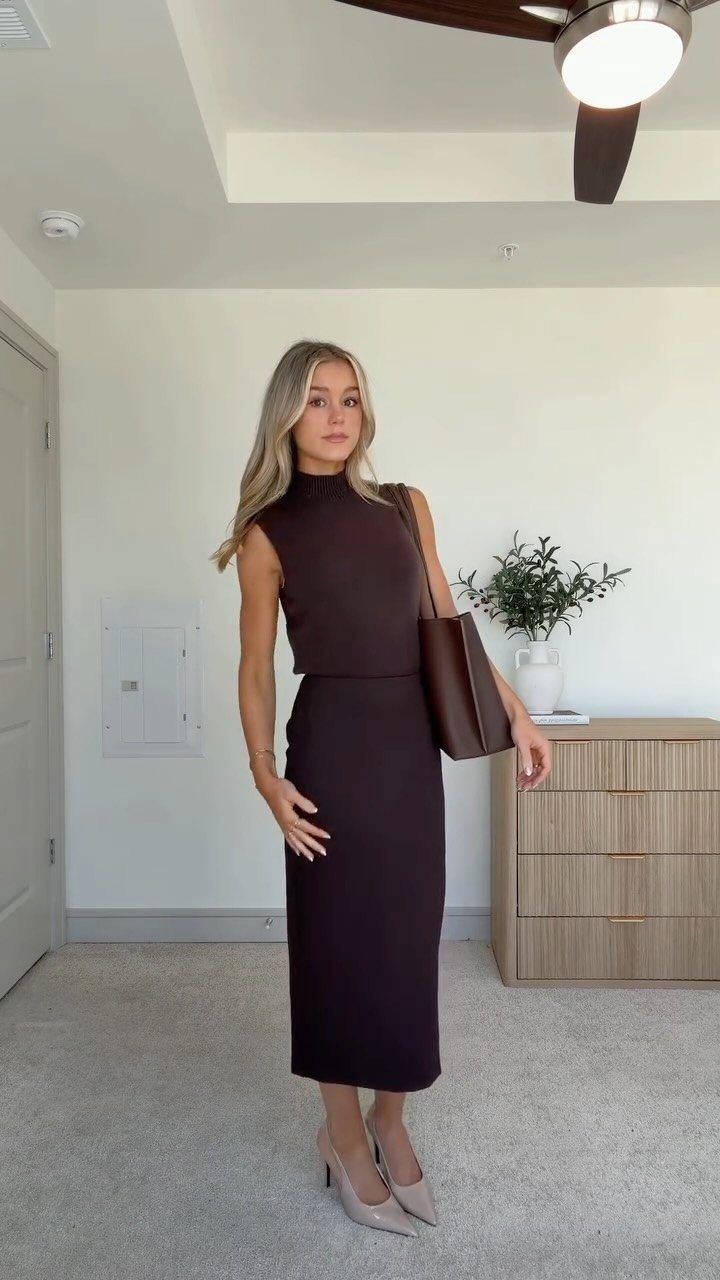
A sleeveless knit top and matching midi pencil skirt in chocolate brown reads boardroom without trying too hard. The knit fabric gives where a woven shell would pull, so sitting through a long meeting stays comfortable.
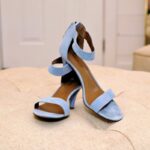
Pointed heels in a warm neutral elongate the line; a structured tote in the same family keeps the palette quiet.
This works best in offices that still expect a skirt, not a suit. The matching top and skirt sidestep the blouse-tucking problem entirely.
For a cooler building, a cropped blazer in camel or black slips on without swallowing the shape.
2. Utility Jacket with Jeans
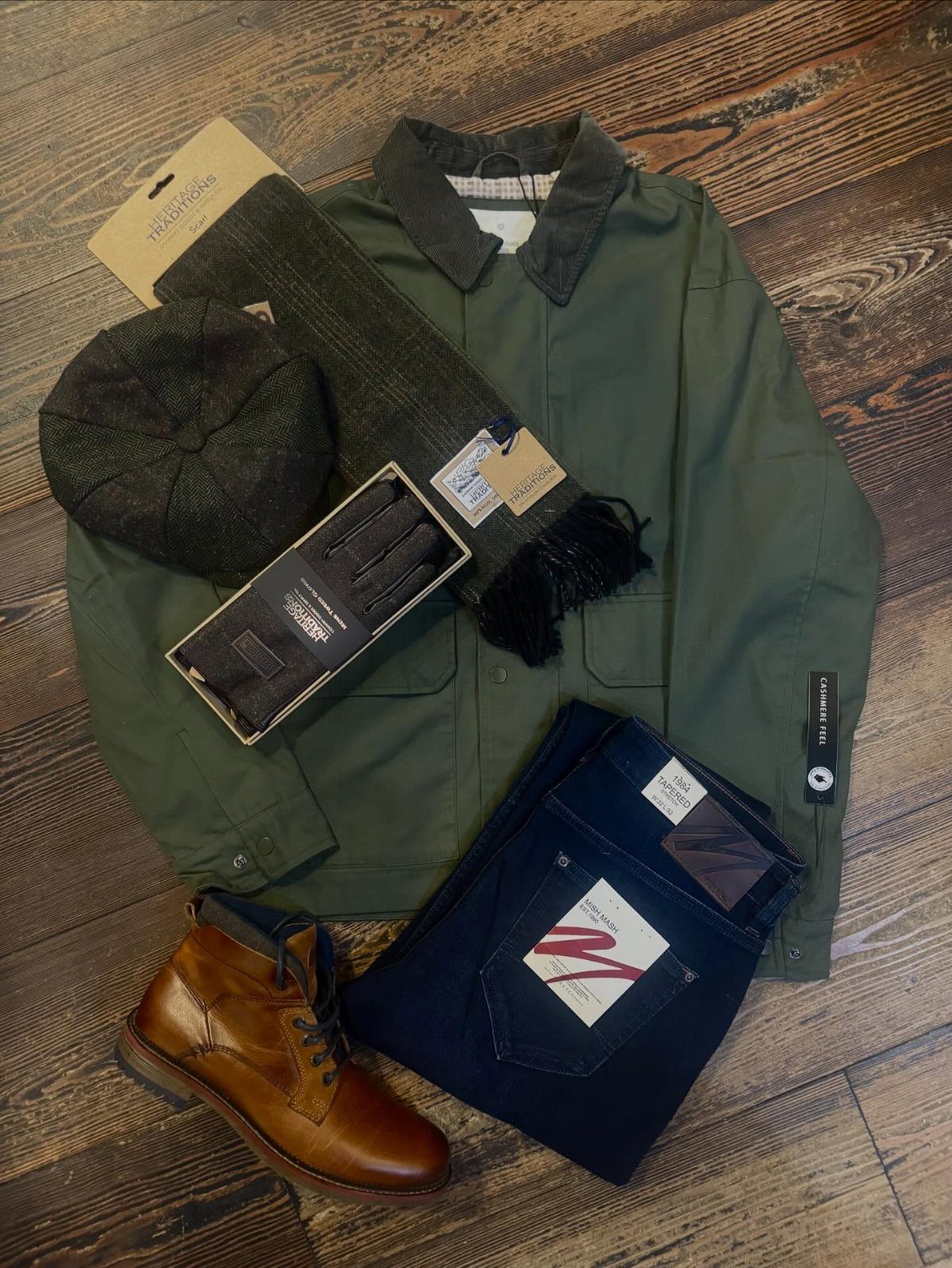
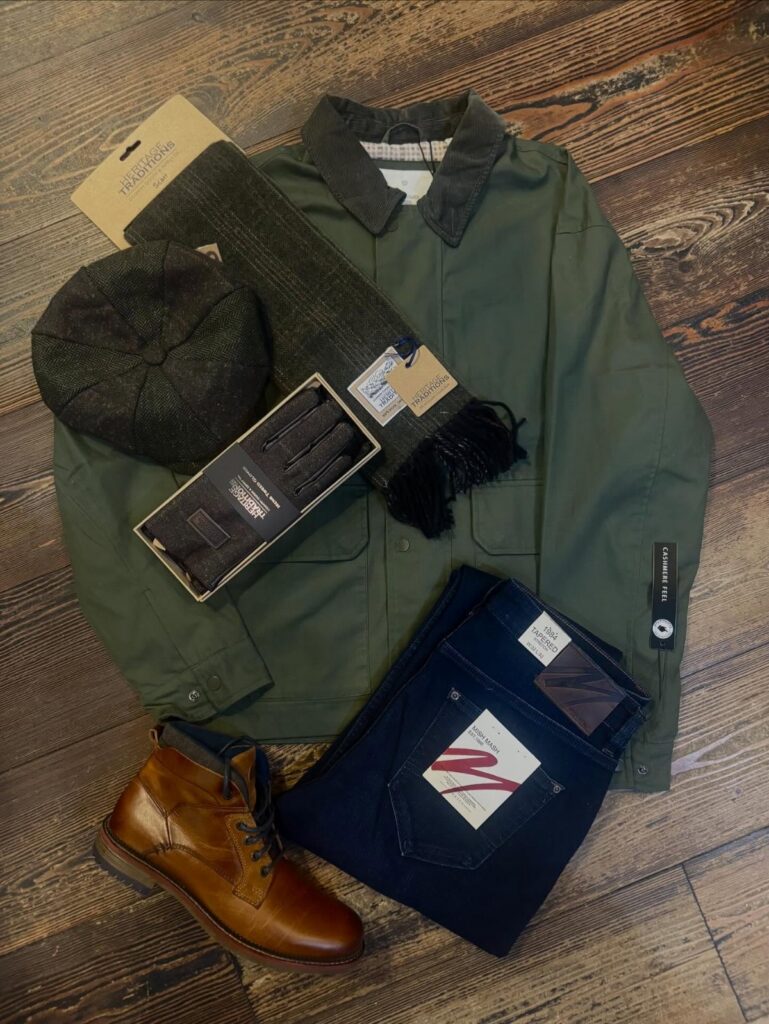
Olive green utility jacket, dark rinse jeans, and leather boots: the Friday uniform that still looks like you planned it. The jacket’s structure does the work here; without it, the same pieces read weekend.
Dark jeans matter more than the wash you prefer on Saturday. A slim straight leg or cropped cut keeps the silhouette intentional, and boots with a small heel or clean lug sole lift the casual base.
Scarf, cap, and gloves in deep tones pull the look together in cold months. Check your office’s actual Friday standard before committing.
Some workplaces mean "no suits" and still ban denim; others treat this as almost off-duty. The boots should be the nicest shoes you own in casual.
3. Dress Pants with Elastic Waist
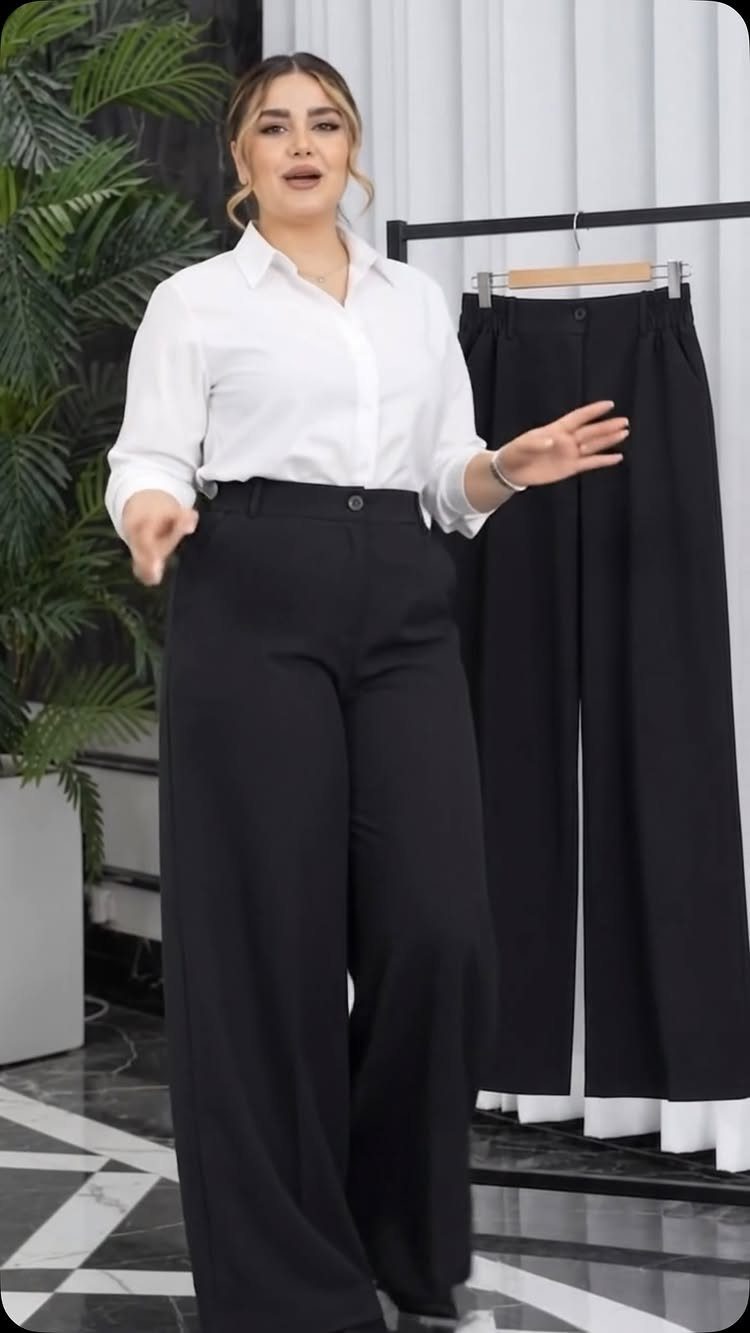
Wide-leg black trousers with a hidden elastic waist look like proper dress pants because they are. High-waisted cut matters: it sits at your natural waist so the fabric drapes rather than pools.
These trousers suit anyone whose weight shifts through the month, or who sits for long stretches. The elastic removes the gaping or digging that traditional pants develop by afternoon.
Check that the front stays flat when you move; some versions gather where the elastic meets the zip.
4. Casual Work Outfits
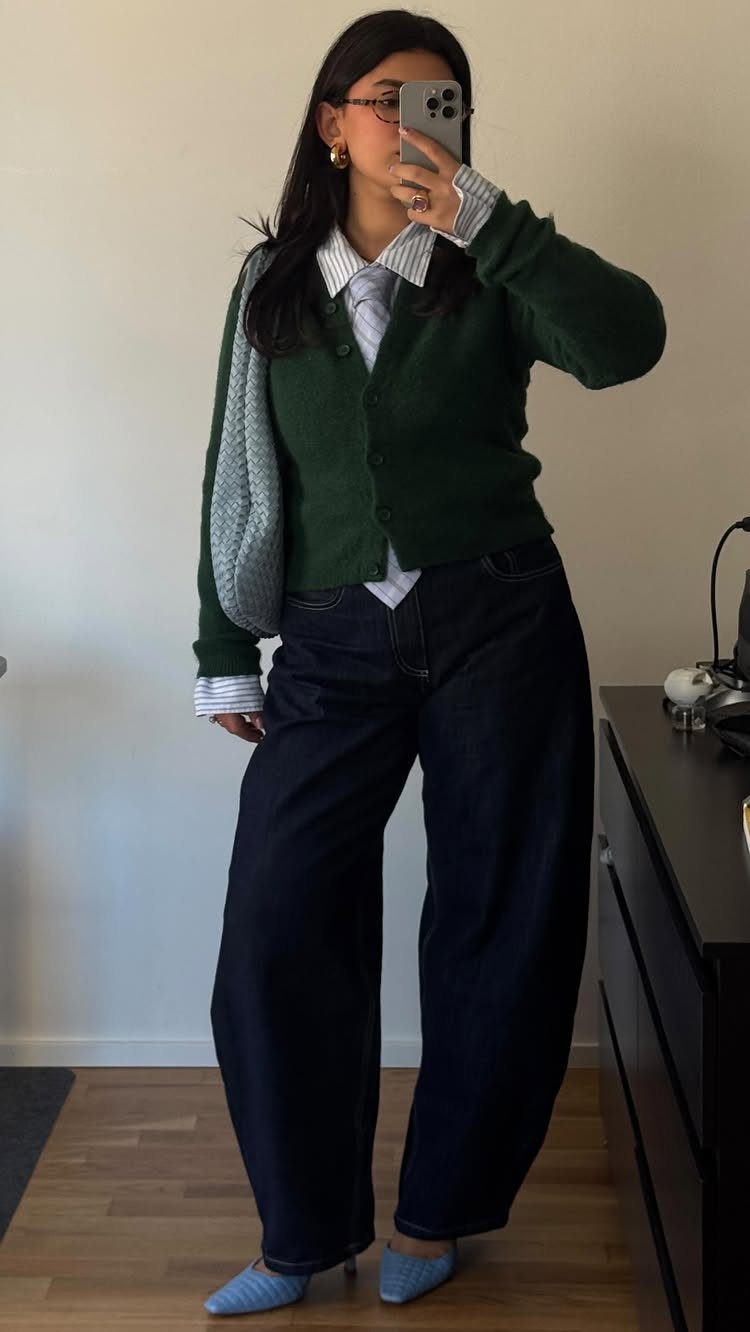
A collared shirt and tie under a soft cardigan, with wide-leg dark denim and pale blue flats: this is the casual office outfit that borrows from menswear without borrowing its stiffness.
The tie and collar signal intent; the cardigan and jeans keep it approachable. Light blue flats pick up the shirt’s formality and drop the heel height.
Madewell built its name on denim that works exactly like this, and their blazers and sweaters fill out the rest of a casual wardrobe without drifting into weekend territory. Contrast keeps one piece reading as work.
Here it’s the tie. In a more formal office, swap the jeans for navy ponte pants and the cardigan becomes your soft layer instead of your cover story.
5. Wrap Cardigan with Black Pants
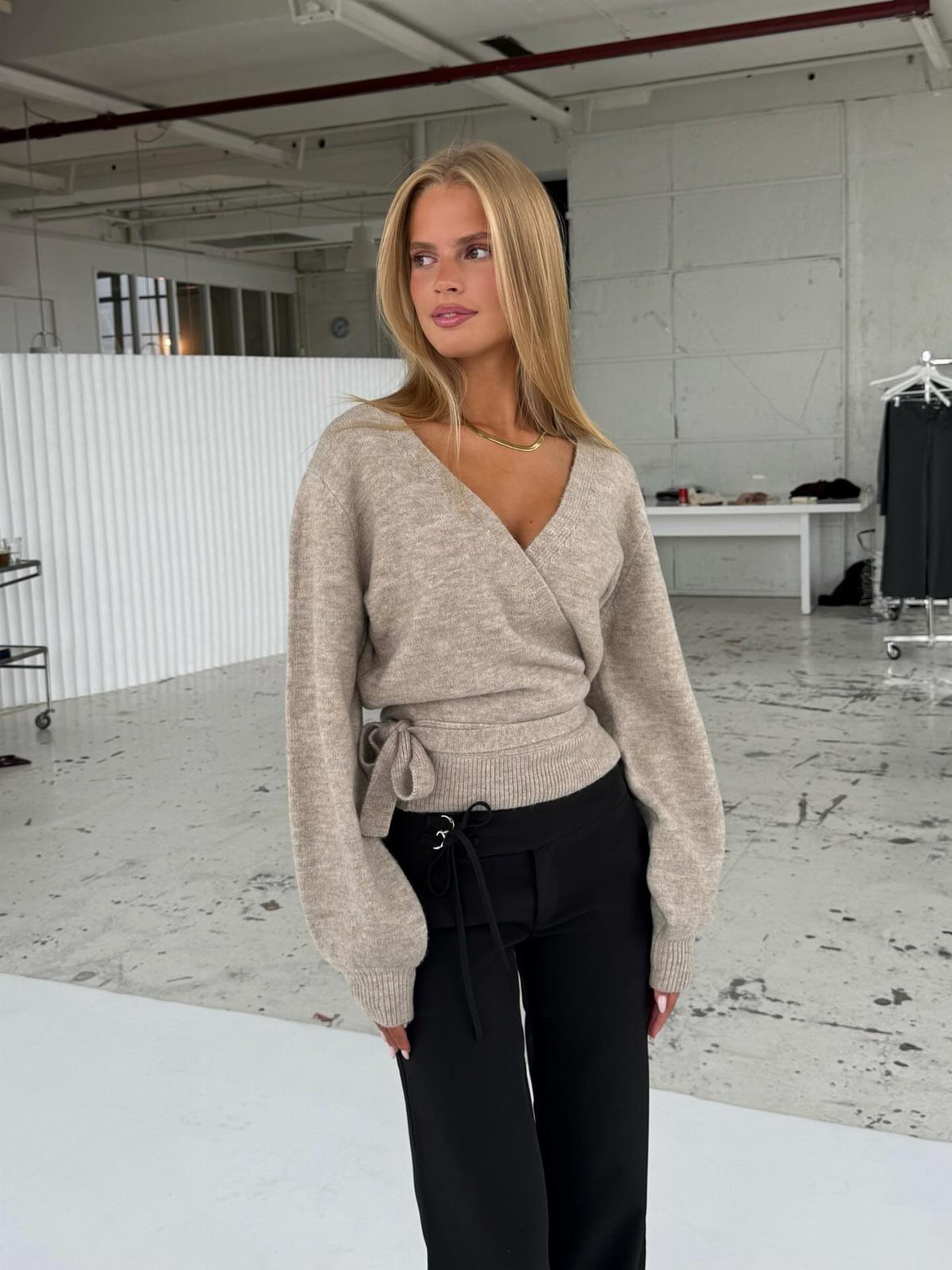
A wrap cardigan in stretch knit, tied at the waist and paired with tailored black trousers, solves the office temperature problem while keeping a shape.
The wrap lets you adjust coverage across a day that starts in a freezing conference room and ends in afternoon sun. Stretch fabric means the tie stays put without bulk.
Black high-waisted trousers ground the softness; without them, the cardigan drifts toward lounge. The waist tie hits at the narrowest point, which helps if you carry weight in your midsection.
LOFT and similar brands stock these in neutrals that layer under a blazer when you need one. Size for the shoulders; the wrap adjusts everywhere else.
6. Monochromatic Outfit
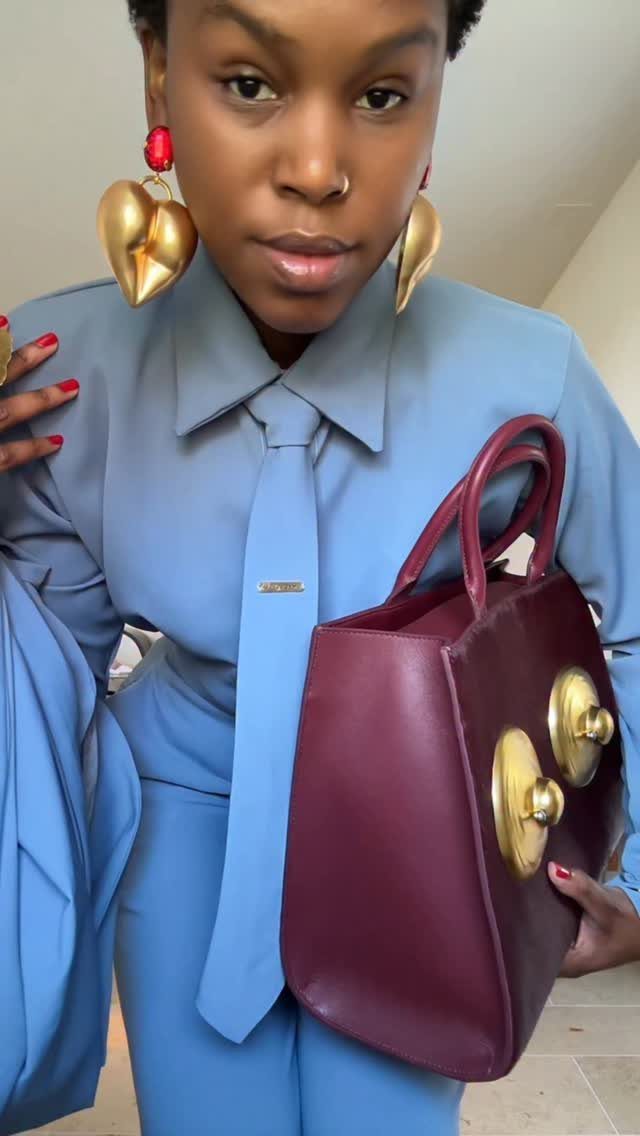
The burgundy bag and gold earrings break the field just enough; without them, the look flattens. White sneakers would push this toward sporty, but the heart-shaped earrings and structured bag keep it polished for a creative or casual office.
Monochrome works best in soft colors; navy or black risks looking like a uniform you didn’t choose. The fabric textures should vary slightly so the eye has somewhere to land.
A silkier trouser against a crisper shirt does this without effort. Check the shade in daylight before buying; indoor lighting flatters colors that read muddy outside.
7. Pinstripe Pantsuit
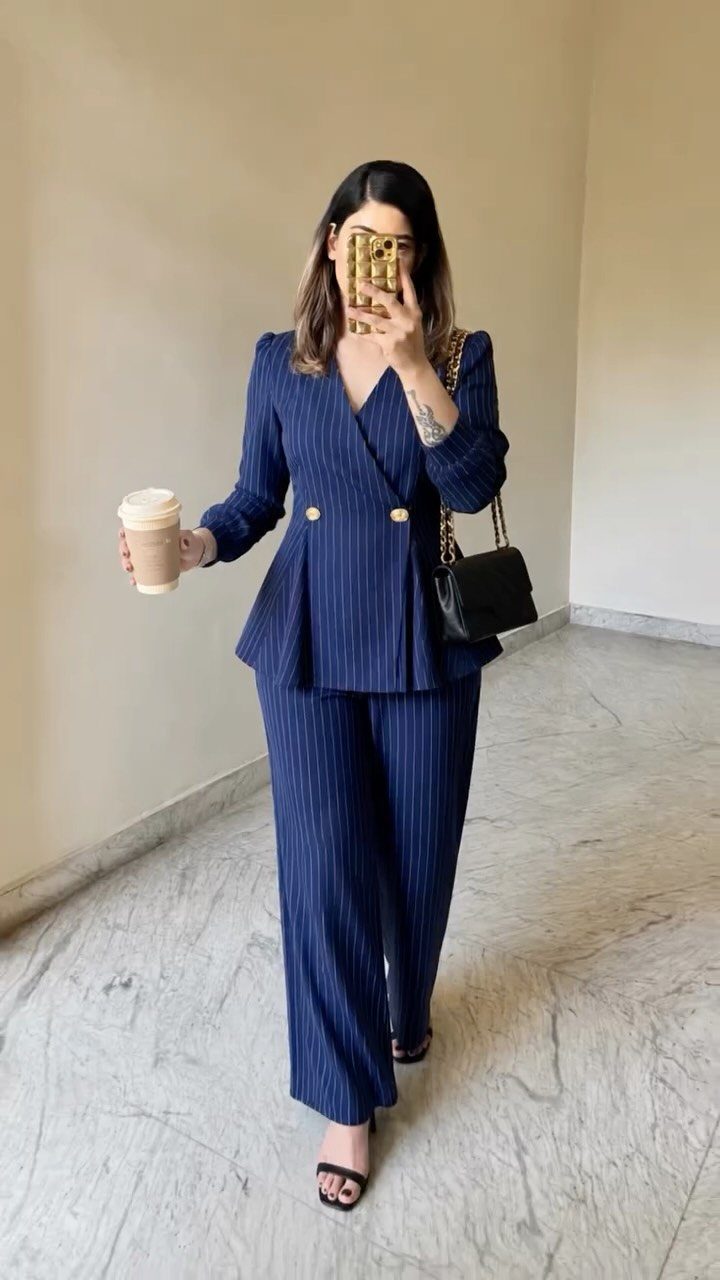
Pinstripe tailoring still signals authority without the stiffness of a solid dark suit. The vertical stripe does the leg-lengthening work; wide legs keep it from feeling like a uniform.
Gold buttons warm up navy and give you something to build accessories around. I’d keep jewelry small and let the stripe run uninterrupted.
This one suits anyone whose office still expects full suiting but who wants out of basic black. The matchy-matchy cut is the tradeoff: you commit to the full set or the effect breaks.
8. Navy Blazer with Beige Trousers
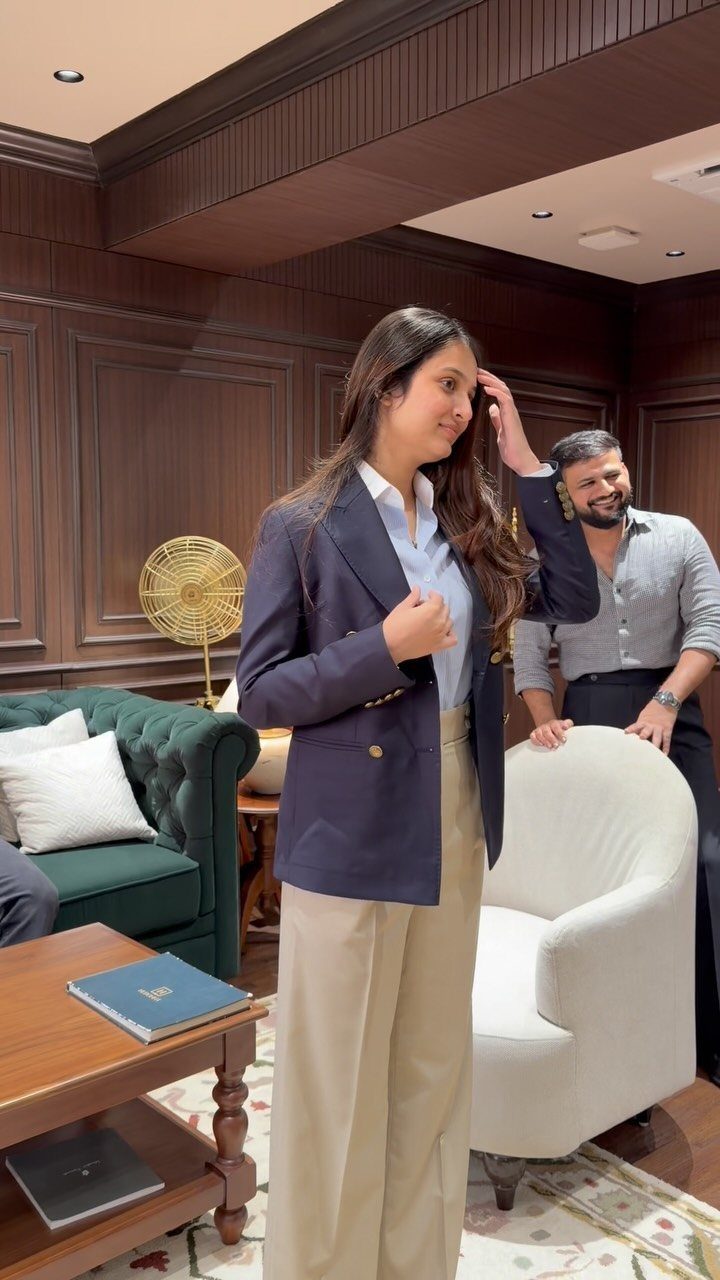
Navy and beige pair like they were made for each other. The blazer borrows authority from tailoring; the trousers soften it with a wider leg and a color that reads approachable.
A white shirt underneath keeps the contrast clean. For my own closet, I’d swap in a cream silk if the office runs casual; the structure still holds.
This combination works across more dress codes than almost anything else here. The only limit is the blazer’s shoulder fit; everything else can be adjusted.
9. White Sheath Dress
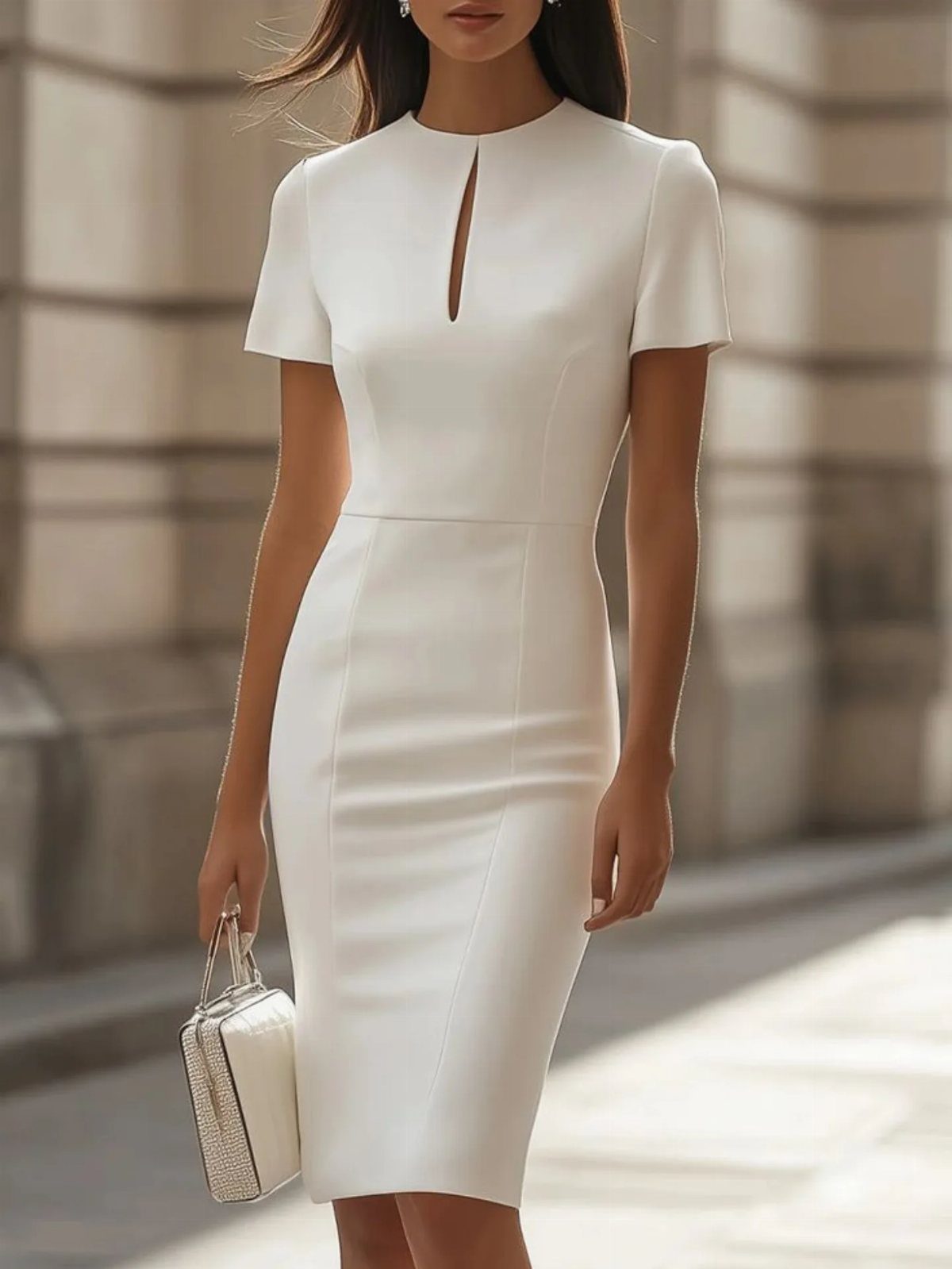
A white sheath dress is the one-piece answer to "I have nothing to wear." A keyhole neckline keeps a white dress from looking ceremony-bound, and short sleeves remove the need to find a matching jacket.
For summer in a city, this is the shape that breathes and still looks intentional. Add a leather jacket after hours and the same dress carries to drinks.
I’d check the lining before buying; white shows every shadow underneath. Petite readers should watch where the hem hits; a true sheath can run long and lose its crispness.
10. Belted Brown Midi Dress
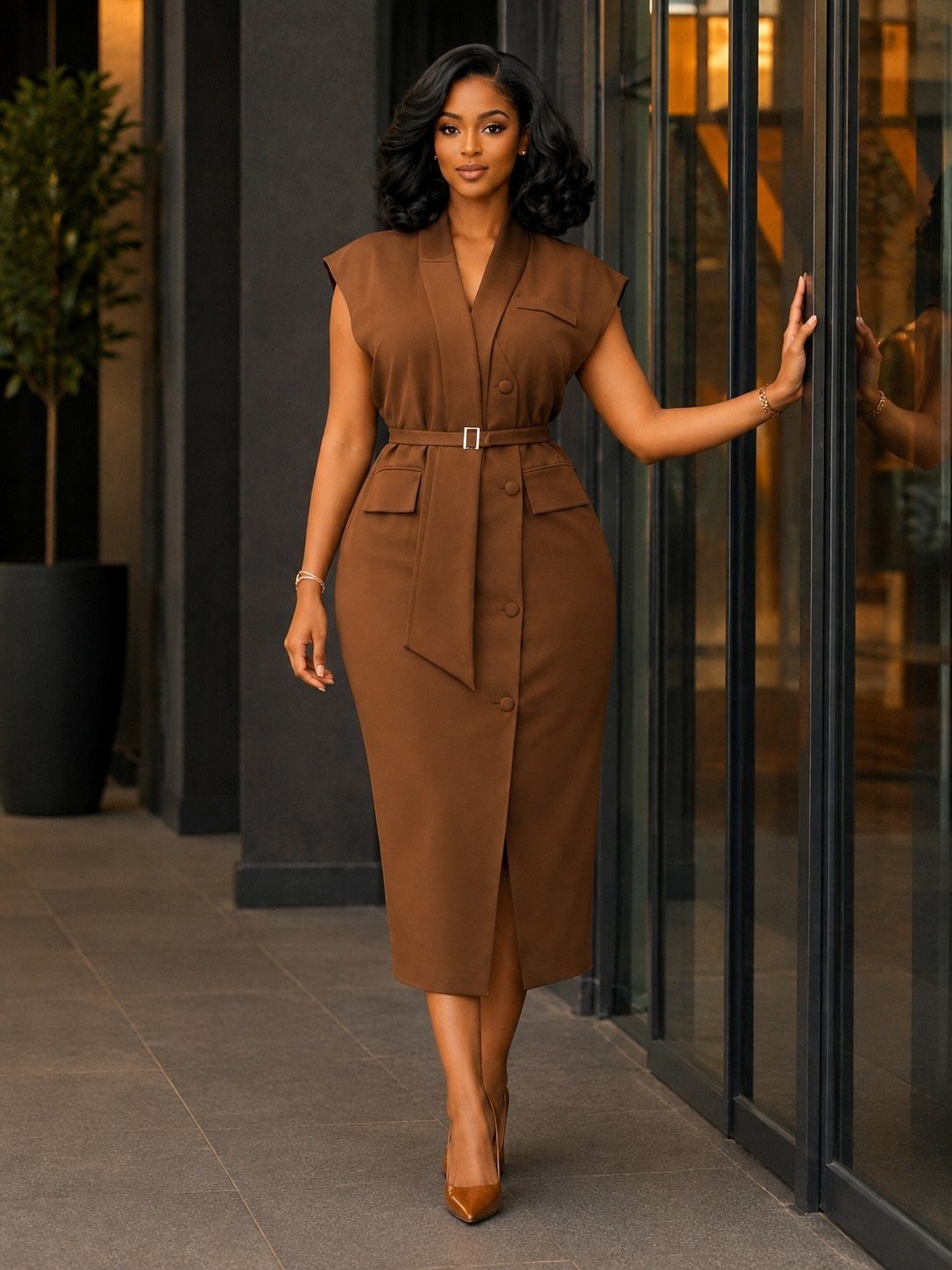
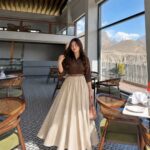
Brown in a midi length feels fresh when black starts to bore you. The matching belt pulls the waist in without extra hardware; pointed heels finish the line.
For fall, I’d swap the heels for booties and throw a leather jacket over. The dress stays the same; the season changes around it.
Sleeveless means layering is built in. The color flatters warm undertones most directly, though camel and chocolate both read as neutral in most offices.
11. Lace Blouse and Cropped Trousers
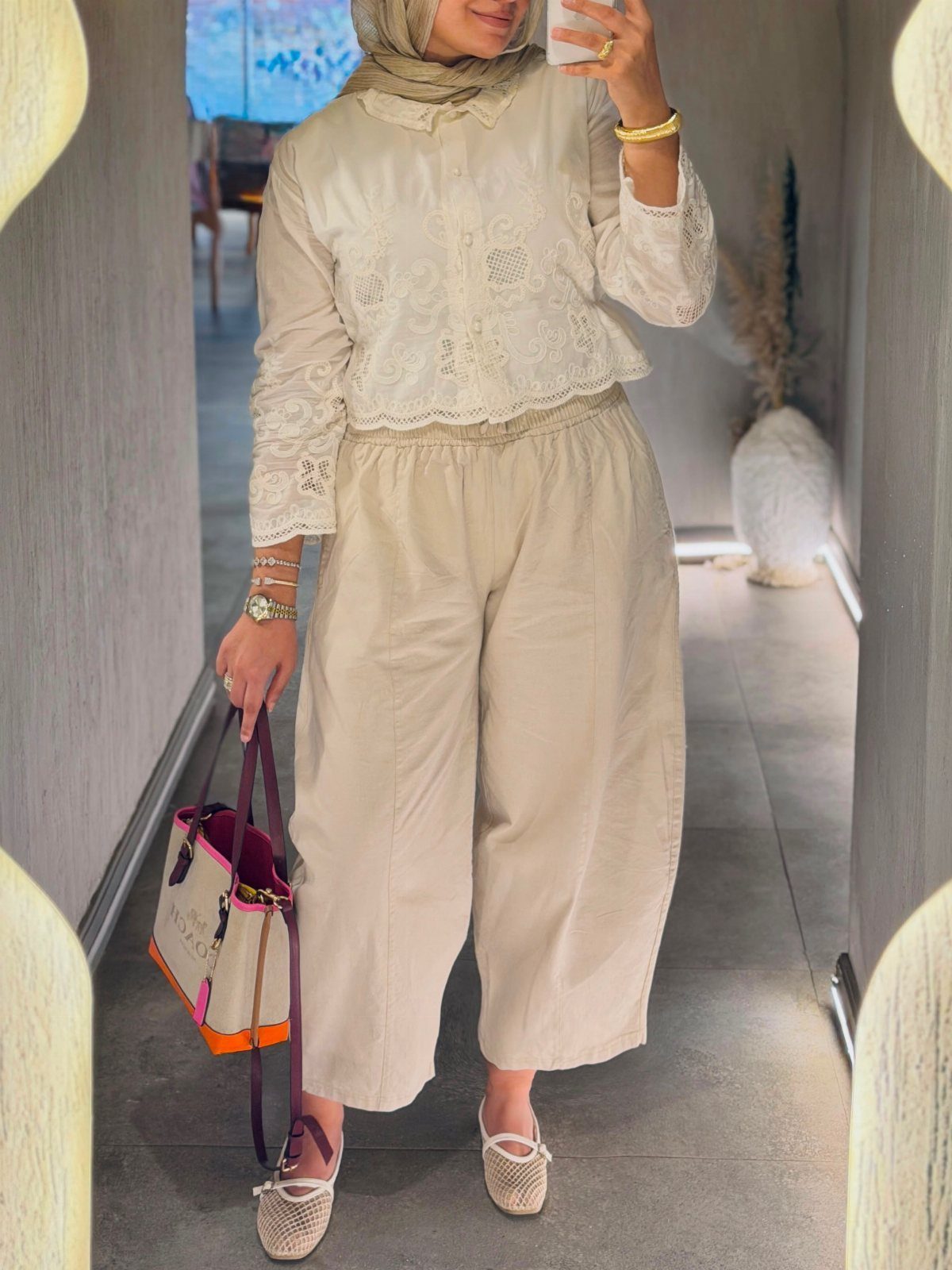
Lace at work walks a thin line. Geometric lace reads more office than floral, as long as the lining underneath is opaque enough.
Wide-leg crops that sit above the ankle ground the detail up top. I’d keep the shoe simple; mesh flats do the job without competing.
This pairing suits someone whose office allows personality but still expects polish. The lace is the statement; everything else supports it.
A solid tote grounds the look and carries what you actually need.
12. Button-down Shirt and Beige Trousers
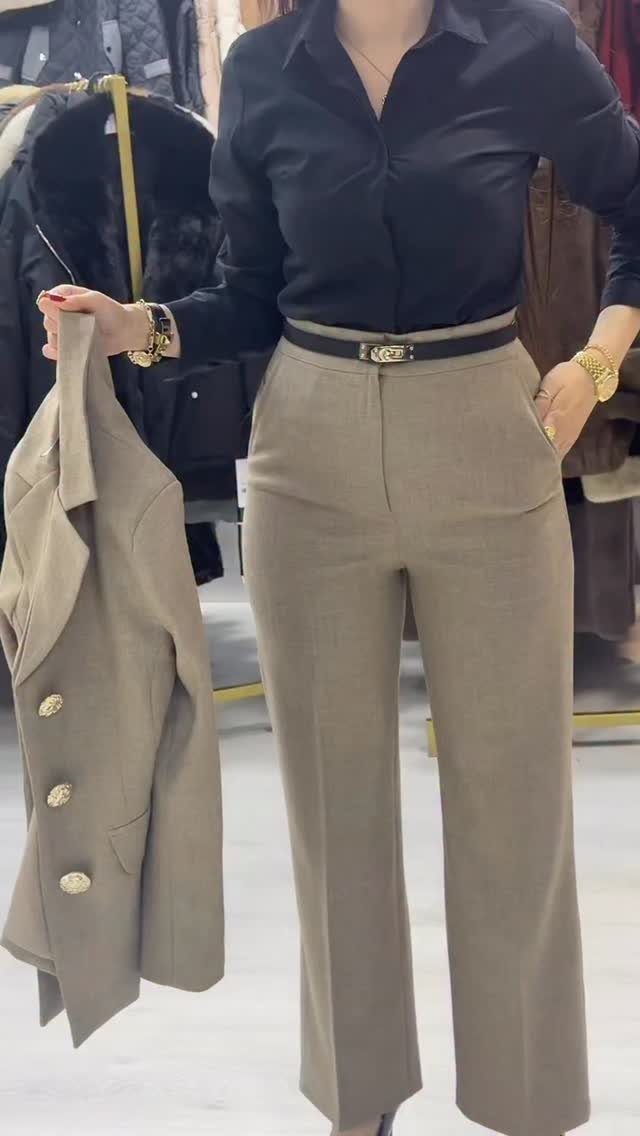
A black button-down tucked into beige trousers is the uniform I keep coming back to. The shirt should be crisp; the tuck should be intentional, held by a belt that matches nothing too exactly.
Holding the blazer rather than wearing it signals you know where you’re going. For travel, I’d hunt down a wrinkle-free weave; cotton comes out of a suitcase needing mercy, and hotel irons rarely deliver.
This is the outfit for striding into a room wanting to feel capable. The chunky heel helps; so do hoops, if that’s your thing.
Versatile Workwear Essentials
Pieces that move from a 9 AM presentation to dinner without a change of clothes save more than packing space. I look for wrinkle-resistant fabrics that still read as intentional after a flight or a long sit.
Eileen Fisher built its reputation on exactly this: wide-legged pants and clean blouses in complementary neutrals that layer and swap without clashing. A capsule of four or five of these pieces covers more ground than a closet of single-purpose items.
The cost per wear drops fast when a trouser works Tuesday through Saturday with only a shoe change.
Importance of Comfort
A waistband that digs or a sleeve that rides will pull your attention away from the work itself. I pass on anything that needs adjusting in a mirror after sitting.
Quality fabrics that hold their shape through the day matter more than the label; a cut that fits well without tugging does more for confidence than structure alone.
After-hours plans happen without warning, and clothing that transitions without a full change keeps the evening feeling possible rather than planned.
Mixing and Matching
Every piece added to a work wardrobe should earn its place by pairing with at least two items already owned. A third piece in a matching or complementary neutral extends an outfit without extending the closet.
I check whether a new trouser works with the cardigan from last season and the blazer from the one before; if not, the purchase waits.
Color has its place, but the backbone of a mixable wardrobe is a range of tones that sit near each other on the spectrum.
Trends in Workwear
Relaxed fits have taken over from the stiff tailoring that used to dominate offices; a wide leg or soft shoulder now reads as current rather than sloppy.
Bold color entered the office through brands like Boden, which pairs playful prints with cuts that still meet a dress code.
Layering is the practical side of this shift: a light knit under a jacket handles temperature swings while adding depth to the silhouette. British labels with equestrian roots have pushed countryside textures into city offices, and the look has stuck.
I would not chase a trend that requires replacing everything; instead, add one relaxed or colorful piece to existing neutrals and let the proportion shift gradually.
Frequently Asked Questions
What is the 3-3-3 rule for clothes?
No 3-3-3 rule for work outfits is covered here.
The pieces described focus on building from individual items that serve multiple purposes: a pencil skirt and knit top that match without tucking, a utility jacket that structures casual Friday pieces, or a wrap cardigan that adjusts across temperature swings.
The through-line is fewer, better pieces that handle more situations.
What are some trendy clothes for work?
Tailored blazers in soft layers, wide-leg trousers with hidden elastic waists, and wrap cardigans in stretch knits are the directions tracked. Boden carries colorful, polished takes with prints and equestrian detailing at around $99–220.
Ann Taylor pairs blazers with slim trousers, sheath dresses with flats, and blouses with ankle pants.
The common thread is structure that doesn’t sacrifice comfort: knits that give where woven shells pull, elastic that removes afternoon digging, ties that adjust without bulk.
What is Gen Z wearing to work?
Gen Z is not spoken to specifically. Madewell’s denim and layering pieces fit this space, built for offices where contrast, not full formality, carries the look.
What are the workwear trends for 2026?
2026 trends are not projected here. Bold color appears in the accessories: a burgundy bag, gold heart-shaped earrings, or the olive utility jacket against dark denim.