These 14 ideas run from a single shirtdress to full color-blocked sets, so the deciding factor is how much structure your office expects: tailored shorts hold up in business-casual environments but I would not try them in a law office, while an oversized blazer in pink or yellow does the heavy lifting anywhere creative.
The fabric weight matters on every piece; linen wrinkles through the day, which is its nature, not a flaw, and polyester holds the structure but traps heat, which defeats the purpose.
1. Shirtdresses
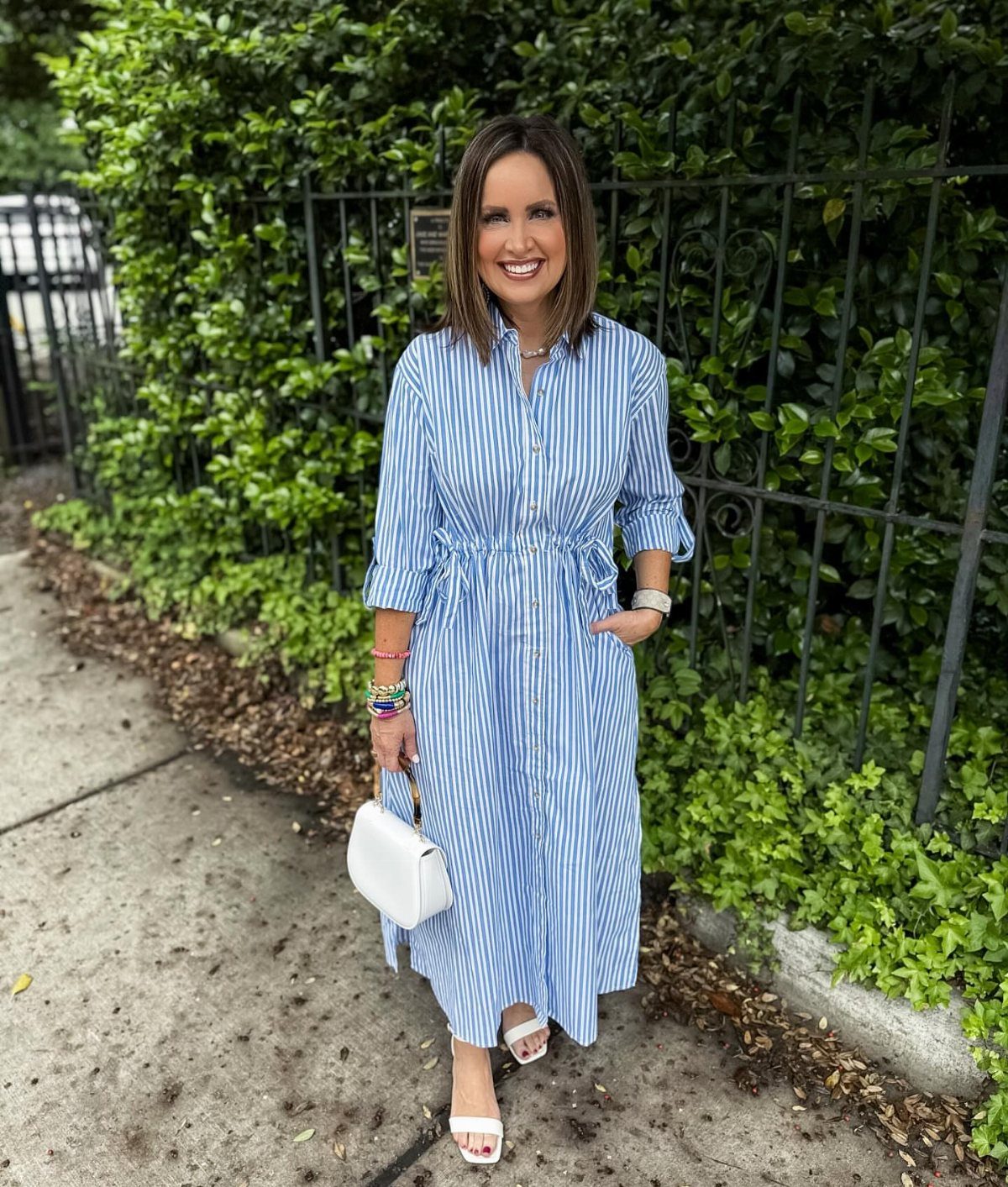
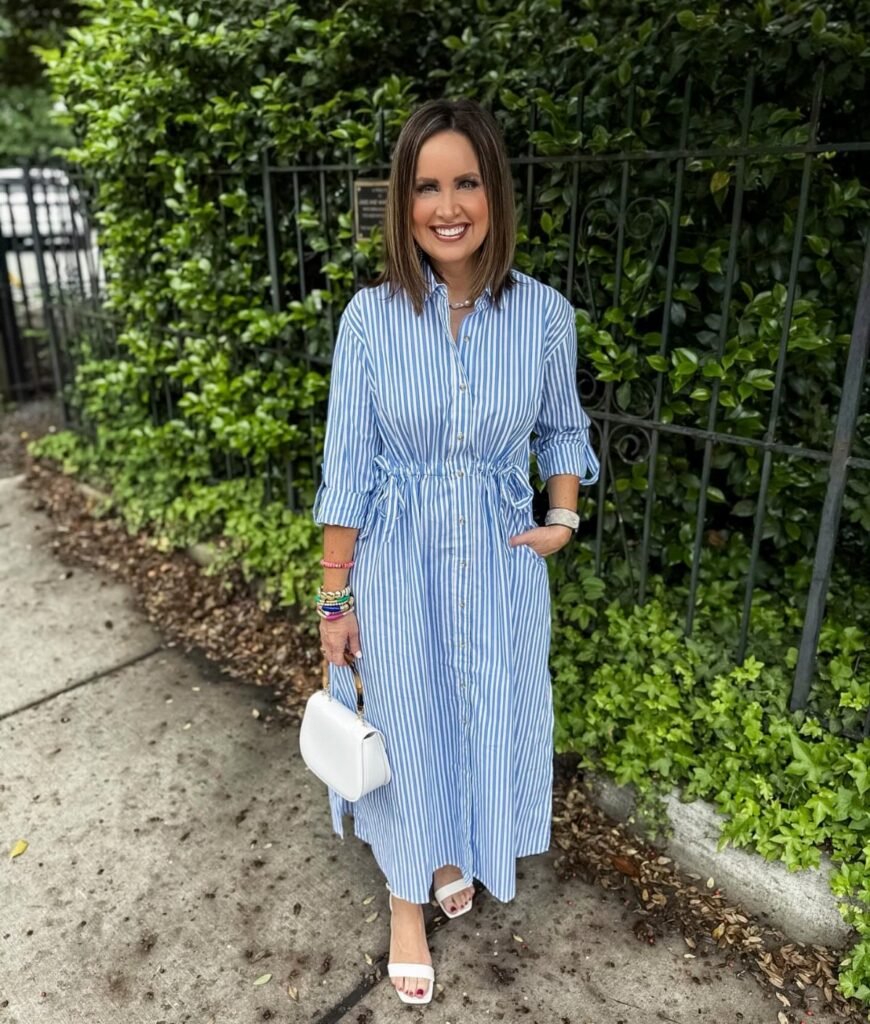
A shirtdress does the morning decision-making for you. Belt it in a contrasting color so the waist reads as intentional, not afterthought, and the whole thing shifts from errand-running to meeting-ready.
I reach for mine when the commute is already running late and the office AC will hit hard; a cotton or linen weight keeps you cool through the walk, and a cardigan tossed over the back of your chair solves the afternoon freeze.
The stripe direction matters more than the stripe width: vertical lines carry the eye up, which is the point of this shape.
Sleeve length is your call, but rolled cuffs look deliberate only when they stay put, so check the fabric weight before you buy.
2. Tailored Shorts
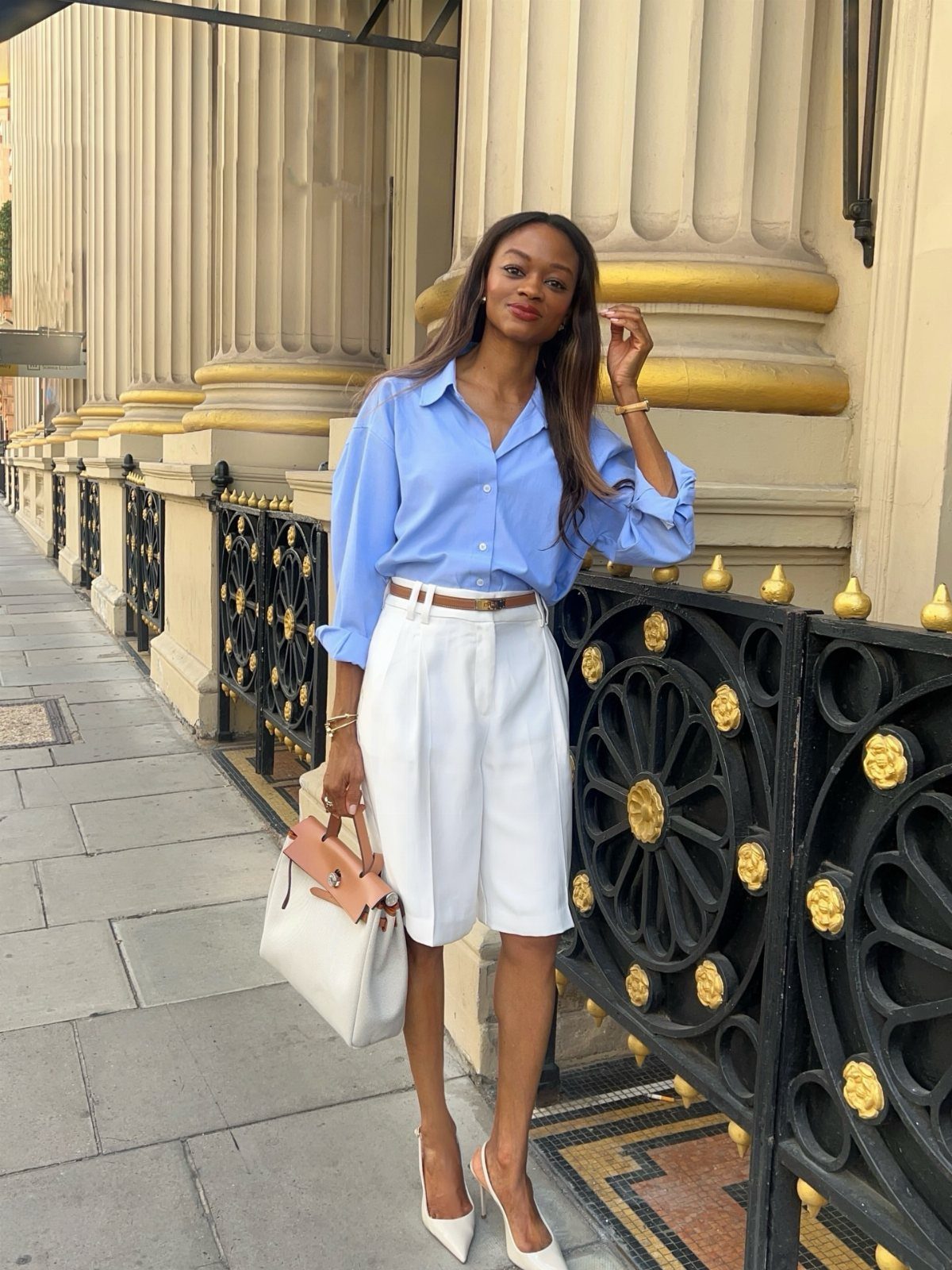
Tailored shorts land you in the right zone only when the length does the arguing for you. Knee-length shorts with a structured fabric that holds a crease read as office-appropriate rather than weekend casual.
Tuck in a light button-down, add a belt that matches your shoes, and the line from shoulder to hem looks continuous.
I would not try this in a law office, but for most business-casual environments the look holds up if the shorts are lined and the color stays neutral.
White is the riskiest shade here; any scuff shows immediately, so budget for dry cleaning or choose navy instead.
3. Casual Blazers
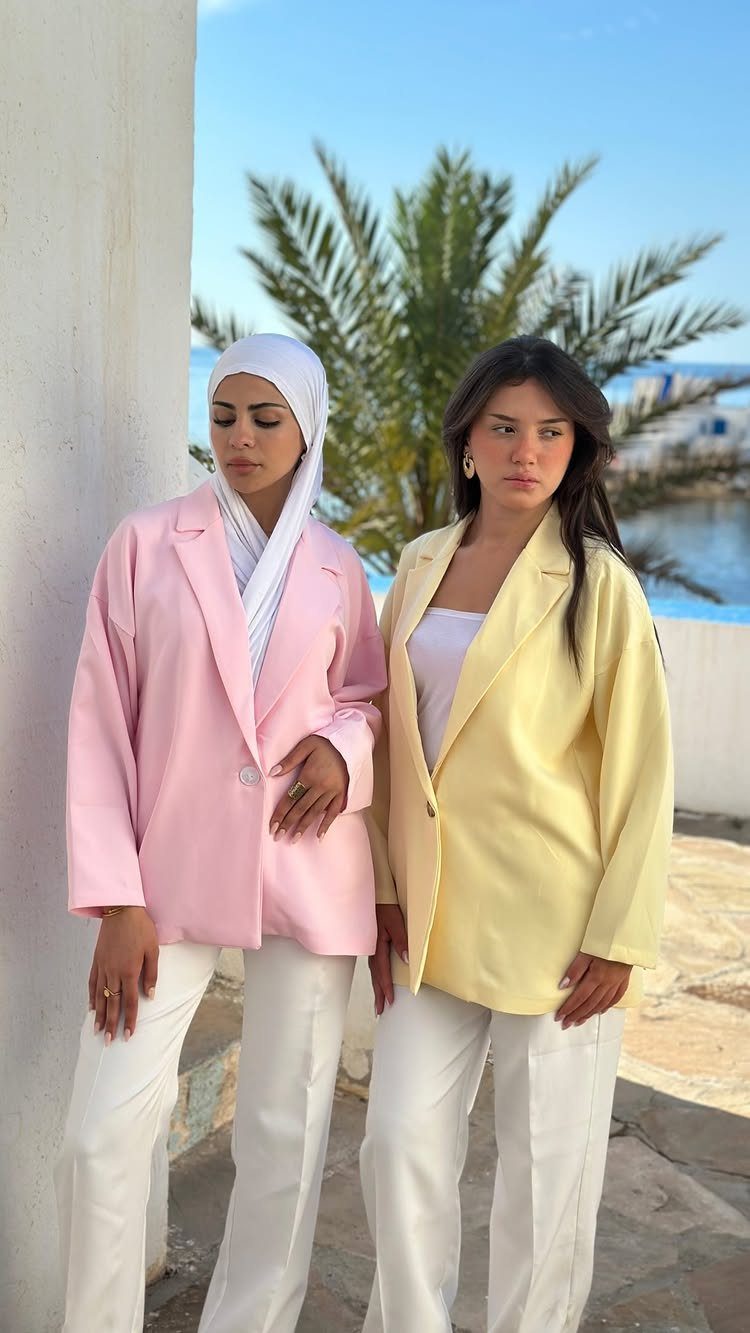
An oversized blazer in a color that is not navy or black signals creative field without trying hard.
The cut matters more than the shade: the shoulder should drop past your natural line, but the sleeve needs to hit at your wrist bone or the proportions read as borrowed.
Linen or a cotton blend keeps the shape from collapsing in humidity; polyester will hold the structure but trap heat, which defeats the purpose.
I pair mine with white trousers when the day has an external meeting, or with a simple tee and the same trousers when the schedule stays internal.
Bright blazers in pink or yellow do the heavy lifting; the rest of the outfit can stay simple.
4. Wide-leg Pants
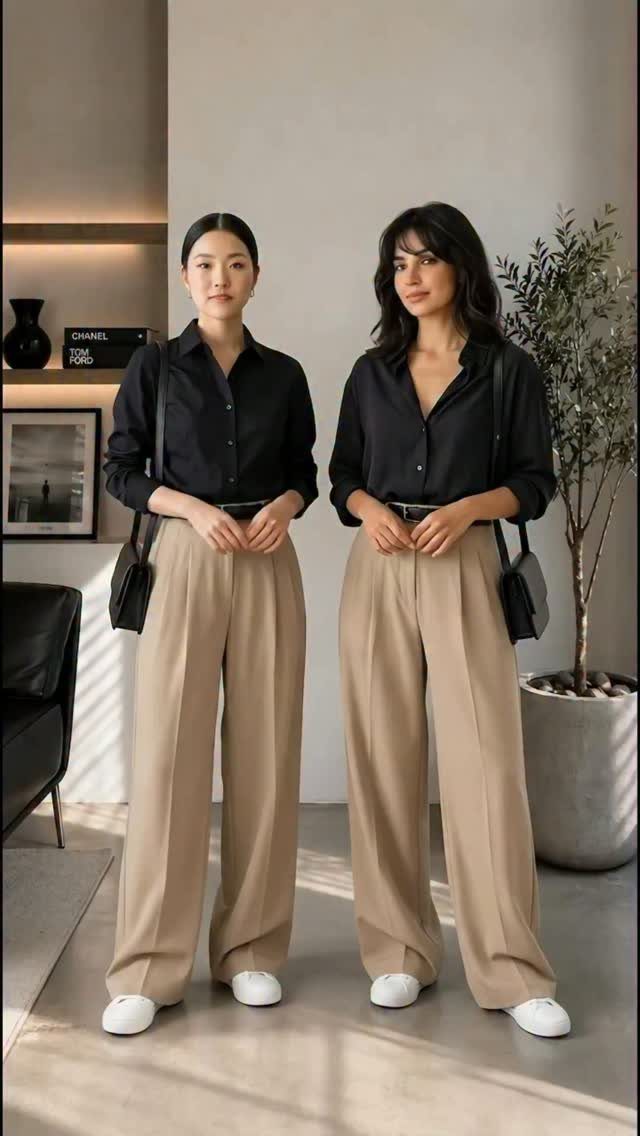
Wide-leg pants move air in a way skinnier cuts cannot, and a high waist gives the legs their full length. The balance is the whole trick: a fitted top, tucked or cropped, keeps the silhouette from becoming a tent.
Pleats add volume, which is comfortable but also a commitment; if you carry weight in your midsection, flat-front may serve you better.
The women here wear theirs with sneakers, which I would reserve for Fridays or commutes, swapping in a sandal or loafer for days with presentations.
Linen wrinkles; that is its nature, not a flaw, so buy the color knowing it will soften through the day.
5. Printed Maxiskirts
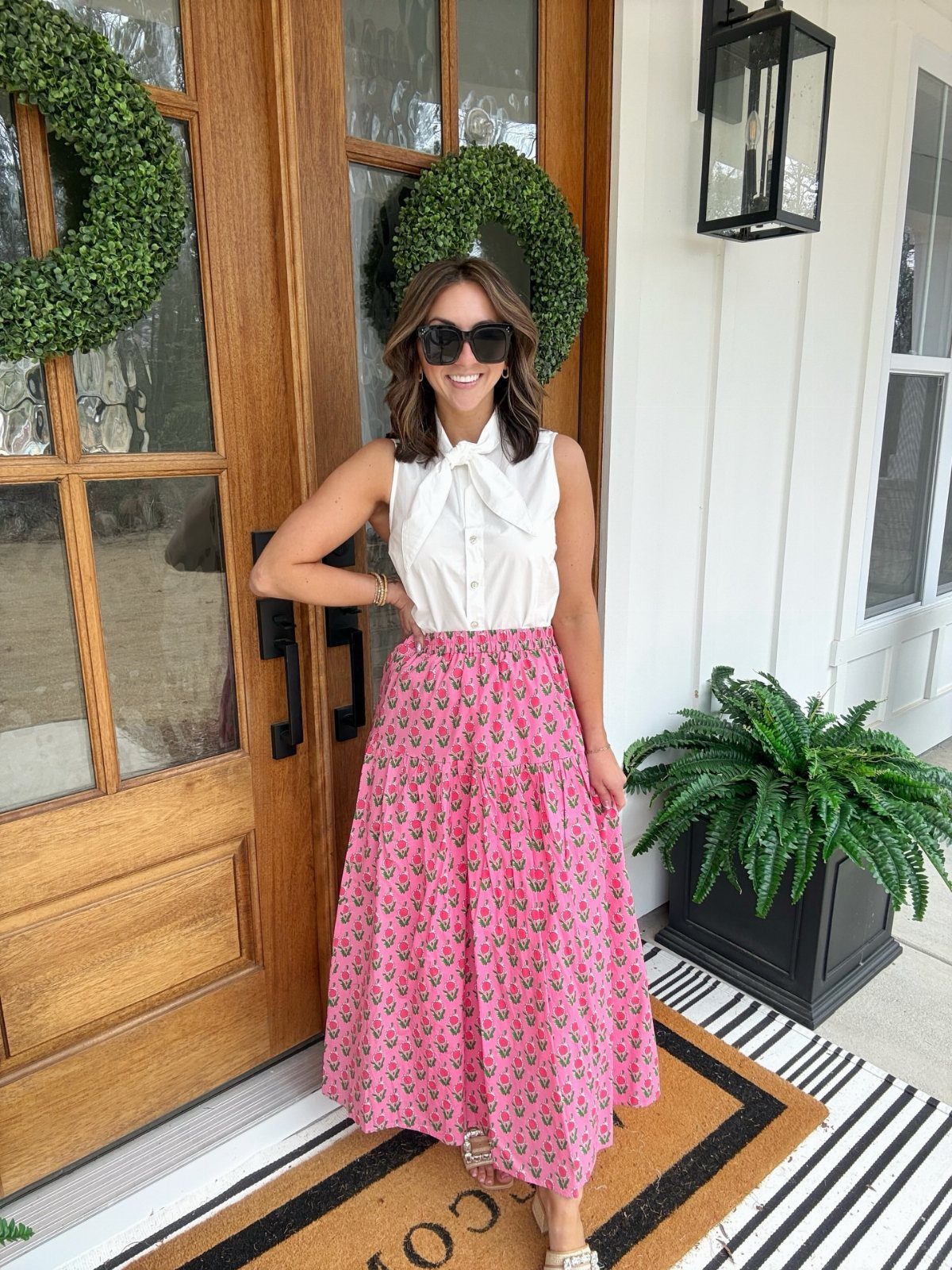
A printed maxiskirt carries the outfit so the top does not have to compete. Small-scale, scattered florals read as texture from a distance rather than a bold statement; that is the safer choice for most offices.
Pair it with a solid blouse in a color pulled from the print itself, not a neutral that fights it.
The length should brush the top of your foot in flats; any shorter and the proportion stumps you, any longer and you are tripping on stairs.
I like a bow or tie at the neck when the skirt is busy, because the vertical line draws the eye up.
Sleeveless works if your office runs warm, but a cap sleeve gives you more coverage for the same temperature.
6. Pencil Skirts
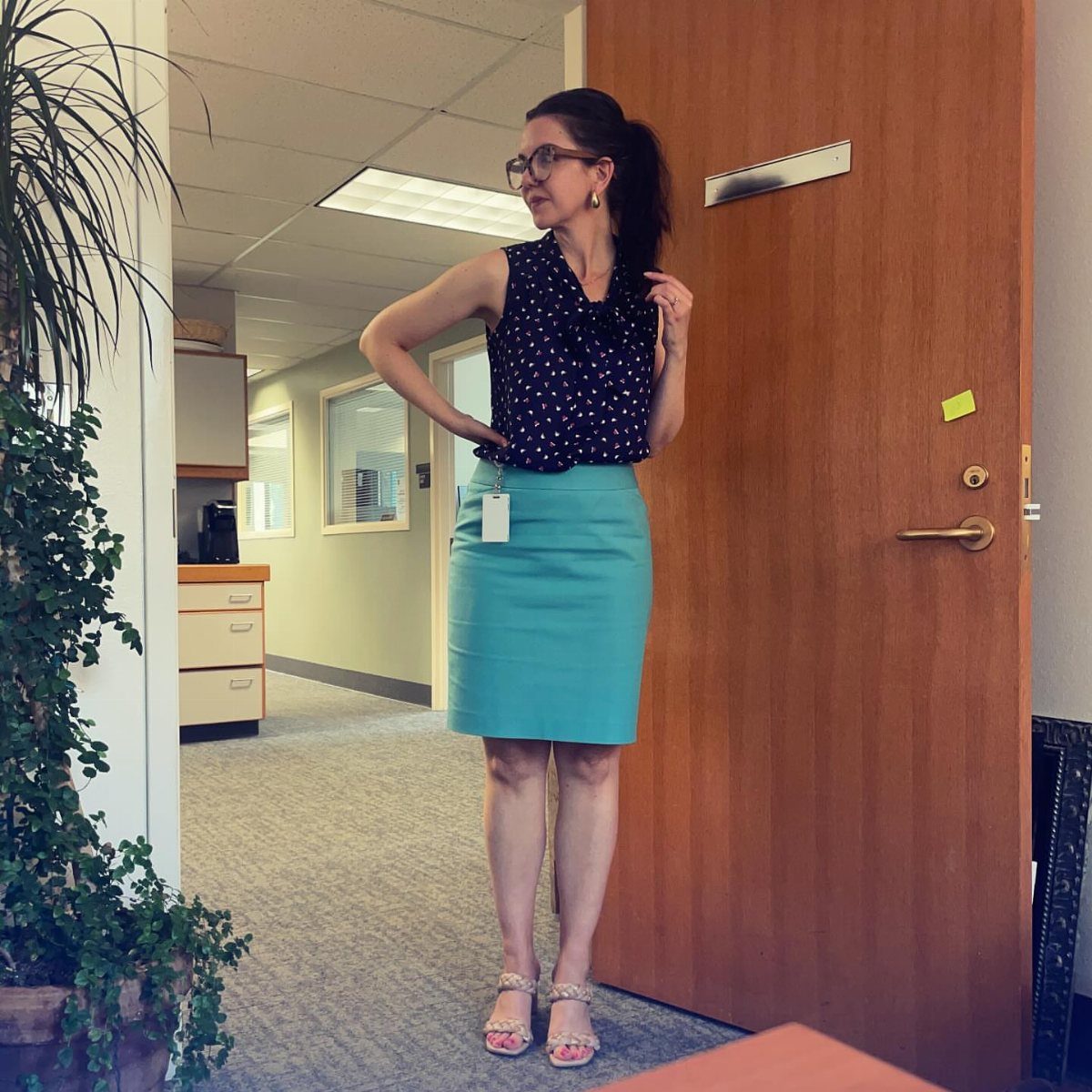
The pencil skirt has not survived this long by accident. A knee-length pencil skirt follows the body without clinging and moves from desk to dinner without a change.
Breathable fabric is non-negotiable in summer; a lined cotton or a tropical-weight wool holds the shape without the sauna effect. The top can be sleeveless in most offices now, though I keep a blazer nearby for unexpected meetings.
The shoe changes the tone: a strappy sandal reads warmer months, a closed pump reads stricter code. The polka dot blouse here adds personality without volume, which is the balance this skirt demands.
If your hips are narrow, look for a waistband that sits at your natural waist; a drop-waist pencil skirt is a different garment and a harder wear.
7. Color Blocking
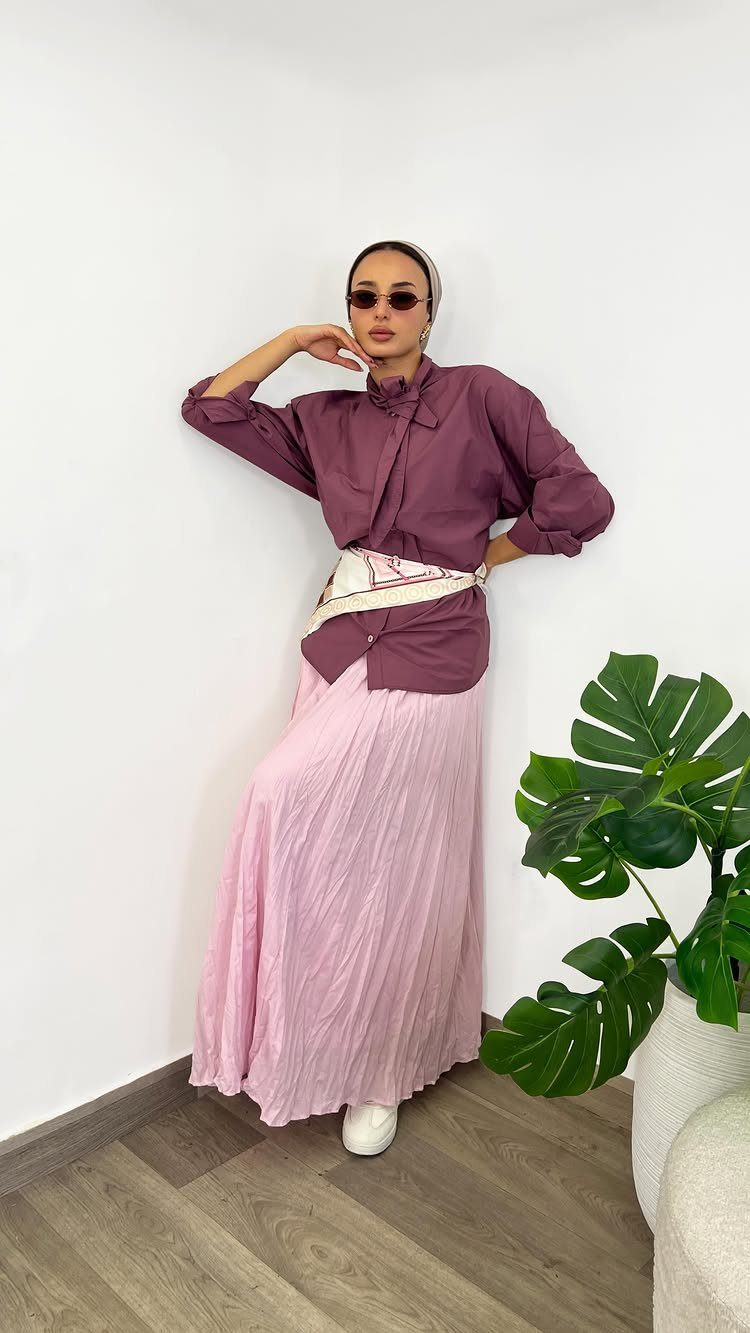
Color blocking turns two solid colors into the whole outfit statement, no print required. A plum blouse against a light pink pleated skirt gives the same polish as a pattern but reads cleaner in an office.
Both tones need the same depth, so one does not look like a mistake. Pastels with pastels, jewel tones with jewel tones.
A scarf at the waist or neck bridges the gap and adds a third neutral if the contrast feels too sharp.
Linen and cotton hold the structure for summer without looking stiff. Silk works too, though it shows sweat lines by noon.
This suits anyone bored with florals but not ready for all-beige minimalism. The risk is looking costume-y; fix that by keeping silhouettes classic and accessories quiet.
8. Short-sleeve Blouse with Jeans
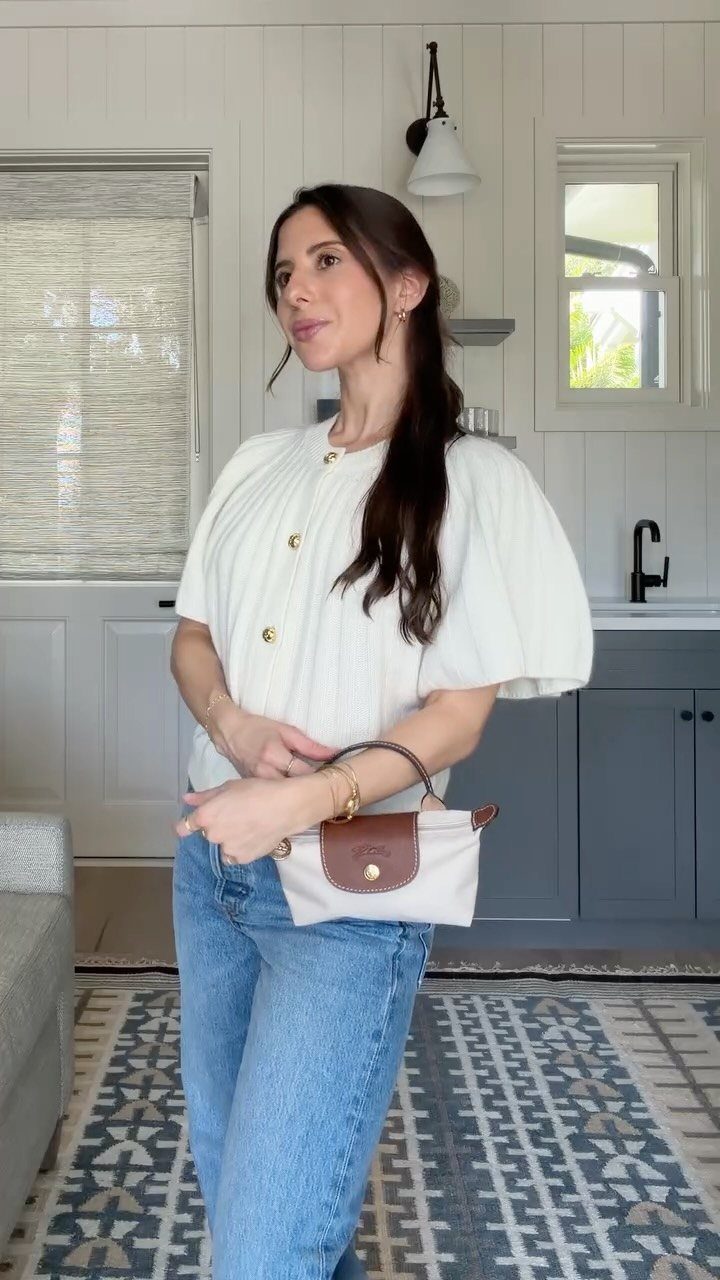
A short-sleeve blouse with gold buttons and neat jeans works for offices where full tailoring feels stiff but leggings would raise eyebrows.
The gold buttons do the work of jewelry; small, structured handbag pulls it toward intentional rather than Saturday errand.
What changes the answer is the wash of the denim. Dark, clean denim reads meeting-ready; anything distressed or faded drifts too casual even in a forgiving office.
I’d check whether your workplace draws the line at open-toe shoes before committing to sandals with this pairing.
For chillier conference rooms, a lightweight cardigan left draped over your shoulders handles the temperature without the bulk of a full blazer.
9. All-black Midi Skirt Outfit
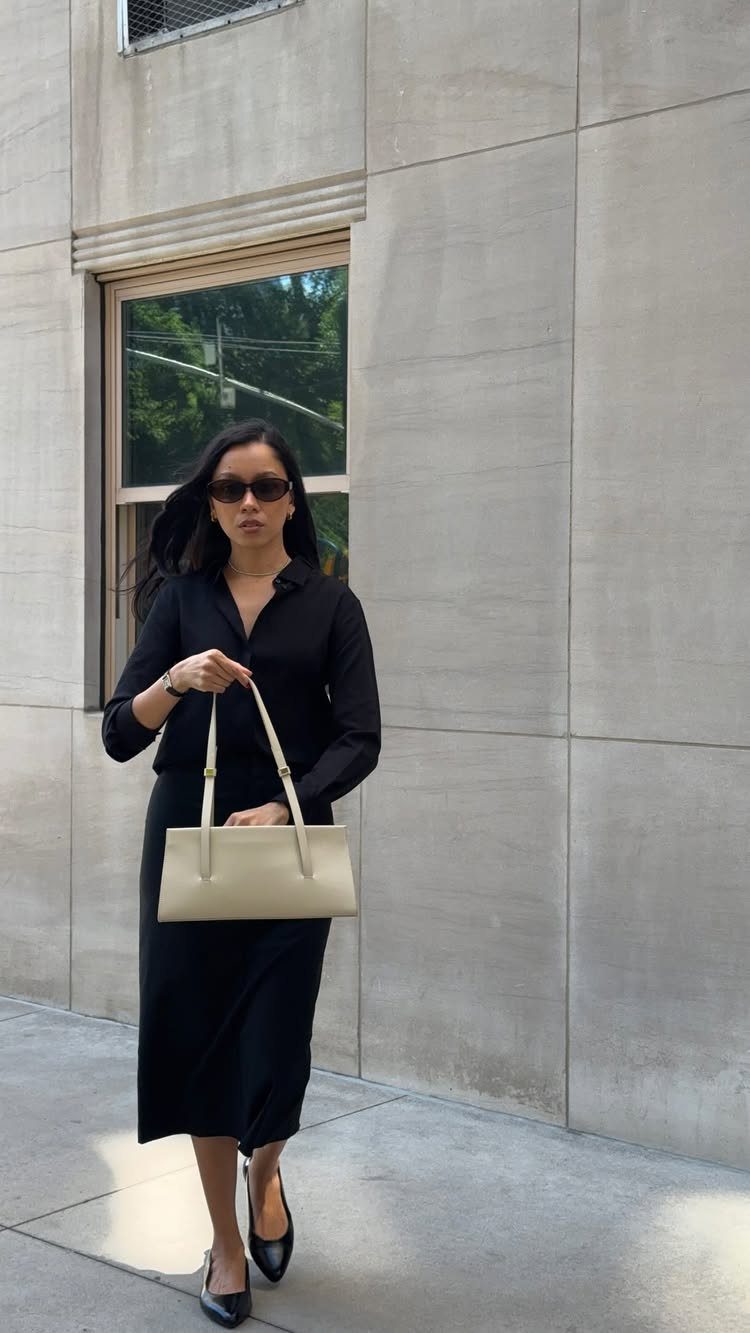
All-black in summer sounds like a heat trap until you feel how pulled-together it reads in a room of mismatched brights.
The cream tote against the black shirt and midi skirt creates the contrast so the outfit doesn’t flatten into a silhouette.
This pairing lives or dies by fabric weight. A black cotton poplin skirt and a silk-leaning shirt breathe; anything with polyester content turns the subway platform into a sauna.
Pointed flats keep the line sharp without the blisters of heels on sticky pavement.
I’d pick this one for mornings when I have back-to-back meetings and no brain space left for color theory. The monochrome does the decision-making.
10. Sleeveless Mini Dress with Heels
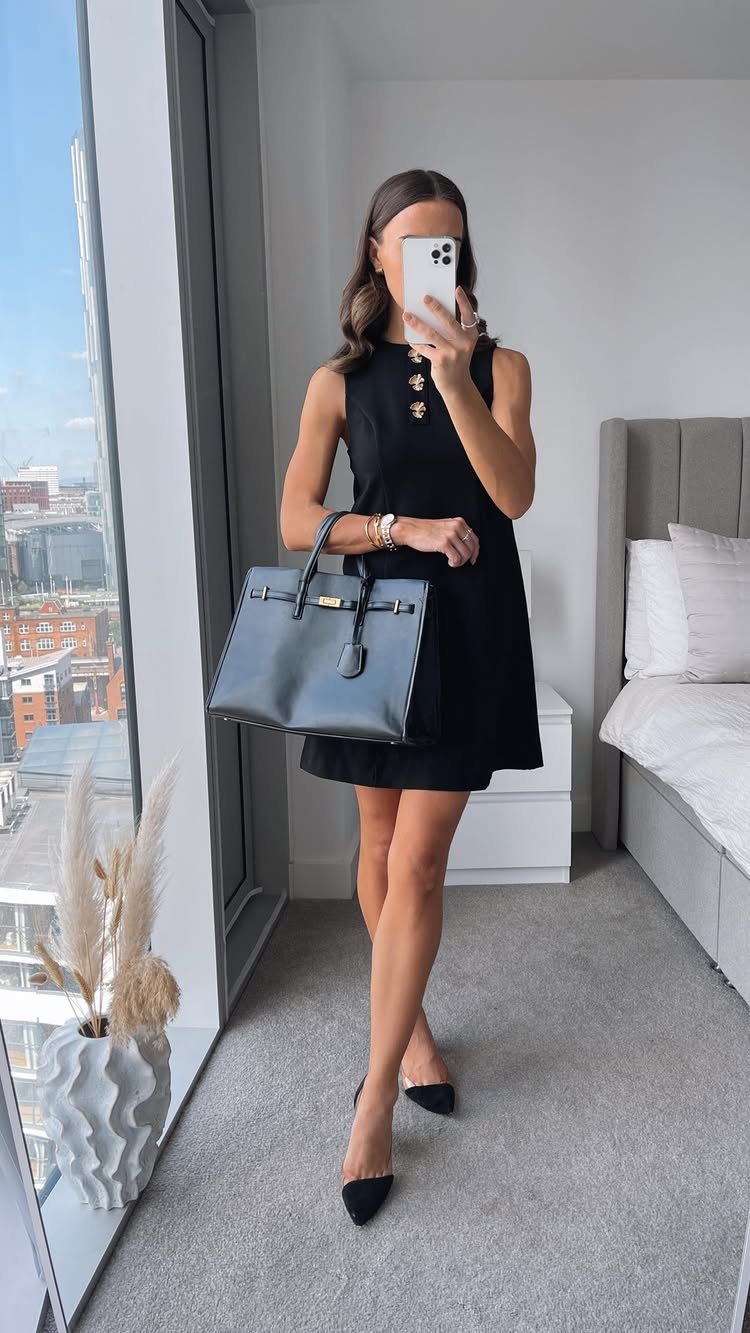
A sleeveless mini dress with heels sounds like evening until the structure of the dress and the size of the bag shift it.
Gold embellishments on a black dress read as hardware, not decoration; a large structured tote carries laptop, charger, and the illusion that you did not just come from drinks.
Length is the judgment call here. A shorter hem sits differently on a petite frame than on a taller one; I’d try sitting in the dress before committing to a full day.
The pointed-toe heel elongates, but a block heel trades some of that for the ability to walk to the subway.
For offices where bare shoulders scan as too informal, a cropped cardigan in the same weight as the dress solves it without looking like an afterthought.
11. Button-down Shirt and Midi Skirt
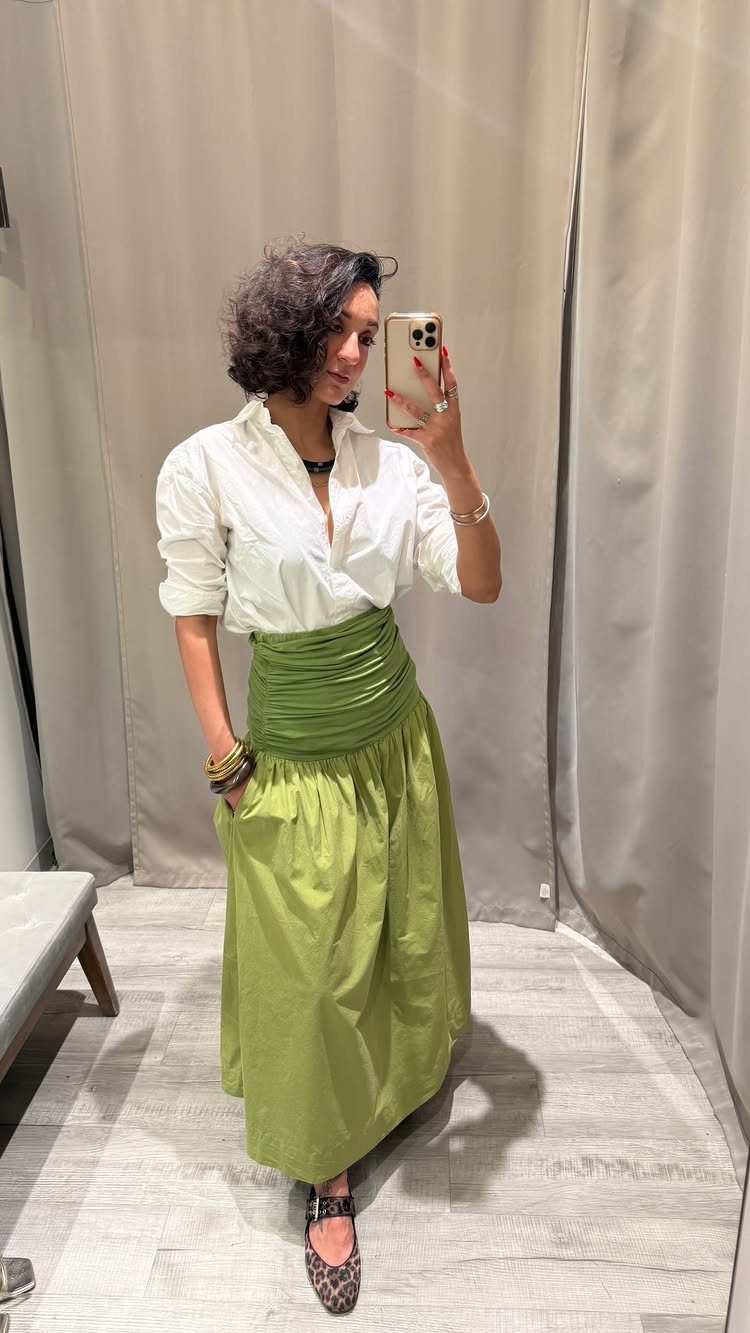
A white button-down and olive midi skirt is the outfit I reach for when I want to look like I tried harder than I did.
Leopard flats add the single pattern so the look doesn’t read as uniform; any printed flat would serve the same function.
The high waist on the skirt matters more than the color. Tucking the shirt fully in rather than half-tucking keeps the line clean for work; save the French tuck for weekends.
Cotton poplin for the skirt means it won’t cling in humidity, which is the difference between looking crisp and looking like you slept in it.
One creator who keeps pieces like this in rotation for over two years says the longevity comes from buying the shirt and skirt separately rather than as a set, so each half can pair with other pieces when the mood shifts.
12. Patterned Puff-sleeve Midi Dress
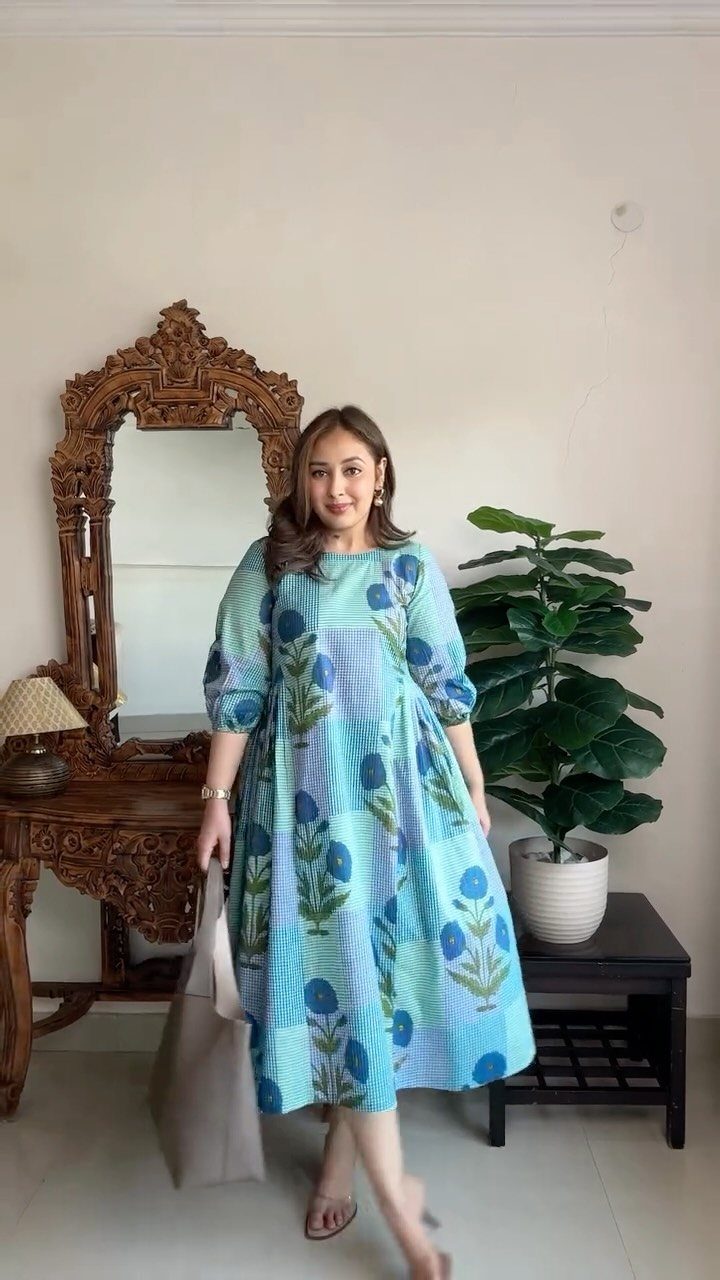
A patterned puff-sleeve midi dress carries enough personality that the accessories barely need to show up.
A blue and green print reads as garden-party from a distance, office-appropriate up close; the puff sleeve adds volume where many summer dresses go too bare.
Without it, the dress drifts toward brunch; with it, the dress becomes the one interesting thing in an otherwise restrained outfit. Sandals work here because the midi length and covered shoulder balance the exposure.
I’d check the armhole cut before buying. Some puff sleeves restrict reach; if your day involves overhead subway straps or whiteboard writing, raise both arms in the fitting room.
A linen-cotton blend with this cut breathes better than full synthetic, and the puff holds its shape through a day of meetings without collapsing into wrinkled deflation.
13. Men’s Lightweight Sweater and Trousers
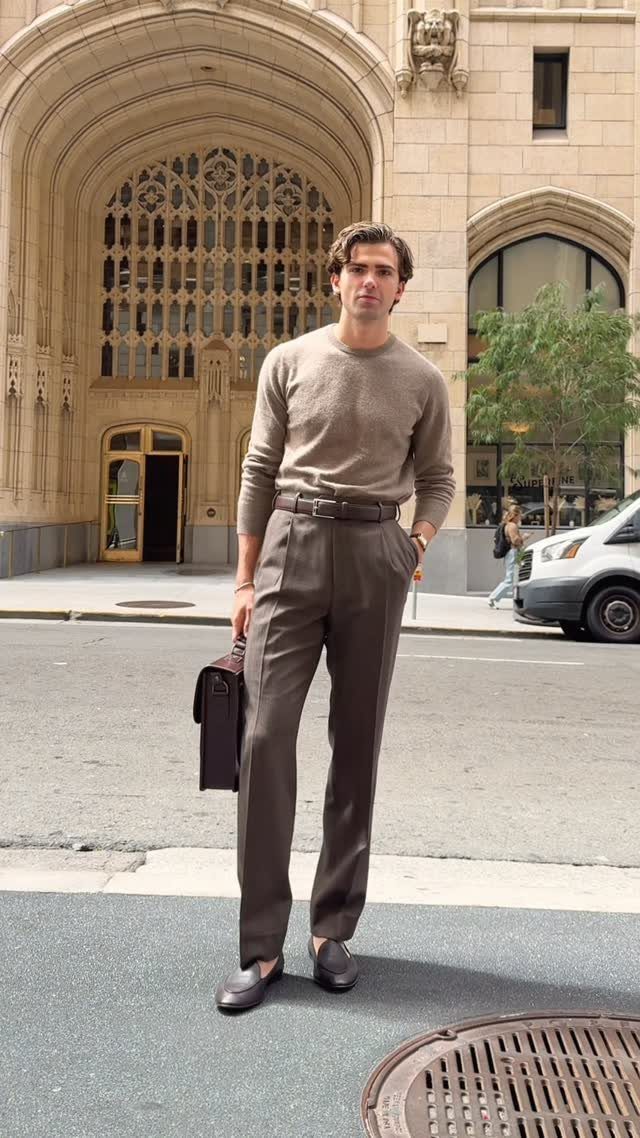
A lightweight sweater and trousers on a man in summer looks wrong on paper until you see the sweater is thin enough to tuck.
A beige crewneck with the gauge of a long-sleeve T-shirt lets the trousers do the formal work while the sweater keeps the temperature human.
Tucking the sweater fully in with a belt defines the waist and separates this from the untucked look of a college student. The leather briefcase reads as old-school intentional rather than inherited; dark loafers ground the light top half.
The fabric choice makes or breaks this combination. A cotton-linen knit breathes; a standard wool blend intended for October becomes a mistake once the morning commute heats up.
I’d check the weight in grams or hold it up to light before buying; if you can read a phone screen through it, it probably works for July.
For offices where the AC runs glacial, this outfit handles the walk to lunch and the return to meat-locker conference rooms without a layer to carry.
14. Striped Button-down with Jeans
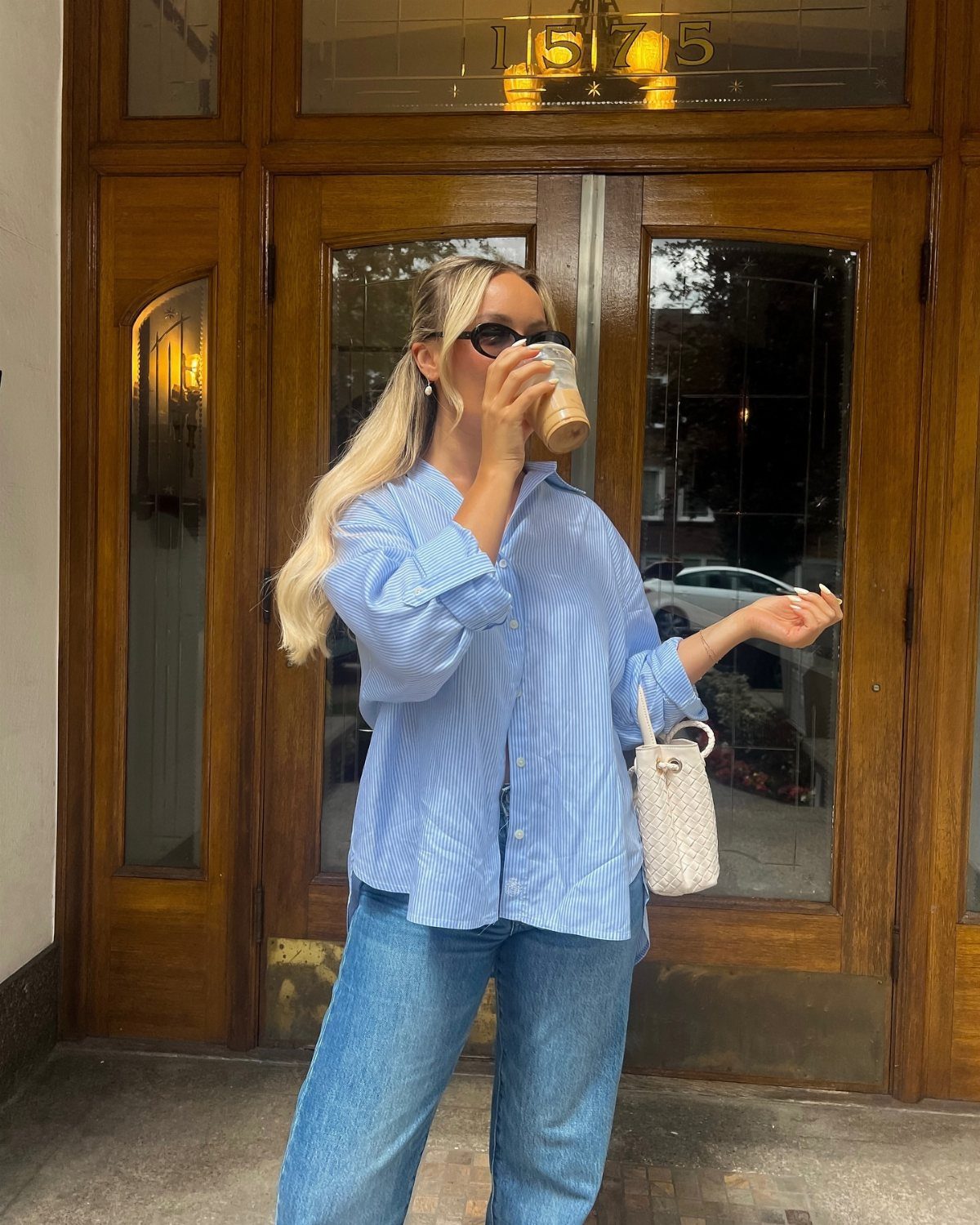
A blue-and-white striped button-down with jeans reads as intentional rather than thrown-on when the shirt is long enough to half-tuck and the denim sits at the natural waist.
The stripe itself does the office-appropriate work; no blazer required unless the AC runs cold.
For that last scenario, a tweed jacket layered on top gives you something to remove at your desk without looking underdressed.
The shirt needs to be substantial, not sheer, and the jeans should rival trousers in fit: high-rise, dark wash, no distressing.
This pairing suits offices where the dress code is "nice" rather than coded, and it trades some formality for comfort you actually feel.
Add toe-loop flats if you want one polished detail, or keep the sneakers if the day involves walking.
Skip it if your workplace requires suiting; otherwise it is the easiest summer work outfit to assemble from pieces already hanging in your closet.
Navigating Dress Codes
Your company’s policy on summer attire is the first filter, not the last. Formal offices still expect tailored suits, though lightweight wool or silk blends replace the winter weight.
Navy, charcoal, and beige mix without fighting. Creative offices leave the most room to move.
A linen blazer thrown over a brighter dress, or a patterned skirt with a plain blouse, reads as intentional without trying too hard. The mistake is dressing for the field you wish you worked in.
A law office that keeps its summer policy strict will notice the capri pants, no matter how well they fit.
Layering for Air Conditioning
Air conditioning is the enemy of every summer outfit you planned on the walk to work. Start with cotton or silk against your skin; it lets air through and still looks pulled together when the AC cranks.
The cardigan or breathable blazer belongs at your desk, not draped on a chair across the room where you’ll leave it all afternoon.
Under a dress, a sleeveless blouse adds heat without bulk; over it, a light shawl across the shoulders does the same work.
The color of these layers matters: neutral tones or something that complements what you are already wearing keeps the whole thing from looking like you grabbed the nearest cover-up.
A layer that is too heavy stays on the chair; one that is too thin does nothing.
A sweaty commute, frigid air-conditioning, and oftentimes having to sit for most of the day. The answer to the endless what-to-wear-to-work question of should always strike the delicate balance between fashion-forward and perfectly professional.
— Vogue
Choosing Fabrics
Cotton, linen, silk, and rayon are the fibers that handle heat differently and deserve different jobs.
Cotton absorbs sweat and stays soft; it’s the shirt you can put on at 7 a.m. and still trust by 5 p.m. Rayon mimics natural fibers at a lower price and works for tops that need more drape.
Light colors reflect sunlight and read fresher in an office: whites, pastels, and light neutrals. Loud prints pull focus across a conference table in a way most meetings don’t need.
Accessorizing Outfits
A single piece of jewelry or one good bag does more than a full set competing for attention. Statement jewelry works when the rest of the outfit is quiet; the same piece against a printed maxiskirt reads as too much.
A chic handbag elevates without needing explanation. Footwear should match the formality of your day, not just your comfort: heels for the presentation, flats for the internal meeting, and nothing that you cannot walk to the subway in.
Mixing and matching tops and bottoms multiplies your options, but only if the colors were chosen to coordinate from the start. A neutral palette makes that easier than a closet of one-off prints.
Frequently Asked Questions
What to wear at work during summer?
Lightweight cotton or linen keeps you cool through the commute, and a cardigan at your desk handles aggressive office AC. Shirtdresses, tailored shorts in structured fabrics, and breathable pencil skirts all work if the fabric weight matches the season.
A blazer in linen or cotton blend holds its shape without trapping heat the way polyester does.
What are some popular summer work outfits for 2026?
Wide-leg pants with a fitted top, printed maxiskirts paired with solid blouses, and color-blocked separates in matching tonal depths are all holding up.
Linen button-ups and lightweight blazers in colors outside the usual navy or black signal creative fields without looking like you’re trying too hard.
What is the 3-3-3 rule for clothes?
The 3-3-3 rule means three tops, three bottoms, and three pairs of shoes that all work together, giving you roughly twenty outfits from nine pieces.