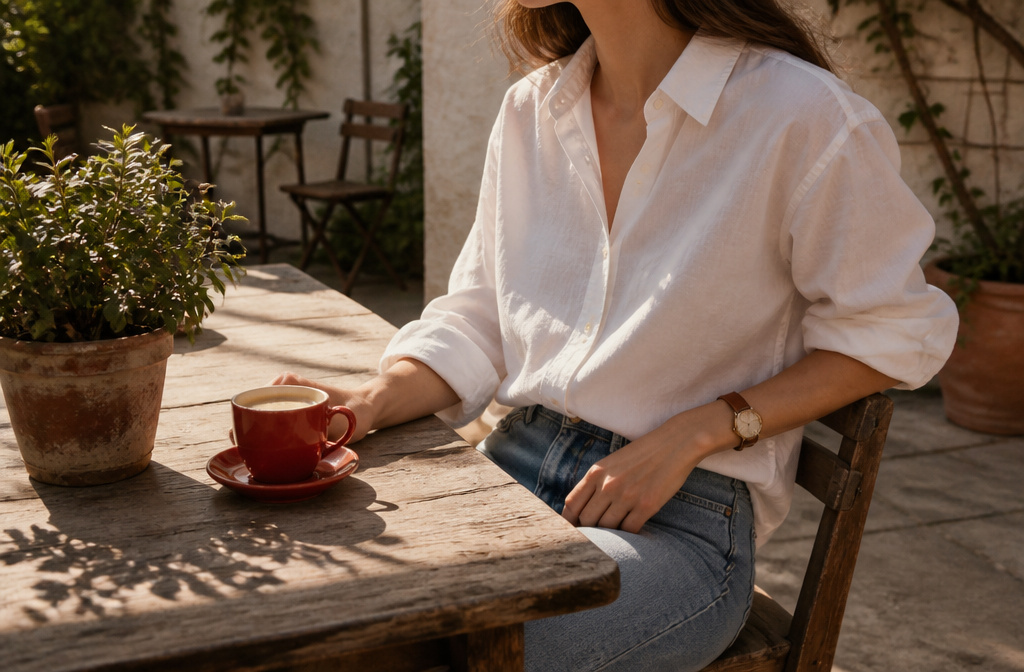
The right female shirt style depends on where you’ll wear it most.
A 5–6 oz cotton crew neck holds its shape through a full workday but turns sloppy under 4 oz; silk shifts a button-down into evening territory without changing the cut, yet the dry-cleaning bill decides whether it leaves your closet.
That weight threshold, and the waistband that keeps a crop top from looking like a sizing mistake, are what separate the pieces you’ll reach for from the ones that hang untouched.
1. Button-Down Shirt
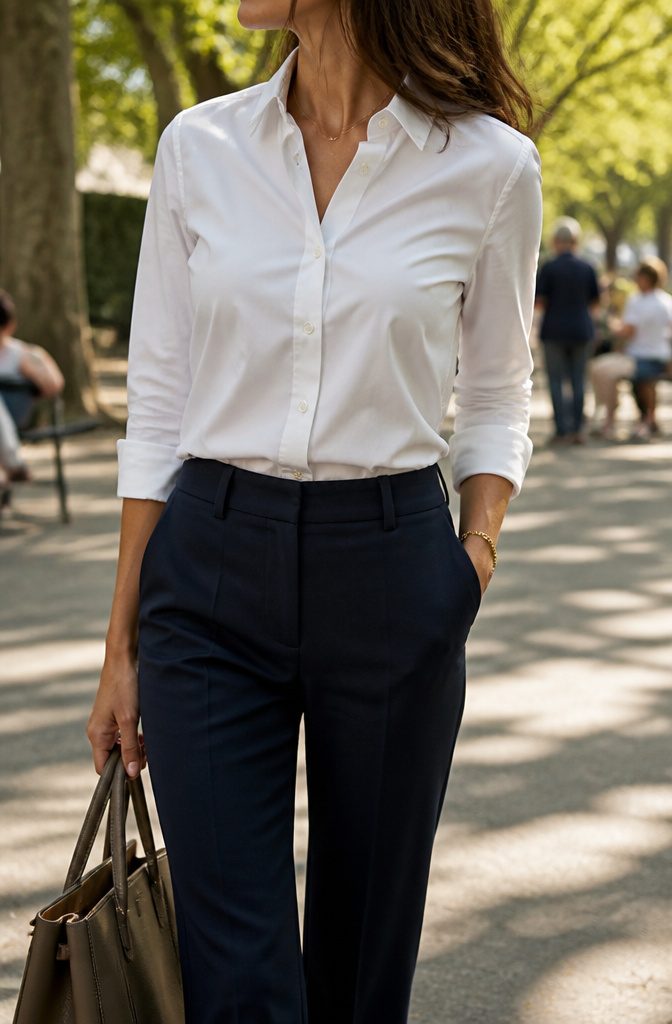
A button-down shirt earns its name from two sets of buttons: the obvious front placket and the smaller ones anchoring the collar points underneath.
That collar structure is what separates it from a standard button-front blouse, and it matters more than you’d think for layering. Under a crew-neck sweater, those anchored points stay put instead of splaying out.
The fabric choice steers the occasion. Cotton and linen handle daily wear and warm weather; silk shifts the same cut into evening territory without changing anything else.
I reach for cotton when I know I’ll be in and out of a blazer all day, linen for weekends when wrinkling reads as intentional, and silk only when the event justifies the dry-cleaning bill.
Tucking changes the whole posture of the piece. Fully tucked with tailored pants or a knee-length skirt reads formal; untucked over jeans with the sleeves rolled to the forearm drops the formality without looking like you gave up.
For a middle ground, the half-tuck or the front-knot at the waistline creates shape if the standard straight hem swallows your frame.
French cuffs, when the shirt has them, add that borrowed-from-the-menswear-department length that works surprisingly well with slim straight-leg jeans and pointed heels.
The roomier cut of a men’s dress shirt worn as a tunic is one of those styling moves that sounds wrong until you see the proportions: the length covers what it needs to, the shoulders drop slightly off, and the overall effect is polished without trying.
2. Blouse
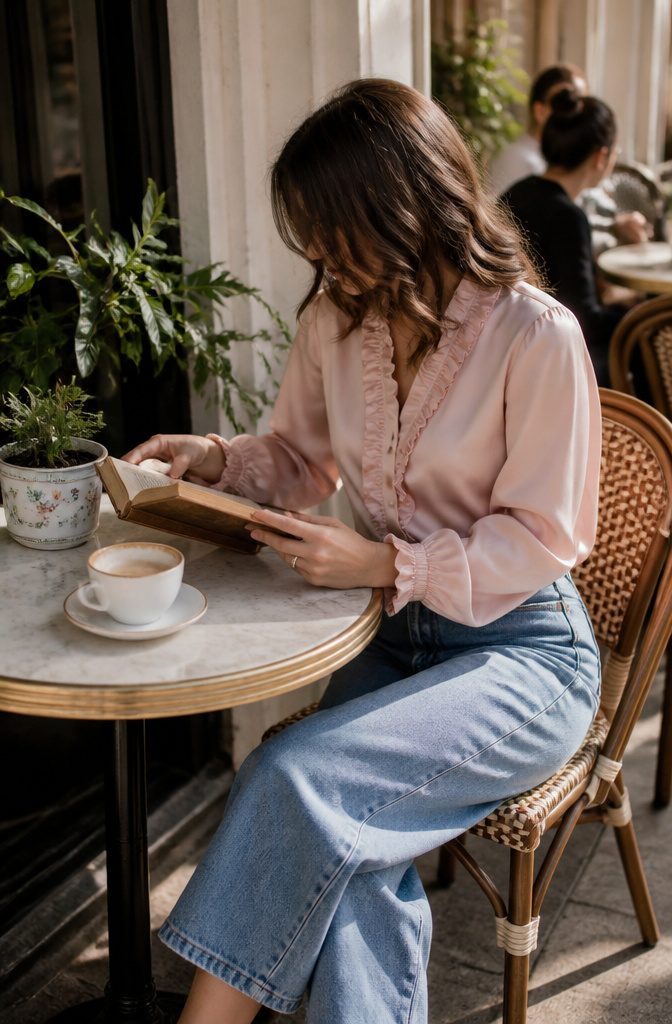
Soft fabrics and feminine details are what separate a blouse from sturdier shirt styles.
Silk, chiffon, satin, cotton, rayon, and polyester all appear regularly, with ruffles, pleats, lace, and special sleeve shapes like bell or bishop sleeves adding the romantic touches that define the category.
Tucking changes everything. A full tuck into girlfriend jeans with a belt reads polished; leaving a blouse loose over ankle skimmer jeans is the same piece on a Saturday.
The front-tuck with the back flowing flatters without feeling confined.
Blouses carry more formality than a standard shirt, yet they travel well between contexts. A draped collar blouse under a blazer works at the office; the same blouse without the blazer holds up at dinner.
Light colors with a contrasting jacket keep the look intentional rather than after-hours.
3. Tunic
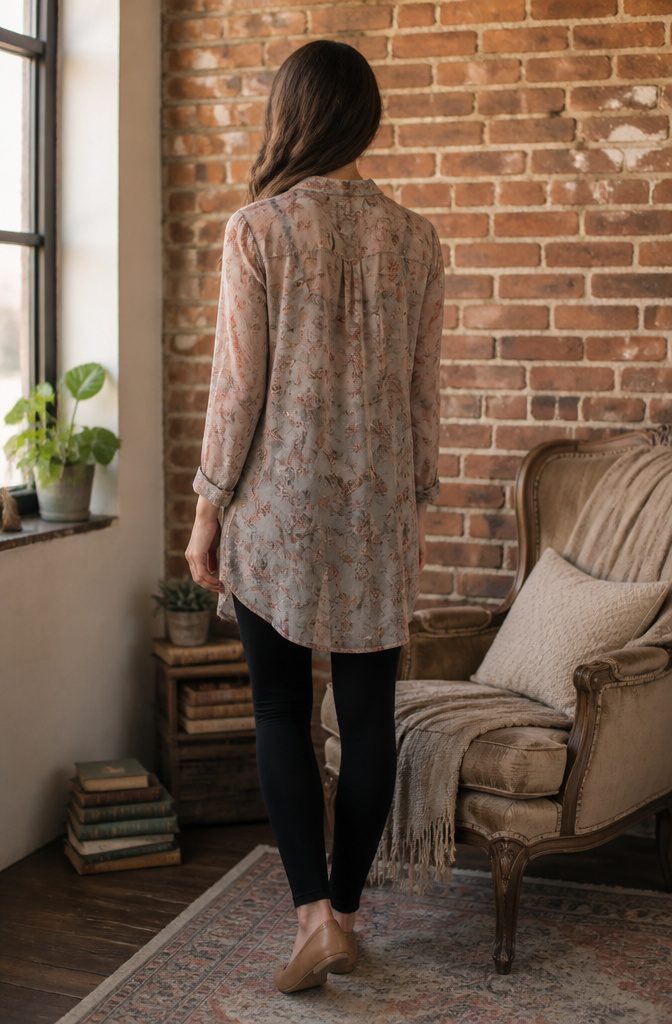
A tunic hangs lower than a standard top, typically reaching somewhere between the hips and mid-thigh.
That extra length changes how the whole outfit reads: the fabric drapes over the torso instead of tucking in, which softens the silhouette and removes any need to fuss with waistbands.
The pairing that makes this work is leggings or skinny jeans underneath. The slim bottom half balances the looser top, so the shape stays intentional rather than swallowed.
Fabric matters here: chiffon, cotton, rayon, and linen each fall differently. A heavier cotton holds its structure; a lighter rayon or chiffon skims the body and moves more as you walk.
The looser the weave, the more the length becomes the whole statement.
Sleeves run the gamut from slim to wide, and necklines vary too: scoop necks, deep V-necks, or something more covered up. Embroidery or pattern can add interest, but the cut itself does most of the work.
For a casual morning, flats and leggings handle it fine. Swap in skinny jeans and heels, and the same tunic shifts toward something sharper without much effort.
The side slit or asymmetrical hem some tunics carry adds a little more motion and breaks up the long line so it does not read as a tent.
4. Crop Top
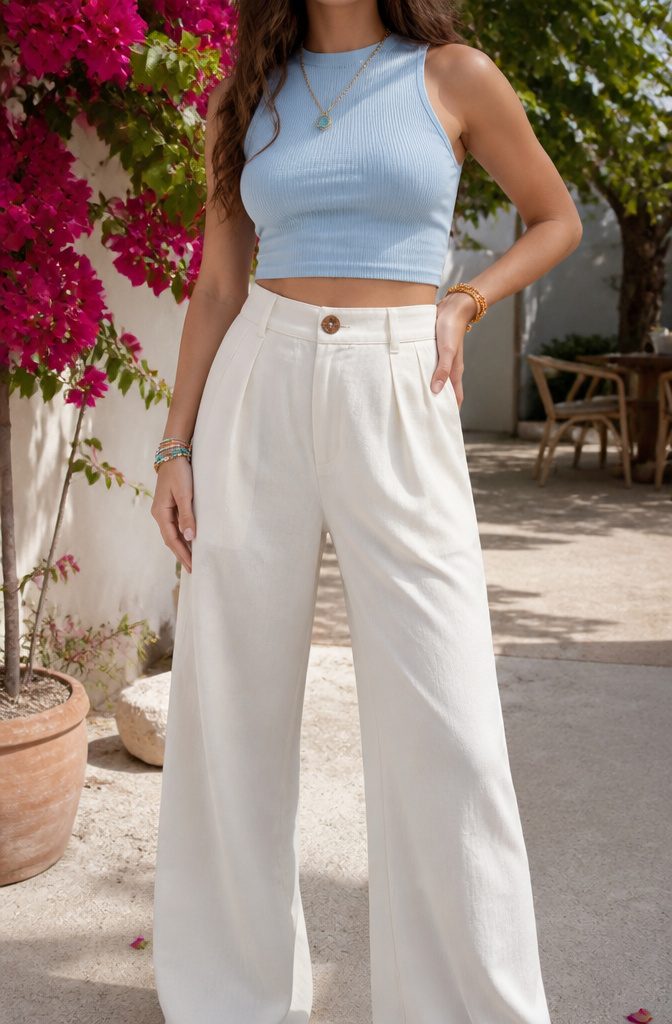
A crop top lives or dies on the proportion it creates against your waistline. The hem hits somewhere between the bottom rib and the navel, which means the bottom half of the outfit does the structural work.
High-waisted trousers or skirts sit at the natural waist and carry the visual weight, so the gap of skin reads as intentional rather than accidental.
The fabric matters more than the cut. Ribbed knits and jersey blends with a touch of spandex recover their shape after sitting, which keeps the cropped line crisp instead of sagging.
A boxy cotton crop without stretch can look architectural in linen, but the same cut in a cheap weave goes floppy after one wash and the whole balance tips toward sloppy.
Seasonally, this is a summer move for most. Light cotton and airy pastels handle heat, and the exposed waist makes sense when the temperature justifies it.
Winter crop tops do exist, usually layered over longer tanks or under oversized blazers, but the look becomes about layering strategy rather than the clean proportion that makes the style work.
The real risk is the high-waist gap: if your trousers slip even an inch, the exposed zone widens and the outfit starts to look like a sizing mistake.
A firm waistband, maybe with a hook or a structured band, keeps the line where you placed it.
5. Denim Shirt
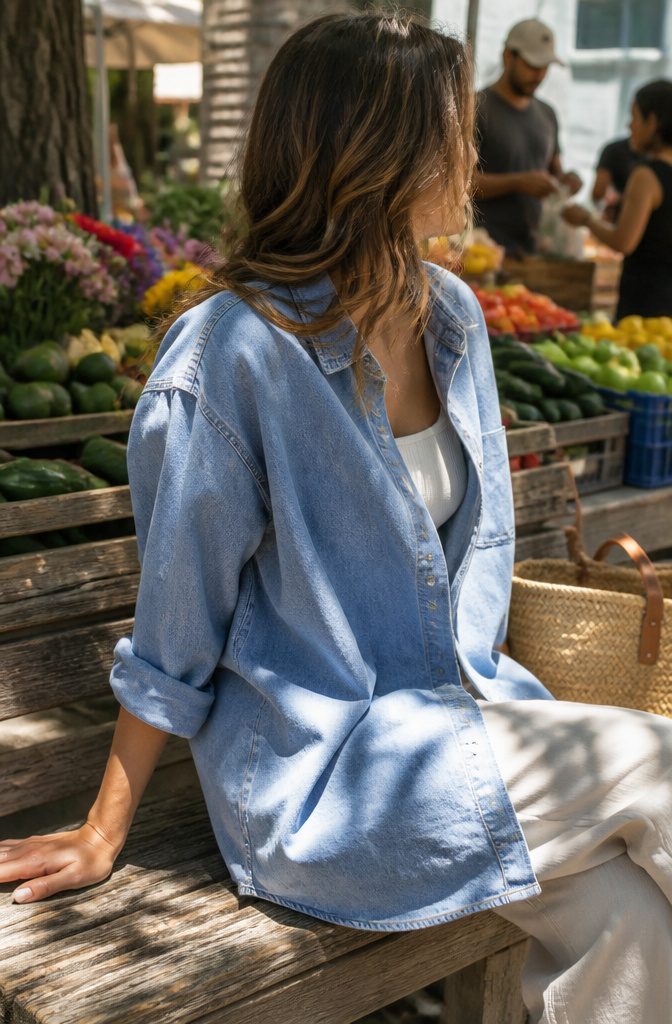
A denim shirt earns its keep by how many jobs it can take over.
The weight matters more than the wash: lighter denim drapes like a shirt and tucks cleanly into a skirt for dinner, while heavier denim holds its shape open over a tee like a jacket when the afternoon cools.
Light-wash reads casual, dark indigo reads intentional, and either one works year-round if the fabric weight matches the season.
The real test is whether you will actually wear it as a layer. Rolled sleeves and left open, it replaces a cardigan on days that start brisk and warm up.
Buttoned to the collar and tucked, it fills the same slot as a chambray workshirt but with more structure.
The mistake is buying one too stiff to layer and too heavy to tuck, leaving it in that limbo where it only works half-buttoned over a tank top.
Two or three washes in, the good ones soften at the shoulders and placket enough to do both jobs; the cheap ones just fray.
6. Peplum Shirt
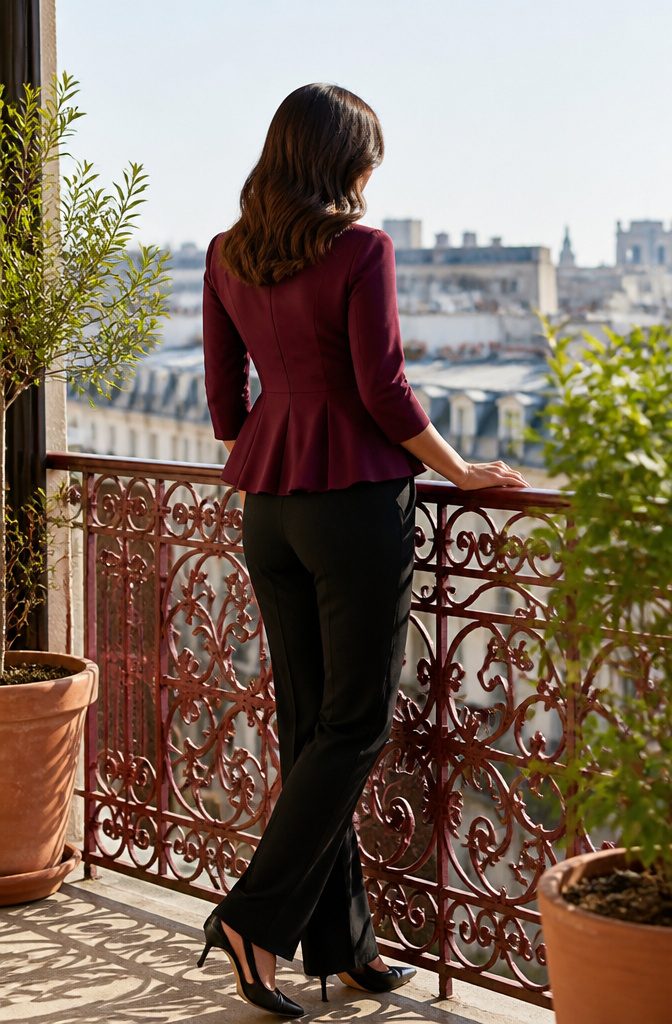
A peplum shirt cinches at the waist before flaring out; that shaping is what makes the cut worth wearing.
That sudden flare creates a defined waistline where one might not read otherwise, and the extra fabric skims over hips rather than clinging.
The silhouette tends to work best on rectangle and apple shapes, since the flare builds the impression of curves, though hourglass figures can wear it too if the cinch sits exactly at the natural waist rather than floating above it.
The flared hem pairs naturally with slim-fit pants or a pencil skirt, balancing the volume on top with something clean below. Sleeve options run from sleeveless to puff, so the formality shifts with the fabric.
Cotton or crepe reads office-appropriate; chiffon or satin leans evening. Polyester versions exist at lower price points but can look stiff where the flare needs to drape.
The one thing to watch is length: too short a peplum and the flare starts from the ribcage, which defeats the waist-defining purpose.
7. Off-Shoulder Top
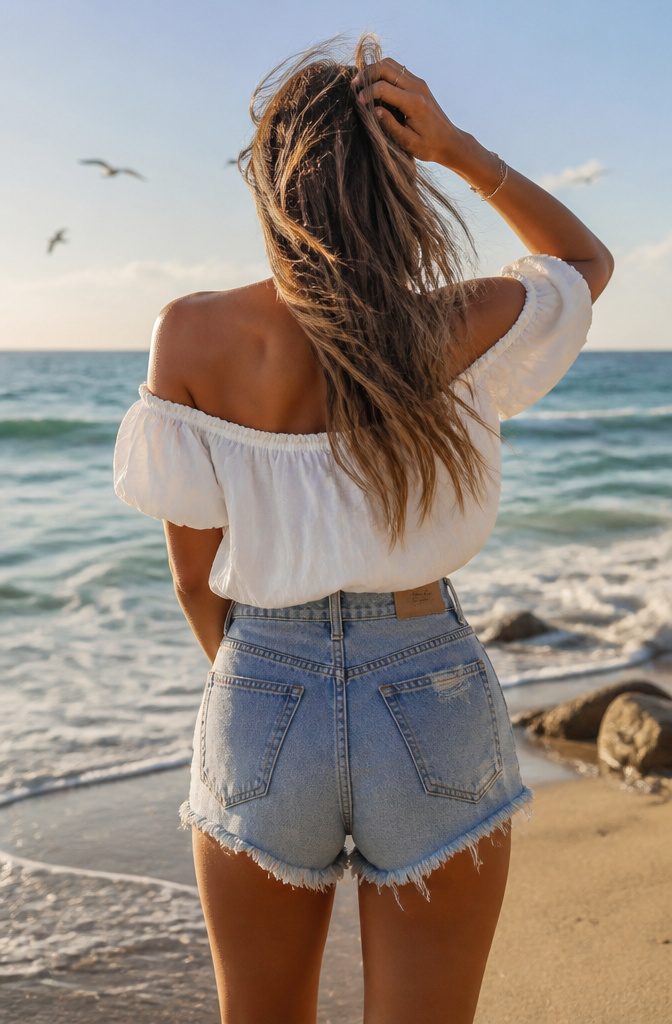
An off-shoulder top sits the neckline below the shoulders, exposing them while the sleeves still cover the upper arms. The look works for parties and events, and pairs naturally with pants or skirts.
Statement jewelry and heels push it dressier when the occasion calls for it.
The neckline stays up one of two ways: elastic that grips the upper arms, or a more structured band that holds its shape without digging in.
Elastic gives you mobility but can feel insecure if you raise your arms often; structured necklines stay put better but limit how far the sleeves can reach.
Support underneath takes planning. A standard bra shows its straps, so a strapless style or one with a convertible band becomes necessary.
Some off-shoulder tops come with built-in support, which solves the problem until it doesn’t: the built-in shelf rarely matches the fit of a bra you already own.
Seasonally, this is warm-weather territory for most. The exposed shoulders and typically lighter fabric suit spring and summer events.
For cooler months, layering defeats the purpose; the silhouette only reads correctly when the neckline stays visible.
8. Wrap Shirt
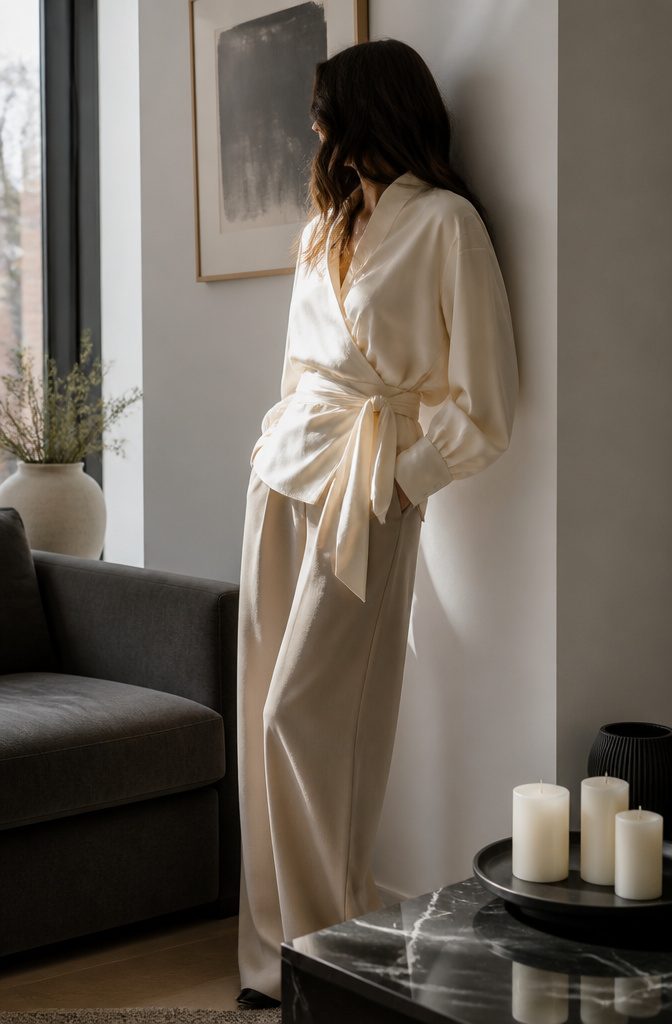
A wrap shirt lives or dies at the waist tie.
Two fabric panels cross over the torso and fasten with a belt or internal tie that sits at the natural waist, which means the fit adjusts to the wearer rather than the other way around.
The crossover creates a V-neckline whose depth you control by how tightly you pull the closure; a looser knot keeps things office-appropriate, while a firmer cinch drops the point lower for evening.
The drape matters more than with most female shirt styles because the fabric has to fall cleanly across the body without bunching at the tie point.
Cotton, satin, jersey knit, chiffon, and polyester blends all work, but each behaves differently: jersey forgives a slightly off placement, while satin shows every pull.
Sleeve length runs the full range from sleeveless to long, so the same wrap structure moves across seasons without changing its core logic.
What the wrap actually does for a body is redistribute attention. The diagonal lines draw the eye to the waist, and the adjustable closure means the silhouette works across bust sizes without gaping or pulling.
Check the under-panel coverage before you commit to a fabric; a lightweight chiffon wrap that shifts during the day leaves you adjusting in public, which ruins a shirt that is supposed to look effortless.
9. Polo Shirt
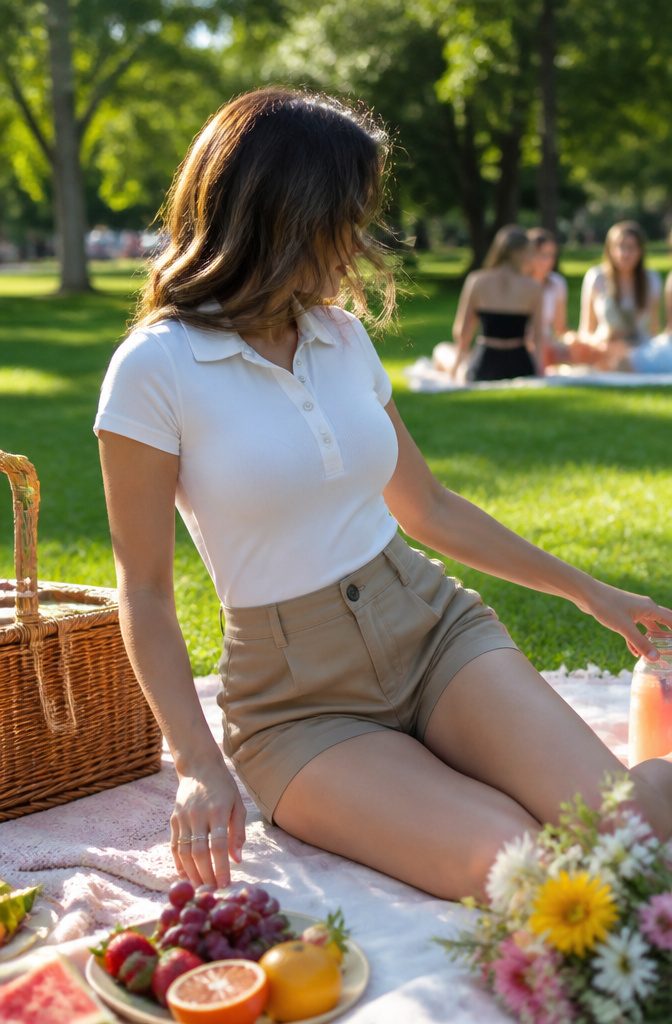
The polo shirt lands somewhere between a tee and a button-down in formality, and the fabric choice decides which end of that range you actually hit.
Pique knit gives you the textured, slightly stiff surface that reads as classic and semi-formal; jersey drapes softer and sits more casual, sometimes sliding too close to glorified t-shirt territory.
A longer placket, four buttons rather than two or three, pushes the look further toward polished.
Women’s polos differ from men’s in cut in ways that matter for styling.
The torso is nipped in rather than boxy, the sleeves are shorter and tighter, and the overall length runs shorter, meant to hit at the hip rather than tuck cleanly into trousers.
That shorter hem means the half-tuck or full tuck with high-waisted pants becomes the move for semi-formal occasions, while untucked with denim shorts and sneakers keeps it casual.
Cotton remains the standard for breathability and wear time, though cotton-polyester blends show up for stretch.
10. T-Shirt

The t-shirt earns its place as a wardrobe staple through two necklines that behave differently on the body.
A crew neck sits higher and reads slightly more finished, which makes it the safer choice under a blazer; a V-neck drops the eye and works better when you are wearing the shirt alone and want to elongate the line.
Fabric weight matters more than most buyers notice. A 5–6 oz cotton is the standard mid-weight that holds shape through a day of wear without looking bulky.
Drop below 4 oz and the shirt turns sheer and wrinkles fast; above 6.5 oz you are in heavy territory that can look stiff on a smaller frame.
Shoulder seam placement changes the whole silhouette. A seam that sits exactly at the shoulder edge gives the cleanest line and the most polish.
When the seam drops down the arm an inch or two, the effect is intentionally relaxed; push it past that and the shirt starts to look like you borrowed it.
The same drop-shoulder cut that works for Saturday coffee looks wrong in a room where everyone else is wearing actual sleeves.
Fit is what finally sets the formality level. A t-shirt skimmed to the body with a shoulder seam in place can pass under a structured jacket for a casual office.
The identical fabric worn two sizes larger with the seam halfway down the arm reads as deliberate leisure, not as an outfit that forgot to get dressed.
The difference is not the cotton; it is the math of where the fabric lands.
11. Knit Top
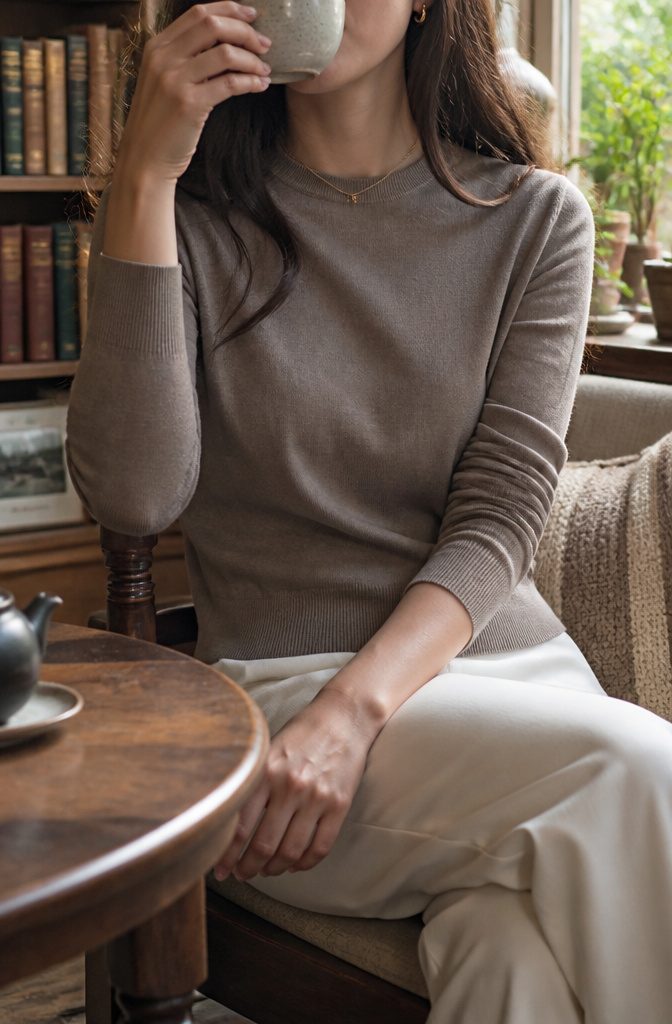
Fine-gauge knits read as polished enough for most offices where a sweater is allowed, while chunky cables and ribbed turtlenecks do the heavy lifting on weekends. The difference is not just weight; it is structure.
A 12-gauge merino or cotton-silk blend drapes close to the body without clinging, which makes it the safer bet under blazers.
Drop the gauge to 3 or 5 and the same fiber stands away from the skin, adding bulk that can flatten a shape or, if the cut is boxy, balance one.
Fiber content governs how long the piece stays presentable. Merino and cashmere pill where friction hits, usually under the arms and along the sides of a crossbody bag.
Cotton and linen knits pill less but lose shape at the hem and cuffs after a season of regular wear.
Synthetics with any stretch recover faster from a day of sitting, yet they hold heat and can turn clammy by afternoon.
The knit structure itself decides whether the top skims or grips. Jersey knits, smooth and flat, follow every line.
Rib knits compress vertically and expand horizontally, which is why a ribbed tank can feel forgiving while a ribbed turtleneck turns into a second skin.
Cable and seed stitches add texture that breaks up silhouette, but they also add literal thickness; a chunky cable under a tailored coat rarely works.
12. Sheer Shirt
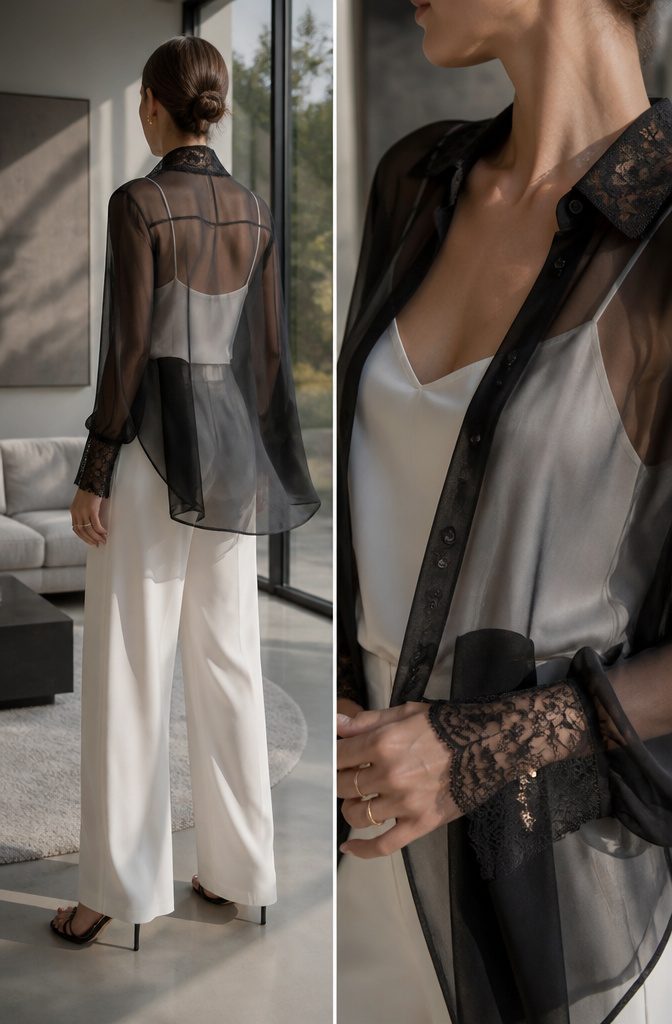
The difference between a sheer shirt that looks intentional and one that looks like a laundry mistake comes down to transparency level and what sits underneath it.
Organza holds its shape like architecture and reads as deliberate even over a plain camisole; voile and chiffon soften into the body and need sharper contrast in the layer beneath to register as a choice rather than an oversight.
Mesh and lace sit at the far end of the spectrum, demanding a bralette or bodysuit you actually want seen. The more skin the sheer reveals, the more the underlayer becomes the outfit’s real statement.
A camisole in a tone too close to your skin risks the accidental-nightgown effect, while one in a deliberate contrast, or a bralette with structure, signals you planned the whole thing.
For office or evening contexts where the sheer shirt needs to behave, layer it under a blazer or jacket. The jacket does the modesty work; the sheer at collar and cuff provides the texture.
High-waisted pants complete the balance, grounding the float of the fabric against something solid. This trio works because it solves the problem sheer always faces: how to be present without being exposed.
13. Utility Shirt
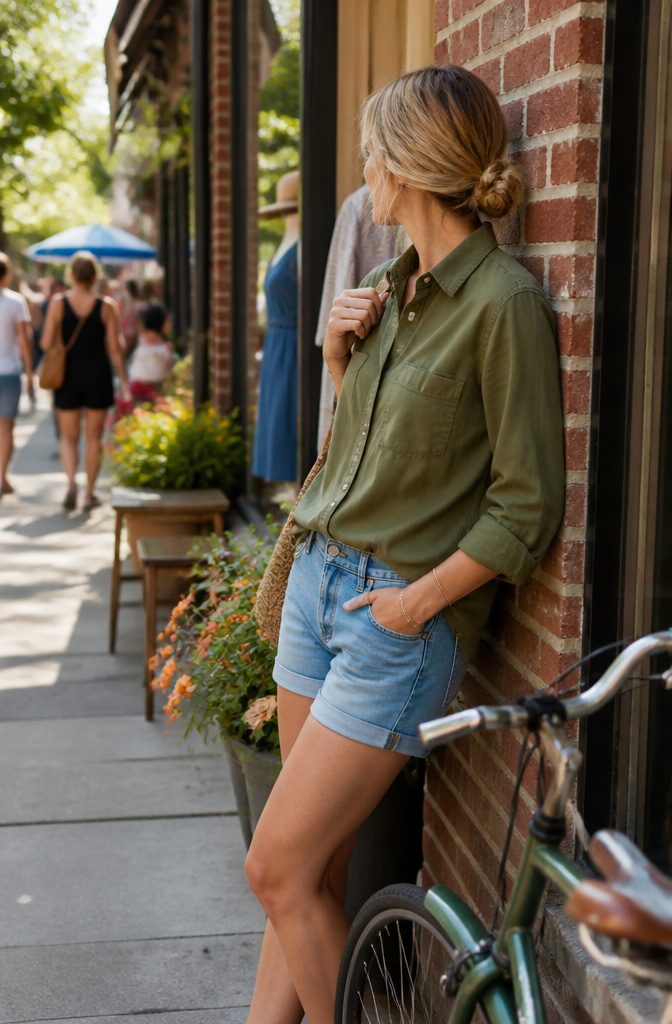
Patch pockets and epaulets started as actual military gear, not decoration. A flap-covered chest pocket kept maps dry; shoulder straps held rifle slings or rank insignia.
Civilian versions borrowed the look because it signaled competence, the same way a field jacket does. The problem arrives when every detail gets cranked up at once.
A utility shirt with two chest pockets, shoulder tabs, button cuffs, and a belted waist stops reading as borrowed function and starts reading as costume. I’ve made that mistake.
The shirt looked fine online, but worn with slim jeans it felt like I was playing a role instead of getting dressed.
The version that actually works keeps one or two details and strips the rest. A single patch pocket, no epaulets, in washed cotton or linen.
That reads as structure without the salute. The line is crossed when the shirt has more hardware than your toolbox.
Pair it with something soft: a utility shirt with wide-leg trousers and simple sandals keeps the balance. Add cargo pants and combat boots and you’re in territory that needs a film set to look normal.
Fabric matters too. Crisp synthetic twill amplifies the drill-sergeant effect; broken-in natural fiber brings it back to civilian life.
14. Ruffle Shirt
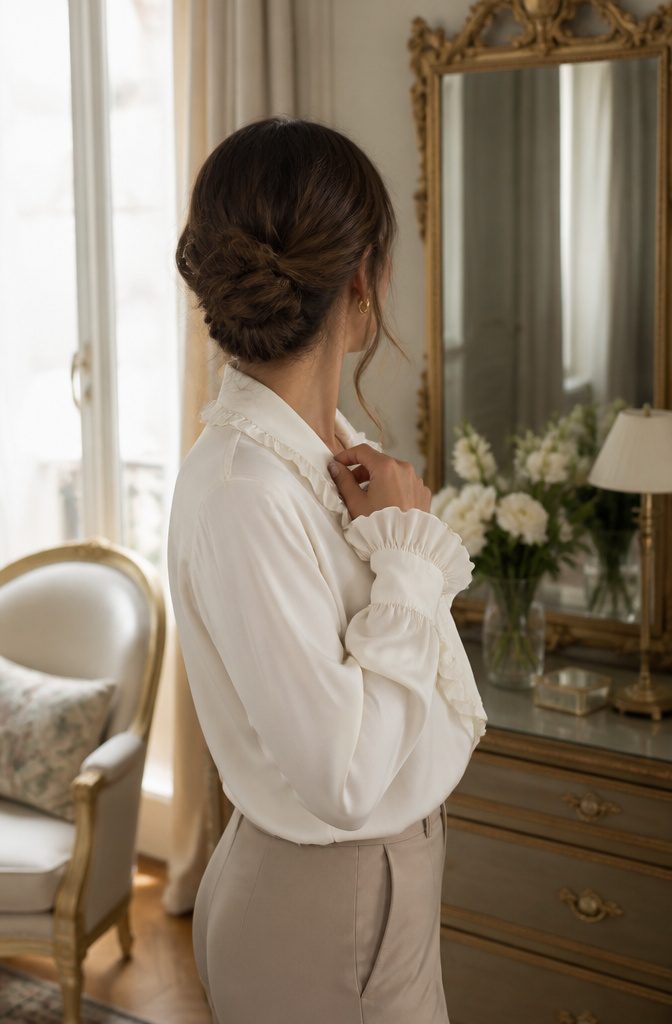
A ruffle at the neck reads romantic but can swallow a short neck whole; the same frill running down a front placket sits flatter and draws the eye vertically instead of pooling horizontally.
Cuff ruffles are the safest entry point, adding movement only where the eye already expects detail.
Scale matters more than placement. A ruffle under two inches wide acts as texture; anything past four inches becomes the entire outfit’s personality.
The difference between vintage-inspired and costume is usually that measurement. I’ve passed on shirts where the sleeve ruffle outweighed the actual sleeve.
Smaller repeats at the collar or placket pair cleanly with tailored trousers or a simple jean. Oversized ruffles demand plain bottoms and minimal jewelry; they are doing enough work already.
If the shirt combines multiple placements, neck and cuff both, treat it as a statement piece and keep the rest quiet.
15. Cap Sleeve Shirt
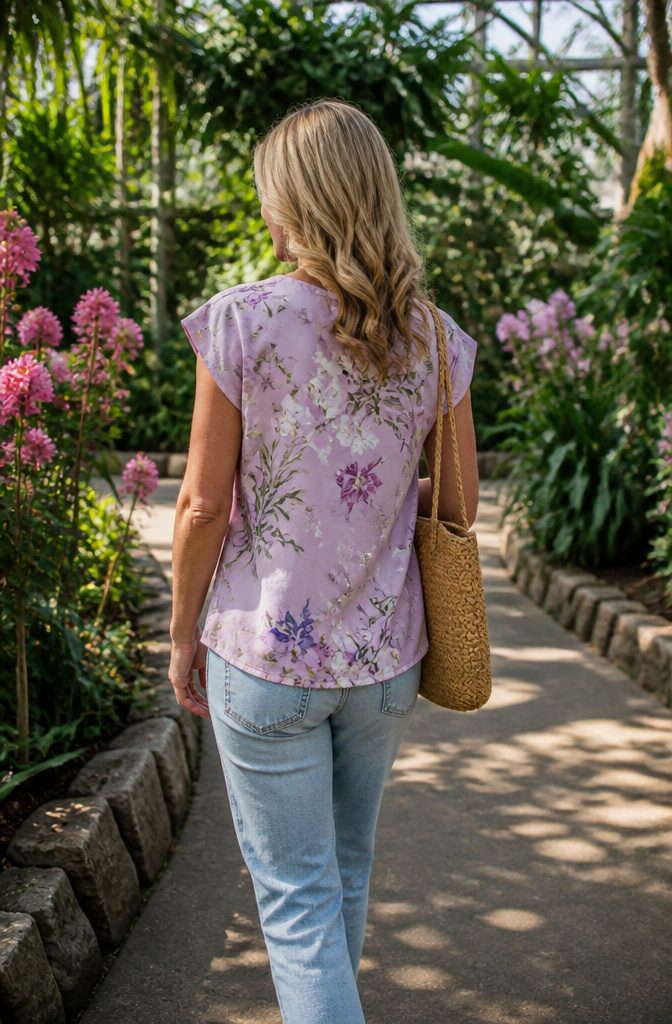
A cap sleeve stops right at the shoulder line, covering just enough to take the edge off bare-arm season without reading as a true short sleeve.
The difference matters in practice: a standard short sleeve hits mid-bicep and adds horizontal bulk there, while sleeveless drops the fabric entirely and leaves the shoulder exposed.
The cap sleeve lands in between, drawing the eye to the shoulder itself rather than the arm below.
That placement flatters narrower shoulders by adding a whisper of width exactly where it helps balance the frame.
On broader shoulders, the same cut can exaggerate the line; the eye reads the sleeve cap as extra structure on top of structure.
I reach for this style when I want the polish of a covered shoulder without the fabric weight of a full sleeve, especially in linen or lace where the material stays light enough that the cap does not stiffen into a shelf.
16. Long Sleeve Shirt

A long sleeve shirt earns its keep by covering the full arm, but the real decision sits at the wrist.
Button cuffs give a shirt its most finished edge; they roll neatly under a blazer sleeve or stand alone with a watch.
French cuffs, with their doubled fabric and required links, read more formal than most daily routines need, though they work when you want that deliberate polish.
Elastic or ribbed cuffs, common on knits, keep the sleeve from sliding into coffee cups or keyboard trays.
The sleeve length itself varies. A true wrist-length cuff breaks right at the wrist bone, which lets your hand move without the fabric bunching.
Some styles run past the wrist, almost to the knuckles; that extra fabric works if you are layering and need the shirt to peek out from under a sweater or jacket, but on its own it risks looking like you borrowed someone else’s clothes.
Seasonal function depends on fabric more than sleeve length alone.
The same long sleeve shape in a light cotton carries you through spring mornings, while the identical cut in flannel or a heavier weave becomes the layer you reach for in October.
A fitted long sleeve shirt tucks cleanly into high rise jeans with booties; left untucked with the ends tied at the waist, it shortens the torso and builds a waistline on shapes that benefit from the definition.
17. Halter Top

A halter top fastens with a strap behind the neck and leaves the back and shoulders completely bare, which makes the bra situation the first thing to solve.
A stick-on or backless bra is the only real option here; anything with a band or straps will show. The weight of the fabric matters more than you’d expect.
Cotton or ribbed knit drapes lightly, but satin or a lined halter can pull forward and strain the neck after a couple of hours. The cut also changes how long your torso looks.
A high-neck halter shortens the upper body visually, while a lower neckline or a cropped hem does the opposite. Flowy styles in chiffon or polyester skim rather than cinch, so they work if you want coverage without the fitted look.
For pairing, the usual move is shorts, skirts, or jeans, and the occasion range runs from casual summer errands to dressier parties depending on the fabric.
18. Tube Top
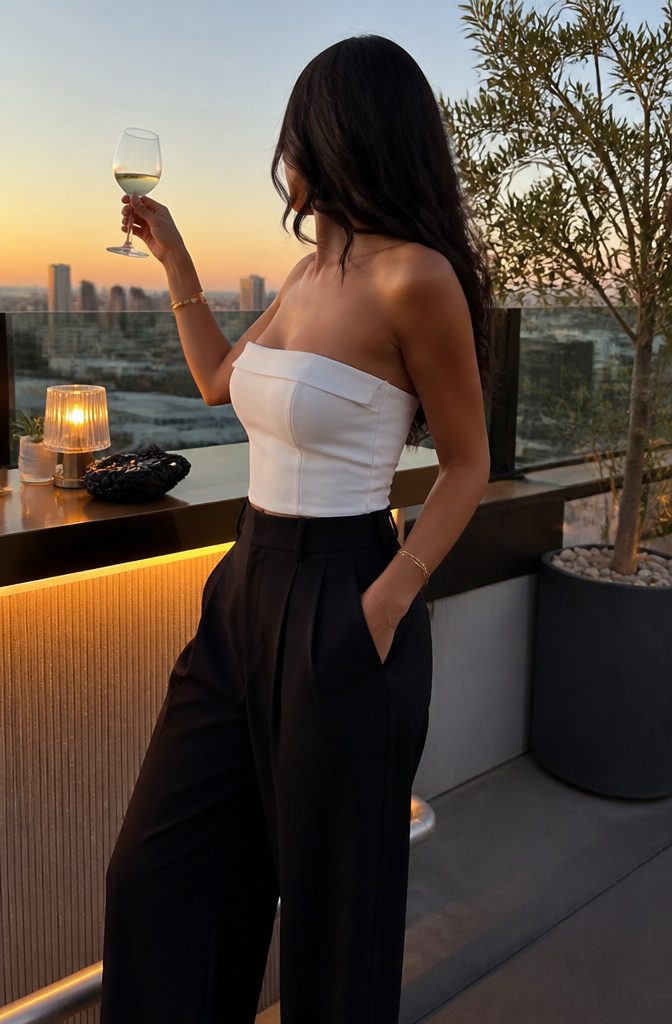
The tube top lives or dies by its grip.
A bandeau version in jersey or a spandex blend will slip during anything more active than walking, so the real choice is between that stripped-back look and a structured sweetheart cut with built-in support that stays put through an actual day.
Layering is where this piece earns its keep. Under a sheer shirt, the tube top gives you coverage without adding straps or neckline competition, and the clean line keeps the outer layer from reading cluttered.
Cotton or ribbed knit options breathe better here than polyester-heavy blends.
Fit around the chest is the make-or-break detail. Elastic smocking helps, but a curved top edge that follows the natural line, rather than cutting straight across, closes the gaping that happens when you raise your arms.
For styling, high-waisted jeans hit at the midriff with a shorter tube top, or wide-legged slacks balance a cropped jacket layered over top. Jagged-hem flare jeans push the look toward vintage territory if that is your direction.
19. Graphic Tee
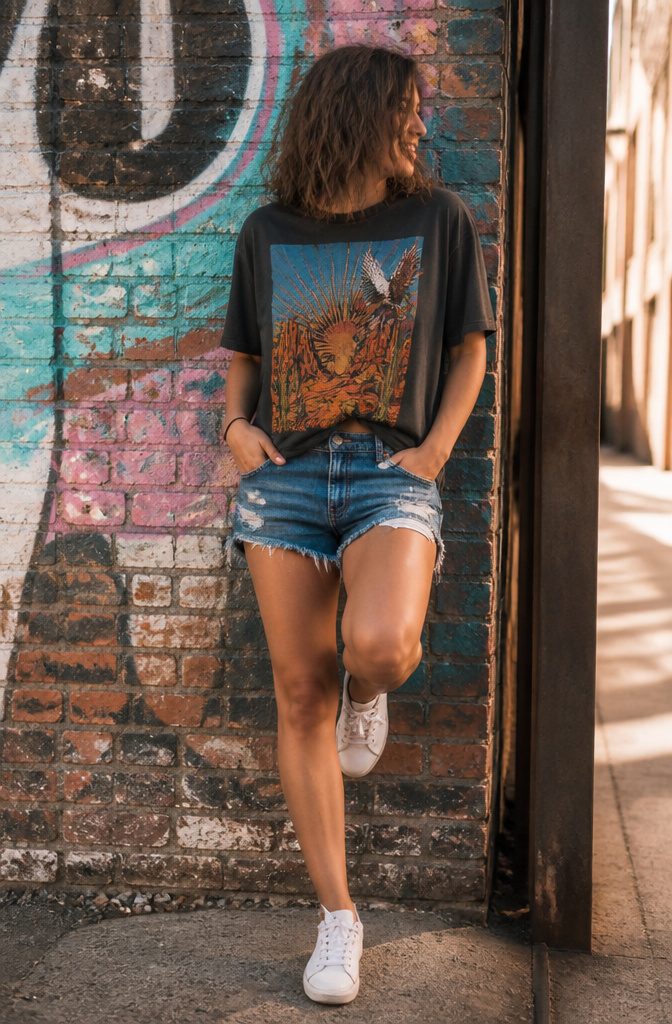
A graphic tee lives or dies by the print itself, and the first thing to check is how the ink sits on the fabric.
Screen-printed graphics hold up longer than heat-transferred ones, though the latter can feel softer against the skin in the first few wears.
The real test comes around wash fifteen or twenty, when cheaper prints start to spiderweb at the edges or flake off entirely. Higher-quality shirts will have the graphic worked into the fibers rather than sitting on top like a sticker.
Scale changes everything about how you wear it. A small chest logo reads as a basic; a oversized print that covers most of the front turns the shirt into the outfit’s statement piece and limits what layers cleanly over it.
A mid-size graphic, roughly postcard-sized, tends to be the most versatile under blazers or tucked into high-waisted pants without the visual fight.
Wash cold, hang dry when you can. The dryer is what accelerates that cracking most people blame on the printer.
20. Boyfriend Shirt
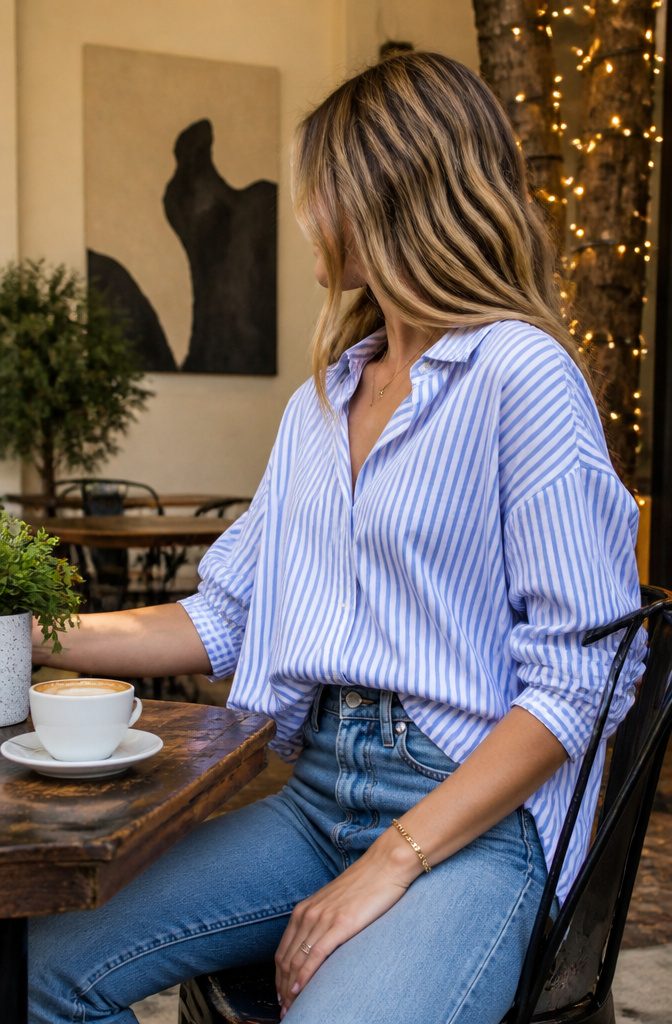
A boyfriend shirt borrows its oversized fit straight from menswear, but the cut matters more than the label. The shoulder seam drops past your natural shoulder line, and the hem typically falls to mid-thigh.
Without attention to proportion, the silhouette can swallow you whole.
The fix is in the styling. Tuck the front loosely into high-waisted jeans or tailored trousers and let the back hang free; this creates shape without sacrificing the relaxed feel.
For a sharper line, roll the sleeves to your forearm and leave the top two buttons open. Skinny jeans or biker shorts underneath balance the volume on top, while a blazer layered over the shirt pulls it toward office-appropriate territory.
The shirt works for laid-back weekends or dressed-up errands, but it needs that deliberate contrast between loose and fitted to look intentional rather than borrowed.
Styling by Occasion
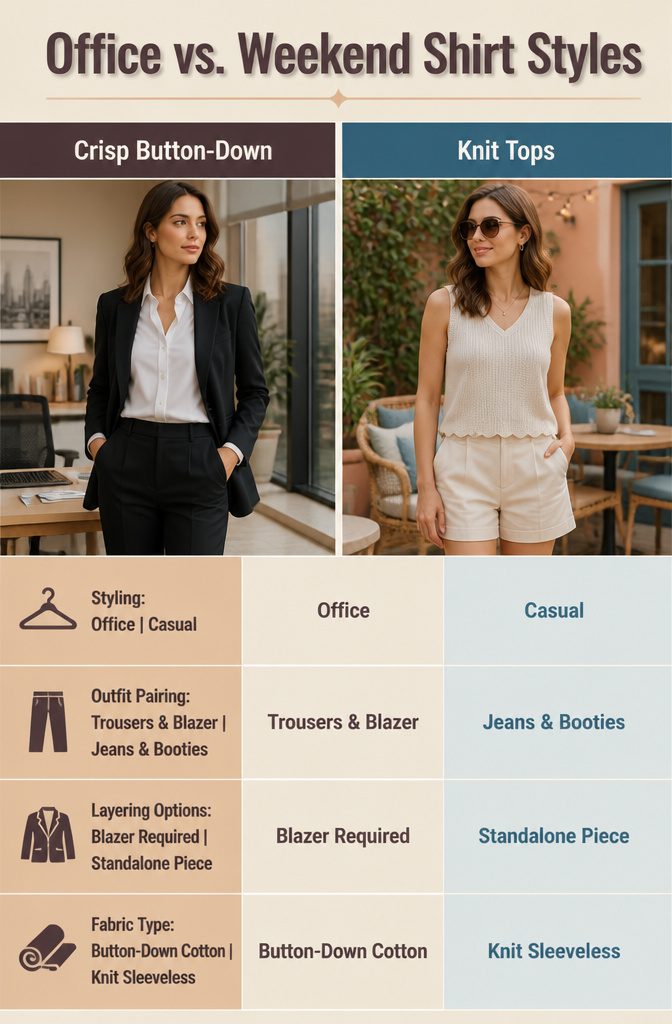
A crisp button-down with long sleeves and buttoned cuffs still earns its place as the hardest-working piece in my closet for anything that resembles an office.
I pair mine with tailored trousers and let a blazer sit on top; the collar stays neat underneath without the bunching you get from softer knits.
For weekends, the same shirt comes out of the suit rotation entirely: high-rise jeans and chunky-heeled booties give it a tunic feel, especially if you borrow from the men’s section for extra length.
The half-button tie at the waist is a trick I return to when I want structure without tucking.
Knit tops handle the rest of the map. A sleeveless cut with a scalloped hem works under that same blazer for a dinner that starts at six, or stands alone with shorts when the only appointment is a patio.
Elbow-length sleeves with ruching pair with cuffed ankle-skimmer jeans for the kind of Saturday that involves actual walking. Deeper necklines on knits read evening; higher necklines lengthen the body for travel days when you want to look deliberate without effort.
Cotton and linen button-downs breathe on planes; the small buttons under the collar keep the shape intact after hours in a seat.
Fabric Weight and Season
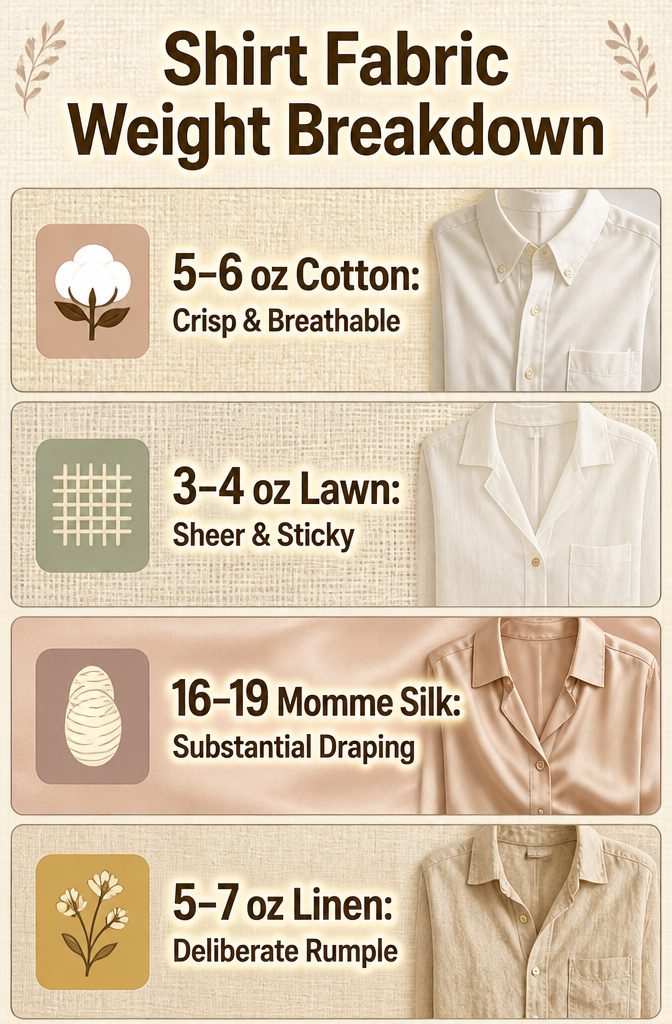
Cotton shirts hang differently depending on ounce weight, and that difference matters more than fiber content alone.
A 5–6 oz cotton carries enough heft to keep a crisp button-down from clinging in humid July, while a 3–4 oz lawn weave turns the same silhouette sheer and sticky by noon.
I learned this after three summers of wondering why my "breathable" camp shirts felt like wearing a wet envelope; breathability is just air permeability measured in cubic feet per minute, and loose plain weaves move more air than tight twills regardless of what the tag promises.
Silk operates on momme weight instead, where 16–19 momme gives a blouse the substance to skim rather than stick, and anything under 12 momme becomes a layering piece by September whether you planned it that way or not.
Linen at 5–7 oz crumples into that deliberate rumple people pay extra for, but the same weight in polyester traps heat because the fibers don’t wick; they just pool moisture against your collarbone.
A peplum or wrap cut in heavy linen works through August. The same shapes in standard polyester need a cardigan by October, not for style but because the fabric won’t regulate temperature on its own.
What Flatters Your Shape
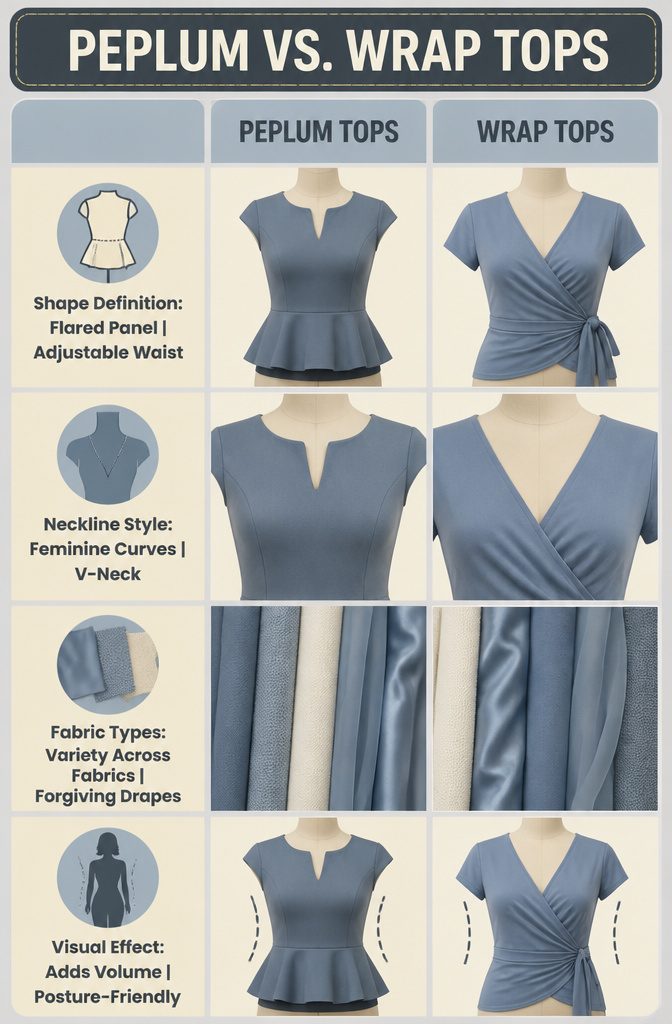
Peplum tops carry a flared panel right at the waist, and that flare is doing more than adding volume. It defines the narrowest point of the torso and creates the impression of curves even where the body runs straighter.
The shape reads as feminine without reading as costume, which is why it works with slim-fit pants or a pencil skirt for office wear and still holds up for dinner out.
Polyester, crepe, cotton, chiffon, or satin builds change the formality, but the waist-defining geometry stays the same.
Wrap tops adjust to torso length in a way fixed seams never will. The self-tie closure lets the wearer set where the waist sits, so a longer rise or a shorter one both find their mark.
The V-neck the wrap creates is part of the same system: it opens the neckline proportionally and works across bust sizes because the fabric drapes rather than fights.
Cotton, satin, jersey knit, chiffon, or polyester blends all behave differently, but the wrap mechanism itself is what makes the fit forgiving.
Cap sleeves sit at a tricky intersection. They offer shoulder coverage that reads as subtle and elegant, but they also add visual width right where the shoulder meets the arm.
On narrow shoulders, that extra bit of fabric can balance the frame. On broader shoulders, the same cut can exaggerate what is already there.
The sleeve draws attention to the arm, which is the point, but the attention lands on width or on length depending on what the shoulder already carries.
Vertical lines, whether a placket, a stripe, or a long open collar, pull the eye upward and lengthen what they travel. The effect is optical and immediate, and it costs nothing extra in the garment.
Frequently Asked Questions
What are the different types of shirts for women?
Popular female shirt styles include button-downs, blouses, tunics, crop tops, denim shirts, peplum shirts, off-shoulder tops, wrap shirts, polo shirts, t-shirts, knit tops, sheer shirts, utility shirts, ruffle shirts, cap sleeve shirts, long sleeve shirts, halter tops, and tube tops.
Each differs by cut, neckline, sleeve length, and fabric weight, which changes where you can wear it.
How do I style a button-down shirt?
Tuck it fully with tailored pants or a knee-length skirt for formal settings, or leave it untucked over jeans with rolled sleeves for casual days.
A half-tuck, front-knot, or wearing a men’s dress shirt as a tunic with slim jeans and pointed heels creates middle-ground or fashion-forward looks.
What is the best shirt for summer?
Lightweight fabrics like linen and cotton in styles such as crop tops, tank tops, or breezy tunics handle heat best. Linen wrinkles intentionally, cotton recovers shape, and sheer fabrics like voile or chiffon stay airy if layered over a camisole.
What are some popular styles of girls’ shirts?
Popular styles include button-downs, graphic tees, henley shirts, crop tops, and off-shoulder tops for younger wearers. The same structural rules apply: fabric weight and cut determine whether the piece reads as casual, school-appropriate, or dressed up.
What are the different styles of women’s tops?
Women’s tops divide by neckline, sleeve, length, and closure. Crew neck and V-neck t-shirts, cap sleeve and long sleeve cuts, cropped and tunic lengths, plus wrap, button-front, and pullover closures each create distinct silhouettes for different occasions.