
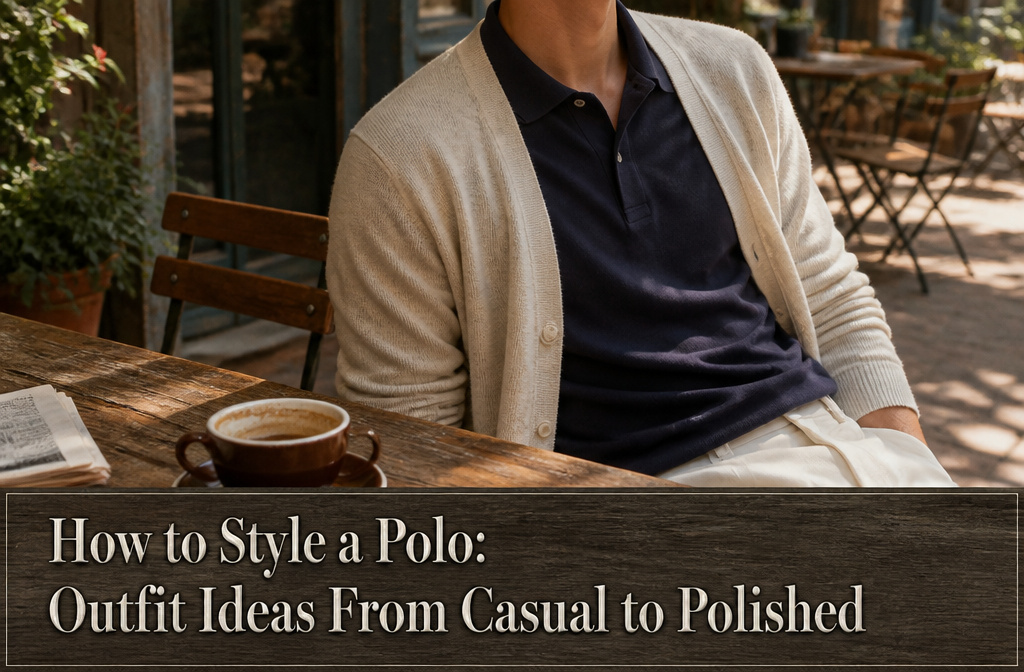
Getting a polo right costs nothing extra and takes no new skill, only noticing what most people miss: the collar disappears the moment the wrong sweater swallows it.
A fine-gauge merino crewneck holds the placket visible; a chunky cable knit flattens it to a ruffle. That knit weight matters more than color, and it is the difference between looking considered and looking like you dressed in the dark.
1. Wear It Solo for a Casual Look
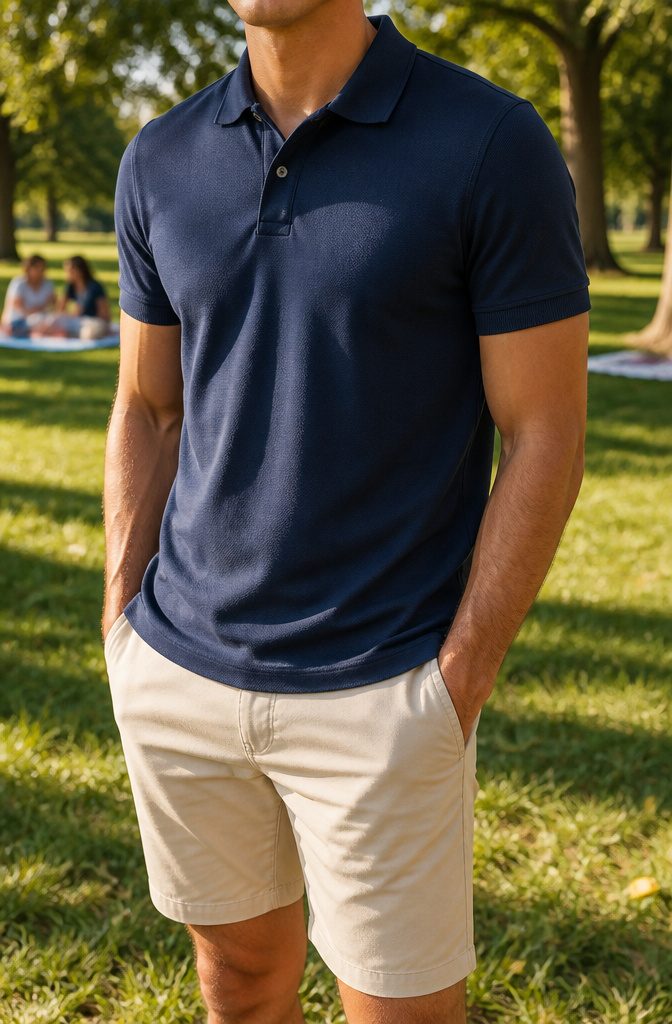
The first polo I reached for on its own was a hand-me-down from a cousin, boxy through the torso with sleeves that hung past the elbow.
Untucked, the hem hit mid-thigh and the whole thing read like I’d grabbed a work uniform by mistake.
Sleeves should hit mid-bicep and grip the arm slightly, and the length should land mid-fly: long enough to tuck if needed, short enough to leave out clean.
Fit sorted, fabric changes what the shirt does alone. Pique cotton, the original knit from 19th-century polo matches in India, carries a slight texture that holds its shape and looks intentional without anything over it.
Jersey drapes softer and can read relaxed to the point of sloppy if the cut isn’t precise.
The athletic origin matters here: this shirt was designed to move, stripped down, in sport. That legacy is why it works solo at all.
2. Layer with a Sweater
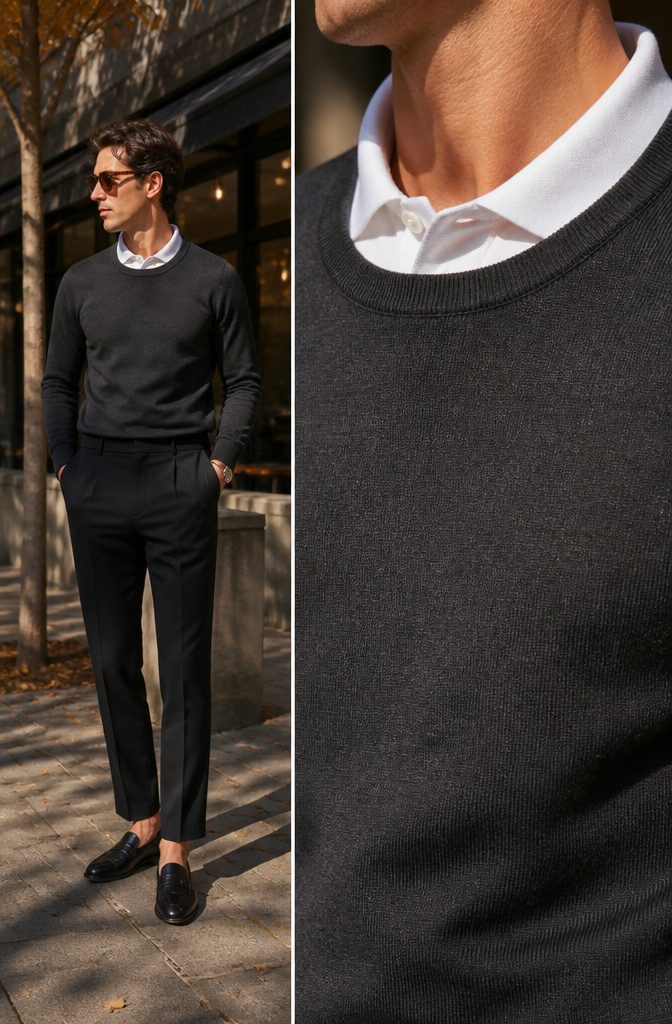
A fine-gauge merino crewneck sits right over a polo collar, holding its shape without swallowing the placket whole.
The same cannot be said for the chunky cable knit I tried one October morning, the collar flattened to a ruffle, the whole neckline lost in wool. The knit weight matters more than the color when you layer this way.
Cardigans read differently.
An open-front style drapes clean, but button it and the polo collar competes with the cardigan’s own neckline. Crewnecks win for simplicity; cardigans win for adjustability on a day that warms up.
Pique polos carry a uniform association that softens under knitwear, while a fine-gauge or ribbed knit polo already reads as intentional knitwear and photographs as expensive beneath another layer.
Reserve linen polos for warm months, pique for the transition, and let merino polos anchor fall and winter layers where the point is keeping heat in, not letting it out.
Almost all of ’em look a little cooler—a little more considered—with some sort of sweater on top.
— GQ
For the reader, this means the polo collar is doing visible work: let it, and choose the sweater that frames it instead of burying it.
3. Pair with Tailored Trousers
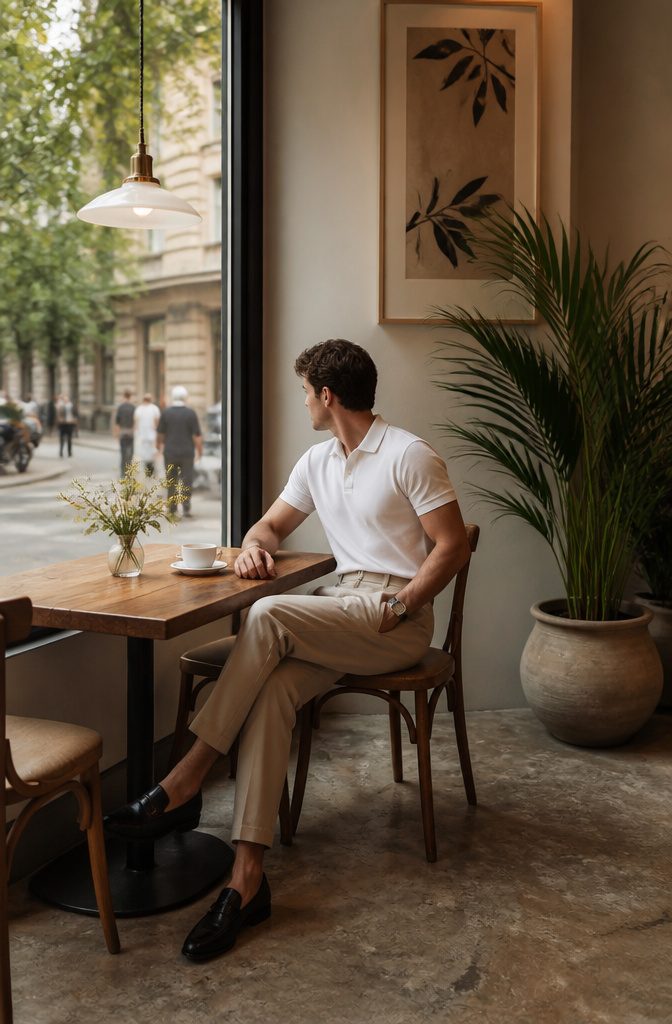
A navy, white, or gray polo tucked into tailored trousers is the move that separates smart-casual from just casual.
The knit polo earns its place here; the fabric has enough body to sit cleanly at the waist without bunching, and the collar keeps its shape where a piqué might wilt under a jacket.
The tuck question comes down to length.
If the hem falls more than about two inches past the waistband, the fabric pools and the silhouette collapses into a rumpled midsection. Anything shorter than that tucks neatly.
A French tuck, front-only, works if the polo is cut slim, but a full tuck reads more deliberate for trousers this refined. Untucked only works when the hem hits at the hip, which most standard polos do not.
Shoes shift at this level of polish.
Sneakers drag the outfit back toward weekend; loafers keep the line continuous from ankle to hem. Suede or leather both work, though leather leans sharper for client-facing days.
The belt helps too, if the trousers have loops. Without one, the tucked polo can look like it floated there by accident rather than choice.
4. Combine with Shorts
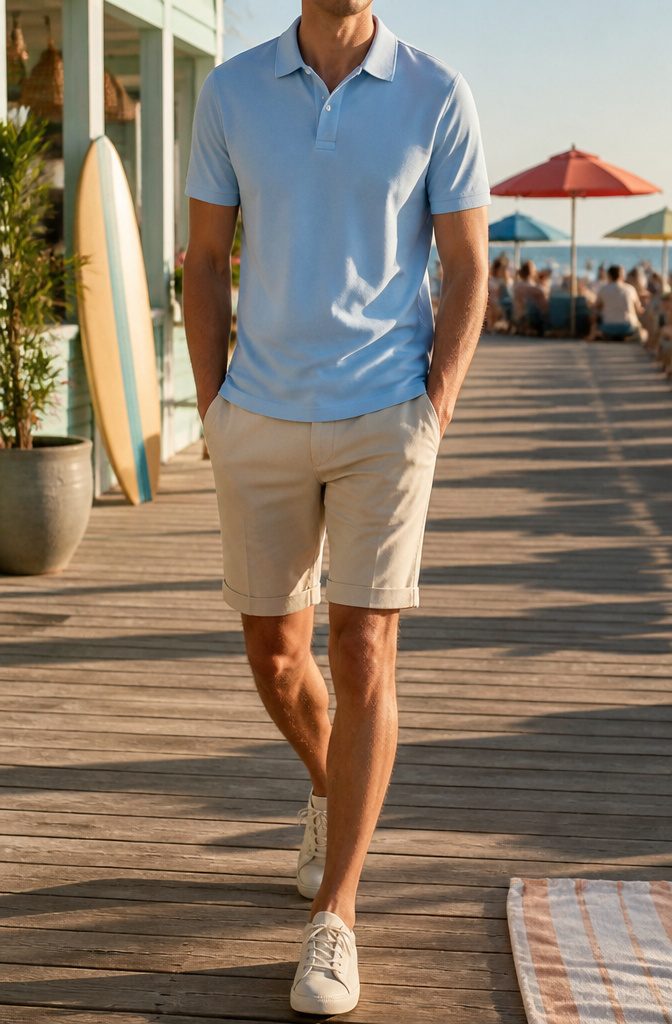
A polo with shorts is the warm-weather upgrade from a T-shirt that still looks intentional.
The structure of piqué cotton or a breathable linen knit keeps the silhouette neat rather than slouchy, and shorts that sit above the knee balance the proportion without trying too hard.
I learned the hard way that Bermuda length, hitting at mid-thigh or lower, aged the look by cutting the leg at its widest point.
Switching to a 5-inch inseam fixed it; the shorter line reads modern and actually elongates the leg.
Chino shorts work here, though tailored styles with a cleaner leg and minimal pocket bulk look sharper. Solid colors or subtle textures in the polo keep the pairing from feeling like you grabbed whatever was clean.
The untucked rule applies more naturally with shorts than with trousers; the hem should hit at the hip, not below your widest point, or the silhouette turns boxy.
A cropped or standard-length polo works untucked here in a way it rarely does with longer pants.
5. Style with a Skirt
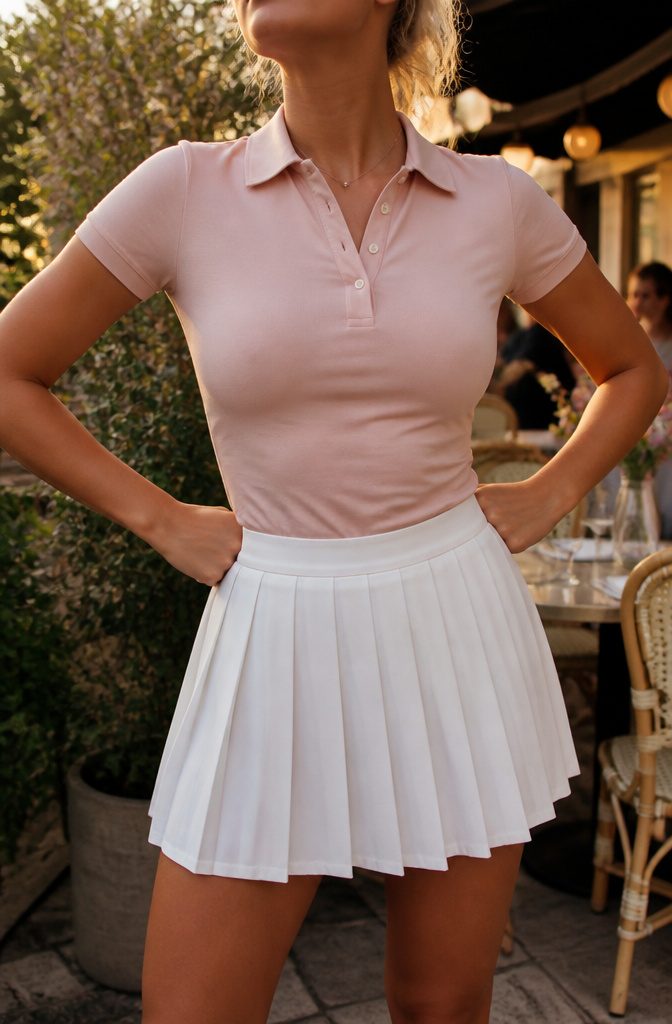
The fastest way a polo drifts into frumpy territory is letting it hang loose over a skirt.
The tuck is non-negotiable here, and where you place the belt matters just as much. A waist belt, not a hip-hugging one, keeps the line intentional.
A fitted or cropped polo tucked into a pleated tennis skirt reads deliberate: the structure of the collar balances the volume below, and the waist emphasis keeps the silhouette from looking like an after-school uniform.
Pastel shades like baby blue or blush soften the preppy edge without losing the polish.
Wide-leg trousers are the other path.
The same tucked polo, this time with linen or fluid trousers, moves the look toward coffee-and-errands territory. The collar supplies enough structure that the outfit feels put-together without trying hard.
Accessories rescue the shape when the proportions feel off.
A thin headband or pearl earrings add the feminine touch, but the belt does the real work: it anchors the waist and signals that this pairing was chosen, not inherited from a dress code.
6. Accessorize with Intention
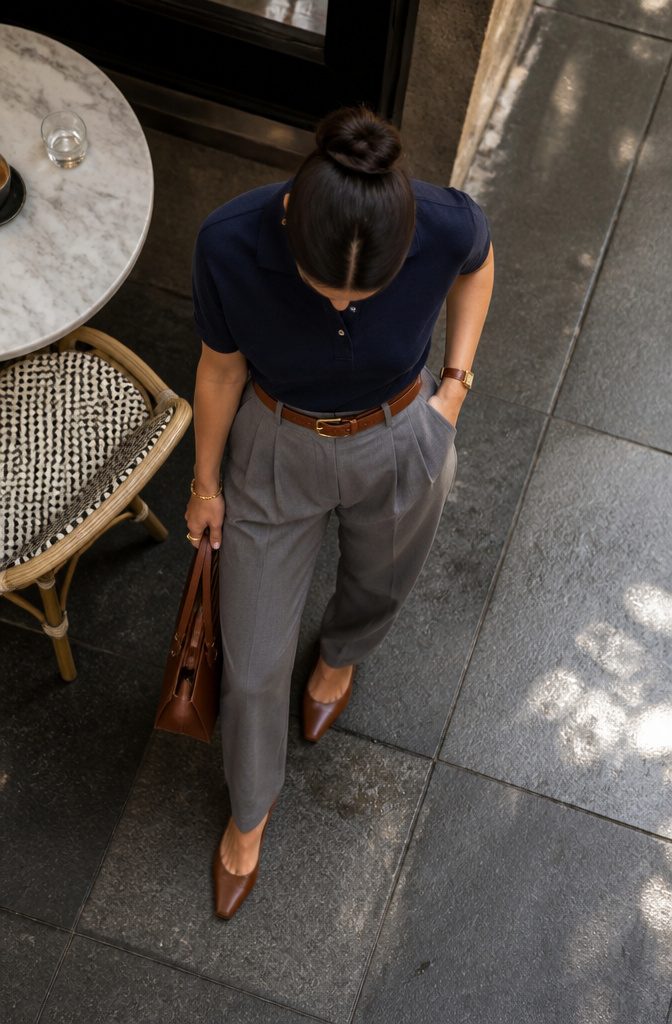
A 1-inch leather belt sits right for trousers, while shorts need something closer to three-quarters of an inch or the proportions look off.
The source material mentions loafers or suede shoes as smarter choices for evenings and smart-casual settings, and white leather trainers for casual polo-and-chinos combinations.
What they skip is the dead zone between those two poles: a scuffed hybrid shoe, too formal for the sneakers but too beat-up for the loafer, kills the polo’s intentionality faster than any other single choice.
Watch face size matters more than most people expect with a polo.
The collar band creates a horizontal line at the throat, and a massive dial fights that geometry. Something in the 38–40 mm range keeps the visual weight balanced without looking like you’re wearing your boyfriend’s watch.
Brown suede with navy, stone, or green polos has real versatility, but the belt and watch should agree on finish: matte with matte, polished with polished.
Mixing a glossy dress belt with a brushed field watch reads like you got dressed in the dark.
Choose the Right Fit
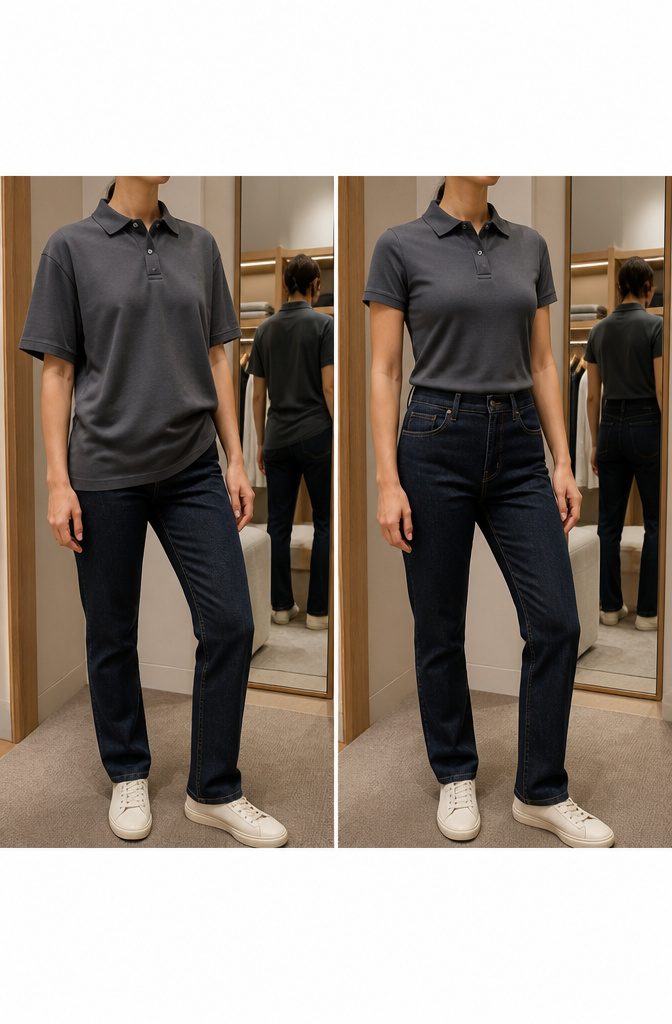
A polo that actually works starts with the fit, not the label.
The shoulder seam should sit right where your shoulder ends, not droop down your arm. The chest needs clean lines without the fabric pulling at the buttons, and the sleeves should hit mid-bicep and hug the arm slightly.
Length matters more than most people check: mid-fly is the mark, long enough to stay tucked through a meeting but short enough to look intentional left out.
I use two quick tests before buying.
At the collar, I slide two fingers between the buttoned band and my neck; any tighter and it chokes, any looser and it collapses. For length, the hem should land right at my fingertips with arms relaxed at my sides.
A billowing body or sleeves hanging past the elbow reads as an afterthought, the kind of shapeless cut that costs you polish no matter what you pair it with. Slim-but-not-tight is the silhouette that flatters without looking like you tried.
Pick Fabric for the Occasion
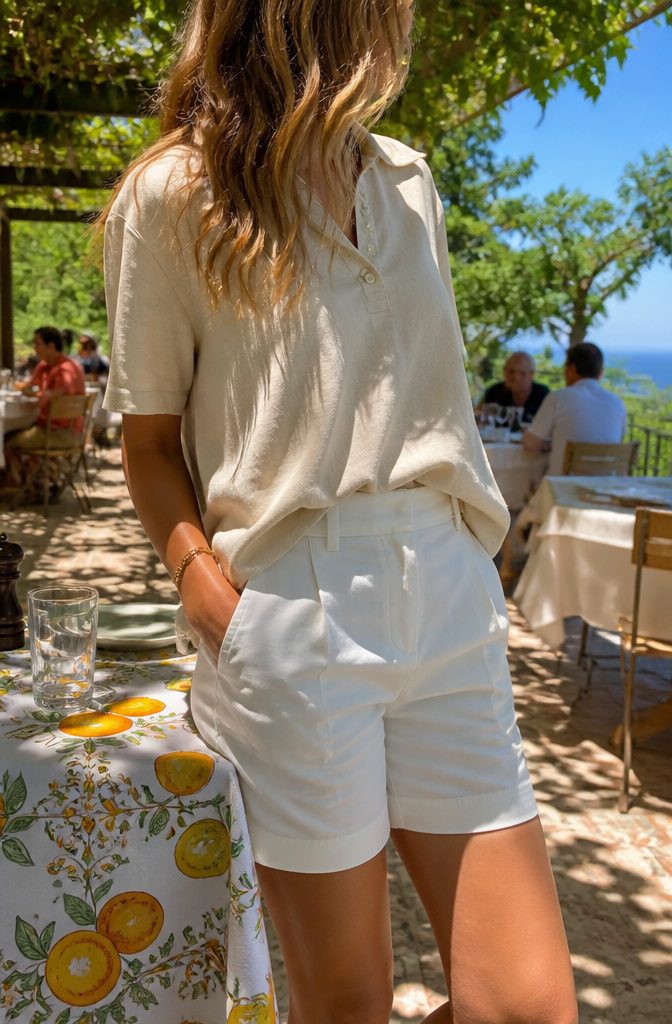
Pique cotton, jersey knit, and linen each carry a polo to a different room. The weave decides whether the shirt reads as weekend gear or something sharper.
Pique cotton gives you structure and texture, the kind of surface that catches light without shining. It works from genuinely sporty days up to smart-casual, though it carries the strongest "uniform" association of the three.
A heavy pique under a blazer can bulk wrong at the shoulders and collar, so I save that layer for finer jerseys.
Jersey knit drapes smoother and reads more refined. The soft fall photographs as expensive and tucks cleanly into tailored wide-leg trousers for a smart-casual office or a gallery opening.
A jersey polo is the fabric to choose when the polo needs to anchor the outfit rather than fade into it.
Linen polos own warm weather, full stop. The breathability is real, but the wrinkling is too, and in an air-conditioned office the fabric can look like you stepped in from a heat wave even when the thermostat says 72.
I keep linen for outdoor brunches and weekend errands, never for client-facing days.
The wrong fabric in the wrong room announces itself before you do.
Color as Strategy
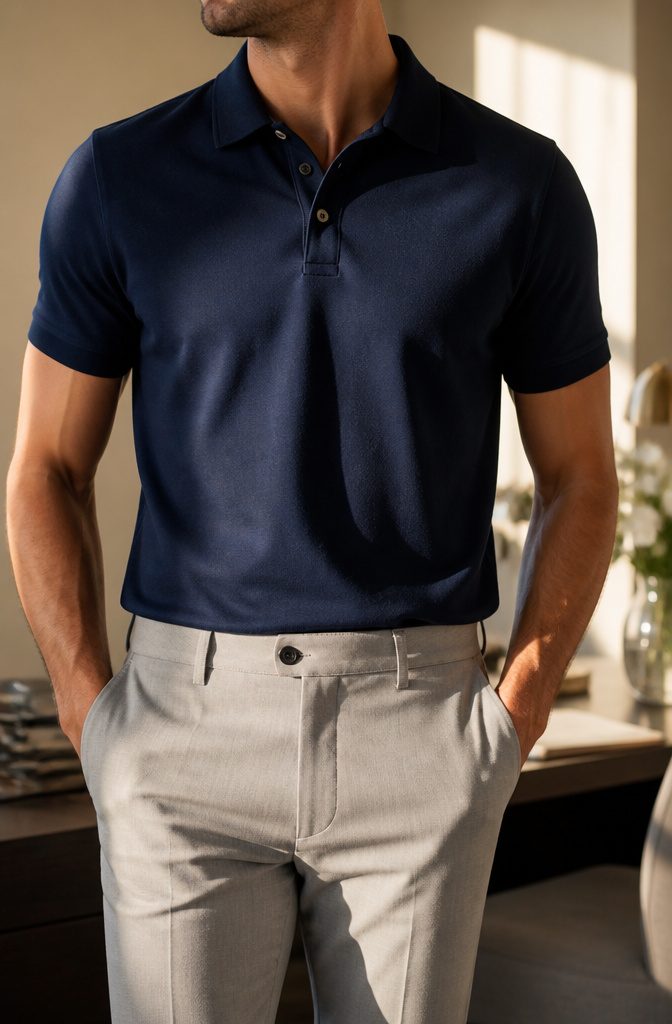
Navy, white, and gray do the heavy lifting in any polo collection because they shift between settings without announcing themselves.
A navy pique polo reads weekend by default, but the same color in a fine-gauge knit passes under a blazer without looking like you grabbed the wrong shirt.
Darker shades anchor smart-casual outfits; pastels, even in expensive fabric, tend to signal leisure the moment you walk into a meeting.
Seasonal colors have a shorter shelf life than most of us want to admit. That coral or powder blue feels fresh for one spring, then sits in the drawer looking like last year’s purchase.
A salmon polo looks like it would bridge casual and work, but the tone reads as strictly off-duty no matter what you pair it with.
Replaced it with terracotta, a shade with enough earth in it to stay grounded, and suddenly the same chinos and loafers looked intentional rather than apologetic.
Fabric changes what color can do. White jersey polo drapes softly and photographs like knitwear; white pique carries texture that reads sporty and can look like a uniform under office lights.
The color is identical. The garment is not.
What Changes with Season
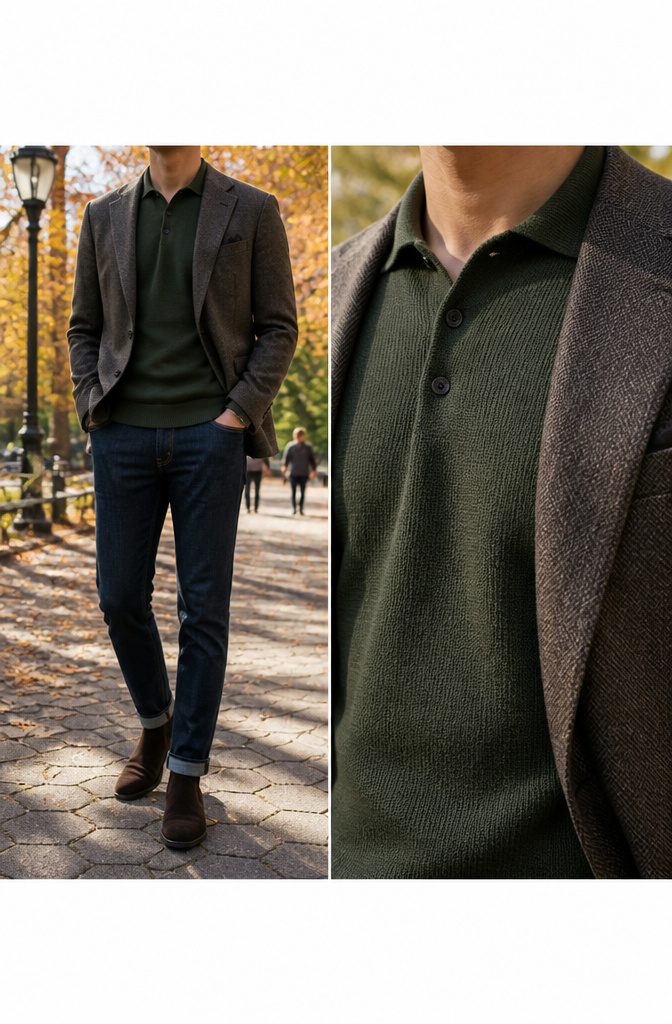
A polo’s year-round life depends on when you swap the fabric weight, not the shirt itself. Pique and open knits carry July; come September, a fine-gauge knit polo under a blazer replaces that solo summer look without changing the silhouette.
I learned this the hard way after trying to stretch a linen-blend polo into October and spending the whole dinner wishing I’d brought a layer.
Color moves the same way.
Lighter tones read fresh for warm months; deeper olive or navy shift the same cut into fall without looking like you forgot to change closets. The knit itself matters more than most expect.
A ribbed or fine-gauge knit drapes like intentional knitwear and photographs expensive, while standard pique stays stubbornly casual and carries the strongest uniform association. Reserve that texture for genuinely hot days or sporty occasions.
Cold months need heavier weight.
A long-sleeve knit polo with real density under a blazer gives you the collar structure of a button-down without the formality. The collar still frames your face; the knit just adds warmth.
A mid-weight merino polo works from October through March, which most people do not expect until they try one. The polo isn’t a summer-only piece unless you treat it like one.
Frequently Asked Questions
How do I style a polo shirt so it doesn’t look frumpy?
Focus on fit first: sleeves should hit mid-bicep and grip the arm slightly, the shoulder seam sits right at your shoulder, and the hem lands mid-fly.
Tuck it when wearing with skirts or tailored trousers, and add a belt at the waist to anchor the silhouette. Accessories like a watch or simple jewelry finish the look without competing with the collar.
Can I wear a polo to a smart-casual event?
Yes, a knit polo tucked into tailored trousers with loafers reads perfectly smart-casual.
Choose navy, white, or gray, and keep the polo length no more than two inches past the waistband so the tuck stays clean. The knit fabric photographs as expensive and holds its shape better than pique under office lights.
What bottoms go with polo shirts?
Polo shirts pair with chinos, tailored trousers, shorts, or skirts depending on the occasion.
Chinos and tailored trousers lean smarter; shorts above the knee keep it casual but intentional. With skirts or wide-leg trousers, the tuck is non-negotiable, and a waist belt keeps the line deliberate.
Should I tuck or leave a polo untucked?
Tuck it for polished or smart-casual looks, especially with trousers or skirts.
Leave it untucked only when the polo is cropped or hits at the hip, which works with shorts or casual fits. If the hem falls below your widest point, tuck it; an untucked full-length polo reads boxy.
What is the 3-3-3 rule for clothes?
The 3-3-3 rule is a packing and wardrobe strategy suggesting three tops, three bottoms, and three pairs of shoes to create multiple outfits.
What’s the proper way to wear a polo?
The proper way starts with correct fit: shoulder seam at the shoulder, sleeves mid-bicep, length mid-fly.
Wear it solo for casual settings, layer with a fine-gauge sweater for cooler days, or tuck into tailored trousers for smart-casual. Fabric matters: pique for structure, jersey for refinement, linen for warm weather.
What is the Ralph Lauren 3-piece rule?
The Ralph Lauren 3-piece rule is a styling concept associated with the brand’s aesthetic, typically involving a third piece like a blazer or sweater to complete an outfit.
Are polos in style in 2026?
Polos remain versatile wardrobe staples that work across casual to polished settings when styled intentionally.